Artwork
Untitled
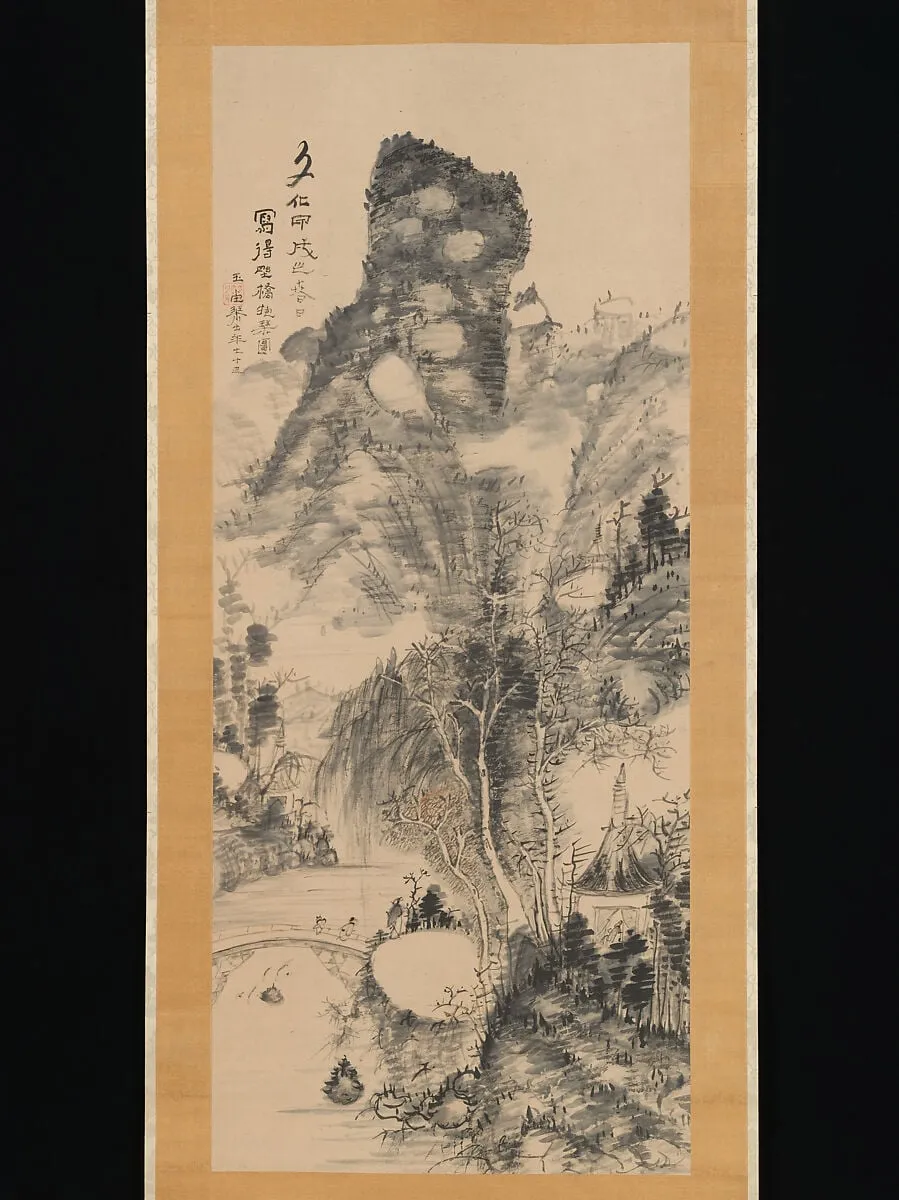
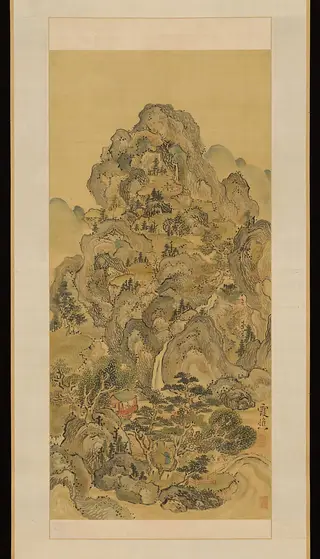
Untitled is an ink painting by the Baroque artist Urakami (Uragami) Gyokudō 浦上玉堂. It dates from 1814 and is held in the collection of the Metropolitan Museum of Art.
About this work
He used only black ink, letting the brushstrokes do the work, thin lines for branches, thick ones for cliffs.
You see a narrow bridge clinging to a steep, ink-washed mountain. Trees cling to the rocks, and a few travelers cross the bridge in the mist.
Gyokudō painted this in 1814, when most Japanese artists were filling scrolls with bright colors. He used only black ink, letting the brushstrokes do the work, thin lines for branches, thick ones for cliffs. The bridge feels small, almost lost in the vast landscape.
If you like this quiet, ink-only style, look up landscapes.
Technique & Style
The work is executed as a hanging scroll in ink on paper, a format and medium characteristic of literati painting traditions in early nineteenth-century Japan. The artist’s handling emphasizes fluid, modulated ink washes to articulate recession and atmospheric depth, while controlled brushwork delineates structural elements such as a bridge and cascading rocks. The composition balances sparse, calligraphic lines with expansive, diluted washes to evoke a mist-laden landscape.
Stylistically, the scroll exemplifies bunjin-ga (literati painting), integrating poetic resonance with minimal, suggestive forms. No evidence of later repainting or significant restoration is indicated in available records.
History & Provenance
The hanging scroll titled Untitled was created by the Japanese artist Uragami Gyokudō in 1814. Executed in ink on paper, this landscape work depicts a bridge and originates from Japan. The piece is currently held in the collection of the Metropolitan Museum of Art.
While the specific commissioning patron and the detailed chain of ownership prior to its acquisition by the museum are not detailed in the available records, the work's inception is dated to the year 1814. The artwork remains a significant example of Gyokudō's landscape painting from the early nineteenth century, preserved within a major institutional collection.
Overview
This hanging scroll, titled Untitled, was created by Urakami Gyokudō in 1814. Executed with ink on paper, the painting presents a serene landscape dominated by a steep, mist-shrouded mountain. A narrow bridge, traversed by a few small figures, spans a chasm, appearing almost dwarfed by the immense natural surroundings. The work exemplifies Gyokudō's distinctive approach to landscape painting during the late Edo period.
Subject & Meaning
The composition centers on a dramatic mountainous terrain, rendered with a sense of depth and atmosphere through varied ink washes. A slender bridge, barely visible against the towering rock faces, connects two parts of the landscape. A handful of travelers are depicted crossing this precarious path, emphasizing the human element's fragility and transient presence within the grandeur of nature. The mist further enhances the feeling of vastness and solitude.
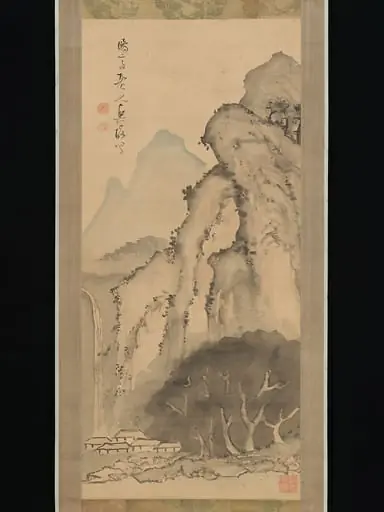
Artist & collection
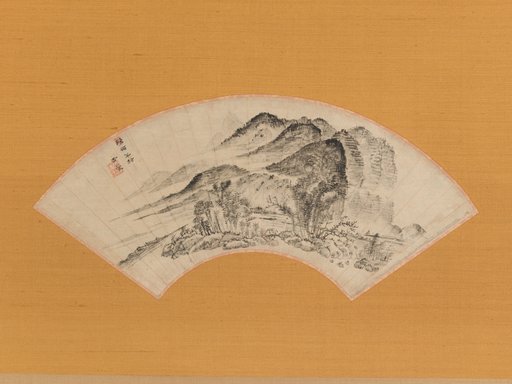
Artist
Urakami (Uragami) Gyokudō 浦上玉堂
Urakami Gyokudō, also written Uragami Gyokudō (1745-1820), was a Japanese painter, musician, poet, and calligrapher associated with the Nanga, or literati, school.

- Untitled
 明/清 王鐸 山水圖 軸|Landscape
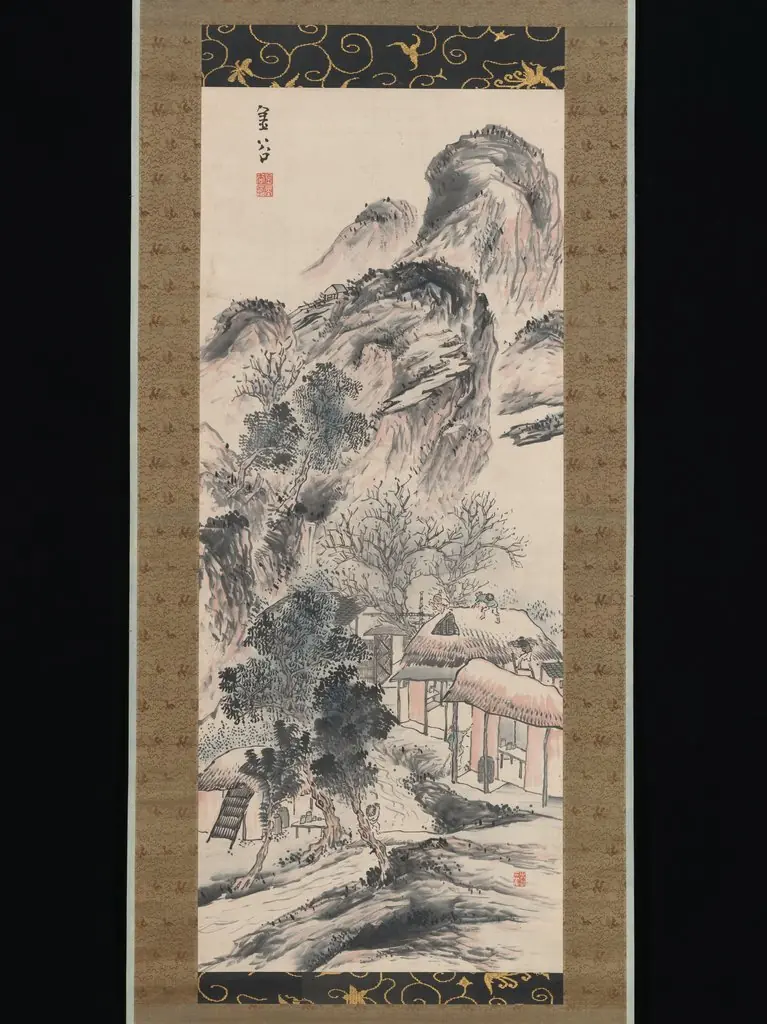 Spring Cleaning
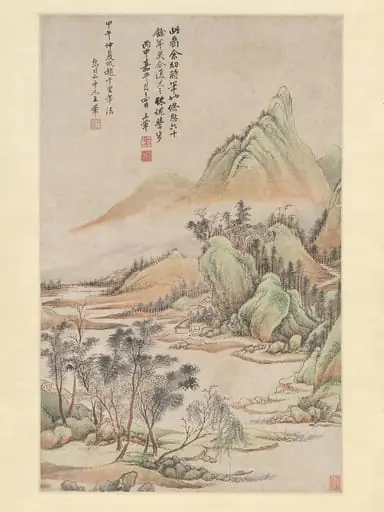 倣趙伯駒山水圖 軸|Landscape in the Style of Zhao Boju (Fang Zhao Boju shanshui)
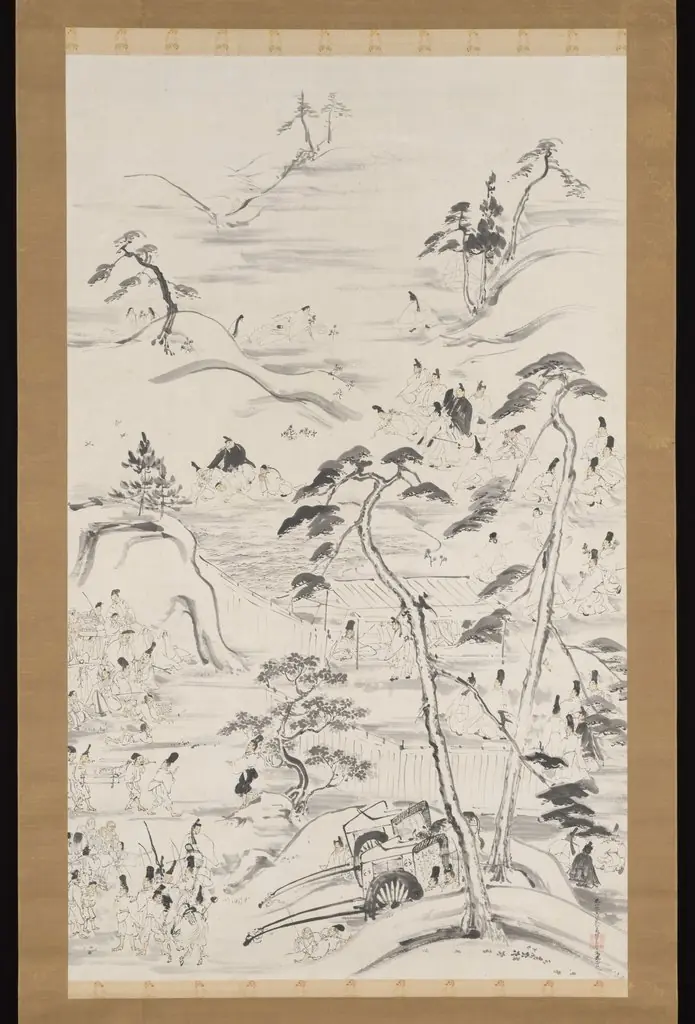 Emperor Enyū’s Outing to Funaokayama on the First Day of the Rat in the New Year
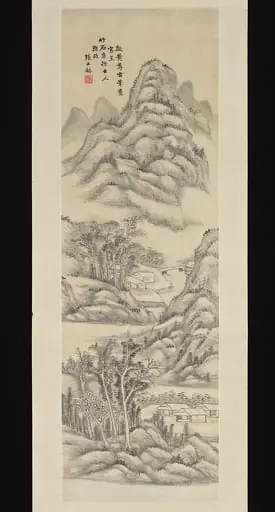 清 張上龢 山水 軸|Landscape
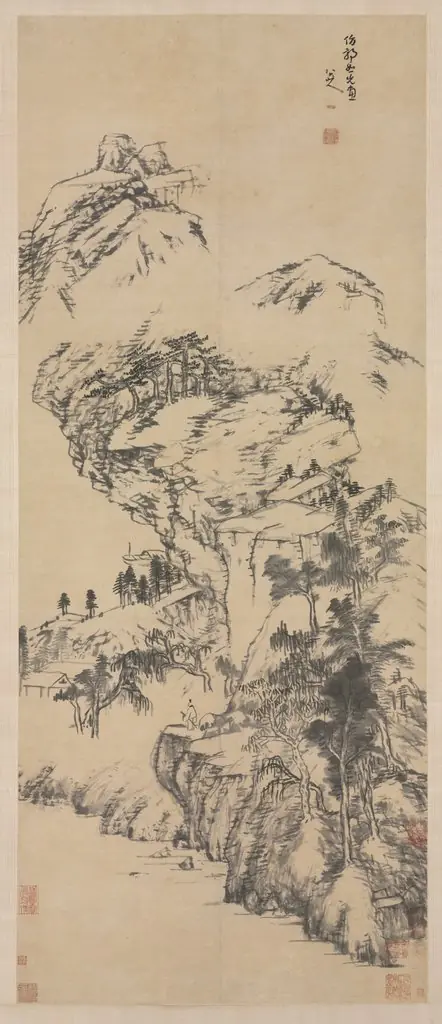 Landscape after Guo Zhongshu
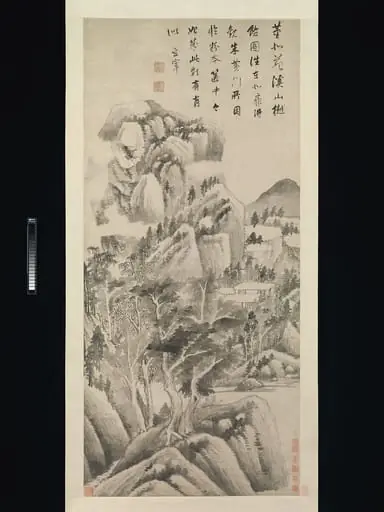 明 董其昌 溪山樾館圖 軸|Shaded Dwellings among Streams and Mountains
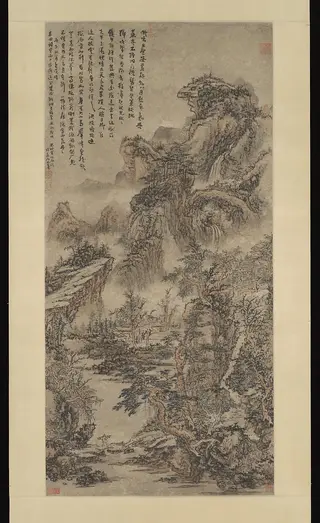 清 倣髡殘 蒸嵐昏巒圖 軸|Wooded Mountains at Dusk
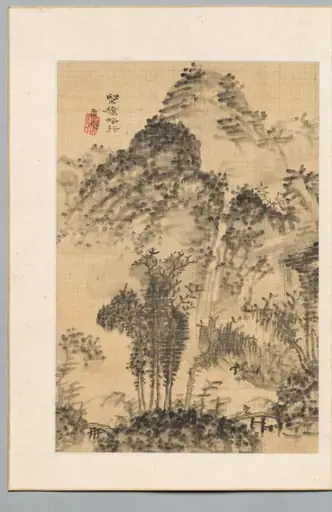 Wild Bridge, Poet's Walk
 清 王原祁 倣吳鎮山水圖 軸|Landscape after Wu Zhen
 Untitled