Artwork
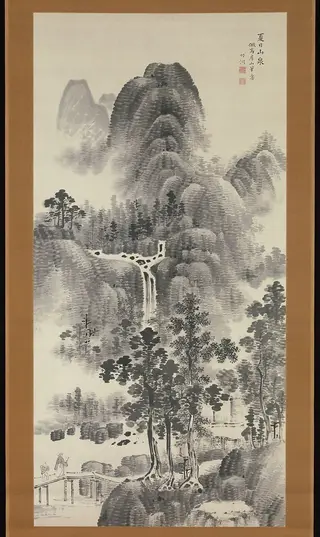
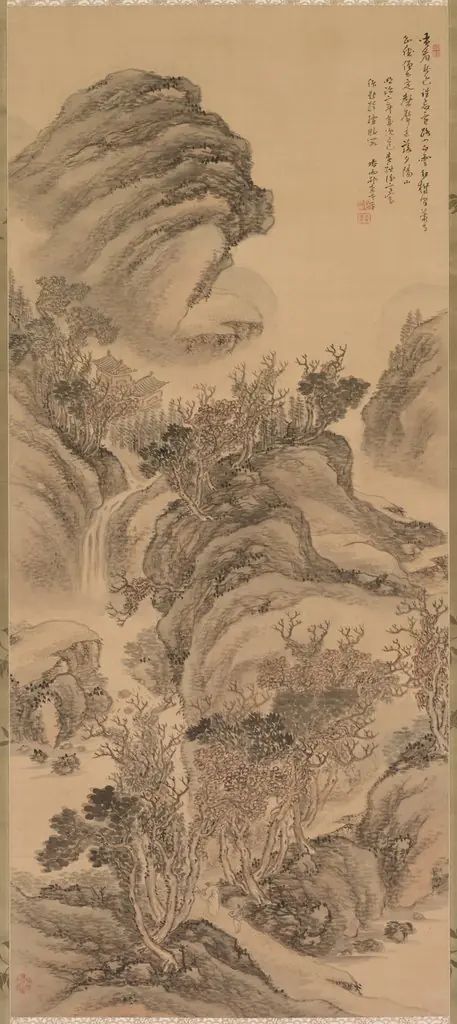
Waterfall in Summer Mountain (Kazan hisen zu) 夏山飛泉図
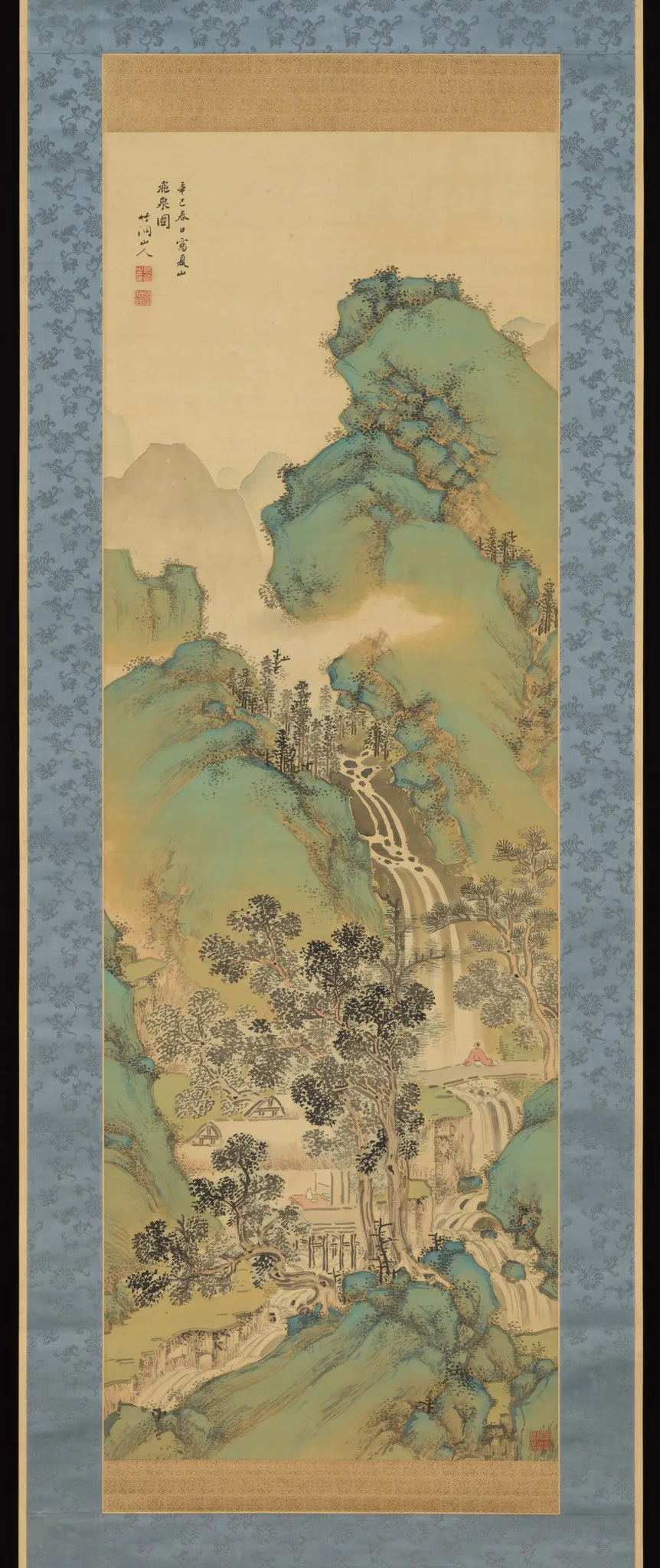
Waterfall in Summer Mountain (Kazan hisen zu) 夏山飛泉図 is an unspecified painting by the Nanga artist Chikutō Nakabayashi. It dates from 1821 and is held in the collection of the Metropolitan Museum of Art.
About this work
History & Provenance
The painting Waterfall in Summer Mountain (Kazan hisen zu) by Nakabayashi Chikutō is held in the collection of the Metropolitan Museum of Art in New York. Created in 1821, the work originates from Japan and remains part of the museum's permanent holdings. The provided sources do not list a specific inventory or accession number, nor do they document any exhibition history for this specific piece.
Context
This work was created by Chikutō Nakabayashi in 1821, a date confirmed by multiple sources and contextualized within the broader production of Japanese painting during the Edo period. The painting is discussed in relation to Nakabayashi's broader oeuvre and his influence on later artists, situating it within the tradition of landscape subjects rendered with meticulous detail and atmospheric sensitivity. Its inclusion in the Metropolitan Museum of Art's collection underscores its significance as a representative example of early nineteenth-century Japanese art, reflecting both technical mastery and cultural engagement with natural themes.
Overview
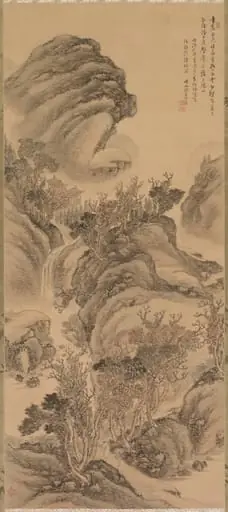
Created in 1821 by Chikutō Nakabayashi, a Japanese painter active in the nanga, or literati, tradition, this work portrays a summer mountain scene dominated by a cascading waterfall. The painting belongs to the collection of the Metropolitan Museum of Art and exemplifies the gentle palette and compositional balance typical of early‑nineteenth‑century Japanese landscape ink paintings.
Subject & Meaning
The composition centers on a steep mountain whose side is split by a multi‑layered waterfall, suggesting the movement of water through mist and rock. Scattered trees cling to the slopes, while a modest settlement at the base hints at human habitation within the natural setting, reflecting the nanga emphasis on harmonious coexistence between humanity and the landscape.
Technique & Style
Executed with delicate brushwork, the artist renders the water in overlapping strokes that convey both fluidity and texture. The rocks are delineated with fine lines, and the surrounding foliage is suggested through soft washes of green and blue. The overall effect relies on subtle tonal variations rather than bold coloration, aligning with the literati aesthetic of restrained expression.
Artist & collection
Artist
Nakabayashi Chikutō, originally Nariaki (Japanese:中林 竹洞; (1776, Nagoya - 27 April 1853, Kyoto) was a Japanese painter in the nanga style. His other art names include Chūtan (沖澹), Taigen’an (太原庵) and Tōzan Inshi (東山隠士).