Artwork
Coast View with Apollo and the Cumaean Sibyl
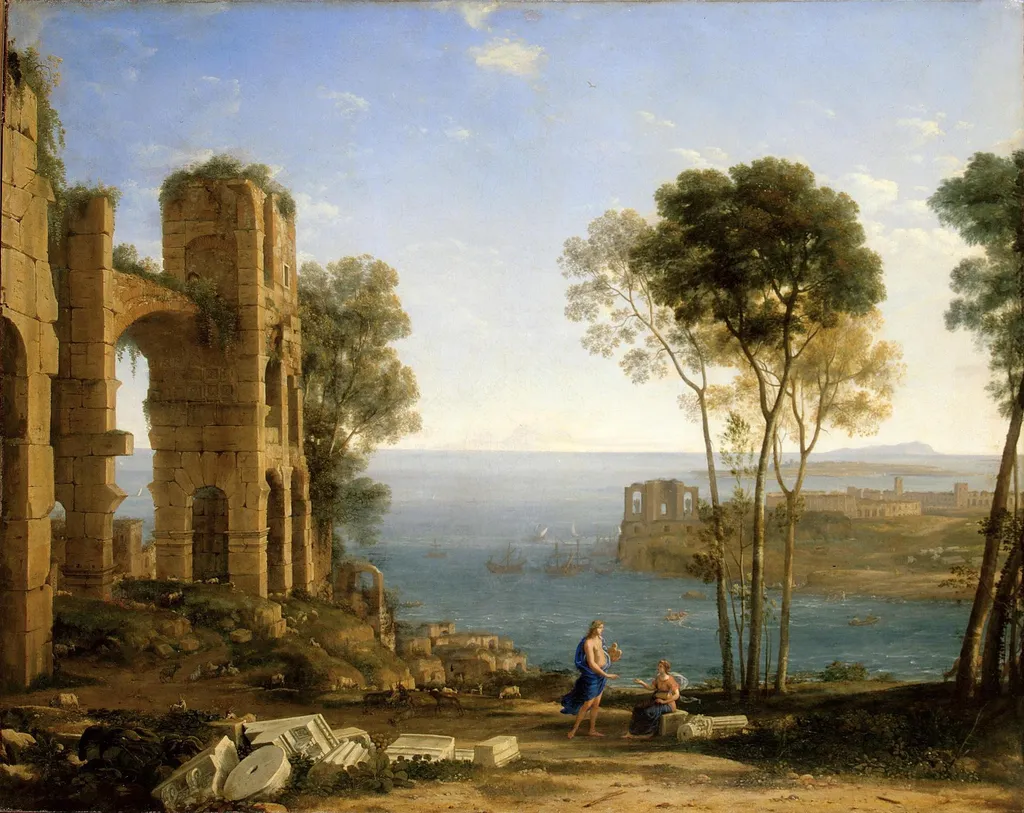
Coast View with Apollo and the Cumaean Sibyl is an oil painting by the French Classical Baroque artist Claude Lorrain. It dates from 1645 and is held in the collection of the Hermitage Museum.
About this work
Subject & Meaning
The painting illustrates a mythological narrative from Ovid's Metamorphoses, depicting the Cumaean Sibyl recounting her encounter with Apollo to Aeneas.
The painting illustrates a mythological narrative from Ovid's Metamorphoses, depicting the Cumaean Sibyl recounting her encounter with Apollo to Aeneas. In the story, the Sibyl requested a lifespan equal to the grains of dust in her hand but failed to ask for eternal youth. While often associated with the Bay of Baia, the landscape is largely imaginary, though it incorporates recognizable Roman ruins such as the Colosseum, the Aqua Marcia, and the Trophies of Marius.
In art historical interpretation, the work has been read through a Christian lens, where the Sibyl is viewed as a prophetess of Christ's birth and Apollo is perceived as a figure representing Christ himself. The human figures were executed by Filippo Lauri, while Claude Lorrain provided the landscape and composition.
Technique & Style
The work is an oil painting on canvas, measuring 99.5 cm by 127 cm, depicting the mythological scene of Apollo and the Cumaean Sibyl as described in Ovid's Metamorphoses. Figures in the composition are attributed to the hand of Filippo Lauri, while Claude Lorrain prepared the design in his Liber Veritatis (drawing no. 99). The painting was created circa 1646–1647 for Cardinal Massimi and later entered the collection of the Walpole family before being acquired by Empress Catherine II in 1778 and installed at the Hermitage Museum, where it remains on display in Room 280.
Technical examination notes the presence of the numbers '3414' painted in black at the lower right verso, referencing its 1859 inventory entry, and remnants of earlier extensions measuring 4.7 cm in width that were removed upon its transfer to the Hermitage.
History & Provenance
Claude Lorrain painted Coast View with Apollo and the Cumaean Sibyl around 1645–1647 on commission from Cardinal Massimi. After Massimi's death in 1677, the work passed to his brother Fabio Massimi, who sold it in 1678 to the Marquis Nicolo Maria Pallavicino in Rome. It later entered the collection of Sir Robert Walpole, who acquired it in 1725 and displayed it at his residence on Arlington Street in London; subsequently it was housed at 10 Downing Street from 1828 and remained in the Walpole family estate at Houghton Hall.
In 1778 the Walpole heirs sold the entire collection to Empress Catherine II, and since 1779 the painting has been part of the Hermitage Museum's holdings in Saint Petersburg, where it is exhibited in Room 280 of the Winter Palace. The canvas measures 99.5 cm in height and 127 cm in width, and its verso bears the inventory number 3414, indicating its inclusion in the Imperial Hermitage inventory in 1859.
The painting is housed in the Hermitage Museum, Saint‑Petersburg, where it entered the imperial inventory in 1859 under number 3414. Formerly part of the Walpole collection, the work retains traces of the 4.7 cm side extensions added while in that ownership before they were removed upon arrival at the Hermitage. Although the canvas was not lent to the major Claude Lorrain retrospective held at the National Gallery of Art, Washington (1982‑83) and the Grand Palais, Paris (1982‑83), it was discussed in the exhibition catalogue.
Context
The painting Coast View with Apollo and the Cumaean Sibyl was created around 1645–1647 for Cardinal Massimi, who also commissioned Landscape with Argus Guarding Io, forming a thematic pair. After Massimi's death in 1677, the work passed to his brother Fabio and was sold in 1726 to Sir Robert Walpole, entering the Walpole collection at Houghton Hall. It remained in the family until 1778, when it was acquired by Empress Catherine the Great and entered the Hermitage collection, where it has been displayed since 1779 in Room 280 of the Winter Palace.
The composition draws on Ovid’s Metamorphoses, depicting the Sibyl of Cumae recounting her encounter with Apollo, with the Sibyl requesting a lifespan equal to the grains of dust she holds, omitting eternal youth. Lorrain typically avoided depicting actual landscapes, yet this work incorporates recognizable Roman antiquities, including the Colosseum, the Arch of Marcius, and the Trophies of Marius, alongside an inscription fragment with partial numerals '...6...2...'. The verso bears the number '3414', marking its inclusion in the Imperial Hermitage inventory in 1859.
Figures in the painting are attributed to Filippo Lauri, and the work is documented in Lorrain’s Liber Veritatis as drawing no. 99.
Legacy
The painting has been treated as one half of a pair with Claude Lorrain's Landscape with Argus Watching Io, both commissioned by Cardinal Massimi, and the two works are commonly considered together in the literature on the artist. The composition is documented in the artist's Liber Veritatis as drawing no. 99, and in 1777 Richard Earlom engraved the Liber Veritatis drawings, including this subject, helping to disseminate Lorrain's designs to a wider audience. The painting was included in the 1982–1983 retrospective of Claude Lorrain organized at the National Gallery of Art in Washington and the Grand Palais in Paris, where the Hermitage canvas was not exhibited but was discussed in Diana Roussel's synthesis article, which reinterpreted the Cumaean Sibyl and Apollo subject within the Christian tradition of the Sibyl as a prophet of Christ's birth.
Overview
Claude Lorrain, a French painter who spent most of his career in Italy, completed the oil canvas Coast View with Apollo and the Cumaean Sibyl in 1645. The work combines an expansive seascape with a small mythological vignette, and it is presently part of the collection of the State Hermitage Museum.
Own this work as a print
Artist & collection
Artist
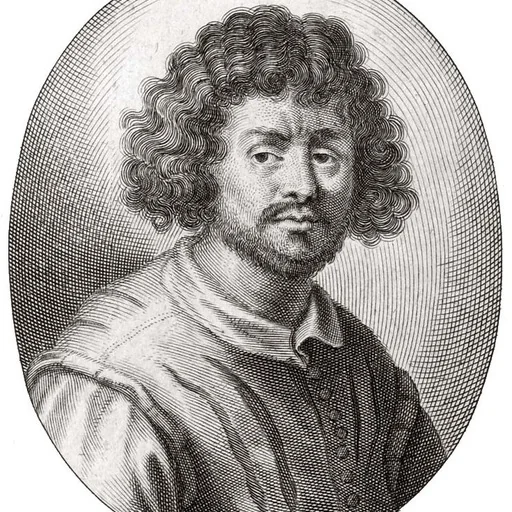
Claude Lorrain (French:; born Claude Gellée, called le Lorrain in French; traditionally just Claude in English; c.

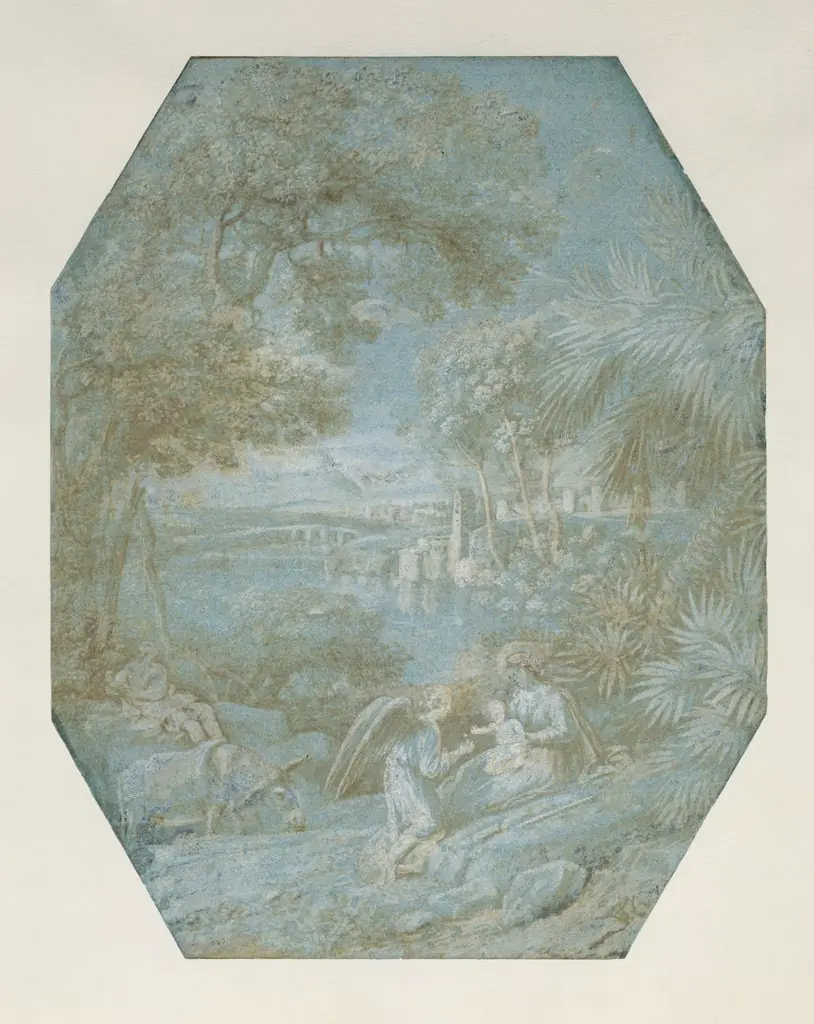
 A Seaport at Sunrise
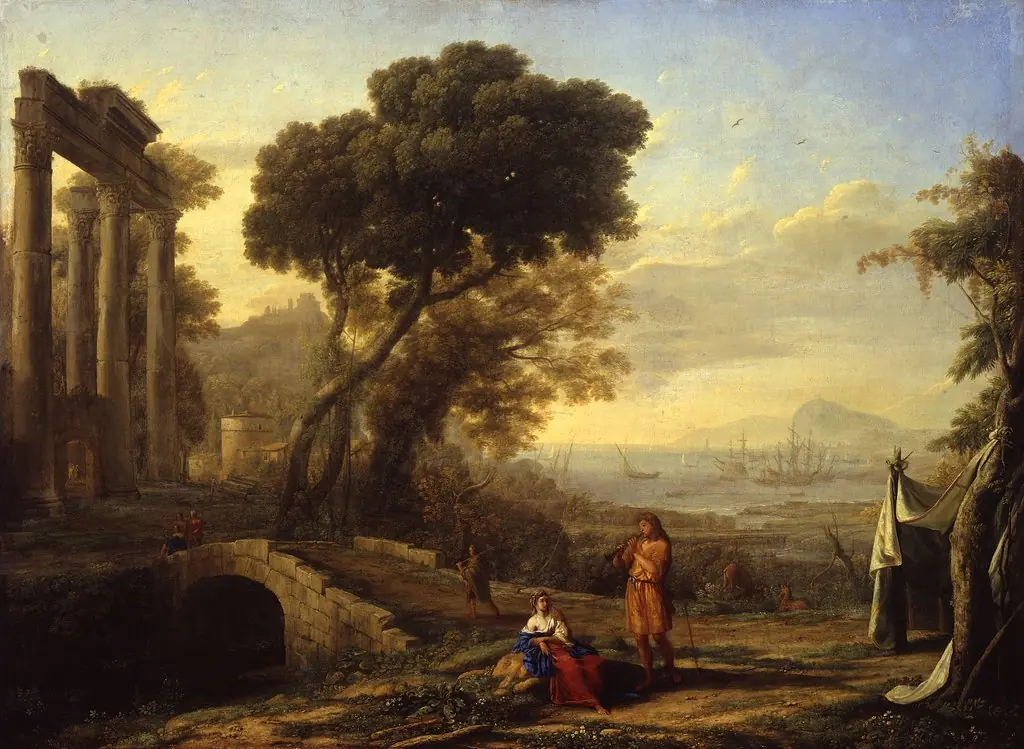 Italian Coastal Landscape
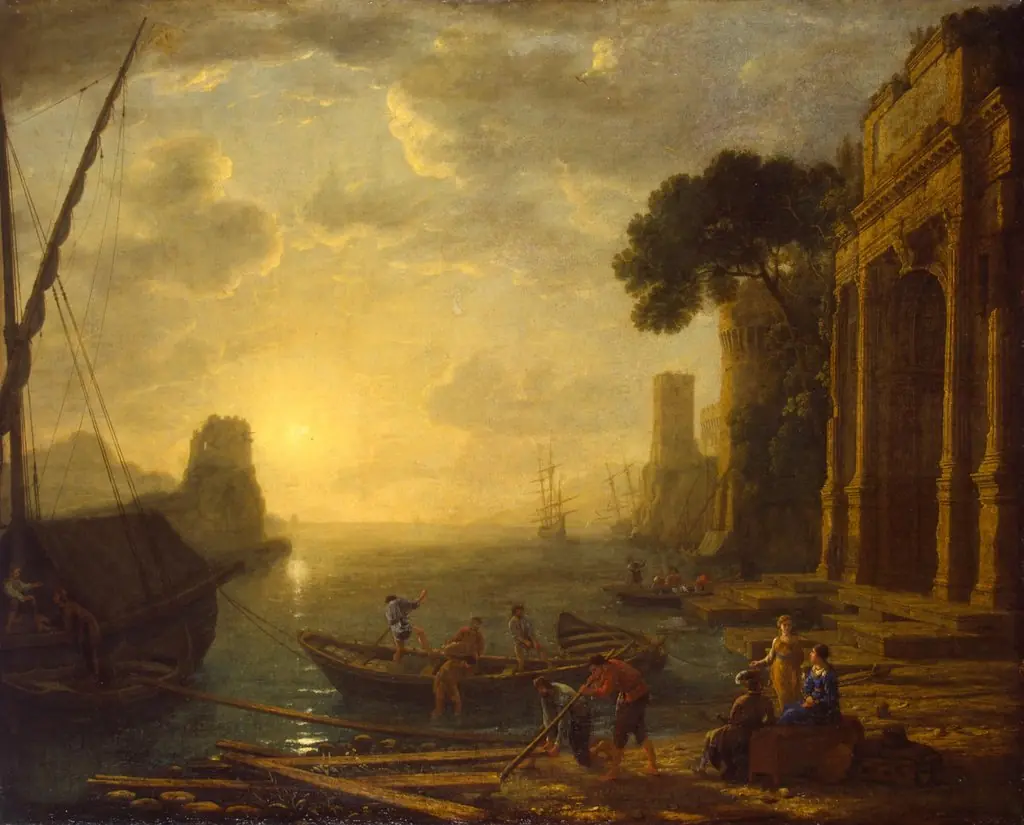 Harbour at Sunset
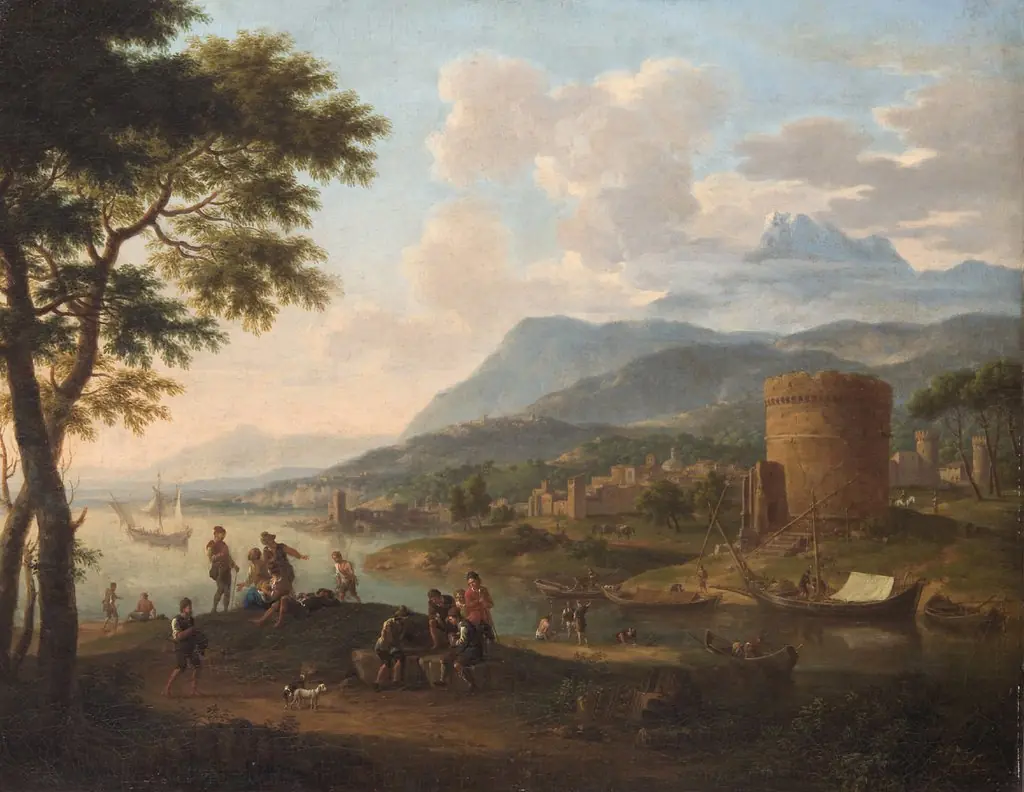 Italienische Abendlandschaft
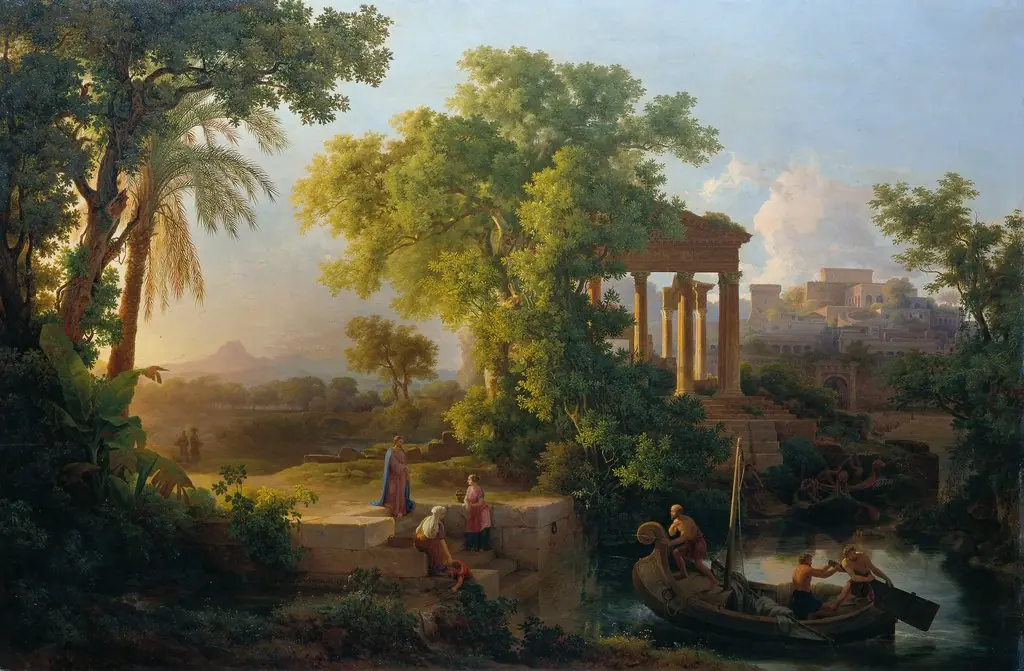 Landscape with the Vocation of St Peter
 Landscape with Saint John on Patmos
 Landscape with the Burial of Saint Serapia
 Evening at the Harbour
 The Banishment of Hagar
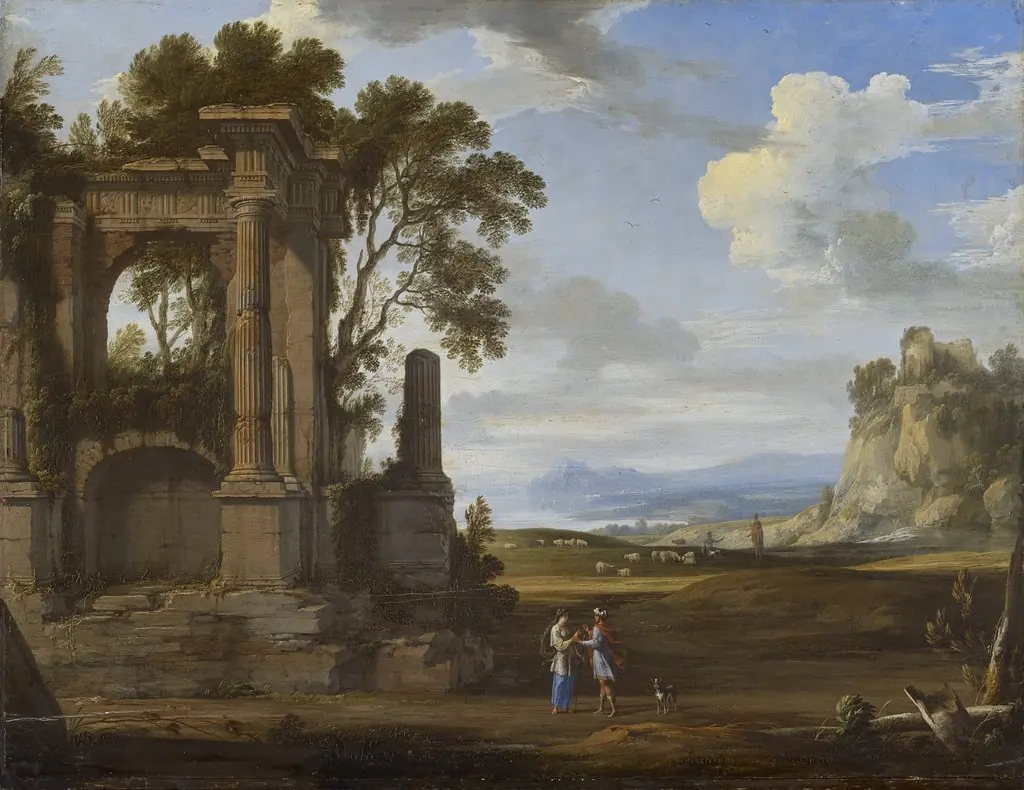 A Classical Landscape with Judah and Tamar
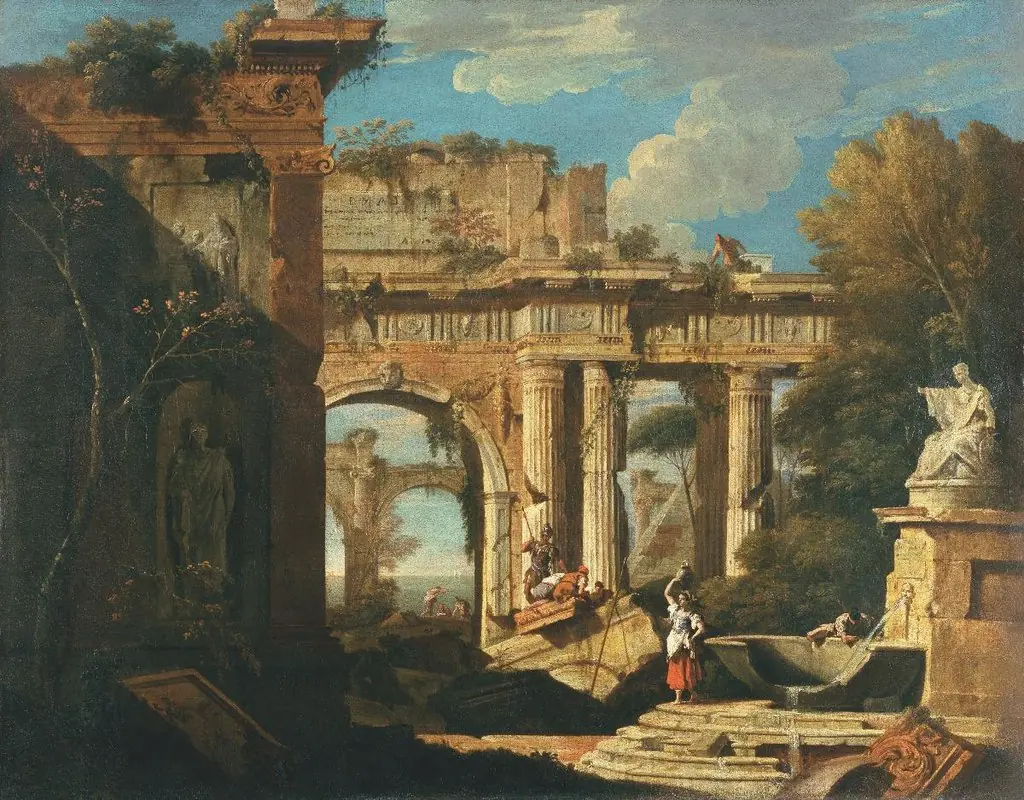 Capriccio con rovine romane
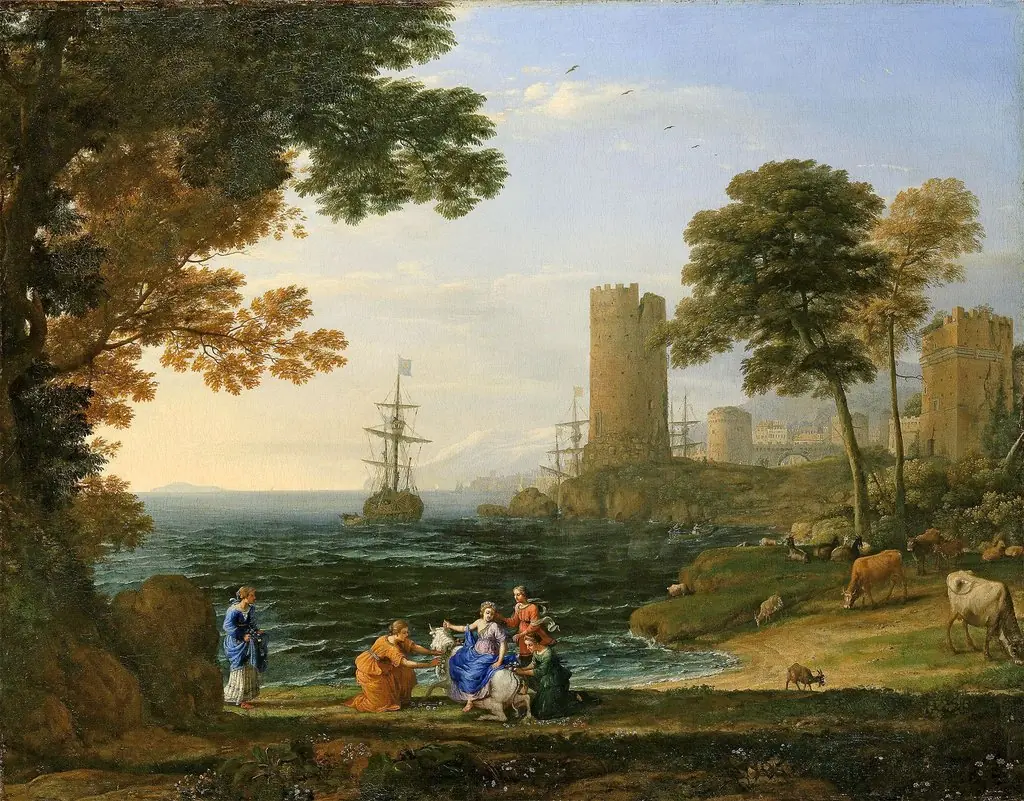
- Coast View with the Abduction of Europa