Artwork
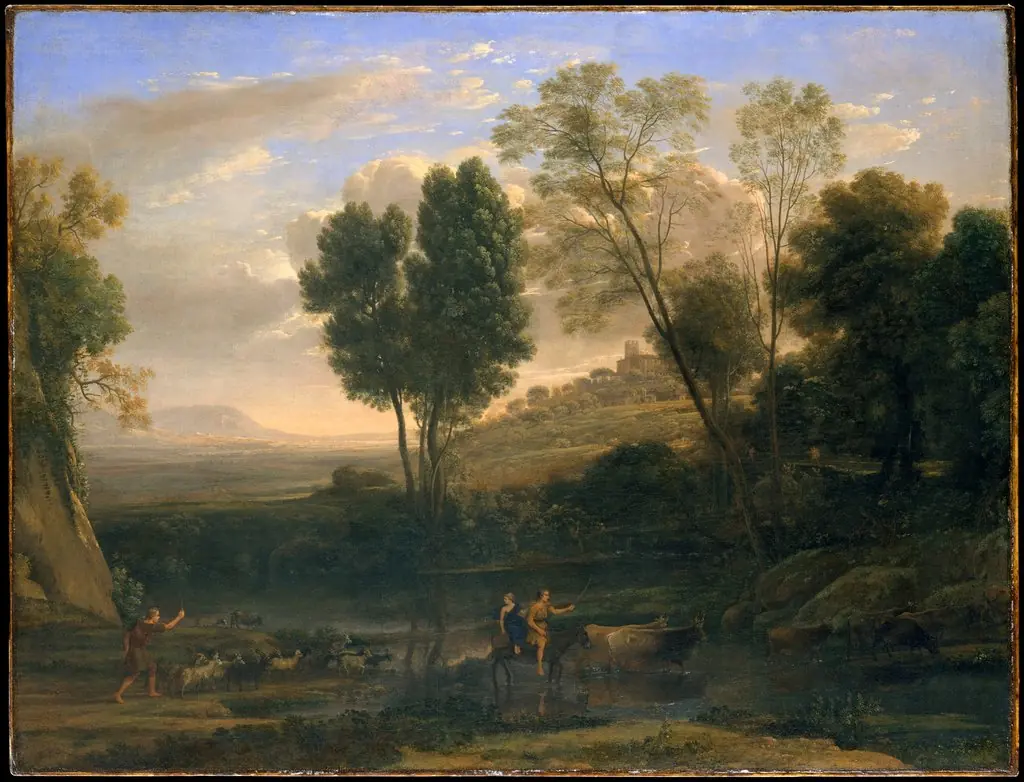
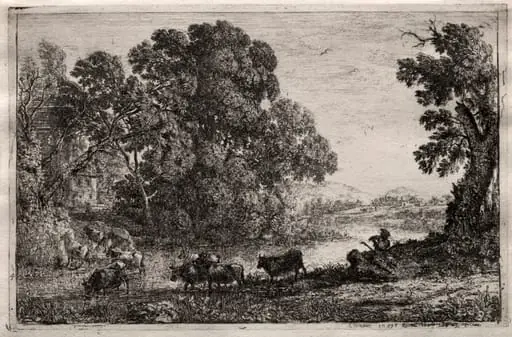
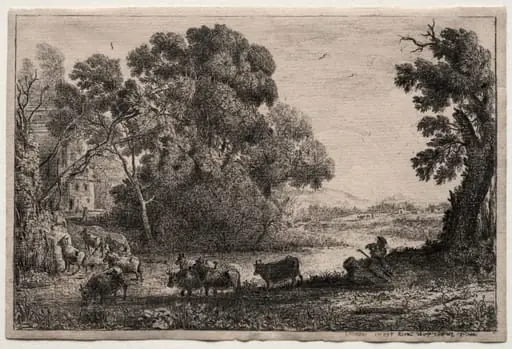
Le Passage du gué
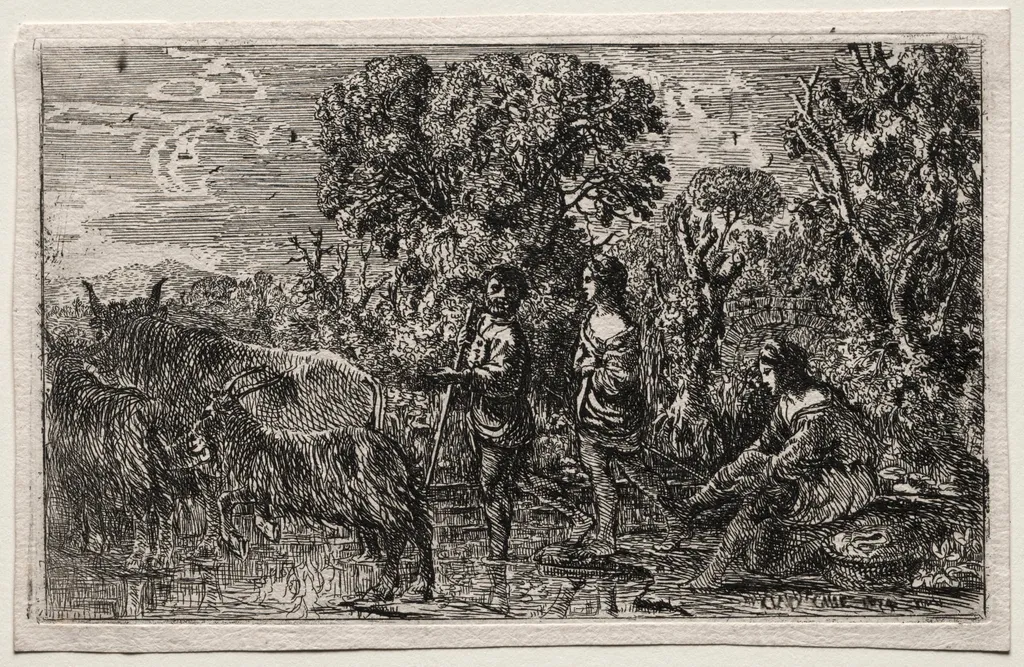
Le Passage du gué is a print by the Baroque artist Claude Lorrain. It dates from 1634 and is held in the collection of the Cleveland Museum of Art.
- Accession no.
- 1968.264
- Credit line
- Gift of Mr. and Mrs. David L. Grund in honor of Florence Fuller Grund
About this work
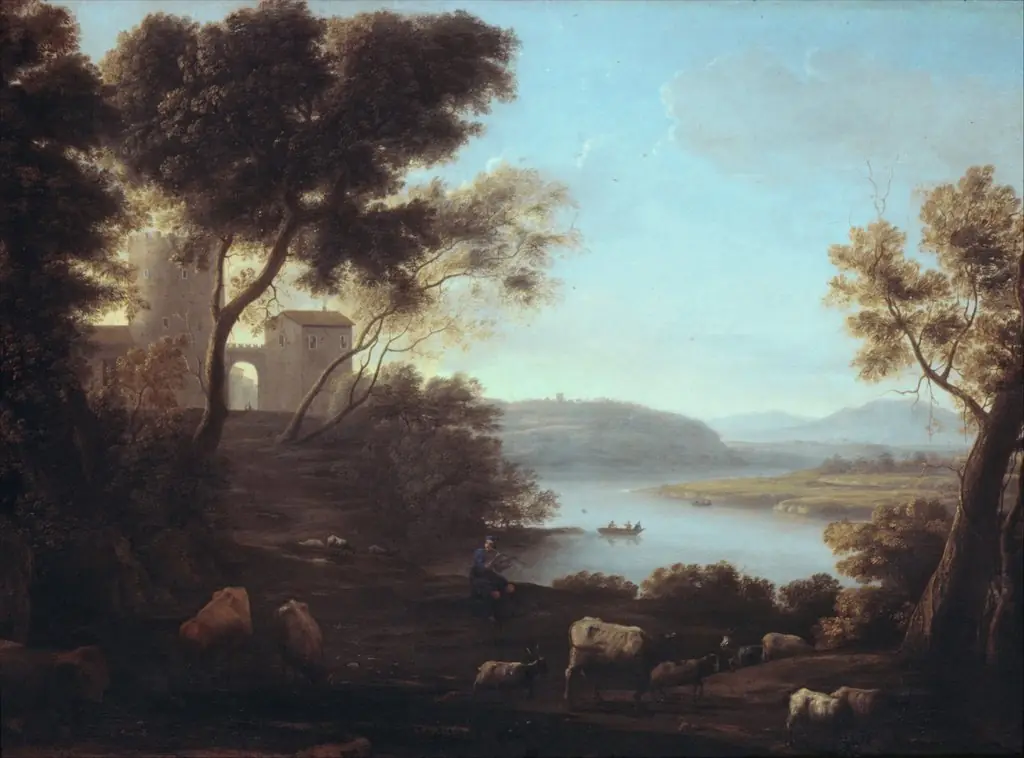
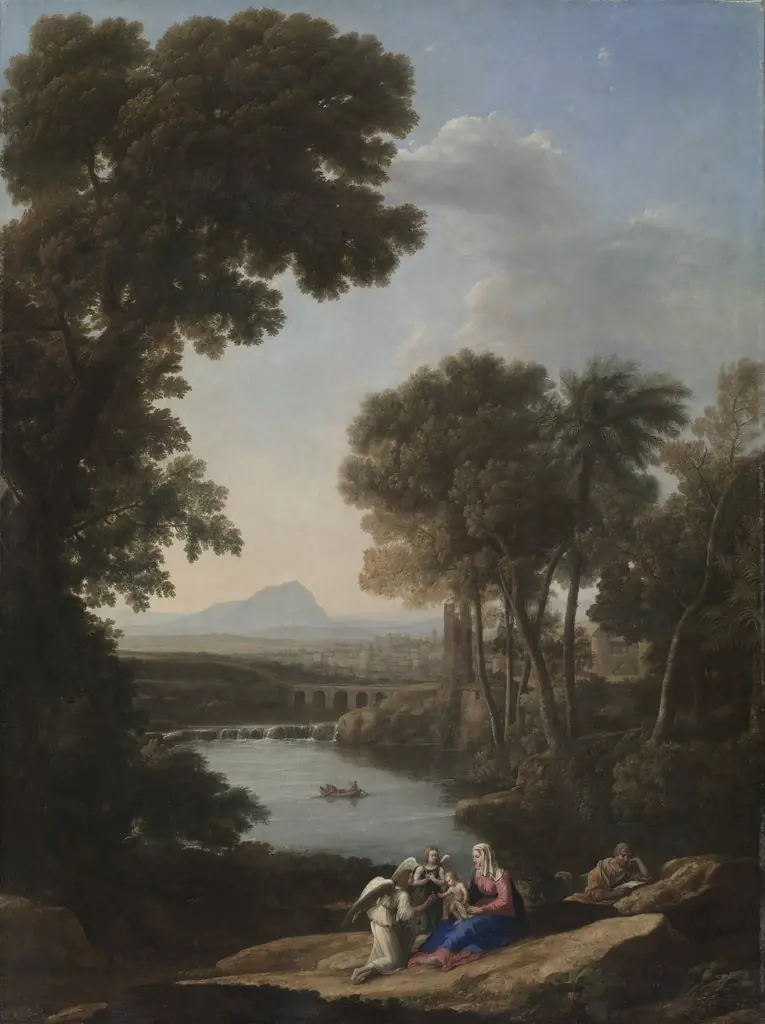
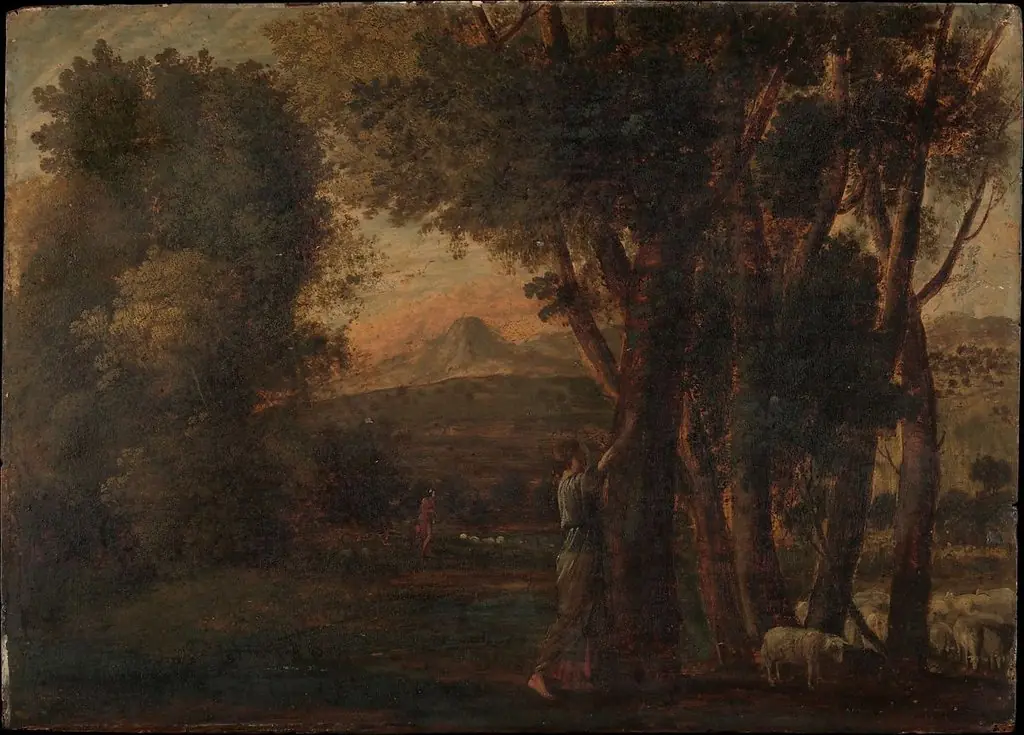
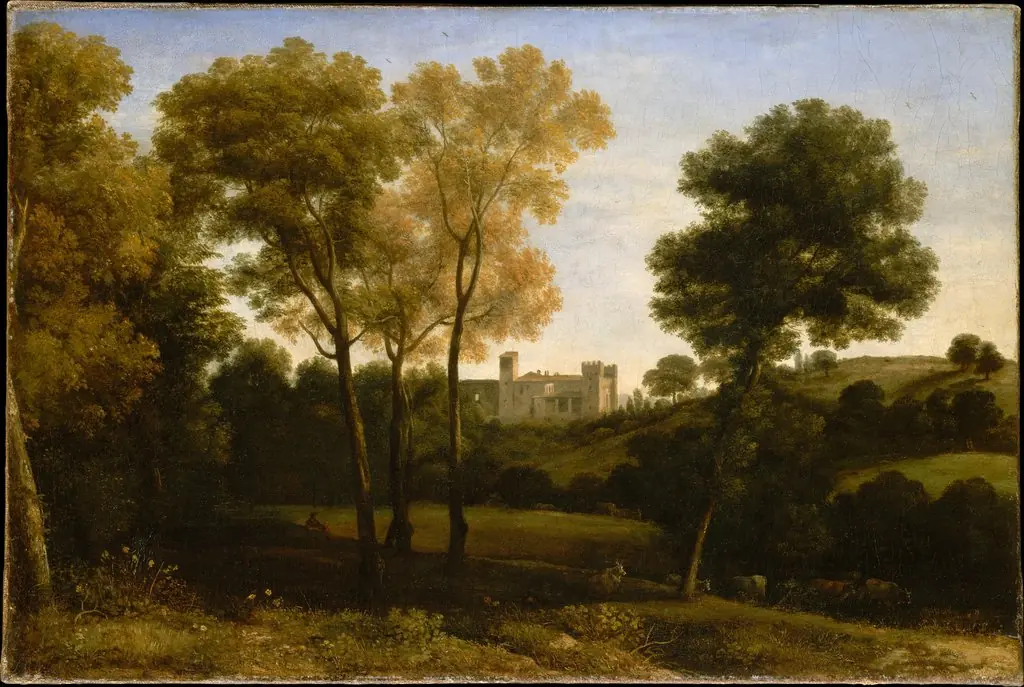
Claude Lorrain painted Le Passage du gué in 1634. A river cuts a bright path through a lush valley. Cattle wade across shallow water. Trees and hills frame the scene, bathed in golden light.
Lorrain was famous for how he painted light. The sun feels warm here, almost real. Look at the soft glow on the cows’ backs.
This style influenced later artists. Search for “Claude Lorrain (French, 1604–1682)”.
Overview
Though modest in scale, the work reflects his broader practice of embedding human activity within harmonious, idealized nature.
Claude Lorrain, born in the Duchy of Lorraine and active in Rome, produced Le Passage du gué in 1634 as a landscape print that blends natural observation with classical serenity. The scene captures a quiet river crossing, where figures and animals move through a sunlit valley. Though modest in scale, the work reflects his broader practice of embedding human activity within harmonious, idealized nature.
Subject & Meaning
The print portrays a rural river crossing, with travelers and cattle navigating shallow waters under soft daylight. No specific myth or biblical story is named, yet the composition evokes timeless pastoral peace. The figures are small, subordinate to the landscape, suggesting a contemplative relationship between humans and the natural world rather than narrative drama.
Technique & Style
Lorrain employed delicate tonal gradations to render light as a structural element, not merely an effect. The golden glow across the water, trees, and animal hides is achieved through subtle ink washes and precise line work, creating depth and atmosphere. His handling of light, warm, diffused, and directional, distinguishes this work as a study in luminous harmony.
History & Provenance
Created in 1634, the print entered the Cleveland Museum of Art’s collection as part of its broader holdings of European prints and drawings. Its provenance traces through private European collections before its acquisition in the 20th century. The work’s survival in good condition reflects its enduring appeal among collectors of 17th-century landscape art.
Context
In mid-17th-century Rome, landscape painting was evolving beyond mere backdrop to become a subject in its own right. Lorrain’s approach, blending observed nature with idealized composition, aligned with classical ideals promoted by academic circles. His prints, though less celebrated than his paintings, circulated widely and shaped contemporary perceptions of the picturesque.
Legacy
Lorrain’s treatment of light and atmospheric perspective influenced generations of landscape artists, particularly in 18th-century England. Le Passage du gué exemplifies his ability to convey tranquility through subtle gradations, a model later adopted by Turner and others. The print remains a quiet testament to his role in redefining landscape as a vehicle for mood and memory.
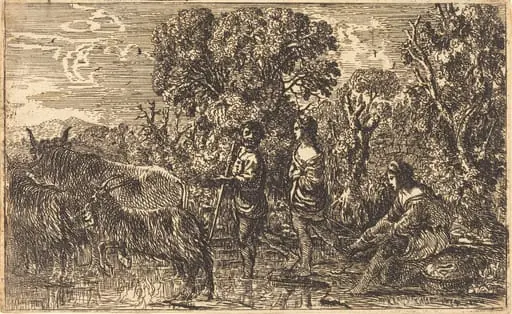
Own this work as a print
Artist & collection
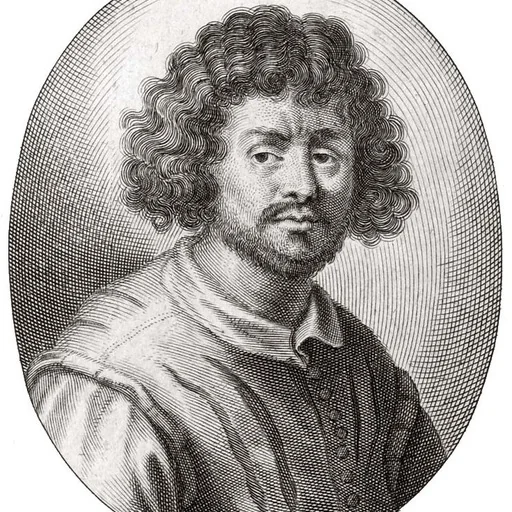
Artist
Claude Lorrain (French:; born Claude Gellée, called le Lorrain in French; traditionally just Claude in English; c.