Artwork
View of the Acqua Acetosa (recto); David and Goliath (verso)
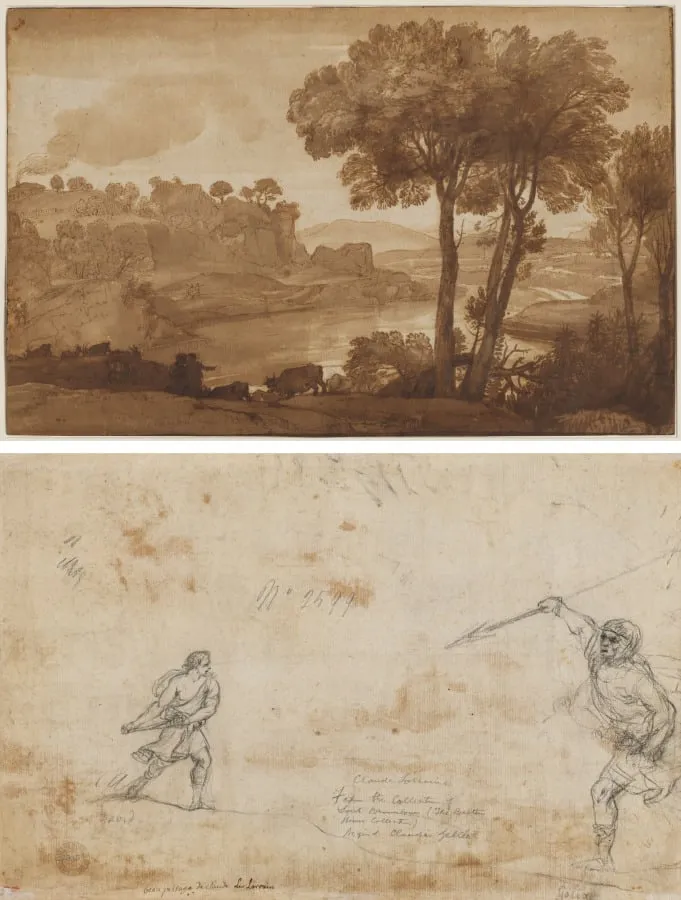
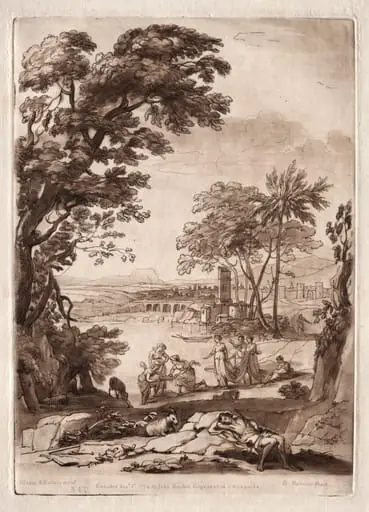
View of the Acqua Acetosa (recto); David and Goliath (verso) is a drawing by the Baroque artist Claude Lorrain. It dates from 1645 and is held in the collection of the Cleveland Museum of Art. This drawing depicts a serene landscape near Rome, featuring the Acqua Acetosa mineral spring, a site renowned for its healing properties.
- Accession no.
- 1928.15
- Credit line
- Gift of Mr. and Mrs. Edward B. Greene
About this work
Overview
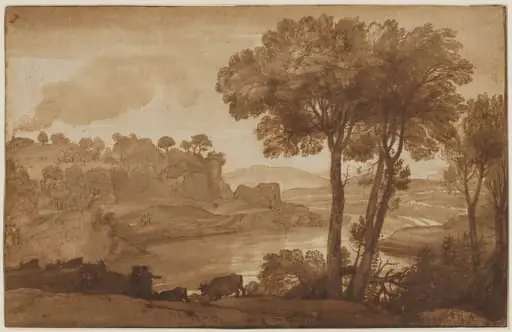
This drawing depicts a serene landscape near Rome, featuring the Acqua Acetosa mineral spring, a site renowned for its healing properties. The work is characterized by a harmonious blend of naturalistic detail and imaginative interpretation.
Subject & Meaning
The scene represents a tranquil riverside setting, with figures collecting water from the spring. The artist's rendering of the location is not a straightforward representation, but rather an idealized vision of an Arcadian world.
Technique & Style
Executed in pen-and-ink and wash, the drawing showcases the artist's mastery of chiaroscuro, a technique that emphasizes contrasts between light and dark. The use of this medium allows for a soft, golden quality that pervades the landscape.
History & Provenance
The drawing is the work of Claude Lorrain, a French-born artist who spent his career in Rome, producing numerous landscapes and drawings of the Roman Campagna and Neapolitan coastline. The verso of the sheet features a sketch of David and Goliath.
Artist & collection
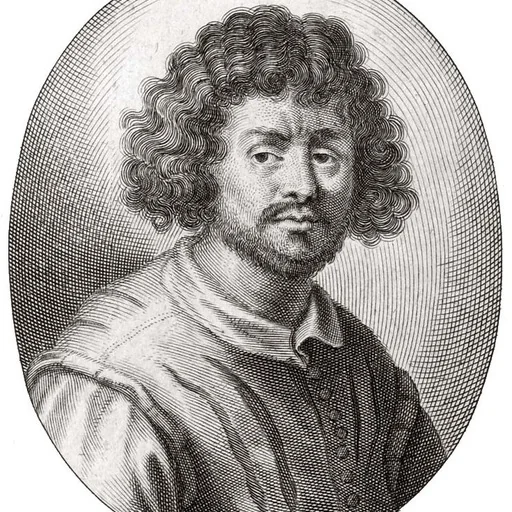
Artist
Claude Lorrain (French:; born Claude Gellée, called le Lorrain in French; traditionally just Claude in English; c.

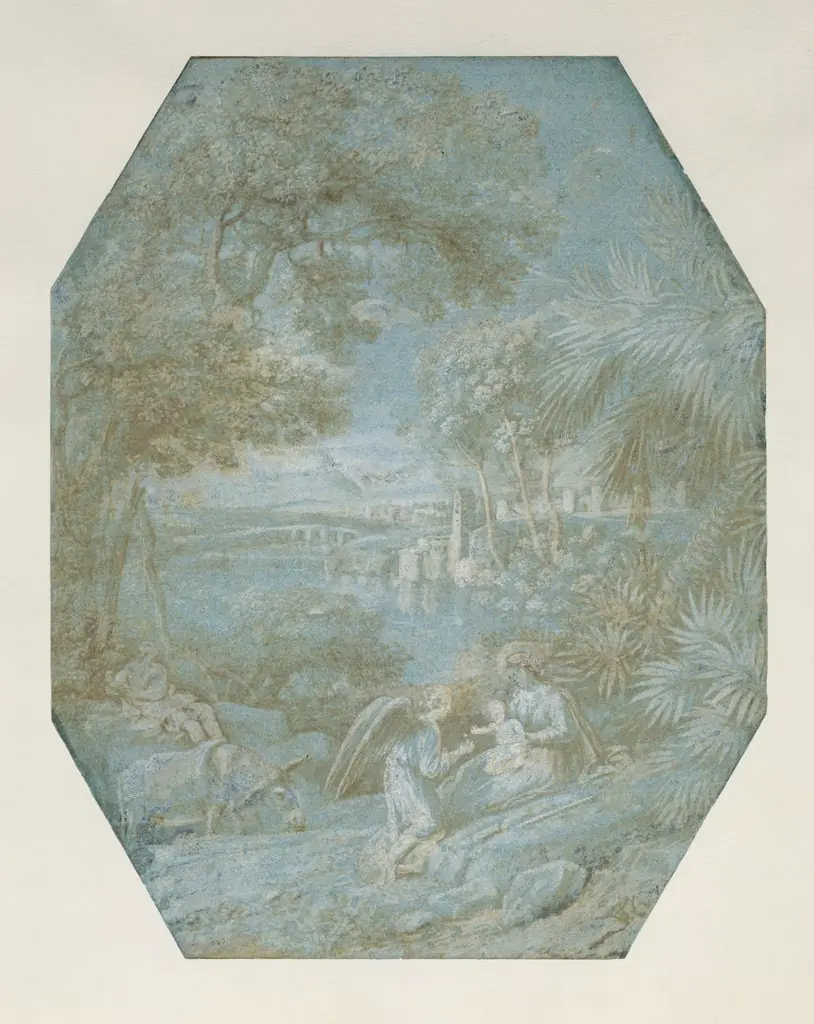
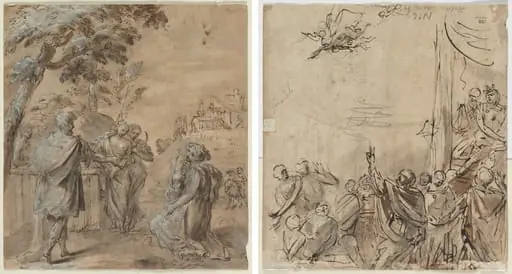 Ruth and Boaz (recto) The Fall of Simon Magus (verso)
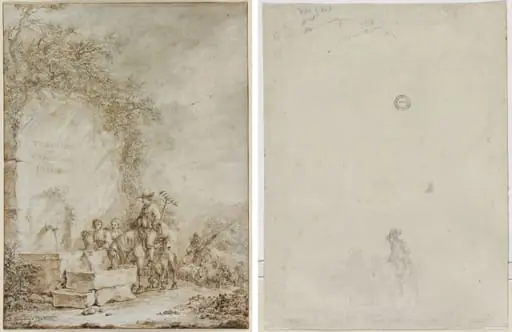 Frontispiece for an Album of Drawings: Peasants at a Fountain (recto); Sketch of Peasants at a Fountain (verso)
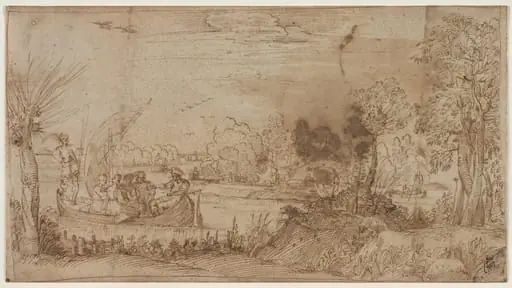 River Landscape with Boats
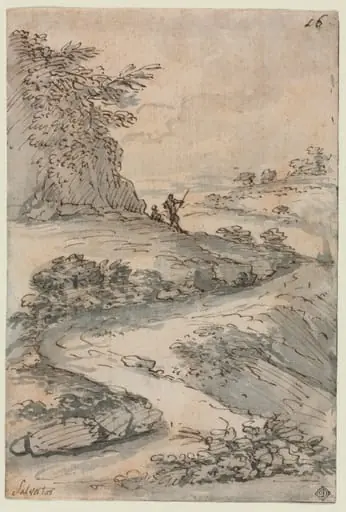 Figures on a Winding Road
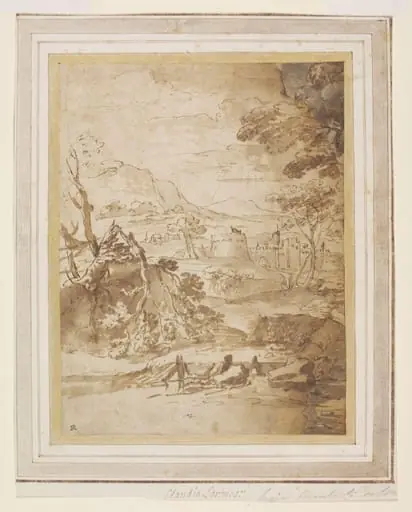 Untitled
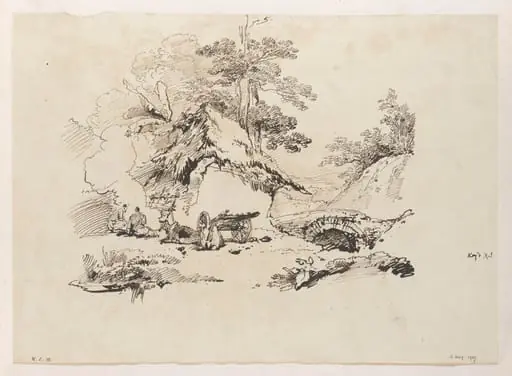 A Bengal landscape with a village dwelling
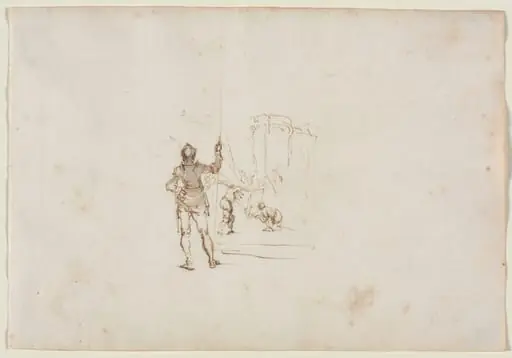 Detail of Martyrdom of Saint John the Evangelist, after Callot
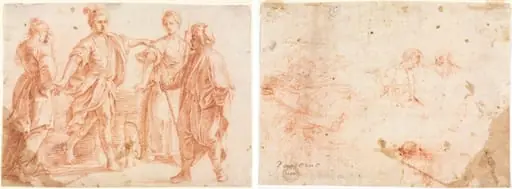 Jacob and Laban with Rachel and Leah (recto); Sketch of Two Men and Other Various Figures (verso)
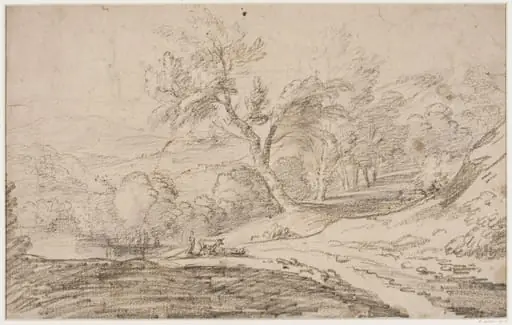 Landscape with lake
 Liber Veritatis: No. 47, A River Scene with the Finding of Moses