Artwork
Bordighera
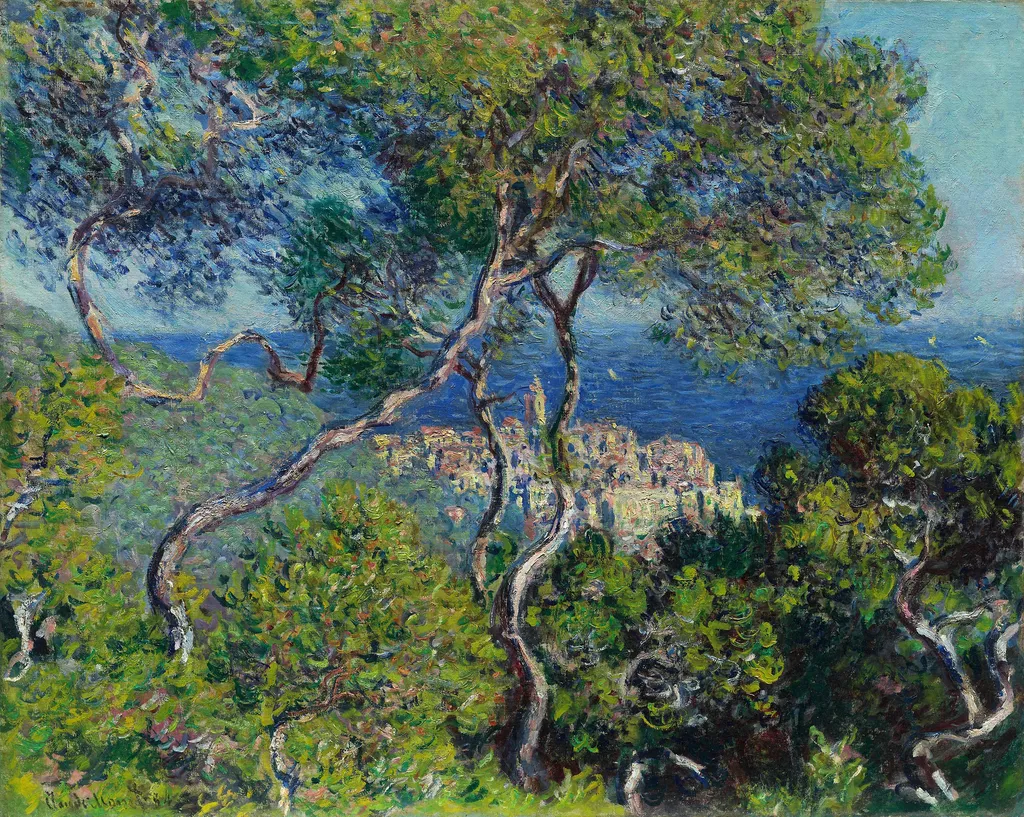
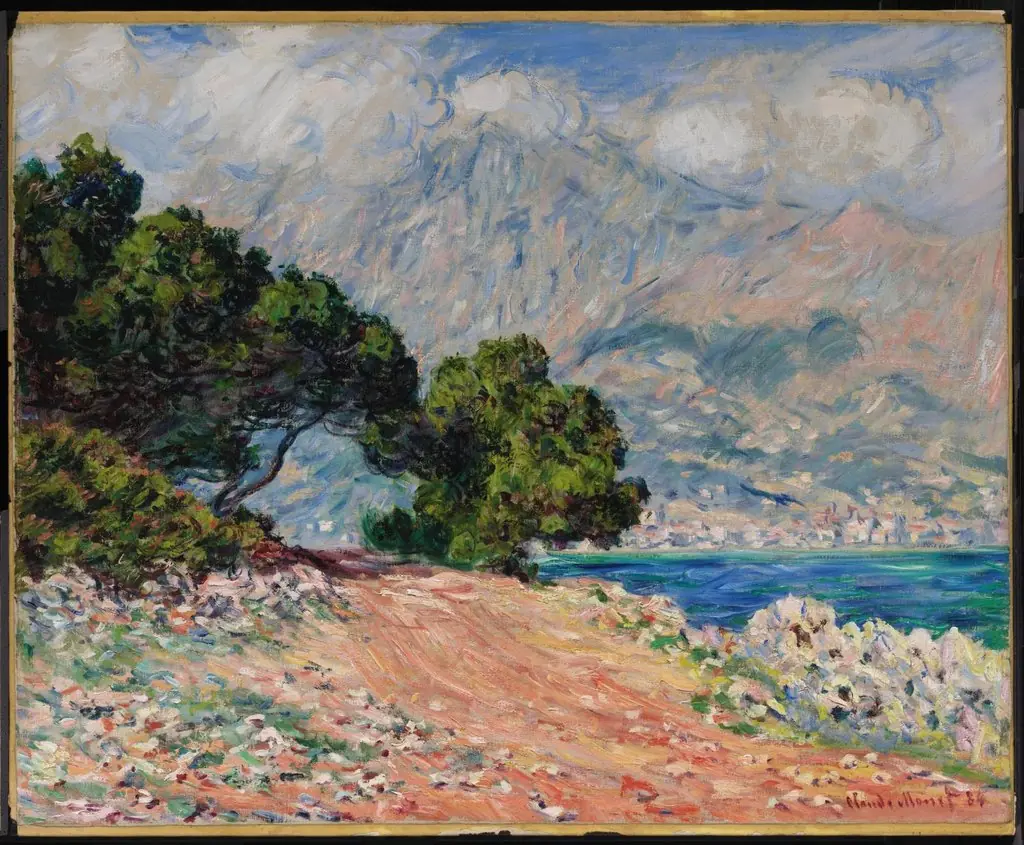
Bordighera is an oil painting by the Impressionist artist Claude Monet. It dates from 1892 and is held in the collection of the Art Institute of Chicago.
About this work
Subject & Meaning
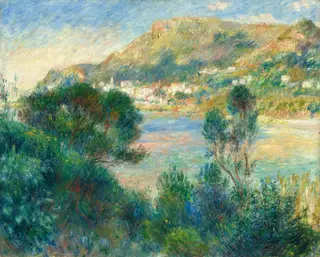
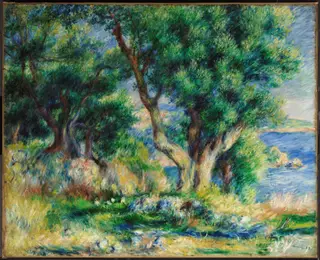
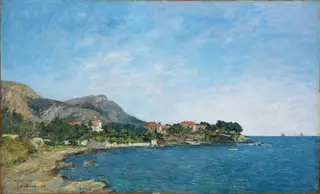
The painting depicts the coastal town of Bordighera on the Ligurian Sea, showing its villas, trees, and the expansive blue sky typical of the Riviera landscape.
The painting depicts the coastal town of Bordighera on the Ligurian Sea, showing its villas, trees, and the expansive blue sky typical of the Riviera landscape. Monet renders the scene with his characteristic Impressionist focus on light and atmosphere, capturing the fleeting effects of sunlight on the sea and foliage. Rather than a narrative or symbolic tableau, the work represents the picturesque beauty and tranquil ambiance of the Mediterranean coast, reflecting the artist’s interest in portraying natural settings as they appear in a specific moment.
Technique & Style
The work is an oil painting executed on canvas, measuring 25.5 cm in height by 32 cm in width. Monet applied oil paint to depict the landscape of Bordighera, capturing the Ligurian Sea, blue sky, and the villas and trees along the Riviera. The handling of brushwork and color reflects Impressionist techniques, emphasizing atmospheric effects and the play of light.
The composition centers on the coastal architecture and vegetation, rendered with loose yet deliberate strokes characteristic of Monet’s plein‑air practice. The painting is part of the Potter Palmer Collection at the Art Institute of Chicago.
History & Provenance
Painted in 1884, this landscape was created on site in Bordighera, Liguria, and depicts the village's villas and coastal scenery. Monet executed the work for the American collector Potter Palmer, who commissioned it as part of his growing Impressionist holdings. After its completion, the painting entered Palmer's personal collection before being donated to the Art Institute of Chicago, where it remains today.
The canvas measures 25.5 cm by 32 cm and is executed in oil on canvas. It was first exhibited at the Salon de Paris in 1884 and later featured in the 1886 Impressionist exhibition in Paris. The work was subsequently acquired by the Art Institute of Chicago and incorporated into the Potter Palmer Collection.
Monet's fascination with the luminous Mediterranean light informed the vibrant palette and loose brushwork characteristic of his late Impressionist period. The painting exemplifies his interest in capturing transient atmospheric effects in a single composition.
The painting is held by the Art Institute of Chicago under inventory accession as part of the Potter Palmer Collection. It was acquired through the legacy of Potter Palmer and remains on view in the museum's Impressionist galleries. Exhibition history includes its display in the 1884 Salon de Paris and later retrospectives at the Art Institute of Chicago highlighting Monet's Mediterranean series.
Overview
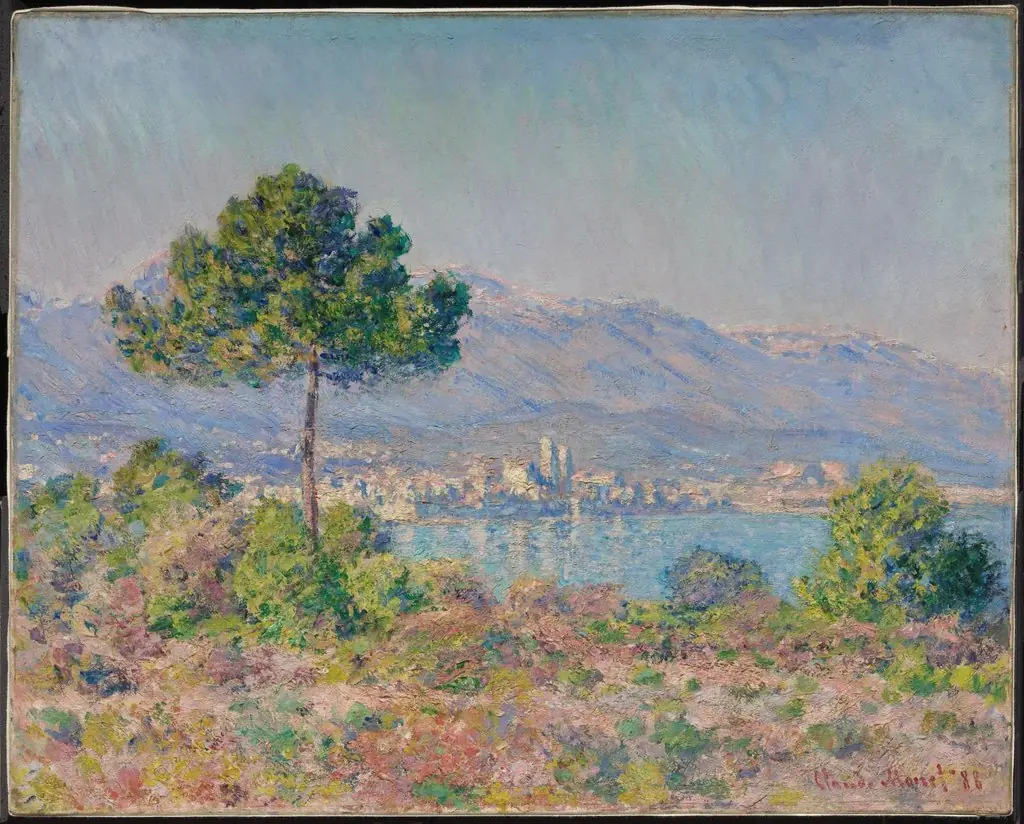
Claude Monet’s 1892 oil painting titled Bordighera captures a coastal scene on the Italian Riviera. The work presents a prominent, twisting tree framing a modest waterfront settlement beneath a pale blue sky. The composition balances natural foliage with the built environment, offering a snapshot of the Ligurian Sea’s shoreline as seen through Monet’s characteristic eye for light and atmosphere.
Context
Monet’s visit to the Italian Riviera followed his earlier explorations of French coastal sites, extending his investigation of water, sky, and foliage to a new geographic setting. The painting aligns with the broader Impressionist movement’s interest in plein‑air painting, capturing the specific atmospheric conditions of a Mediterranean summer.
Own this work as a print
Artist & collection

Artist
Oscar-Claude Monet was a French painter and founder of Impressionism who is seen as a key precursor to modernism, especially in his attempts to paint nature as he perceived it.