Artwork
Jerusalem Artichoke Flowers
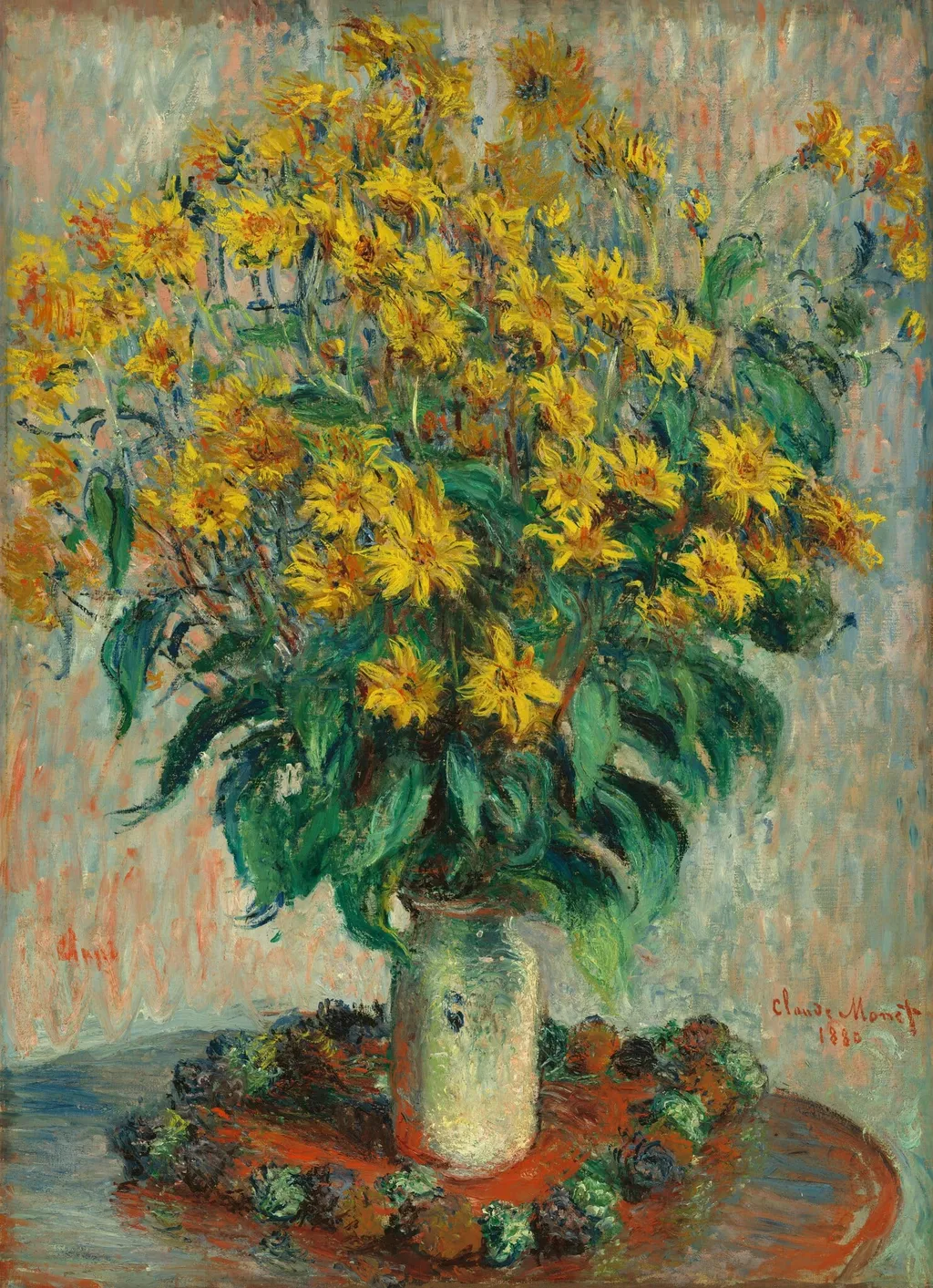
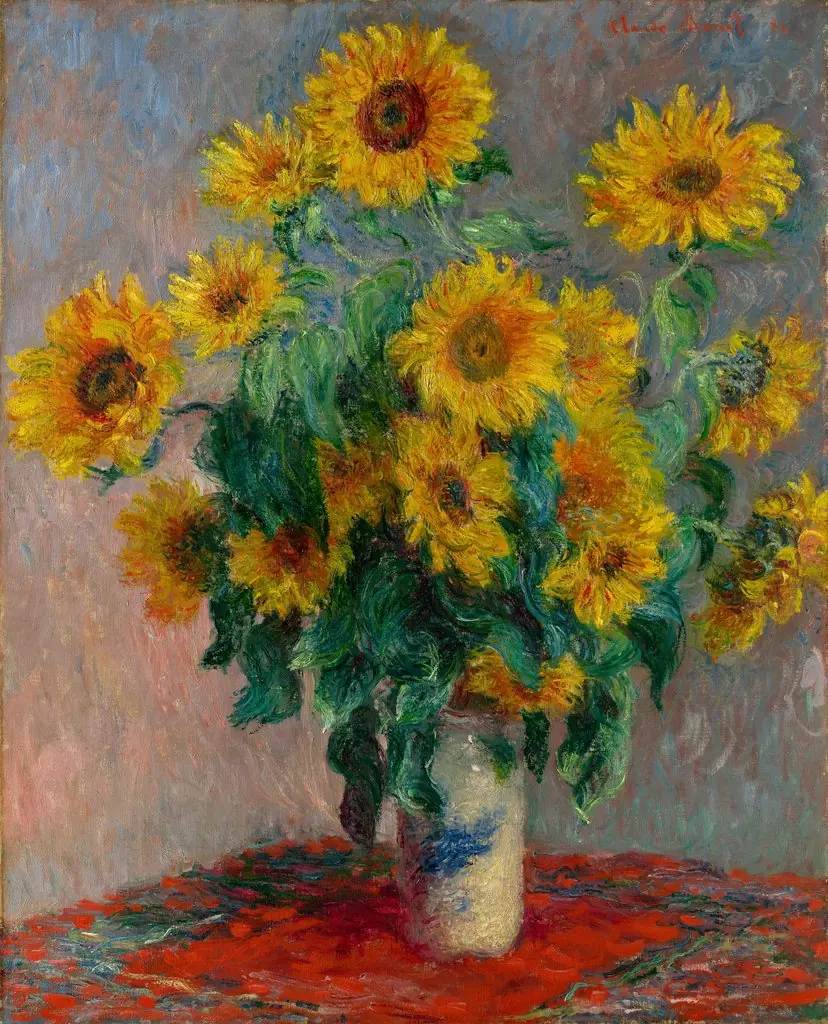
Jerusalem Artichoke Flowers is an oil painting by the Impressionist artist Claude Monet. It dates from 1880 and is held in the collection of the National Gallery of Art.
- Inscription
- Inscribed:lower right: Claude Monet / 1880
About this work
A cluster of Jerusalem artichoke flowers stands against a tree trunk, painted by Monet in 1880 with quick, visible strokes. The yellow blooms pop against a barely defined background of loose dabs. Monet often painted wildflowers in the countryside near his home.
History & Provenance
Ownership later transferred to Georges de Bellio, who bequeathed it to his daughter, Victorine de Bellio, and her husband, Ernest Donop de Monchy.
Claude Monet completed this oil on canvas in 1880. The work remained in the artist's possession until November 1880, when it passed to M. Cahuzac in Paris; Cahuzac subsequently lent the piece to the seventh Impressionist Exhibition in 1882. Ownership later transferred to Georges de Bellio, who bequeathed it to his daughter, Victorine de Bellio, and her husband, Ernest Donop de Monchy.
By 1914, the painting had been acquired by Alexandre Berthier, the 4th Prince de Wagram, before moving to the dealer Durand-Ruel in Paris. In 1929, Chester Dale purchased the work in New York. Following Dale's death in 1962, the painting entered the collection of the National Gallery of Art in Washington, D.C., through his 1963 bequest.
Claude Monet’s painting Jerusalem Artichoke Flowers (1880) is presently held by the National Gallery of Art in Washington, D.C., where it entered the collection through Chester Dale’s 1963 bequest and is catalogued as part of that bequest. Its documented provenance traces a chain from the artist to M. Cahuzac in November 1880, then to Georges de Bellio, to M. and Mme Ernest Donop de Mochy, to Alexandre Berthier, and finally to Durand‑Ruel before its 1929 sale to Dale;[1] the work was also shown at the 7th Impressionist Exhibition in 1882.[2]
Overview
Jerusalem Artichoke Flowers, painted by Claude Monet in 1880, is an oil-on-canvas still life depicting a dense cluster of yellow Jerusalem artichoke blossoms set against a dark, textured tree trunk. Executed during the height of Monet's Impressionist period, the work exemplifies his interest in capturing the immediate visual effects of light and color through rapid, visible brushstrokes. The composition focuses tightly on the floral subject, allowing the vibrant yellows of the petals to contrast sharply with the muted, earthy tones of the background.
This piece reflects Monet's broader practice of painting wildflowers and garden scenes found in the countryside surrounding his home, moving away from traditional studio still lifes toward a more naturalistic observation of flora. The loose handling of paint and the emphasis on the fleeting quality of the blooms align with the artist's commitment to depicting modern life and nature with spontaneity. Created a decade after his foundational Impressionist works, this painting demonstrates the continued evolution of his technique and his enduring fascination with botanical subjects as vehicles for exploring color relationships and atmospheric conditions.
Technique & Style
Monet utilized quick, visible brushstrokes to depict the Jerusalem artichoke flowers, a hallmark of his Impressionist technique. While the application of paint is loose, it effectively conveys the distinct forms of the blossoms. The bright yellow of the flowers contrasts sharply with the muted, indistinct background, which is rendered with minimal dabs of color, drawing the viewer's focus to the foreground subject.
Context
This painting aligns with Monet's broader interest in depicting the natural world immediately surrounding his environment. During this period, he frequently turned to wildflowers found in the countryside near his residence, creating numerous studies that explored the transient beauty of such subjects. "Jerusalem Artichoke Flowers" reflects this ongoing engagement with everyday flora.
Own this work as a print
Artist & collection
Artist
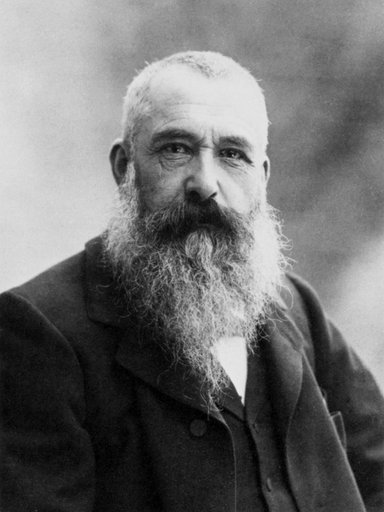
Oscar-Claude Monet was a French painter and founder of Impressionism who is seen as a key precursor to modernism, especially in his attempts to paint nature as he perceived it.