Artwork
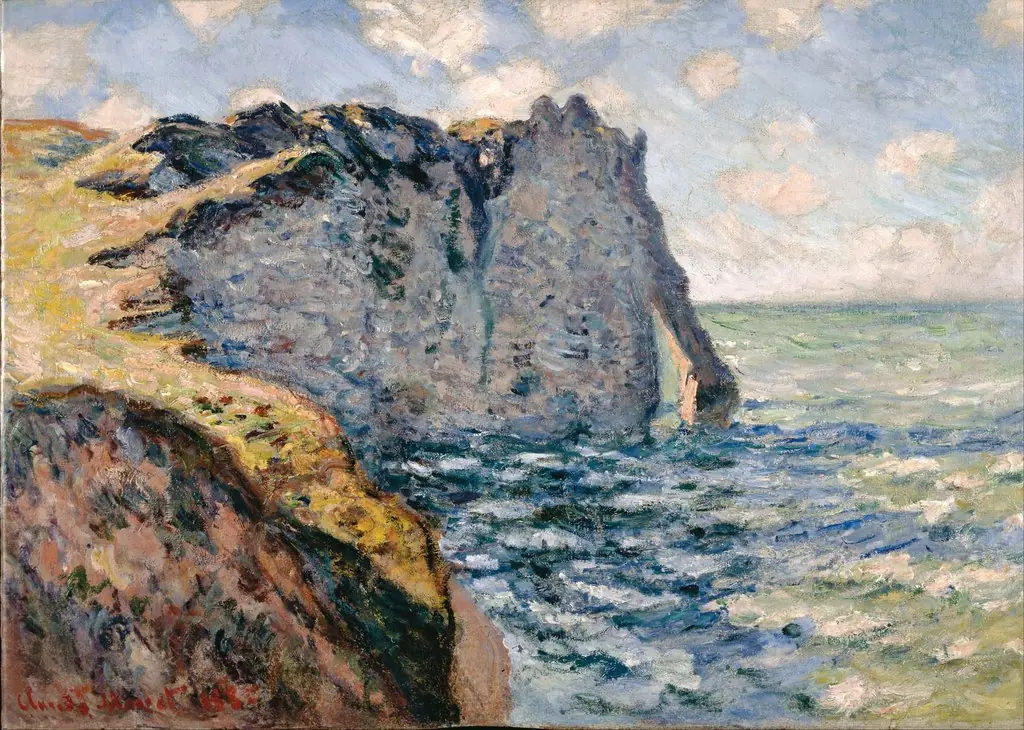
The Manneporte near Étretat
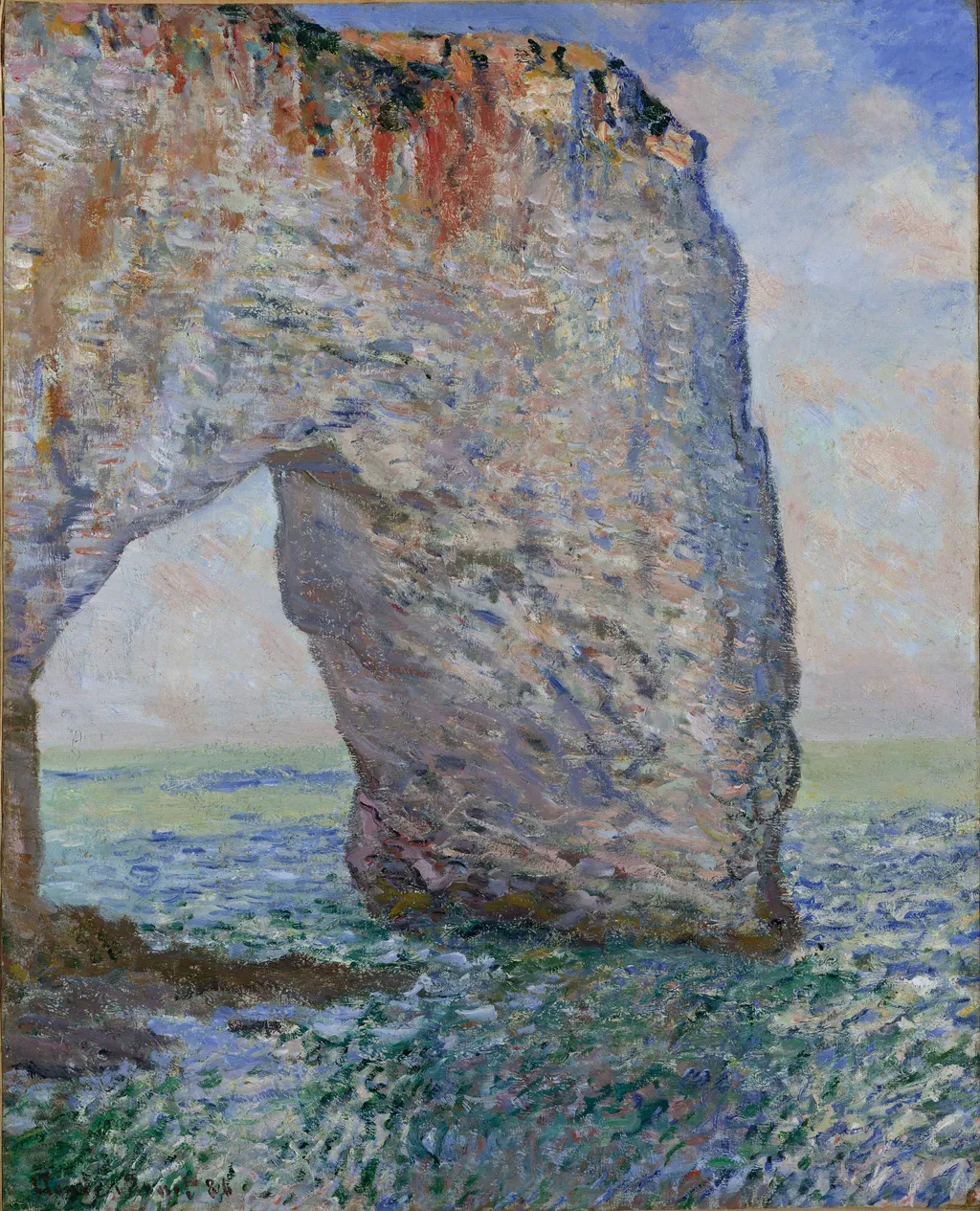
The Manneporte near Étretat is an oil painting by the Impressionist artist Claude Monet. It dates from 1894 and is held in the collection of the Metropolitan Museum of Art.
About this work
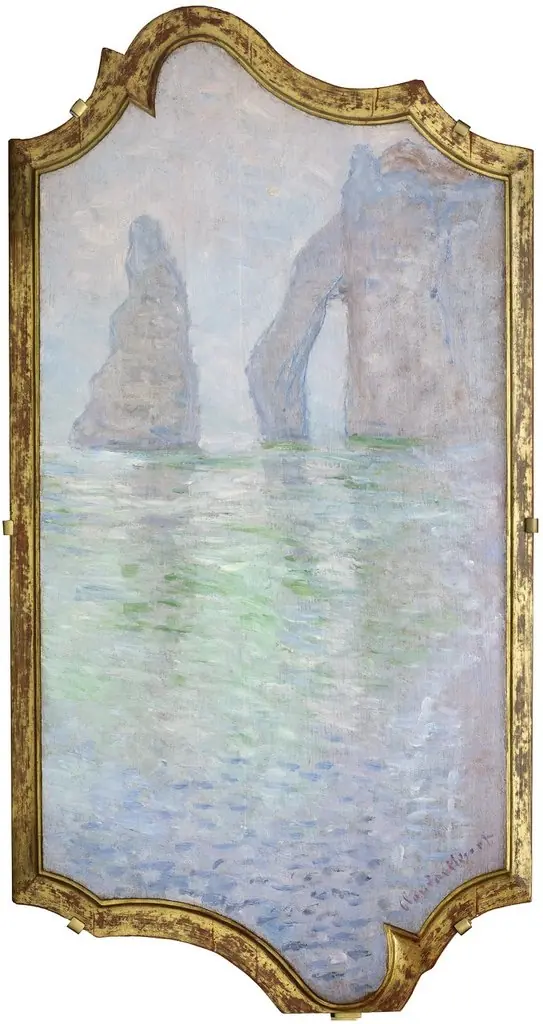
In 1886 Guy de Maupassant watched Claude Monet stride the beach at Étretat trailed by children hauling five or six canvases of the same cliff arch, swapped as the light shifted. The Manneporte near Étretat is one of six vertical views Monet made of that Normandy arch across visits in 1883, 1885, and 1886. It entered the Metropolitan Museum of Art in 1931 through the bequest of Lillie P. Bliss.
Subject & Meaning
Classified as marine art within the Impressionist movement, the work captures the transient effects of natural light on the rugged shoreline and water.
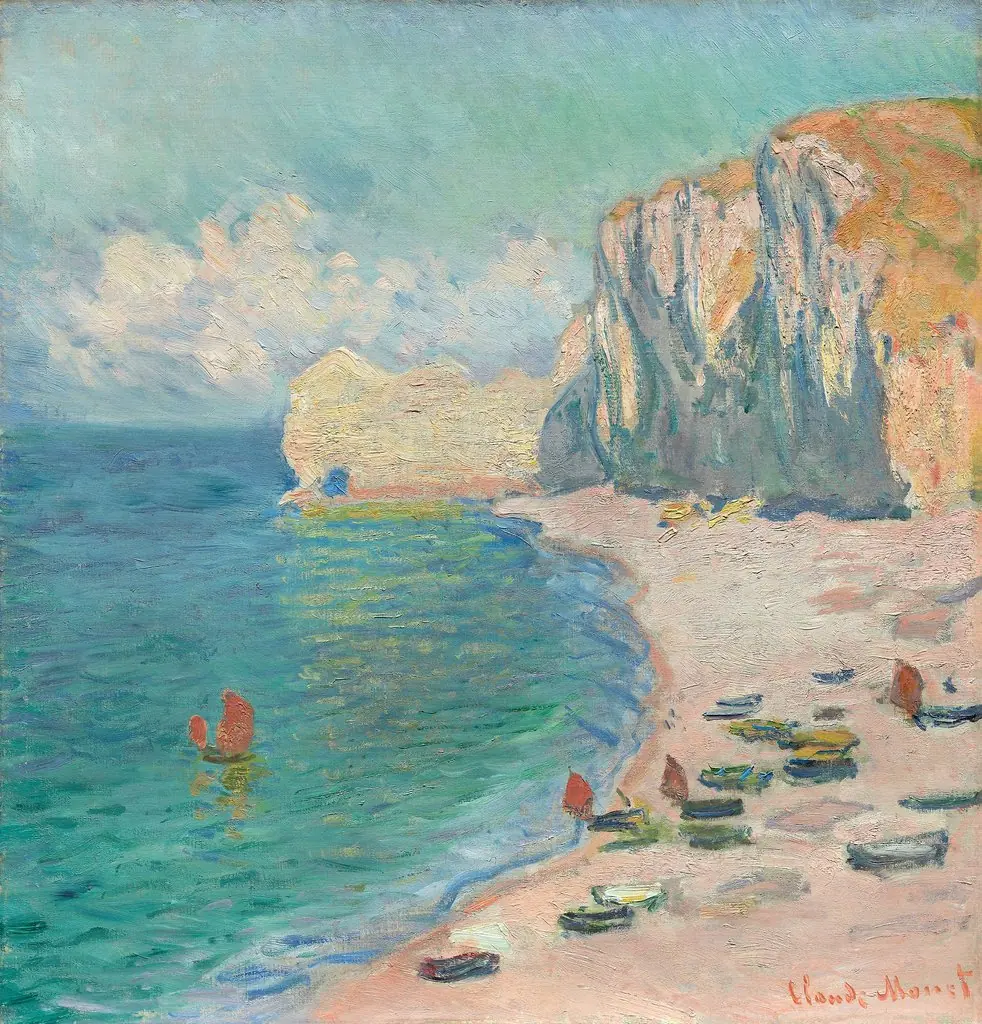
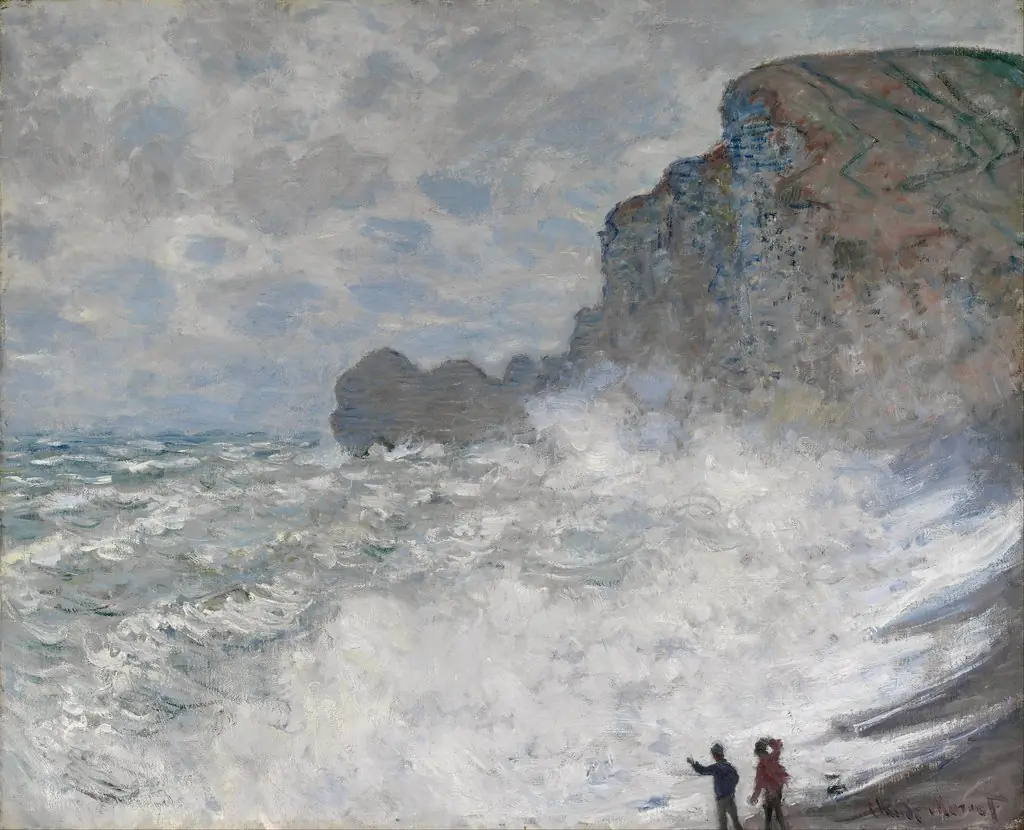
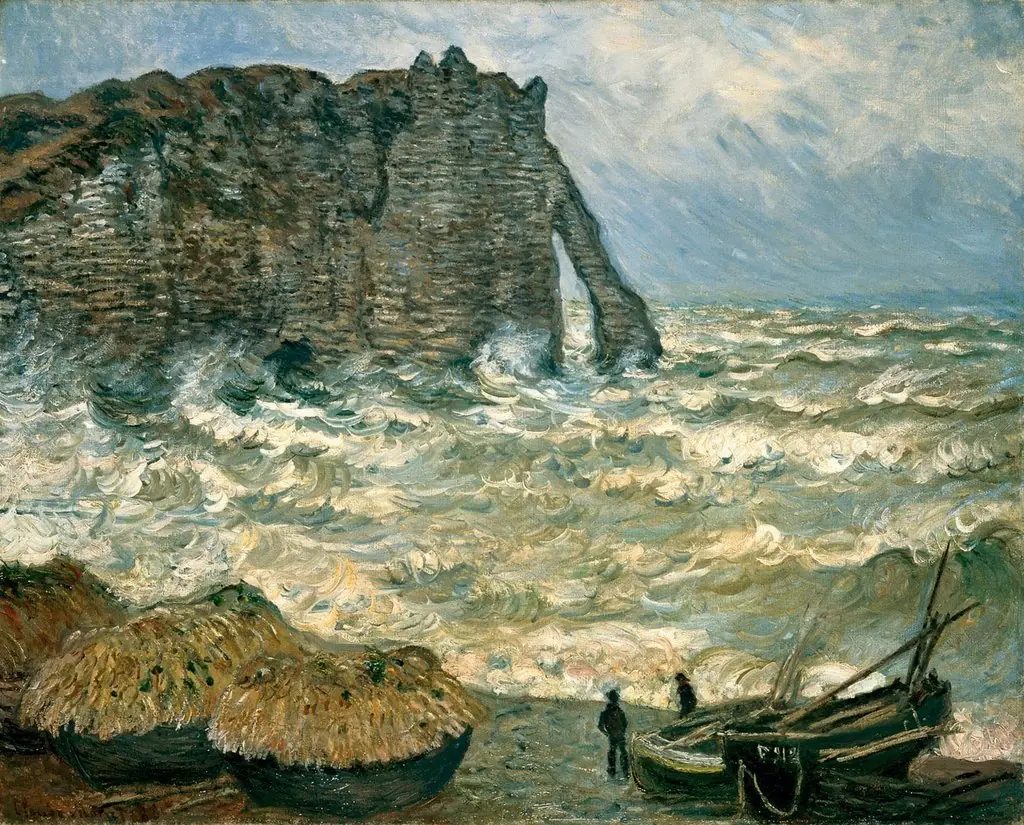
The painting depicts the Manneporte, a dramatic natural arch on the coast of Étretat in Normandy, France. The composition includes the sea, beach, sky, and clouds, with the arch serving as the central focal point. Classified as marine art within the Impressionist movement, the work captures the transient effects of natural light on the rugged shoreline and water.
Rather than carrying explicit symbolic or iconographic meaning, Monet’s rendering exemplifies the Impressionist concern with optical perception, atmosphere, and the changing appearance of the scene under varying weather and time of day. The choice of a prominent geological feature reflects the artist’s broader interest in the distinctive coastal landscapes of the Étretat region.
Technique & Style
Claude Monet's 'The Manneporte near Étretat' (1886) is an oil painting on canvas measuring 81.3 × 65.4 cm. Executed in the Impressionist style, the work depicts the natural arch of Manneporte, the English Channel, and the sky, emphasizing the transient effects of light and atmosphere through broken color and visible brushwork characteristic of the movement.
History & Provenance
Claude Monet painted this oil-on-canvas work in 1886 while at Étretat on the Normandy coast. It entered the collection of the Metropolitan Museum of Art in New York, where it remains. No commission or earlier ownership details are recorded in the available sources.
Overview
Claude Monet's 1886 oil painting, The Manneporte near Étretat, captures one of the dramatic natural arches along the Normandy coast. This canvas is part of a larger group of six works depicting the same geological formation from a consistent viewpoint. Monet created these paintings during his multiple visits to the fishing village of Étretat, a coastal resort close to his native Le Havre, between 1883 and 1886.
Context
The writer Guy de Maupassant, familiar with Étretat, provided a contemporary account in 1886 of Monet's working habits. He described the artist moving along the shingle, accompanied by children laden with canvases, which Monet would exchange as the light and weather conditions shifted. This anecdote highlights Monet's immersive, on-site practice and his dedication to capturing the fleeting moments of nature.
Own this work as a print
Artist & collection
Artist
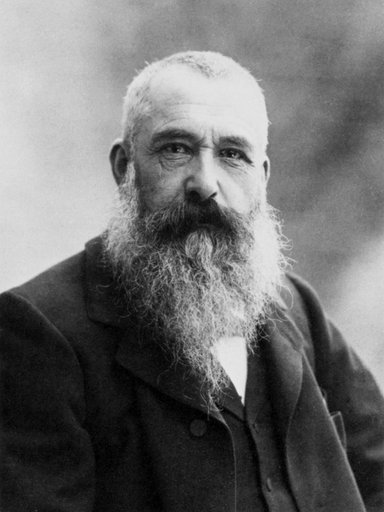
Oscar-Claude Monet was a French painter and founder of Impressionism who is seen as a key precursor to modernism, especially in his attempts to paint nature as he perceived it.