Artwork
Haystacks (Effect of Snow and Sun)
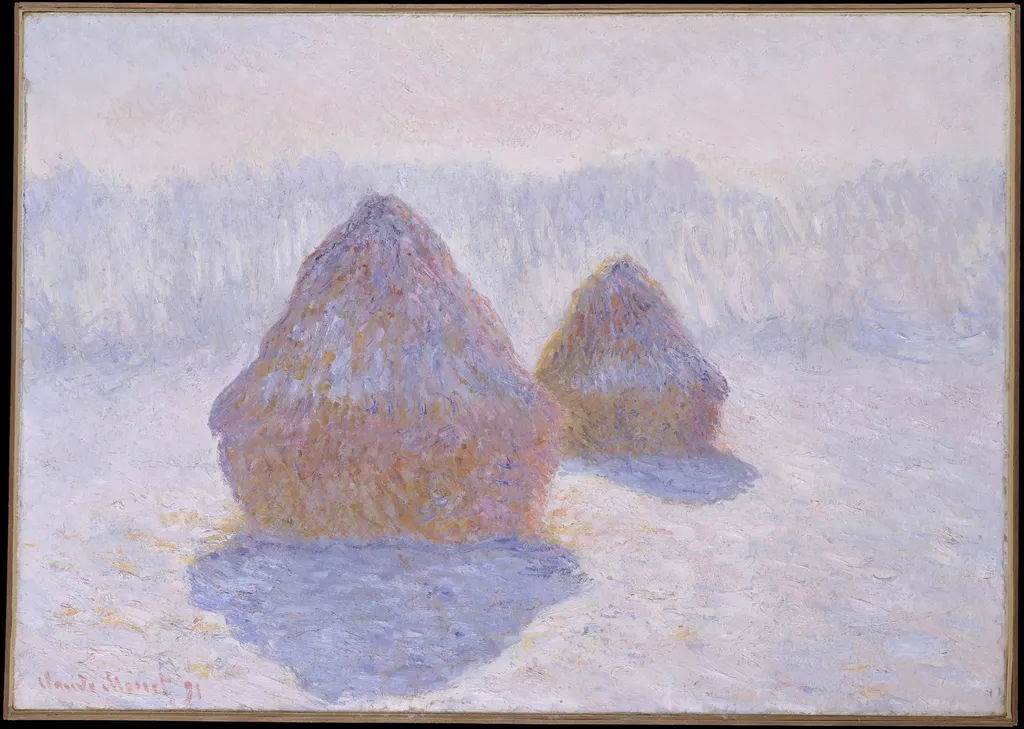
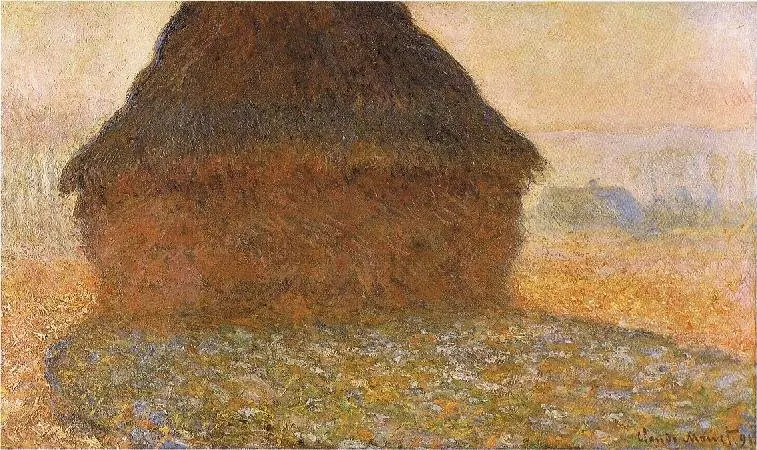
Haystacks (Effect of Snow and Sun) is an oil painting by the Impressionist artist Claude Monet. It dates from 1896 and is held in the collection of the Metropolitan Museum of Art.
About this work
Subject & Meaning
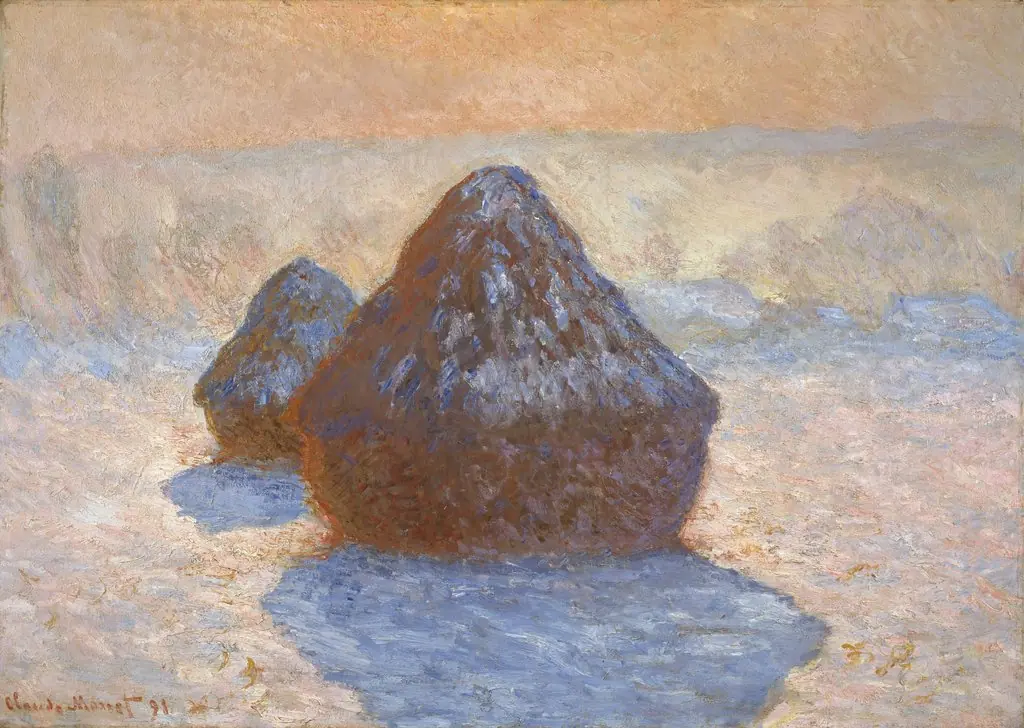
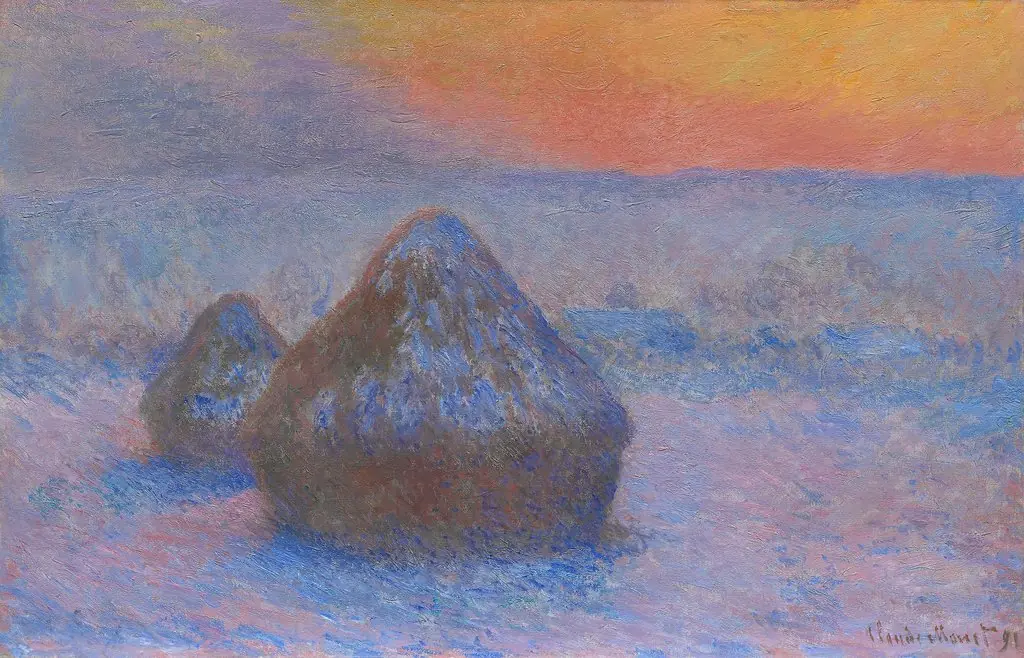
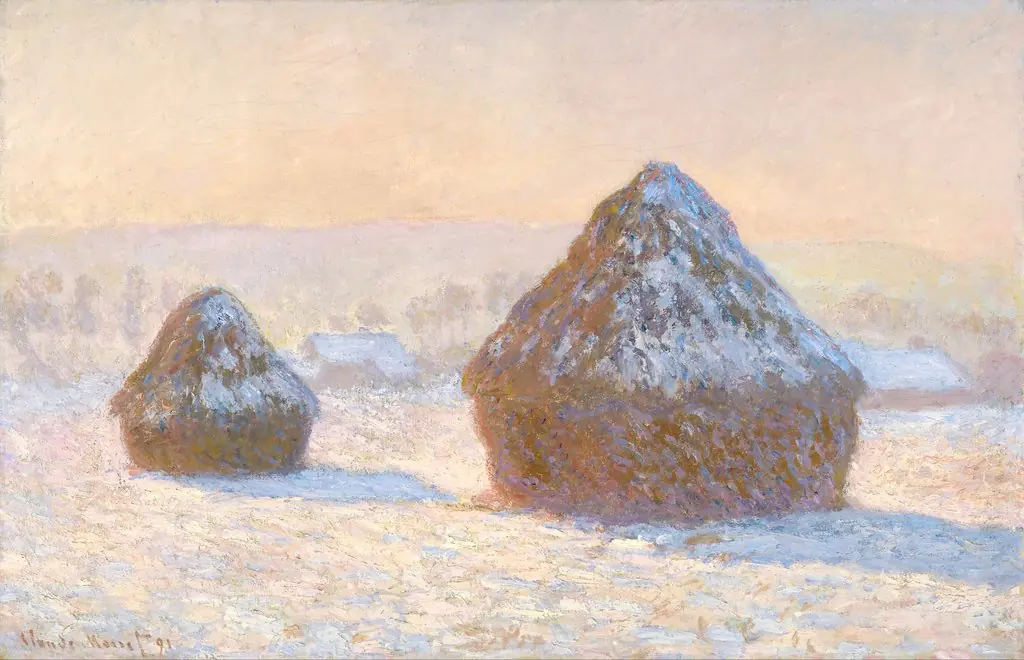
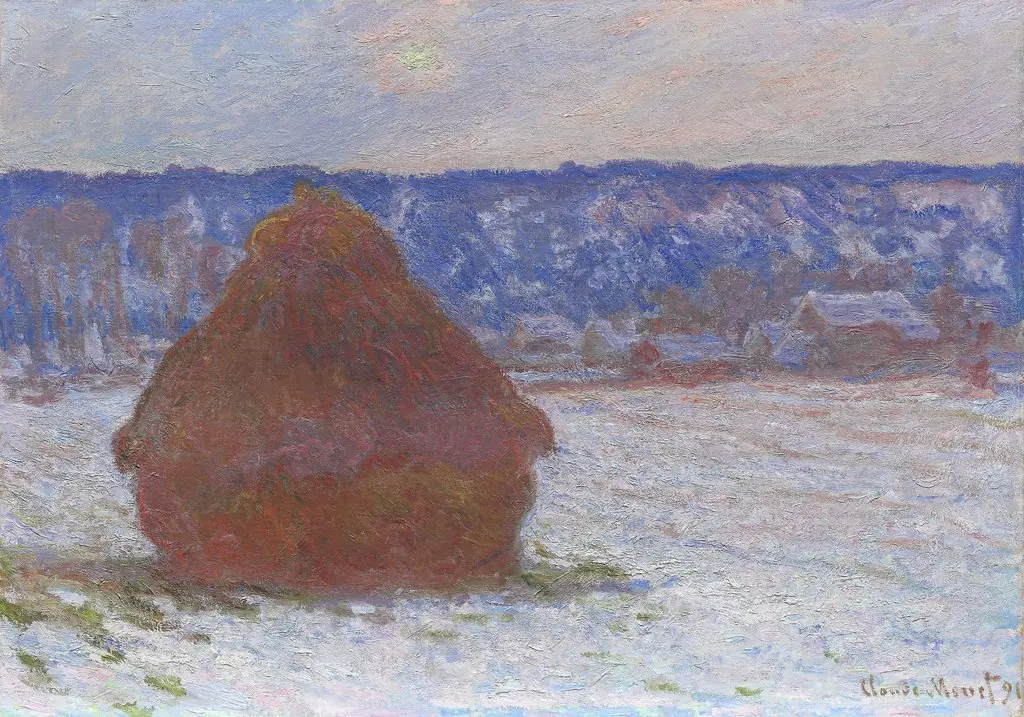
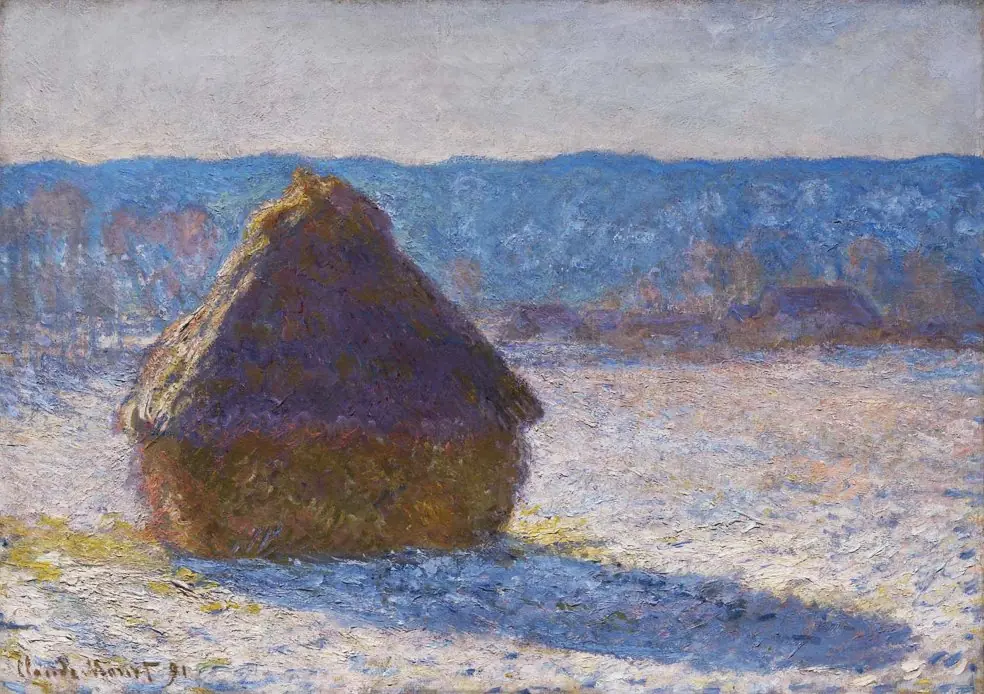
The work depicts a solitary haystack set within a winter landscape, capturing the specific atmospheric conditions of snow and sunlight.
The work depicts a solitary haystack set within a winter landscape, capturing the specific atmospheric conditions of snow and sunlight. As part of a larger series, the subject is not a narrative scene but a study of light and color acting upon a mundane rural object. The iconography centers on the haystack as a constant form that changes appearance based on the time of day and weather, here defined by the stark contrast of white snow and the warm glow of the sun.
The painting represents Monet's exploration of how natural light transforms the perception of a static subject, elevating an ordinary agricultural element into a vehicle for observing the fleeting effects of the seasons. The depiction of winter emphasizes the quiet stillness and the interplay of cold shadows against illuminated surfaces.
Technique & Style
The work is an oil painting executed on canvas, a support typical of Monet's mature practice. Monet applied thick, layered brushstrokes of oil paint to capture the fleeting effects of winter light on a haystack, using a palette of muted blues, whites and ochres that modulate with subtle tonal shifts. The composition isolates the subject against a low horizon, emphasizing atmospheric perspective and the interplay of snow-covered ground with sun-lit surfaces.
The painting's formal qualities include a flattened spatial depth, delicate modulation of color, and a focus on surface texture that conveys the tactile quality of snow. It is housed in the Metropolitan Museum of Art.
History & Provenance
Claude Monet painted Haystacks (Effect of Snow and Sun) in 1896, employing oil on canvas to capture the winter light on a snow-covered stack. The work belongs to Monet's series of haystack studies and was owned by the American collector Louisine Havemeyer, who bequeathed it to the Metropolitan Museum of Art, New York, where it remains. The painting measures 65.4 cm in height by 92.1 cm in width.
The available sources confirm the location, creator, dimensions, and former private ownership, but do not record a specific accession number or a detailed exhibition history.
Legacy
Monet's 1896 Haystacks (Effect of Snow and Sun) has come to symbolize the artist's fascination with atmospheric variation and the fleeting effects of light. The work's inclusion in the Metropolitan Museum of Art and its provenance through the collector Louisine Havemeyer have cemented its status within a major museum collection. Art historians cite the haystack series as a landmark in the development of serial imagery, while its execution in oil on canvas demonstrates Monet's command of color and texture.
Overview
Haystacks (Effect of Snow and Sun) is an 1896 oil painting by Claude Monet, part of his renowned series of grainstacks executed at Giverny. The work depicts two haystacks situated in a snow-covered field under a pale pink sky, capturing a specific moment of winter light. Monet renders the foreground stack with greater prominence, utilizing a palette of earthy browns and tans contrasted against cool blues and purples within the shadows to articulate the texture of the snow and the play of sunlight.
The composition emphasizes the verticality of the stacks against the horizontal expanse of the field and sky. Created during a period when Monet focused intensely on serial painting to study the effects of changing atmospheric conditions, this piece exemplifies his Impressionist technique of applying distinct brushstrokes to capture transient light. The work demonstrates his shift from depicting the subject's form to prioritizing the visual experience of light and color, a hallmark of his mature career in the late 1890s.
Own this work as a print
Artist & collection
Artist
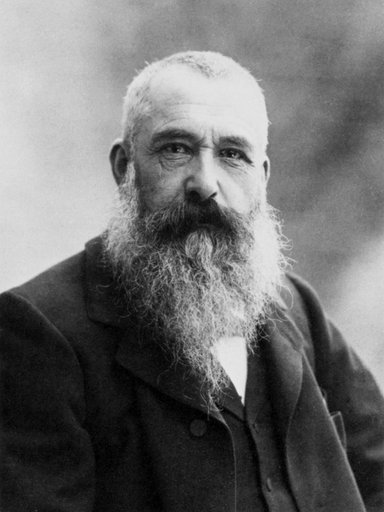
Oscar-Claude Monet was a French painter and founder of Impressionism who is seen as a key precursor to modernism, especially in his attempts to paint nature as he perceived it.