Artwork
The Infants Christ and Saint John the Baptist Embracing
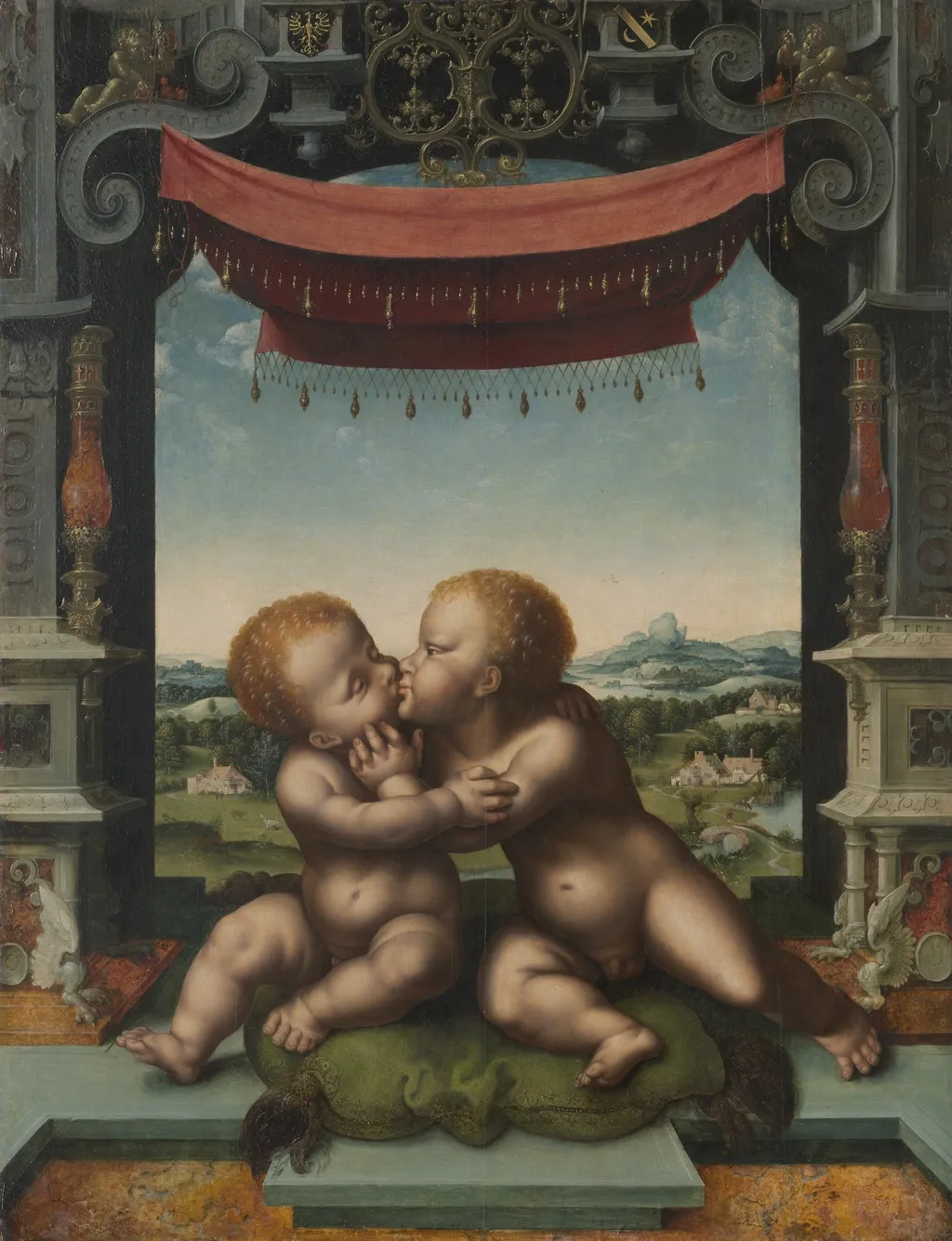
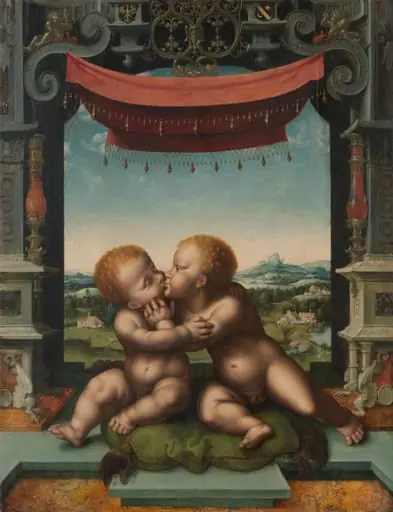
The Infants Christ and Saint John the Baptist Embracing is an oil painting by the Northern Renaissance artist Joos van Cleve. It dates from 1525 and is held in the collection of the Art Institute of Chicago.
About this work
Subject & Meaning
The painting portrays the Christ Child reaching toward his cousin Saint John the Baptist in an intimate embrace, a gesture that symbolizes their shared divine destiny and the recognition of Christ's supremacy even before birth. The tender physical contact emphasizes the human connection between the two figures and underscores theological themes of kinship and prophetic anticipation within the Holy Family narrative. This iconography was common in early sixteenth‑century devotional art, highlighting both the familial bond and the spiritual significance of John’s role as the forerunner of Jesus.
Technique & Style
The work was executed in oil paint on a wooden panel, a technique typical of early sixteenth‑century Netherlandish religious painting.
The work was executed in oil paint on a wooden panel, a technique typical of early sixteenth‑century Netherlandish religious painting. The surface bears the fine brushwork characteristic of Joos van Cleve’s workshop, with delicate modeling of the infants’ flesh and a subtle rendering of drapery that emphasizes their intimate embrace. The composition is balanced by a gentle diagonal thrust that guides the viewer’s eye toward the tender kiss shared by the Christ Child and Saint John the Baptist.
The painting’s condition is relatively stable, showing only minor craquelure across the panel and a faint varnish layer that has yellowed over time, preserving the original color harmonies.
History & Provenance
The work titled The Infants Christ and Saint John the Baptist Embracing was painted by Joos van Cleve in 1525. It is an oil painting on panel measuring 75 by 58 centimeters and belongs to the religious genre. The artwork entered the collection of the Art Institute of Chicago, where it remains on view today.
The painting is held by the Art Institute of Chicago. According to the Wikidata entry for the work, both its collection and its location are recorded as the Art Institute of Chicago, and it is catalogued as a religious painting by Joos van Cleve and his workshop, executed in oil on panel in 1525.
No accession number or specific inventory reference is supplied in the available sources, and no exhibition history is documented for the work.
The painting measures 75 cm in height by 58 cm in width, consistent with its identification as a panel painting.
Legacy
The painting was frequently reproduced in copies and workshop versions, establishing a visual model for the depiction of the Christ Child and Saint John in intimate embraces. Its composition influenced later devotional works that emphasized the tender interaction between the two infants, a motif that persisted in Counter-Reformation imagery. The work's presence in a major public collection helped cement the image of the embracing infants as a recognizable element in Northern Renaissance religious art.
Overview
Created in 1525 by Joos van Cleve, a prominent Antwerp painter active from the early 1510s until his death in the early 1540s, this oil painting portrays a tender encounter between the infant Jesus and the infant John the Baptist. The work is part of the Art Institute of Chicago’s collection and exemplifies the Northern Renaissance’s devotional imagery.
Context
Working within the Northern Renaissance, van Cleve merged the meticulous detail of Early Netherlandish painting with emerging Italianate influences. Religious subjects dominated his output, and this work reflects the period’s emphasis on intimate, humanized depictions of sacred narratives, set against a backdrop of green fields and a tranquil sky.
Own this work as a print
Artist & collection
Artist
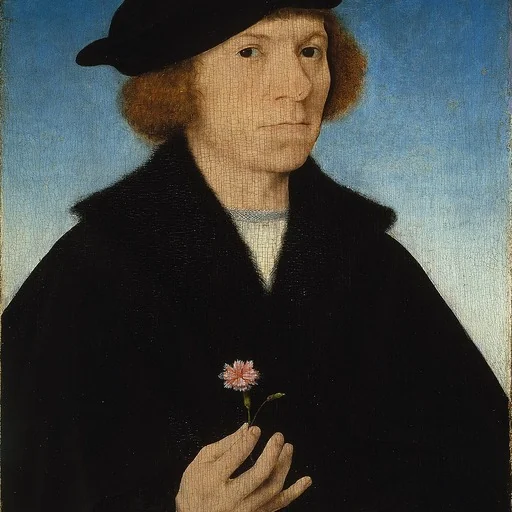
Joos van Cleve (; also Joos van der Beke; c. 1485–1490 – 1540/1541) was a leading painter active in Antwerp from his arrival there around 1511 until his death in 1540 or 1541. Within Dutch and Flemish Renaissance…

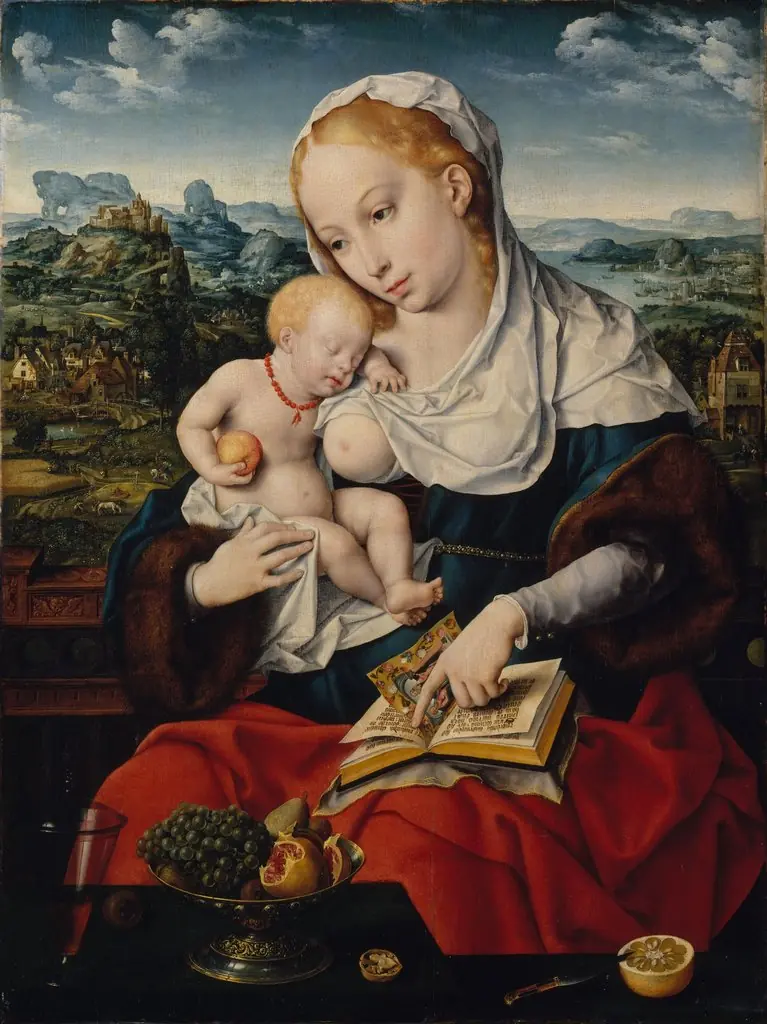
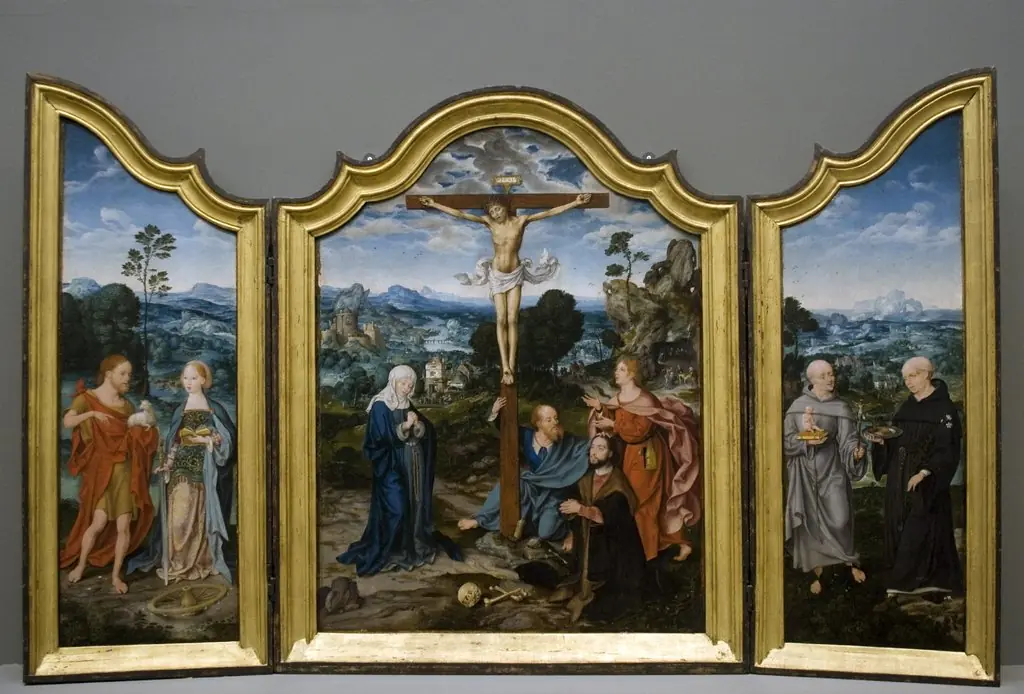
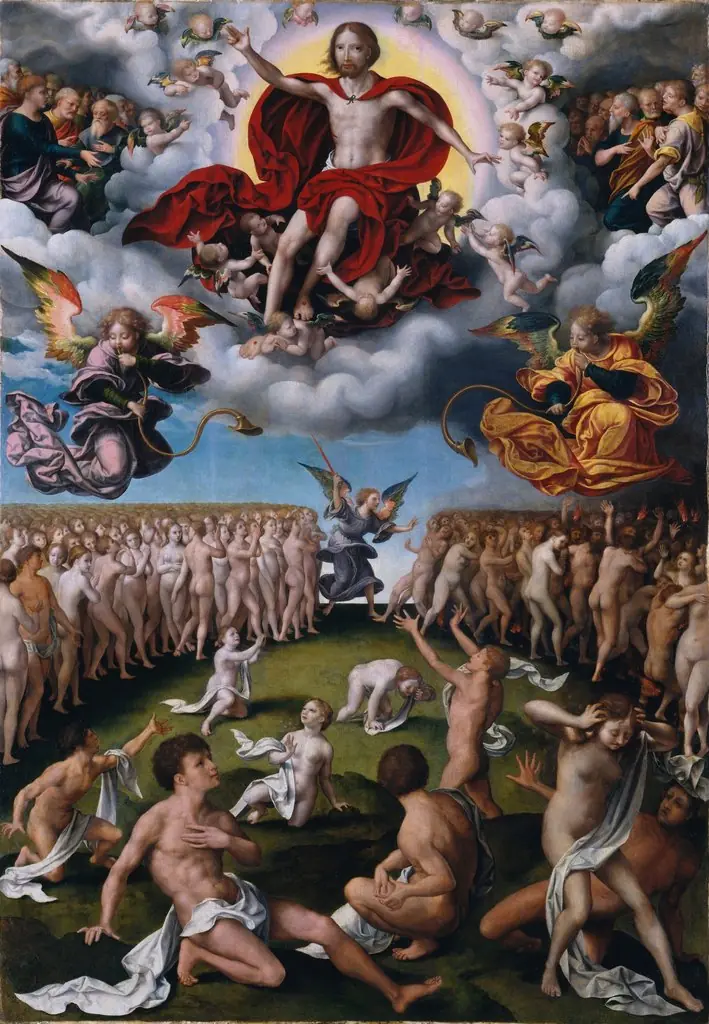
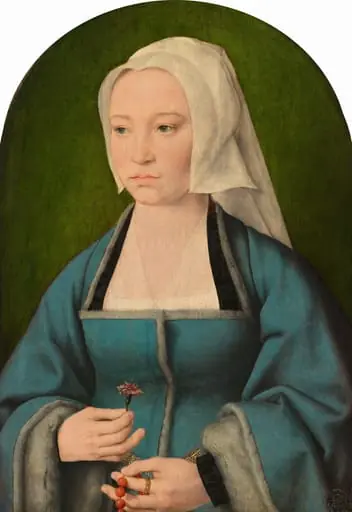
 The Infants Jesus Christ and Saint John the Baptist Embracing
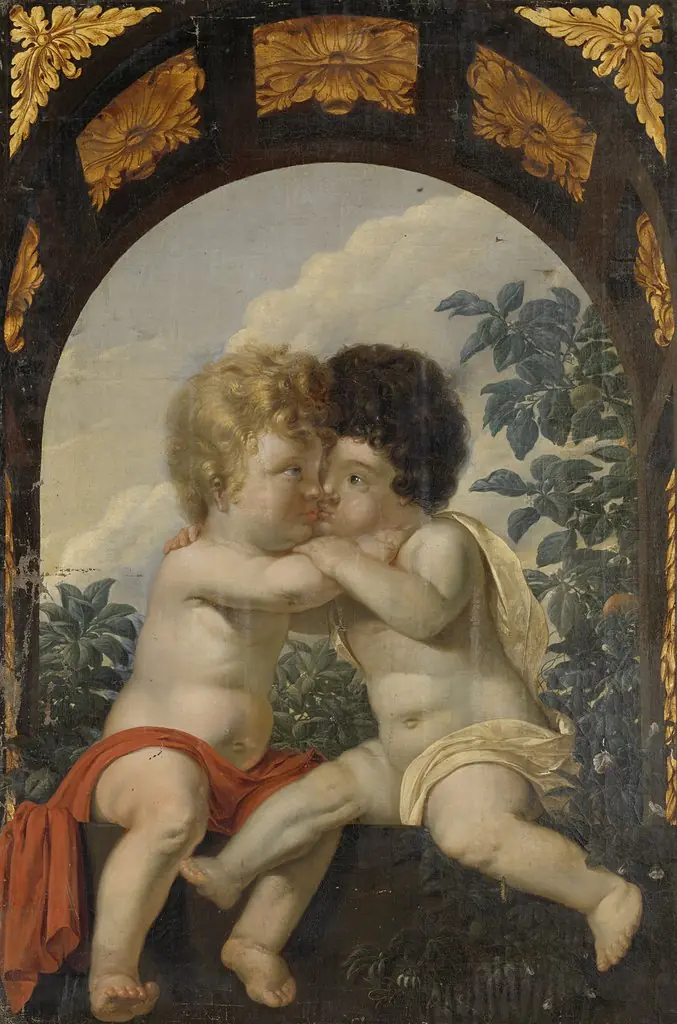 Christian Allegory with two Children Hugging each other
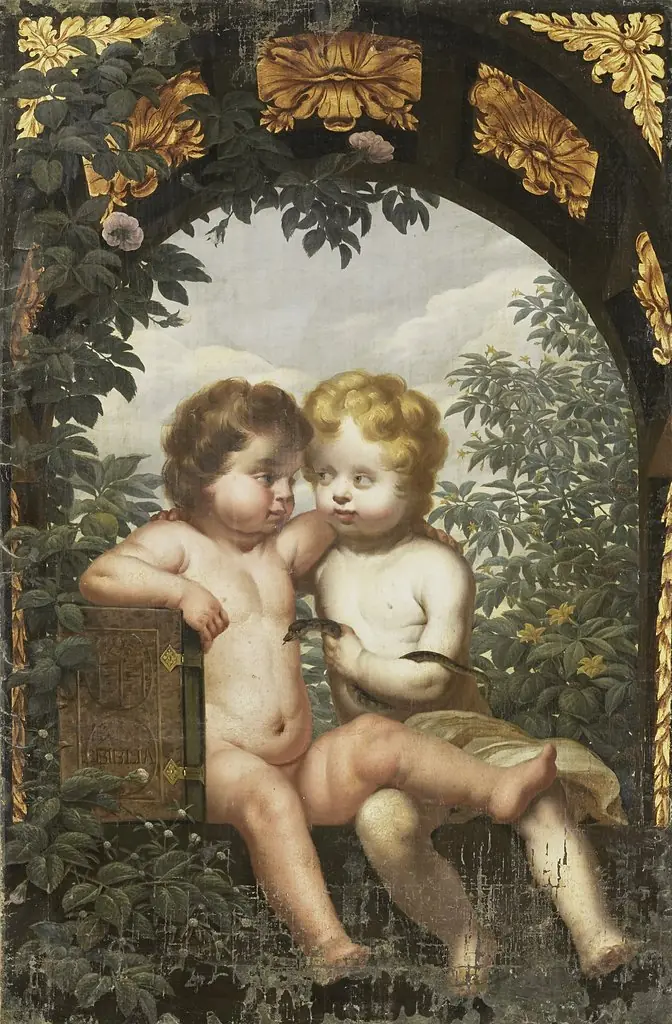 Christian Allegory with two Children with a Bible and Snake
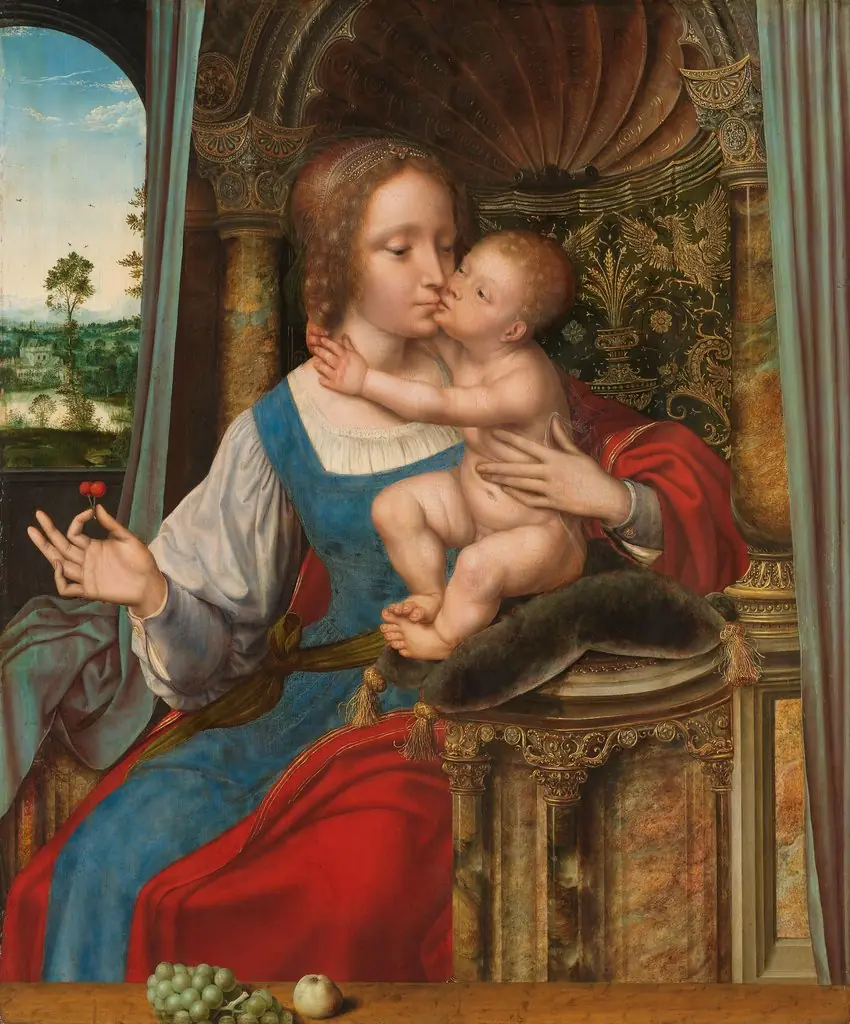 The Virgin and Child
 War and peace
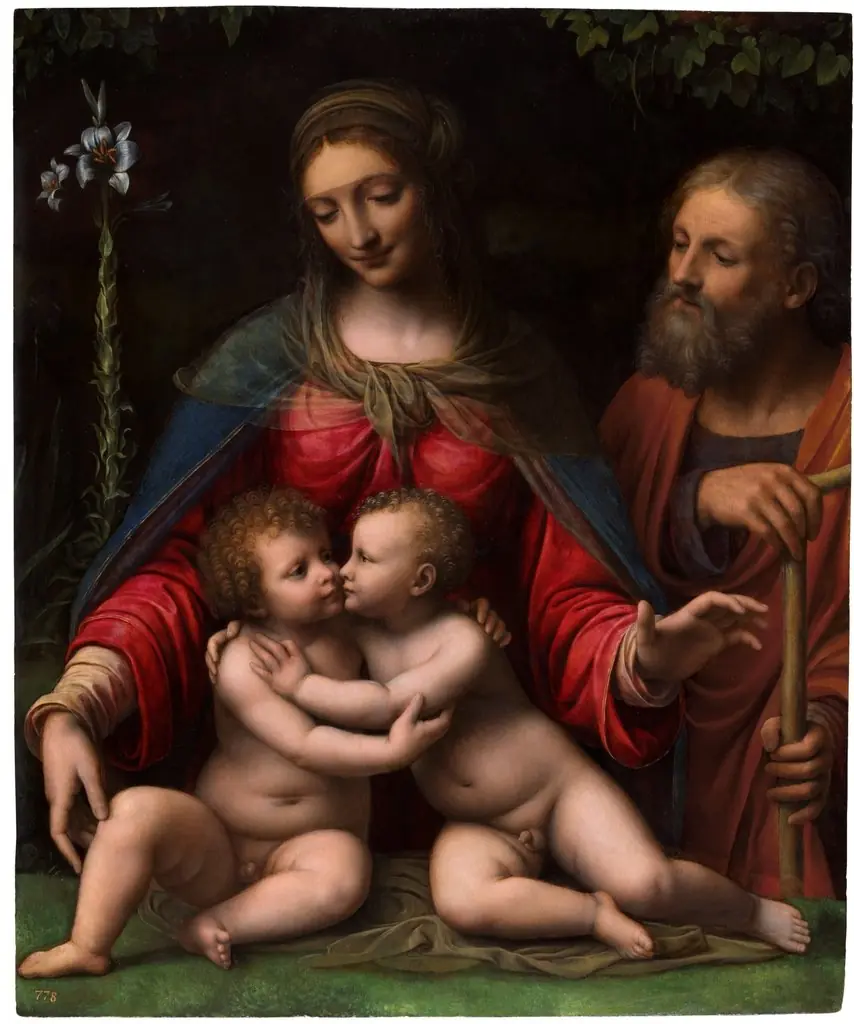 The Holy Family
 Two Infants, Personifications of Spring and Autumn
 The Madonna of the Cherries
 Holy Infants Kissing
 Madonna and Child