Artwork
Portrait of a man
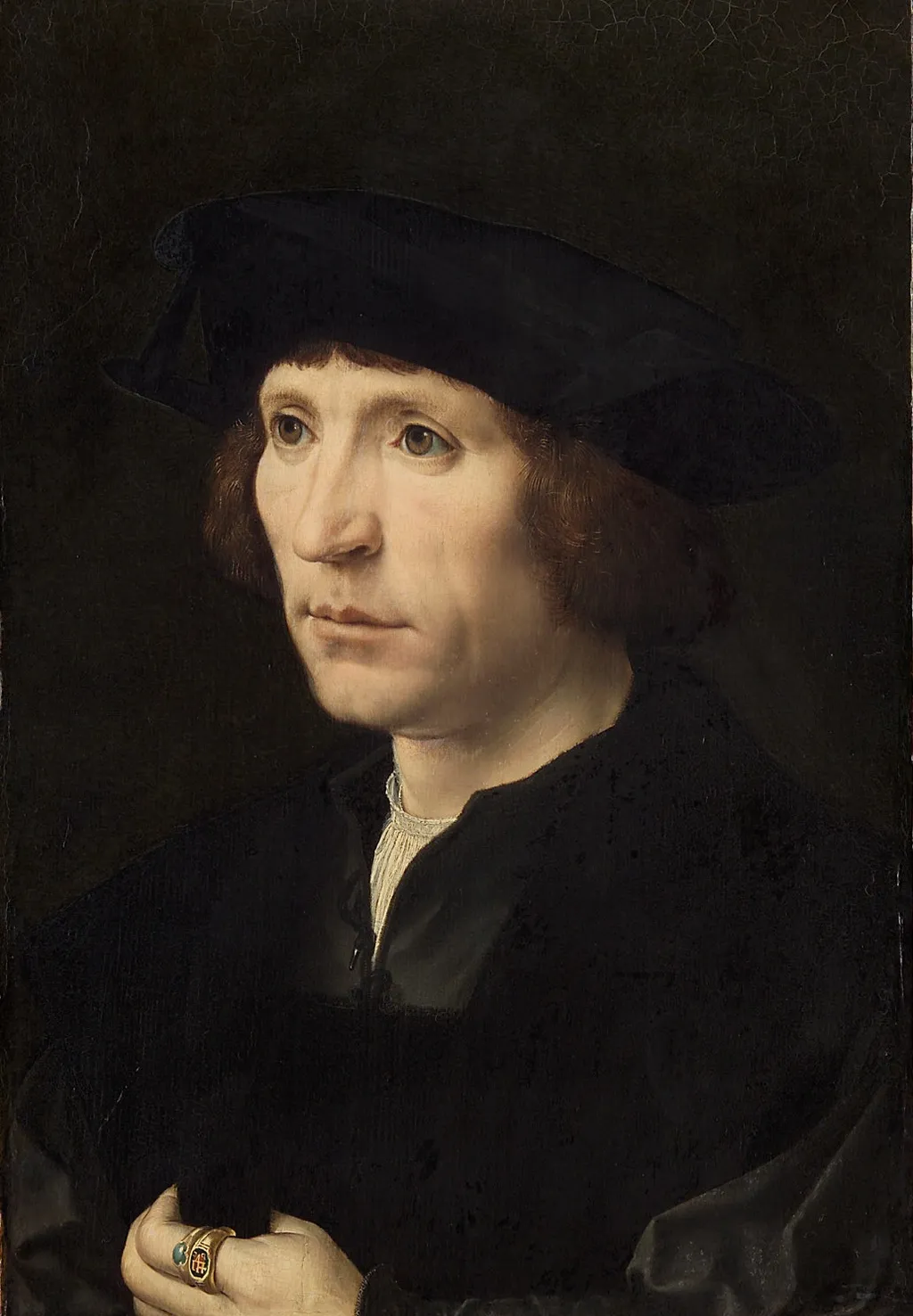
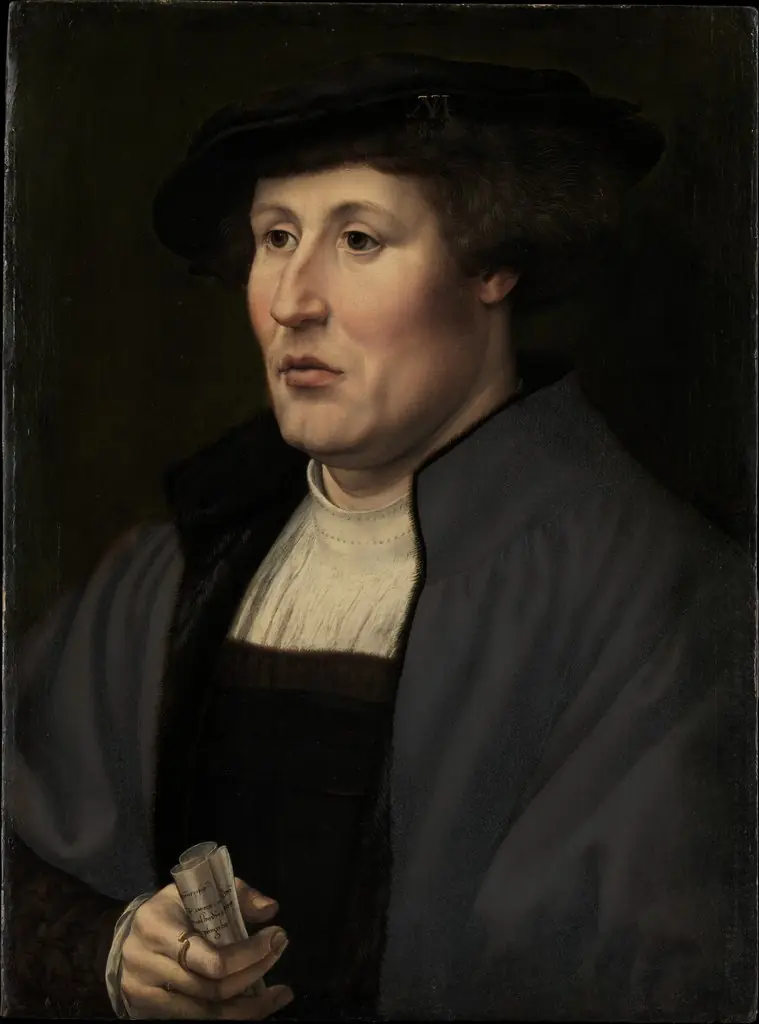
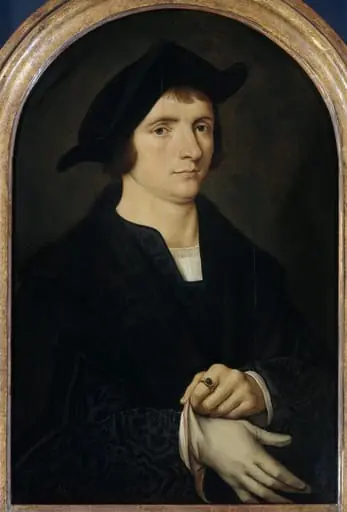
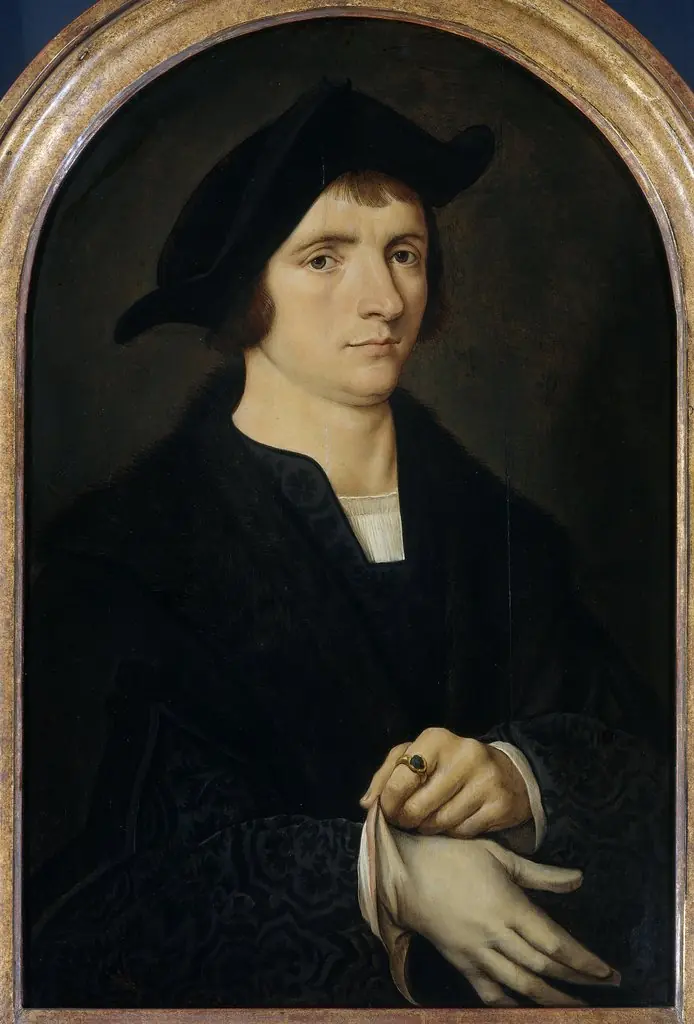
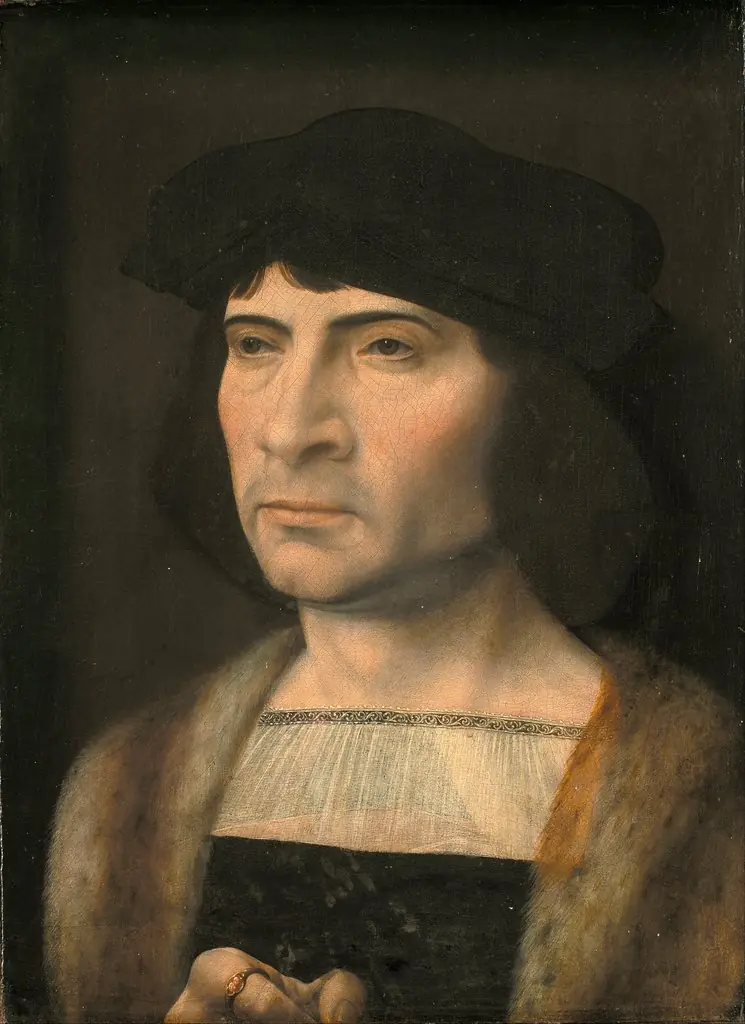
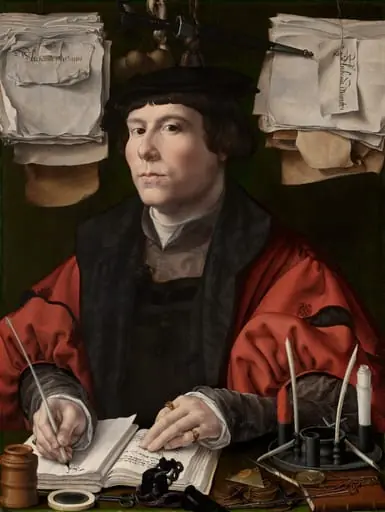
Portrait of a man is an oil painting by the Northern Renaissance artist Jan Gossaert. It dates from 1527 and is held in the collection of the Kunsthistorisches Museum.
About this work
Technique & Style
As a formal portrait, the composition focuses exclusively on the depiction of a male subject.
Executed in 1527, this portrait by Jan Gossaert is an oil painting on a wooden panel. The work measures 40 cm in height and 27.5 cm in width. As a formal portrait, the composition focuses exclusively on the depiction of a male subject.
The application of oil paint on a rigid panel support reflects the standard materials and techniques employed by Netherlandish artists of the early sixteenth century for small-scale devotional or secular likenesses.
History & Provenance
The painting was created in 1527 by Jan Gossaert, as indicated by the artist’s inscription and date on the work. It entered the collection of the Kunsthistorisches Museum in Vienna, where it remains housed today. The work is listed in the museum’s holdings with dimensions of 40 cm in height and 27.5 cm in width, confirming its continuous presence within that institution.
Jan Gossaert's Portrait of a man, dated 1527, is held in the collection of the Kunsthistorisches Museum. The oil-on-panel work depicts a male subject and is part of the museum's permanent holdings. The provided sources do not list a specific inventory or accession number for this piece, nor do they document any exhibition history.
Context
Jan Gossaert's Portrait of a man (1527) exemplifies Northern Renaissance portraiture through its psychological depth and precise rendering of texture, positioning it within his transition from late Gothic to early Netherlandish naturalism. Scholarship emphasizes its role in bridging early Netherlandish traditions with Italianate influences, particularly through Gossaert's Antwerp period and connections to humanist circles. The work's significance is contextualized by its presence in the Kunsthistorisches Museum's collection, reflecting its enduring recognition as a pivotal piece in early 16th-century European art.
The painting's depiction of a man, rendered in oil on panel, demonstrates Gossaert's mastery of portraiture that combined meticulous detail with emerging Renaissance compositional techniques, solidifying its place in art historical narratives of the period.
Overview
Jan Gossaert, also known as Jan Mabuse, painted this oil portrait in 1527. The work is a Northern Renaissance piece that now belongs to the Kunsthistorisches Museum’s collection, featuring a solitary male sitter rendered with careful attention to light and form.
Subject & Meaning
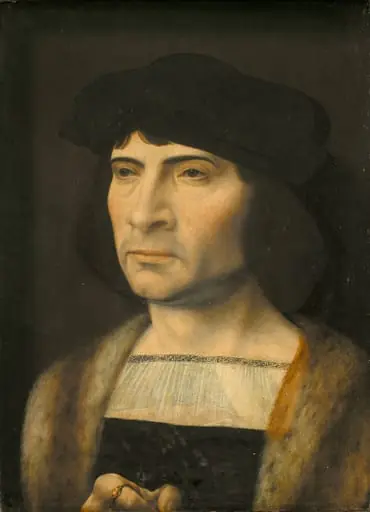
The portrait shows a man with short reddish-brown hair, a sober expression, and a dark hat. He wears a black garment accented by a white collar, his hands folded in front of him, and a ring on one finger, suggesting a dignified, perhaps civic, status.
Artist & collection
Artist
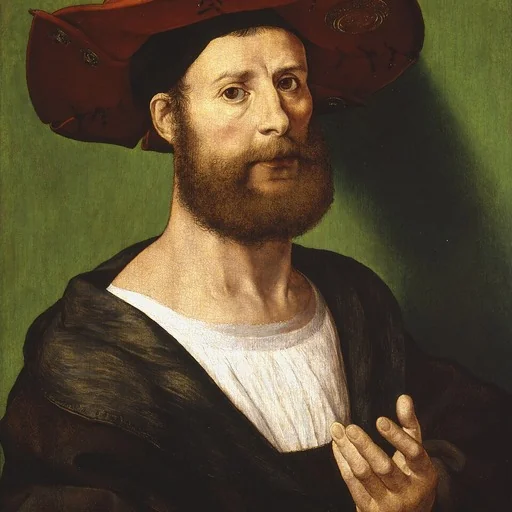
Jan Gossaert (c. 1478 – 1 October 1532) was a French-speaking painter from the Low Countries also known as Jan Mabuse (the name he adopted from his birthplace, Maubeuge) or Jennyn van Hennegouwe (Hainaut), as he called…

![Saint Jerome Penitent [right panel], by Jan Gossaert](https://artifactworldgallery.com/img/jan-gossaert--saint-jerome-penitent-right-panel--0d4ac14f44de87b1-w320.webp)
![Saint Jerome Penitent [left panel], by Jan Gossaert](https://artifactworldgallery.com/img/jan-gossaert--saint-jerome-penitent-left-panel--3d396afbb0f8e738-w320.webp)