Artwork
The Return
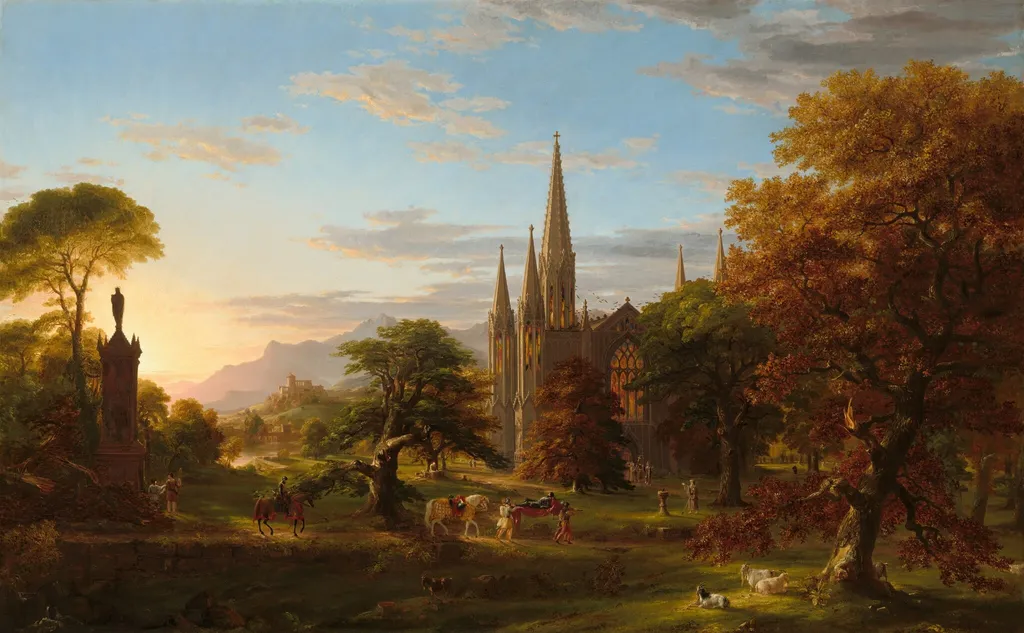
The Return is an oil painting by the Hudson River School artist Thomas Cole. It dates from 1837 and is held in the collection of the National Gallery of Art.
- Inscription
- Inscribed:center left on monument: T Cole / 1837; lower center right: T Cole. 1837
About this work
A single tree stands in a landscape. Thomas Cole worked with simple colors to build depth, playing light against dark and using shadow to open a sense of space in this early work from 1837.
Subject & Meaning
Its presence functions as the principal iconographic motif, drawing attention to the natural environment that Cole frequently explored in his landscapes.
The Return, painted by Thomas Cole in 1837, is a landscape oil on canvas that centers on a solitary tree as its primary visual element. The work was commissioned by William P. Van Rensselaer and later entered the collection of the Corcoran Gallery of Art before being acquired by the National Gallery of Art in 2014. In the composition the tree occupies the foreground, framing the scene and serving as the focal point of the painting’s spatial arrangement.
Its presence functions as the principal iconographic motif, drawing attention to the natural environment that Cole frequently explored in his landscapes.
Technique & Style
The Return is an oil painting on canvas, measuring about 100.3 cm in height by 161.4 cm in width. Executed in 1837, the work belongs to the landscape genre and depicts a solitary tree within a broadly rendered scenery. The painting’s support is a stretched canvas, and the artist employed traditional oil pigments to achieve layered tonal transitions typical of Hudson River School landscapes.
No specific condition report is included in the documentation, and the piece has been part of the National Gallery of Art’s collection since 2014, having previously entered the Corcoran Gallery of Art in 1869.
History & Provenance
The Return was commissioned in 1837 by William P. Van Rensselaer of Albany for Thomas Cole, who executed the work as an oil on canvas landscape. The painting entered the collection of William Wilson Corcoran, who purchased it in 1853; it was later gifted to the Corcoran Gallery of Art on 10 May 1869. The Corcoran Gallery subsequently transferred ownership to the National Gallery of Art in Washington, D.C., where the work remains on display. The composition depicts a solitary tree and measures 100.3 cm by 161.4 cm.
Commissioned by William P. Van Rensselaer of Albany, The Return entered the collection of William Wilson Corcoran in Washington by 1853. On May 10, 1869, Corcoran gifted the painting to the Corcoran Gallery of Art. Following the dissolution of that institution, the work was acquired by the National Gallery of Art in Washington, D.C., in 2014, where it is currently held.
While the painting dates to 1837 and measures approximately 100.3 by 161.4 centimeters, the available records detail its institutional lineage from private commission to major public collections without listing specific temporary exhibition loans or inventory accession numbers beyond these ownership transfers.
Overview
Thomas Cole's painting, The Return, completed in 1837, is an oil on canvas work. This landscape composition centers on the depiction of a single tree within a broader natural setting. The piece exemplifies Cole's early engagement with landscape themes, a genre he would profoundly influence throughout his career.
Context
Created in 1837, The Return represents a work from Thomas Cole's earlier career. The technical approaches visible in this painting, such as the strategic use of color and chiaroscuro for spatial effects, offer insight into the developing artistic sensibilities of a painter who would soon become a prominent figure in American landscape art.
Own this work as a print
Artist & collection
Artist
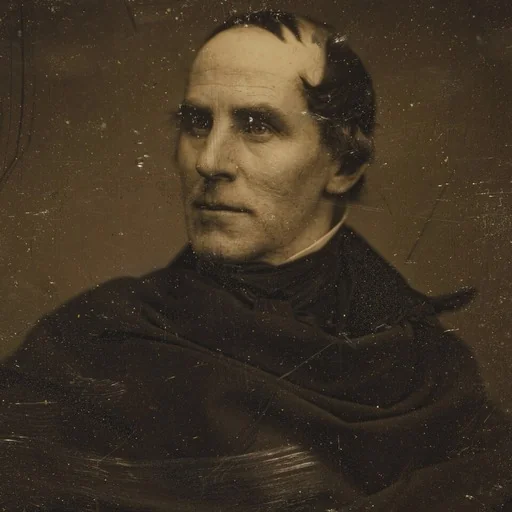
Thomas Cole (February 1, 1801 – February 11, 1848) was an Anglo-American artist who founded the Hudson River School art movement.

- Arcadian Landscape with Fishermen
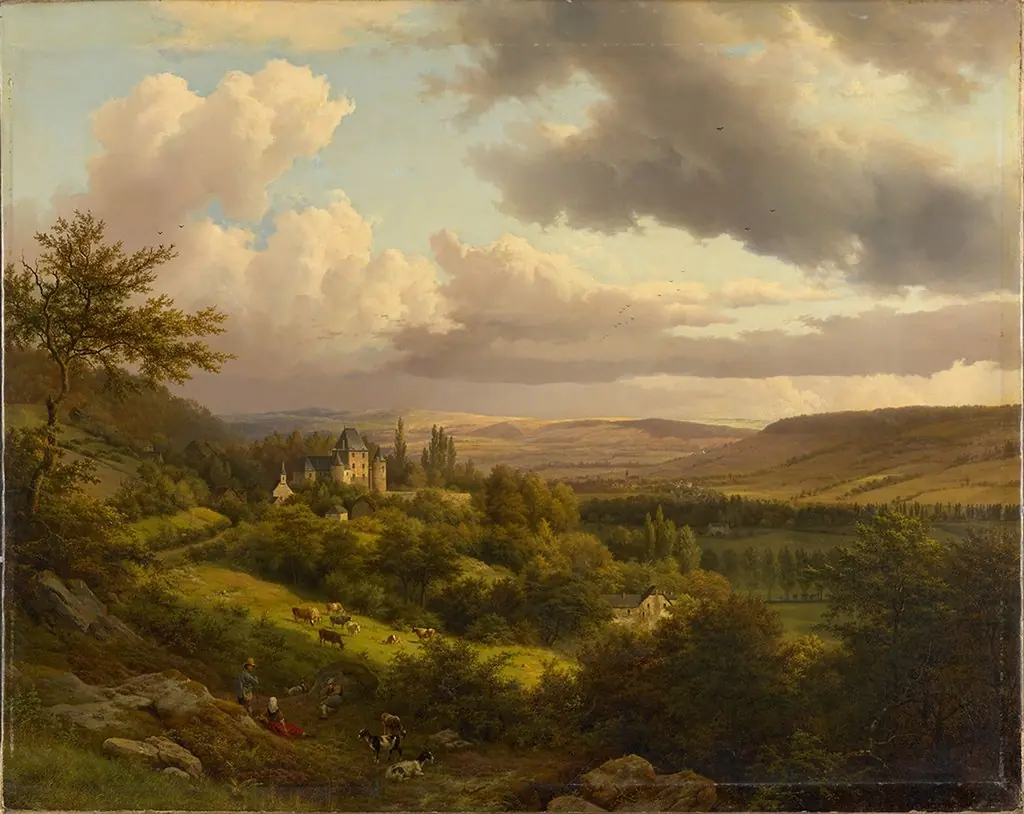 Luxemburgische Landschaft mit Blick auf Schloss Berg
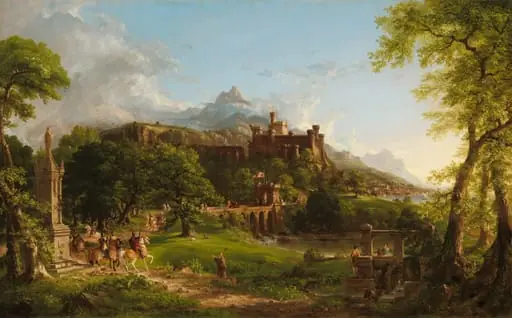 The Departure
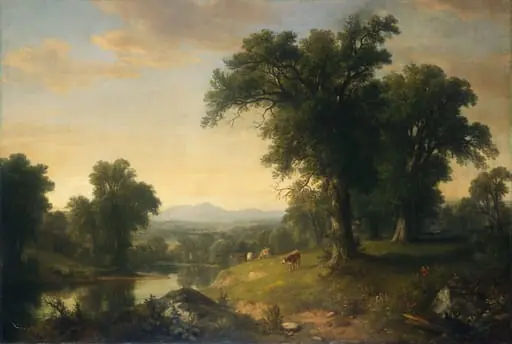 A Pastoral Scene
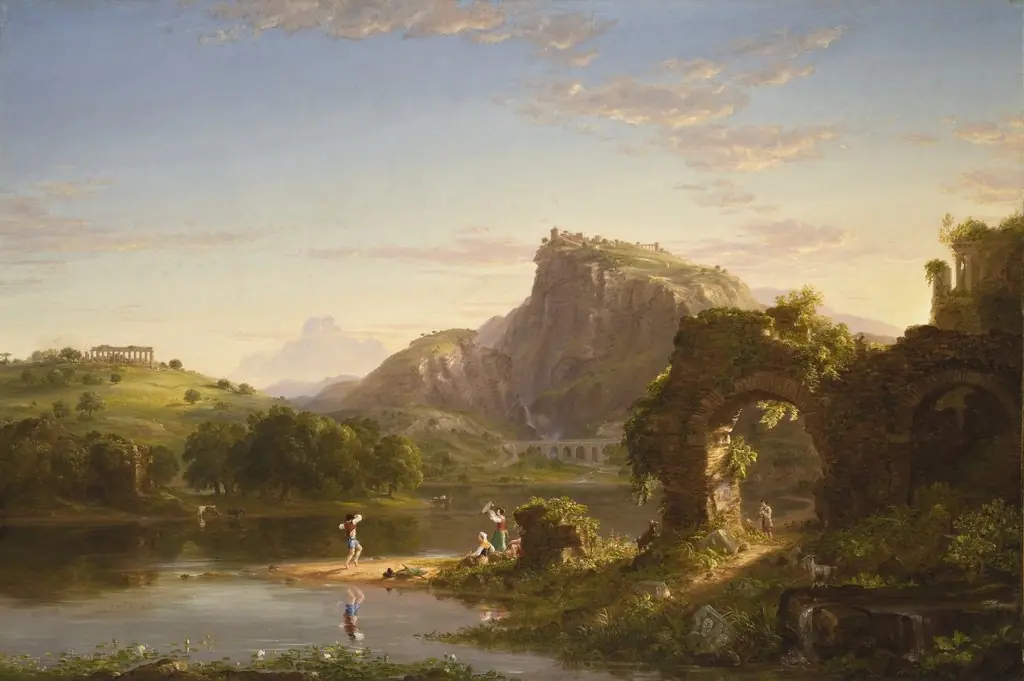 L-Allegro (Italian Sunset)
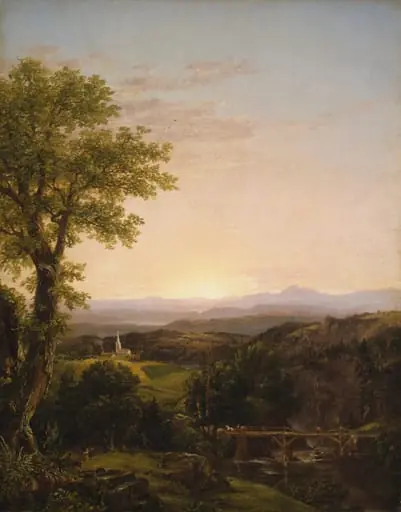 New England Scenery
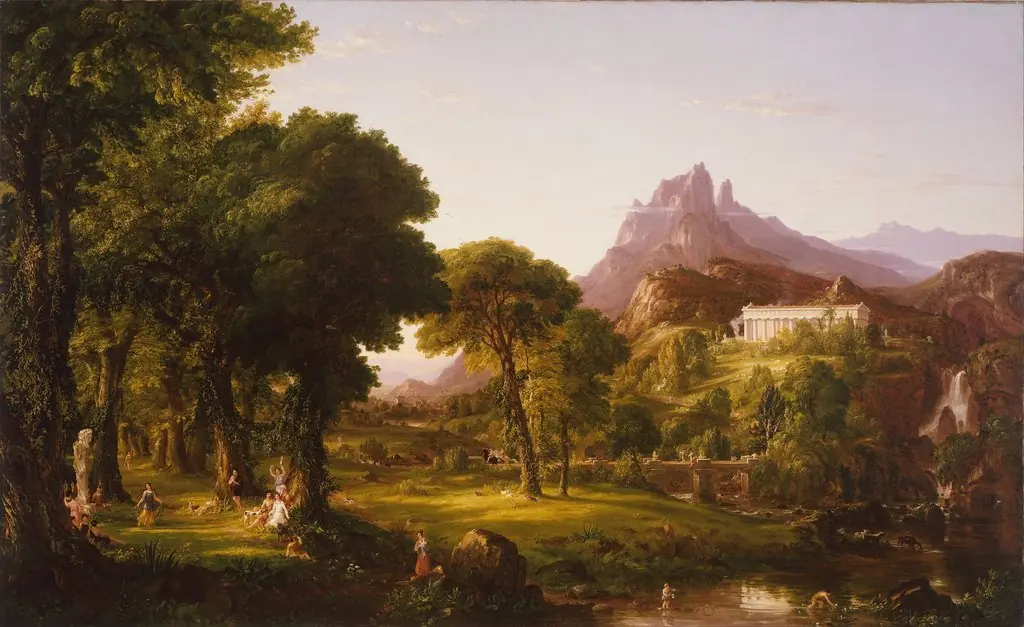 Dream of Arcadia
 Hilly Landscape with a Ruin
 Maisema, karjaa ja henkilöitä
 Sommerlandschaft im Hochgebirge
 Italiaans landschap met overzetveer
 Forest Scene