Artwork
Breach of a Dyke by Storm Surge on March 5 1651
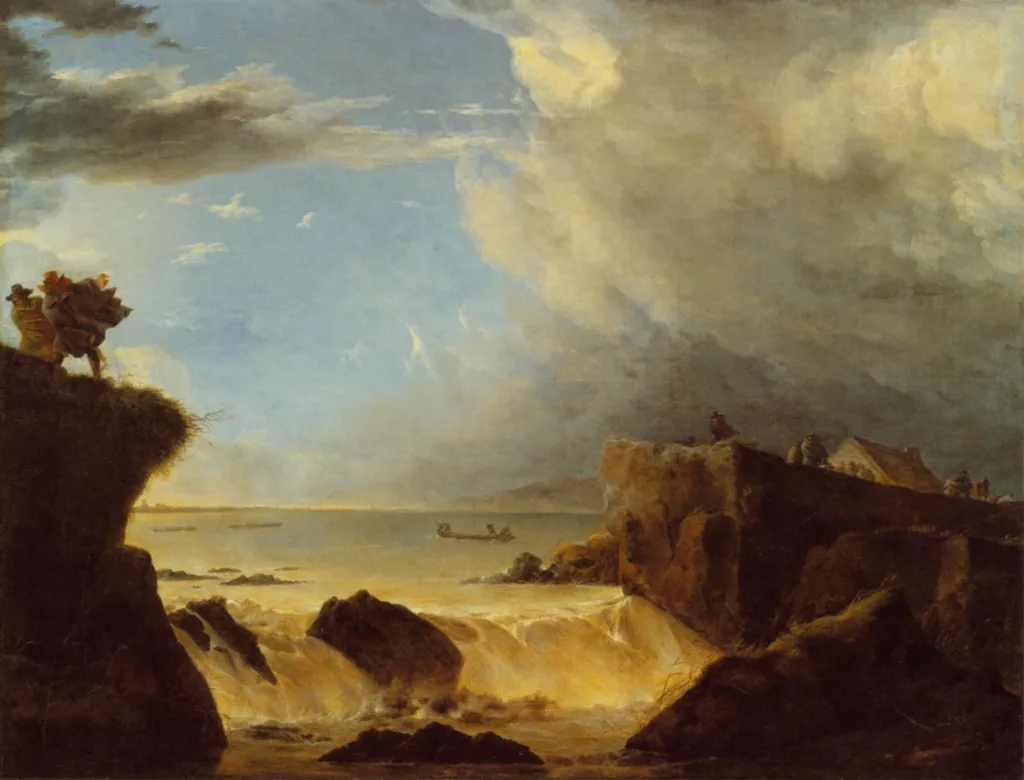
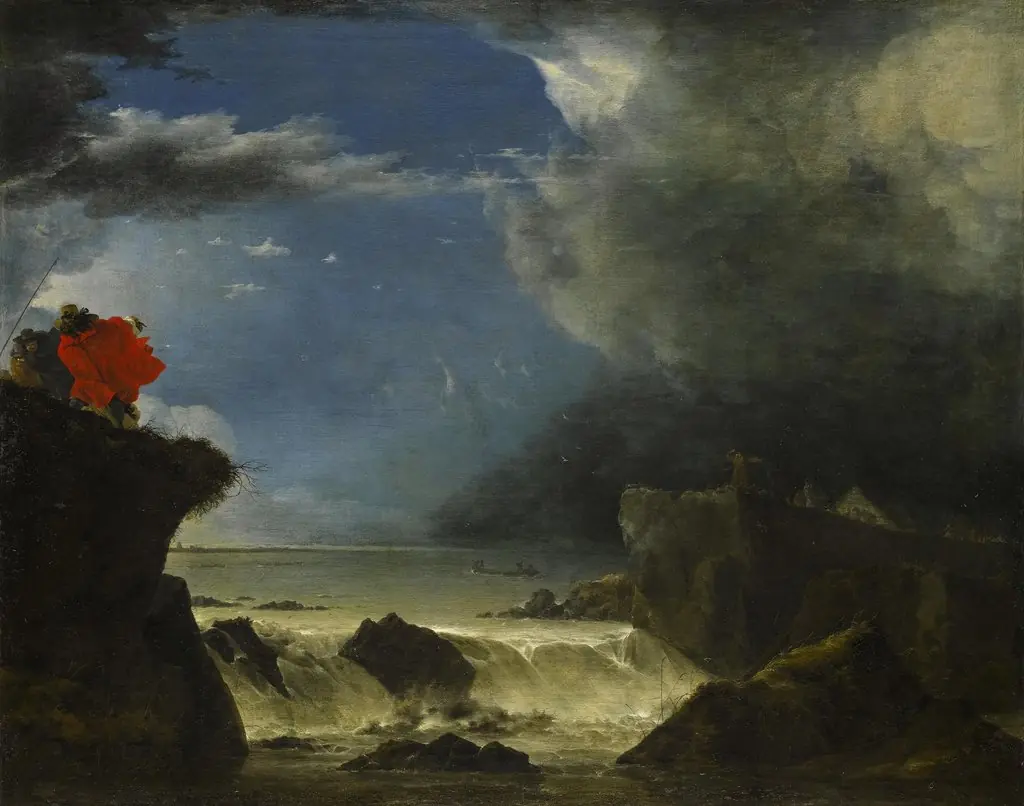
Breach of a Dyke by Storm Surge on March 5 1651 is an oil painting by the Dutch Golden Age artist Jan Asselijn. It dates from 1651 and is held in the collection of the Gemäldegalerie Berlin.
About this work
Subject & Meaning
The painting depicts the catastrophic breach of a dyke by a storm surge, a literal landscape disaster that the artist has framed as a history painting.
The painting depicts the catastrophic breach of a dyke by a storm surge, a literal landscape disaster that the artist has framed as a history painting. According to the catalogue record, the work specifically represents St. Peter's Flood, the violent North Sea storm surge of 1651 that ruptured protective levees and inundated low-lying coastal land. The imagery centers on the failure of human-built flood defenses: a levee giving way under the pressure of rising water, with the flood pouring through the breach.
By treating a contemporary real-world catastrophe in the elevated genre of history painting, Asselijn elevates a destructive natural event into a subject worthy of serious pictorial attention, transforming the depiction of collapsing infrastructure and surging water into a meditation on the vulnerability of reclaimed land to the sea.
Technique & Style
The painting is executed in oil paint on canvas, a standard support for mid-seventeenth-century Dutch history painting. Its dimensions are recorded as 73.5 cm in height by 95 cm in width, giving it a horizontal landscape format suited to the panoramic depiction of a levee breach and flooding during the St. Peter's Flood event of 1651. The work is classified as a history painting, a genre designation that frames the catastrophic subject within the broader tradition of Dutch narrative landscape painting.
The canvas is held in the collection of the Gemäldegalerie in Berlin. Beyond the medium, support, and measurements, the available sources do not provide further specifics regarding handling of the paint, surface condition, or stylistic qualities.
History & Provenance
The painting is held in the Gemäldegalerie Berlin, part of the Berlin State Museums' collection of European paintings. Catalogued as a Dutch history painting on canvas, it measures 73.5 by 95 centimetres.
No accession number or inventory designation is recorded in the available sources, and no exhibition history is documented.
Context
Jan Asselijn's 1651 oil painting Breach of a Dyke by Storm Surge on March 5 1651, housed in the Gemäldegalerie Berlin, depicts a dramatic flood scene referencing the St. Peter's Flood of 1651. The work was classified as a history painting and exemplifies the Dutch Golden Age fascination with natural disaster narratives. Contemporary accounts praised its dynamic composition and emotional intensity, though systematic scholarly analysis remains limited.
Art historians note its significance in the development of Dutch landscape and historical subjects, situating it within Asselijn's broader output focused on atmospheric effects and national resilience motifs. The painting's provenance in a major Berlin collection since acquisition has ensured its visibility in European art discourse.
Overview
Jan Asselijn’s 1651 oil painting records the catastrophic breach of a dyke during the storm surge of March 5, 1651, known historically as St. Peter’s Flood. The canvas captures the moment water overwhelms the levee, spilling into the low‑lying terrain and forcing residents to flee. The work is part of the collection of the Gemäldegalerie in Berlin.
Own this work as a print
Artist & collection