Artwork
Stonehenge
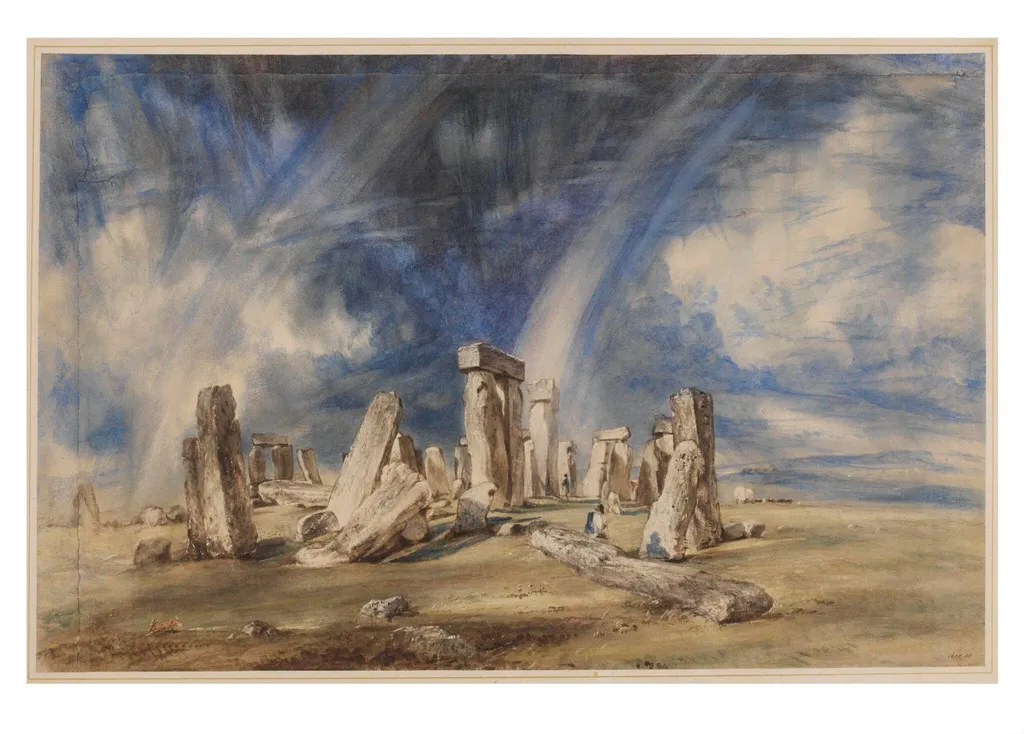
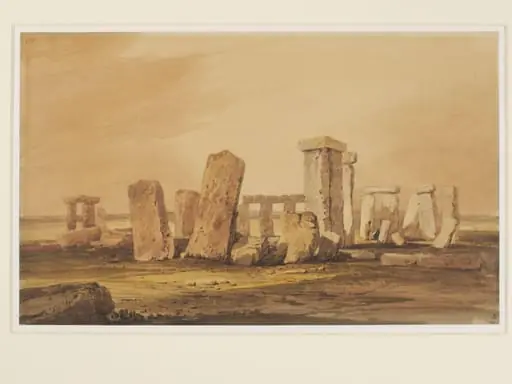
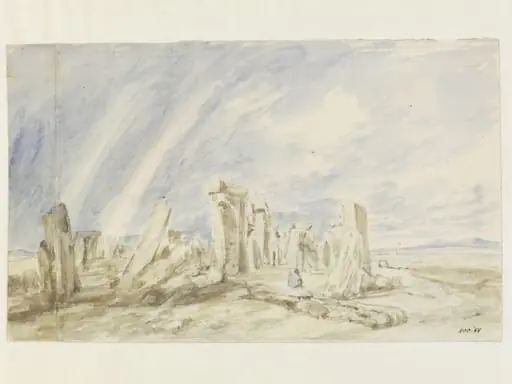
Stonehenge is a watercolor work on paper by the Romanticist artist John Constable. It dates from 1835 and is held in the collection of the Victoria and Albert Museum.
About this work
He made it during a sad time, his wife and close friend had died, and his sons left home.
John Constable painted a watercolor of Stonehenge in 1835. He made it during a sad time, his wife and close friend had died, and his sons left home. The painting feels heavy and lonely.
The museum says Constable might have put his sadness into the scene. It shows the old stones standing on a flat, empty plain. He even wrote lines to go with it, calling Stonehenge mysterious and remote.
Check out more works by the artist Constable, John (RA).
Overview
John Constable completed this watercolour of Stonehenge in 1835, during a period of profound personal loss. The death of his wife Maria, the passing of his close friend John Fisher, and the departure of his two eldest sons left him isolated. The painting reflects this emotional weight through its subdued tones and solitary composition, capturing the monument not as a tourist attraction but as a quiet, enduring presence in a vast, empty landscape.
Subject & Meaning
The painting presents Stonehenge as an isolated, ancient structure on an unbroken heath, stripped of human activity or seasonal vitality. The absence of figures, the muted sky, and the low horizon amplify a sense of solitude. Constable’s accompanying catalogue text, likely authored by him, describes the monument as mysterious and remote, suggesting he saw in its ruins a mirror for his own grief, a symbol of endurance amid absence.
Technique & Style
Constable employed transparent watercolour washes to create a hazy, atmospheric effect, with delicate layering that softens the edges of the stones and sky. The palette is restrained, dominated by greys, pale blues, and earth tones, reinforcing the mood of stillness. His brushwork is precise yet unobtrusive, allowing the emotional tone to emerge from composition and light rather than dramatic detail.
History & Provenance
The watercolour was exhibited at the Royal Academy’s Summer Exhibition in 1836, where it was accompanied by poetic lines possibly written by Constable himself. It remained in his possession until his death, suggesting personal significance beyond public display. After his passing, it entered private collections before being acquired by the Victoria and Albert Museum, where it is now held.
Context
In the mid-1830s, Constable was increasingly drawn to themes of transience and memory, moving away from the lush landscapes of his earlier career. Stonehenge, an ancient site with no clear historical narrative, resonated with his preoccupation with time and loss. The painting aligns with a broader Romantic interest in ruins as vessels of contemplation, though Constable’s approach remains intimate rather than grandiose.
Legacy
This watercolour stands as one of Constable’s most introspective works, marking a shift in his artistic focus toward emotional resonance over topographical accuracy. While not widely celebrated in his lifetime, it has since become a key example of how personal sorrow can inform landscape art, influencing later artists who sought to convey inner states through natural forms.
Own this work as a print
Artist & collection
Artist
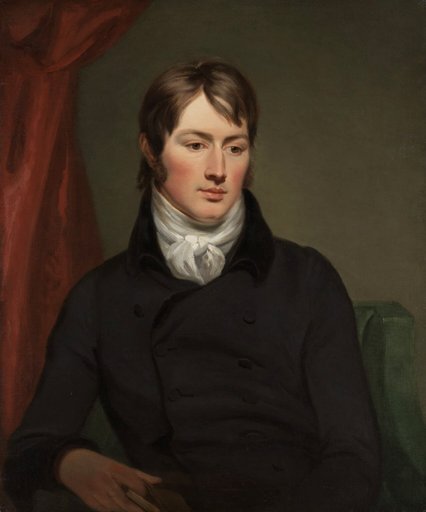
John Constable was an English landscape painter in the Romantic tradition. Born in Suffolk, he is known principally for revolutionising the genre of landscape painting with his pictures of Dedham Vale, the area on the…

 Stonehenge
 Stonehenge
 Stonehenge at Daybreak
 Stonehenge from the West-South-West
 Stonehenge
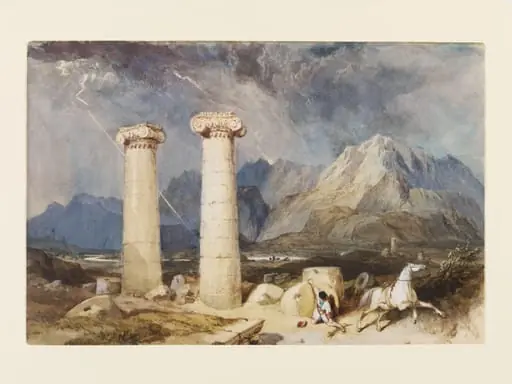 Sardis, One of the Seven Churches
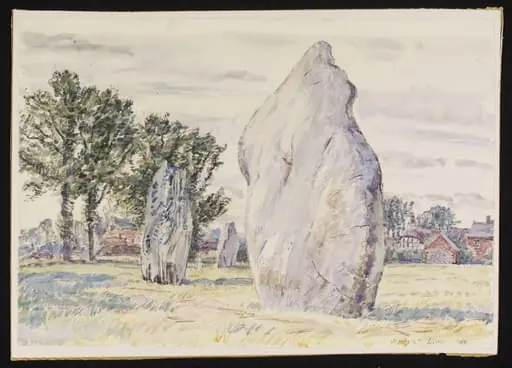 The Southern Circle and Village, Avebury
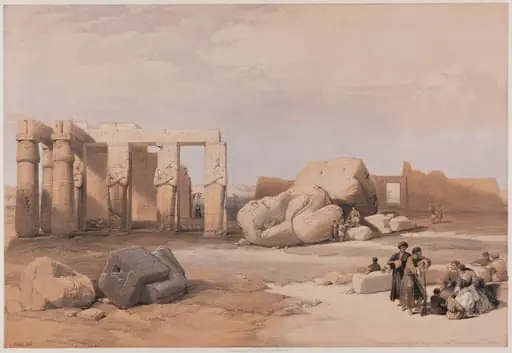 Egypt and Nubia, Volume II: Fragments of the Great Colossi at the Memnonium, Thebes
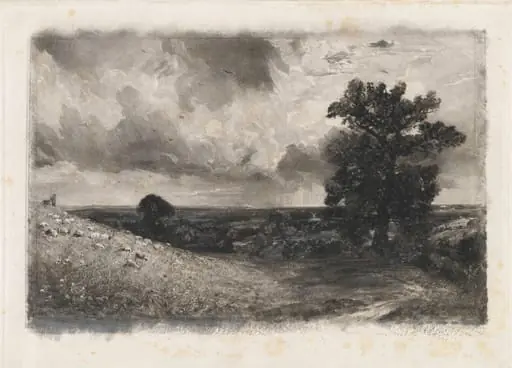 Noon
Noon Hadleigh Castle (Large Plate)
 Temple at Derr, Nubia, Egypt
- Stone Henge