Artwork
The Ferry Crossing
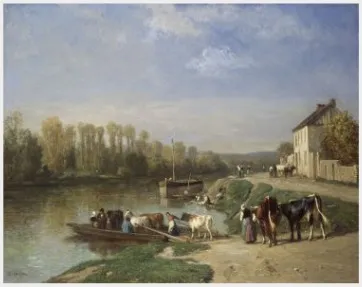
The Ferry Crossing is an oil painting by the Barbizon school artist Constant Troyon. It dates from 1862 and is held in the collection of the National Gallery of Ireland.
About this work
Overview
Constant Troyon’s 1862 oil work, titled The Ferry Crossing, presents a calm riverside tableau. A modest group of figures gathers beside a small boat that is being drawn along the water by a rope. Cattle linger on the bank, one guided by a hand, while a distant house framed by trees anchors the composition under a clear sky.
Subject & Meaning
The scene captures everyday rural activity, emphasizing the interaction between humans, livestock, and the landscape. The ferry, a simple means of transport, suggests a moment of transition, while the tranquil setting and gentle light convey a sense of pastoral stability and communal routine.
Technique & Style
Troyon employs a restrained palette of greens, browns, and blues, layering thin washes to render atmospheric depth. The brushwork varies from smooth sky washes to more textured handling of foliage and the cattle’s hide, creating a tactile contrast that enhances the sense of space and quiet movement.
History & Provenance
Executed in the mid‑nineteenth century, The Ferry Crossing entered the collection of the National Gallery of Ireland, where it remains on public display. Its acquisition reflects the institution’s interest in French landscape painting of the period, providing visitors insight into Troyon’s oeuvre.
Context
Created during a time when French artists were increasingly drawn to rural genre scenes, Troyon’s work aligns with the Barbizon school’s focus on naturalistic observation. The painting’s composition and subject matter echo contemporary interests in depicting the simple, unromanticized aspects of countryside life.
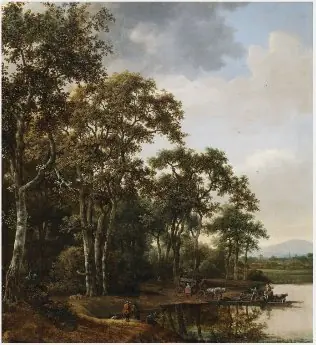
Artist & collection
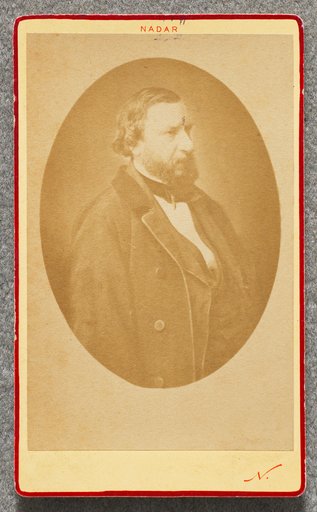
Artist
Constant Troyon was a French painter of the Barbizon school. In the early part of his career, he painted mostly landscapes. It was only comparatively late in life that Troyon found his métier as a painter of animals,…

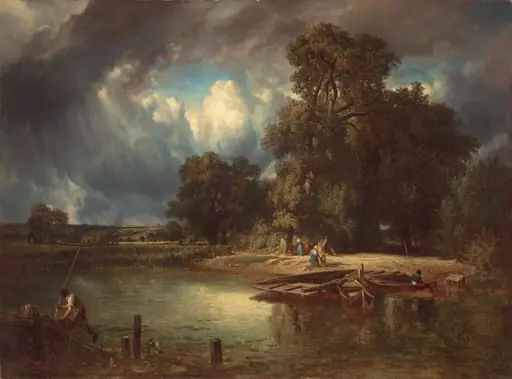
 The Confluence of the Rivers Seine and Oise
 Cottage by the River with Washerwomen
 Landscape with a Cottage and a Brook
 Cottage by the River with Washerwomen
 Paisaje de Portland
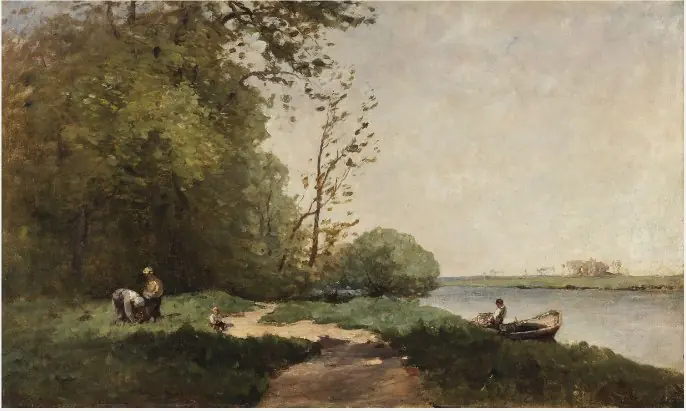 The Banks of the Seine
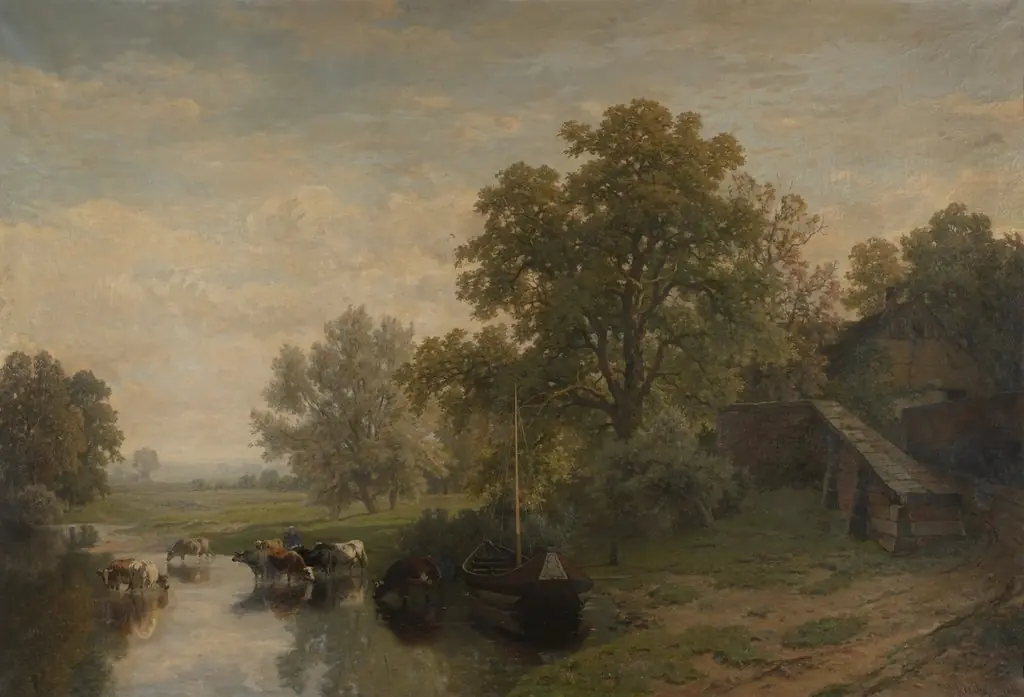 Landscape in Limburg
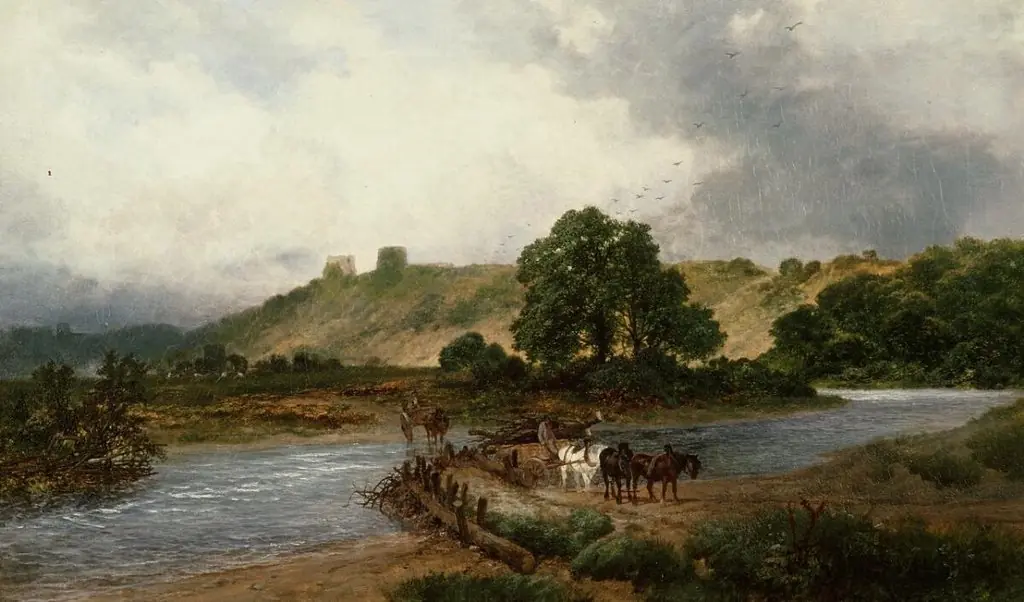 Hauling logs near Rhuddlan Castle
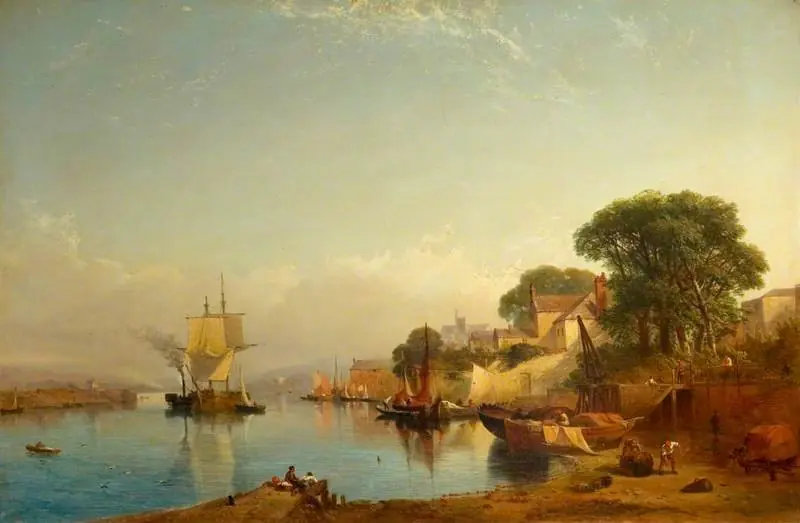 The Menai Strait
 An Inn Scene in a Landscape
 Drying Nets
- The Ferry Boat