Artwork
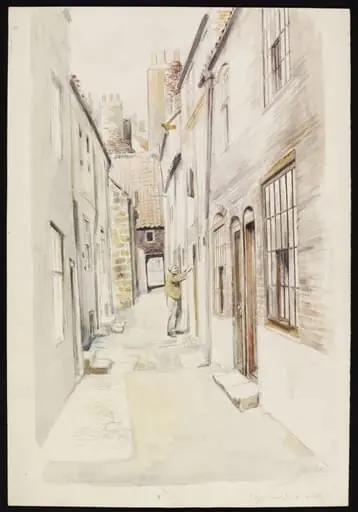
White Horse Hotel, Whitby
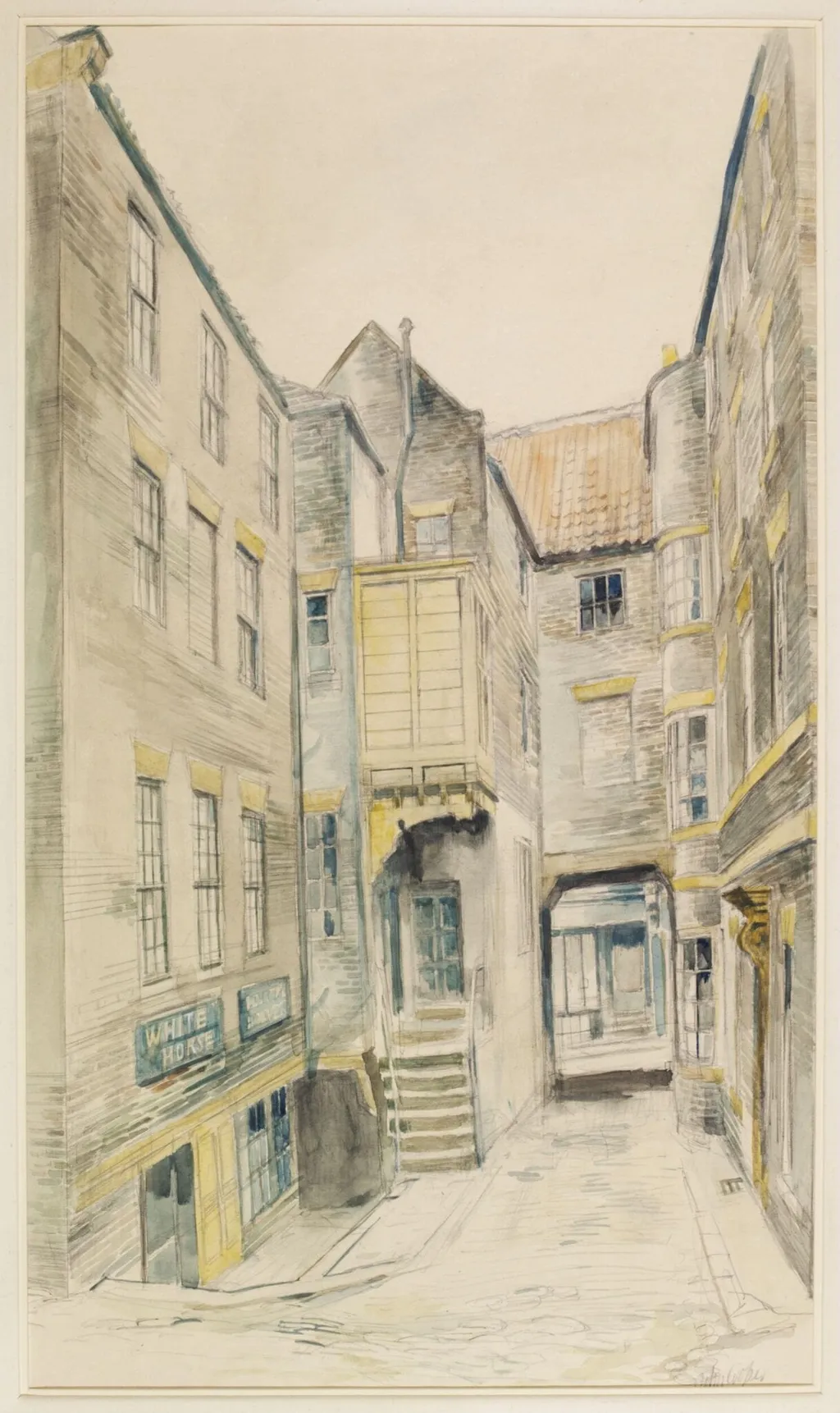
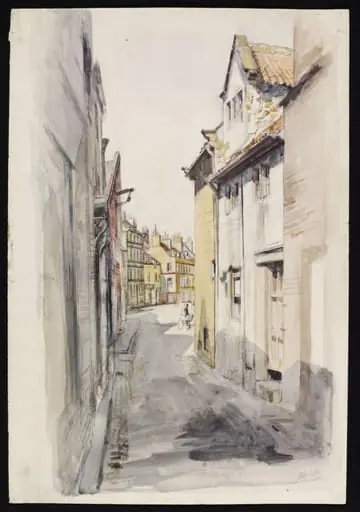
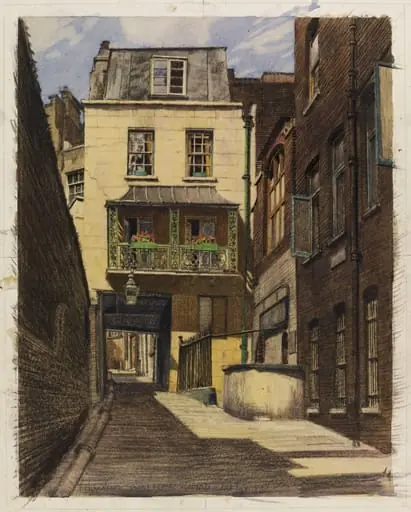
White Horse Hotel, Whitby is a watercolor work on paper by the Regionalist artist John Cooper. It dates from 1940 and is held in the collection of the Victoria and Albert Museum.
About this work
Overview
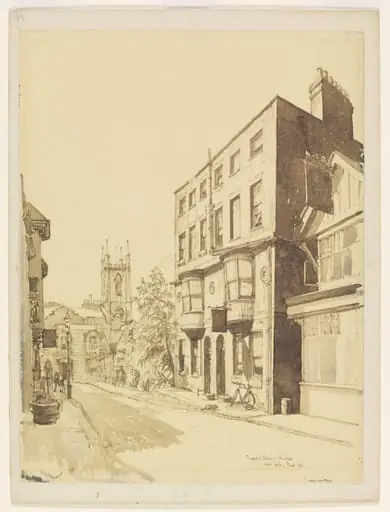
John Cooper’s 1940 watercolour captures a quiet alleyway in Whitby, with the White Horse Hotel visible along the left flank.
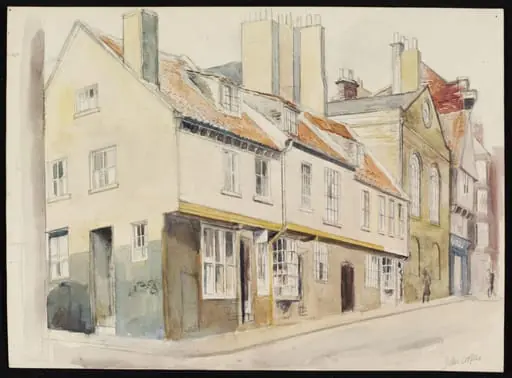
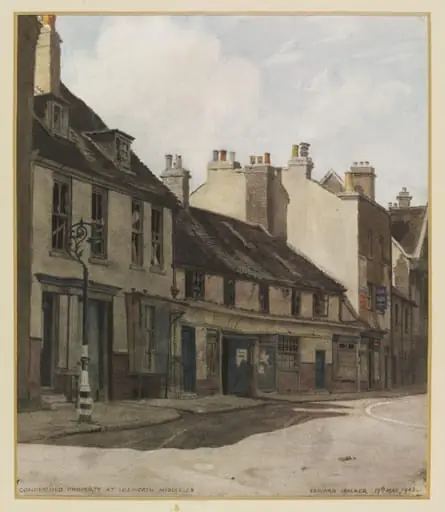
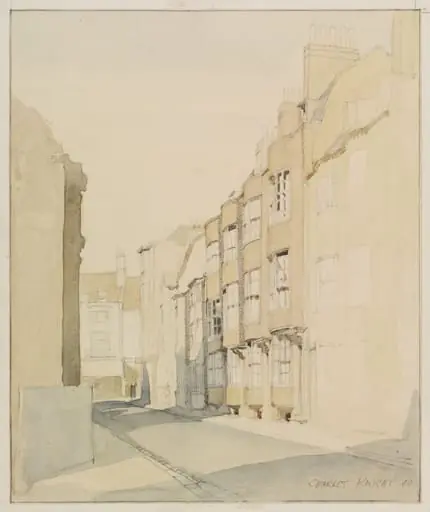
John Cooper’s 1940 watercolour captures a quiet alleyway in Whitby, with the White Horse Hotel visible along the left flank. Executed as part of the Recording Britain project, the work contributes to a broader wartime effort to visually archive vulnerable landscapes and vernacular architecture. The composition emphasizes narrow urban passages, framing everyday structures with restrained detail and subdued tones.
Subject & Meaning
The scene centers on a confined passageway between modest buildings, suggesting the intimate, often overlooked corners of coastal towns. The hotel’s presence anchors the view in local identity, while the staircase and clustered doorways imply daily life unfolding behind closed shutters. The image conveys a sense of stillness, reflecting the project’s aim to preserve ordinary spaces threatened by conflict and modernization.
Technique & Style
Cooper employed transparent watercolour washes to build subtle gradations of gray, beige, and pale yellow, avoiding sharp outlines in favor of soft transitions. The medium’s fluidity enhances the atmospheric quality of the scene, with light diffused across weathered surfaces. While not using sfumato in the Renaissance sense, the technique similarly blurs edges to evoke mood rather than precise detail.
History & Provenance
Created in 1940 under the Recording Britain initiative, the painting was commissioned by the Pilgrim Trust and directed by Sir Kenneth Clark. The project enlisted artists to document at-risk sites as Britain braced for aerial bombardment and postwar redevelopment. Cooper’s work entered the Victoria and Albert Museum’s collection as part of this systematic preservation effort.
Context
During the Second World War, cultural institutions feared the loss of historic architecture through bombing and neglect. Recording Britain responded by commissioning watercolours of rural and urban scenes deemed emblematic of national character. Cooper’s depiction of Whitby’s alley reflects this mission, prioritizing authenticity over idealization in a time of national uncertainty.
Legacy
The Recording Britain collection endures as a vital archive of mid-20th-century British topography. Cooper’s watercolour remains a quiet testament to the resilience of ordinary places, offering insight into how communities were visually remembered during crisis. Its inclusion in the V&A ensures continued access for scholars and the public interested in wartime cultural preservation.
Artist & collection
Artist
John Cooper specialized in quiet watercolor views of northern England from the 1940s.