Artwork
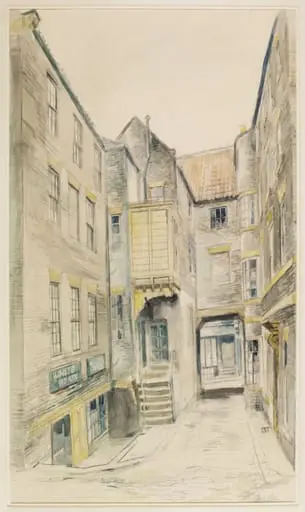
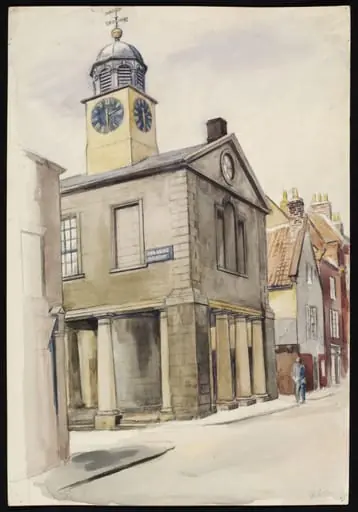
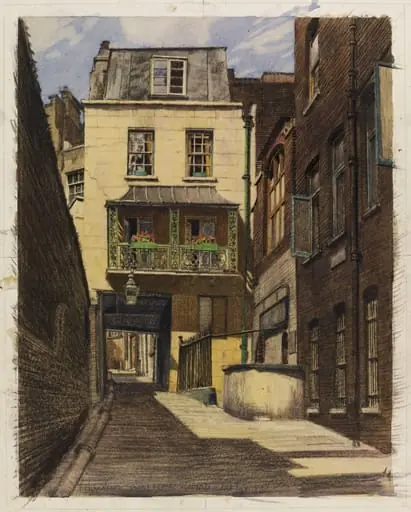
Loggerheed Yard, Whitby
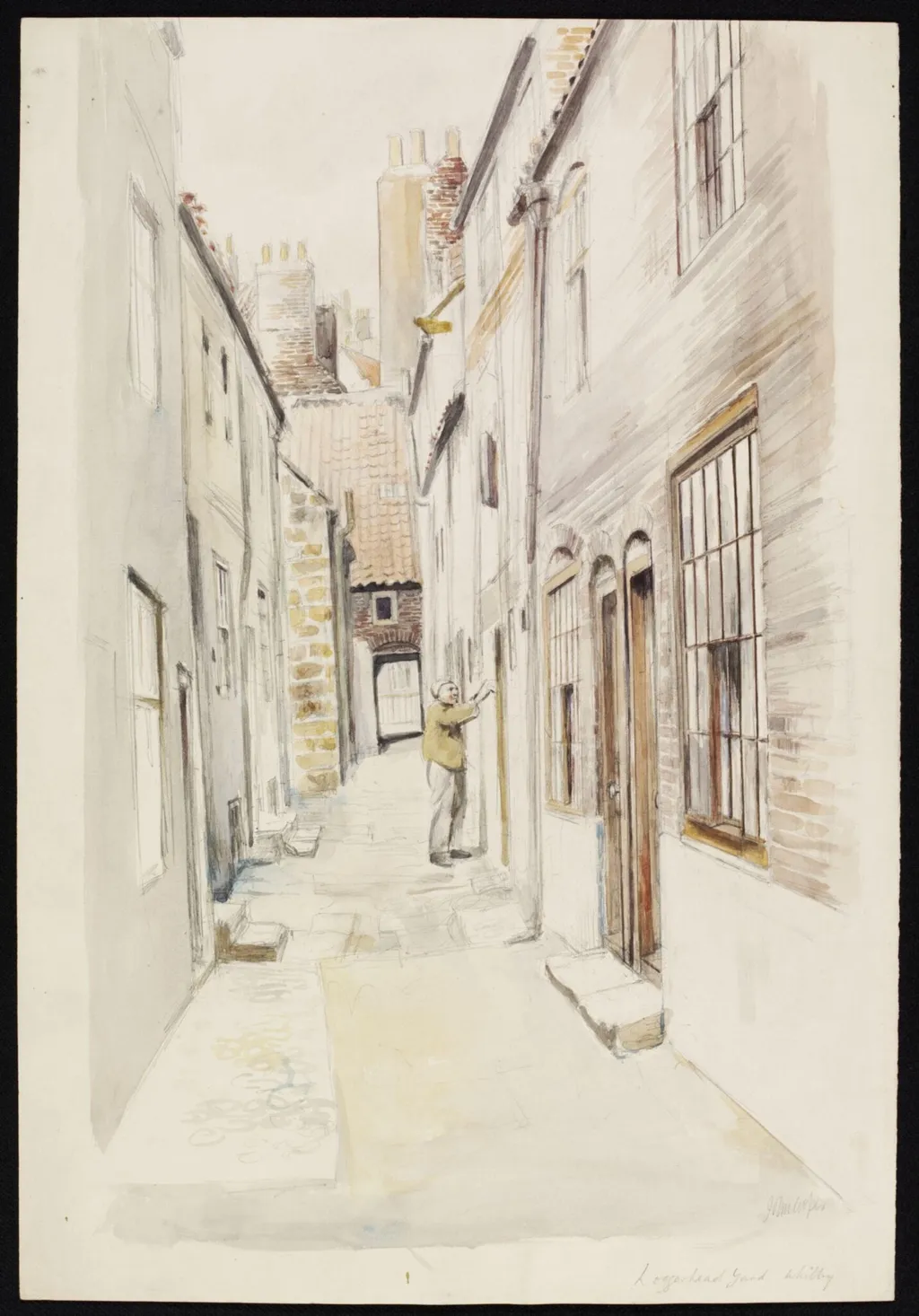
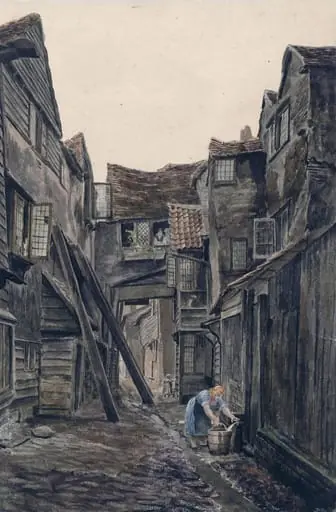
Loggerheed Yard, Whitby is a watercolor work on paper by the Regionalist artist John Cooper. It dates from 1940 and is held in the collection of the Victoria and Albert Museum.
About this work
Overview
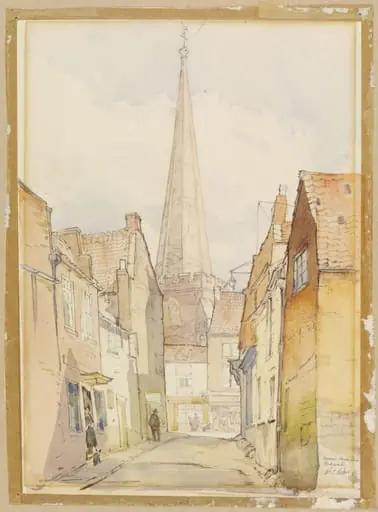
John Cooper’s watercolour, signed and dated 1940, portrays a narrow lane bordered by modest terraced houses in Whitby’s quayside district. The composition captures a modest urban scene, with a solitary figure in a light coat standing midway, gazing upward toward the wall. Muted tones dominate, while subtle shadows accentuate the sloping alley and weathered brickwork.
Subject & Meaning
The work records a slice of everyday life on Britain’s home front during the early years of the Second World War. By focusing on an ordinary street and its inhabitants, the painting reflects the resilience of local communities and the continuity of daily routines amid national upheaval.
Technique & Style
Cooper employs rapid, loose brushstrokes to suggest the texture of brick and the worn surface of the alley. A light source from the upper left creates soft, diffused shadows, while the restrained palette emphasizes the muted atmosphere of the scene.
History & Provenance
The piece was produced for the Recording Britain initiative, a wartime effort funded by the Pilgrim Trust and overseen by Sir Kenneth Clark. The scheme commissioned artists to document sites at risk from bombing or post‑war redevelopment, resulting in over 1,500 works by 97 contributors between 1940 and 1943.
Artist & collection
Artist
John Cooper specialized in quiet watercolor views of northern England from the 1940s.