Artwork
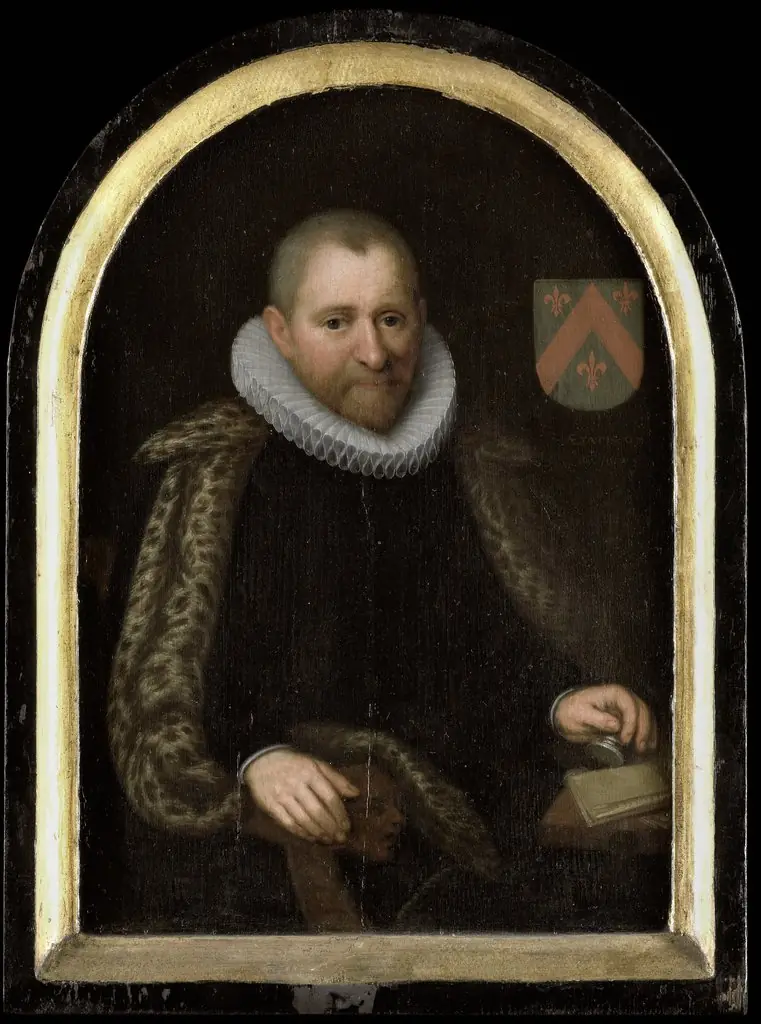
Portrait of Floris Gerritsz Overrijn van Schoterbosch (c. 1562-1618)
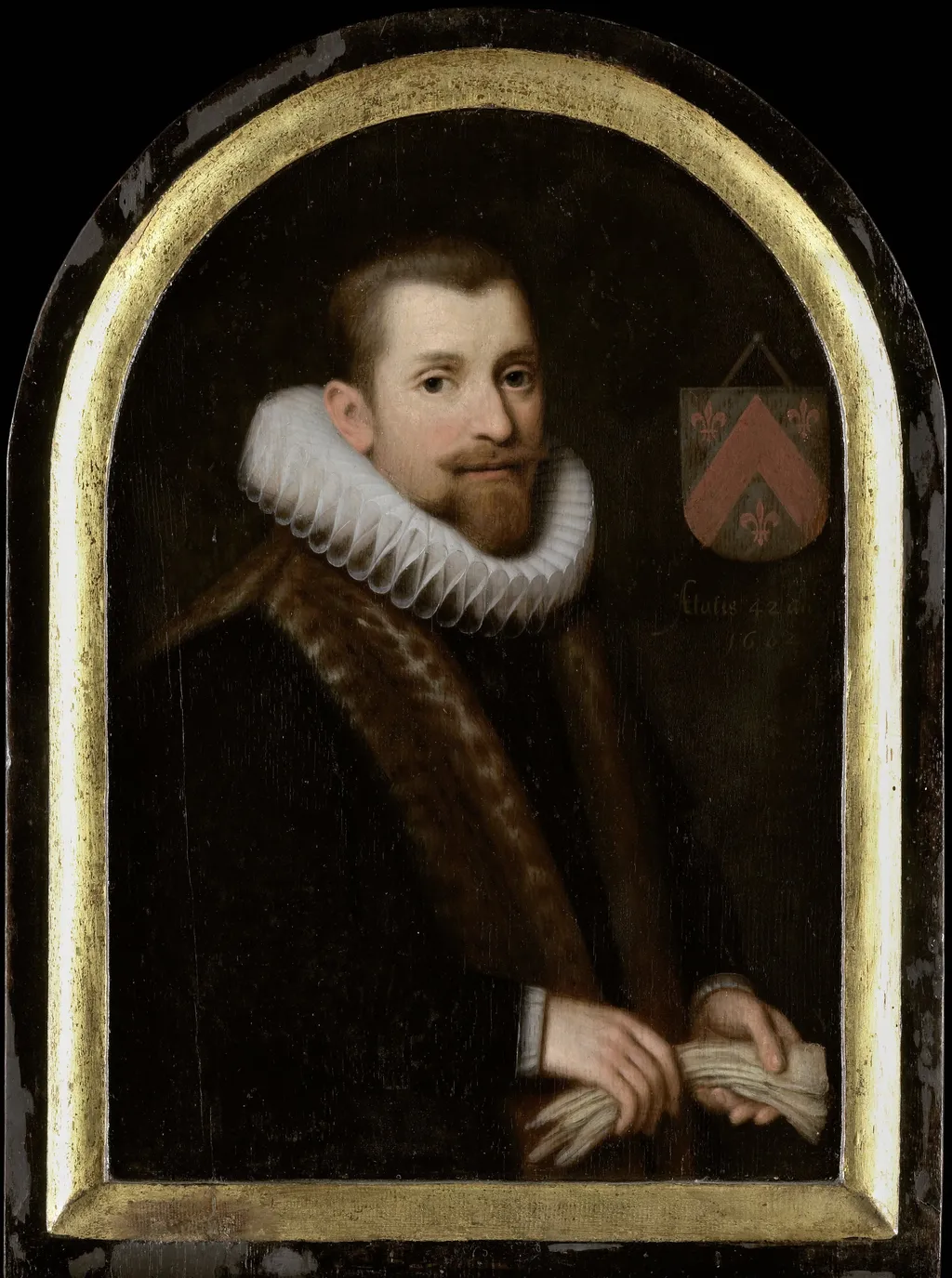
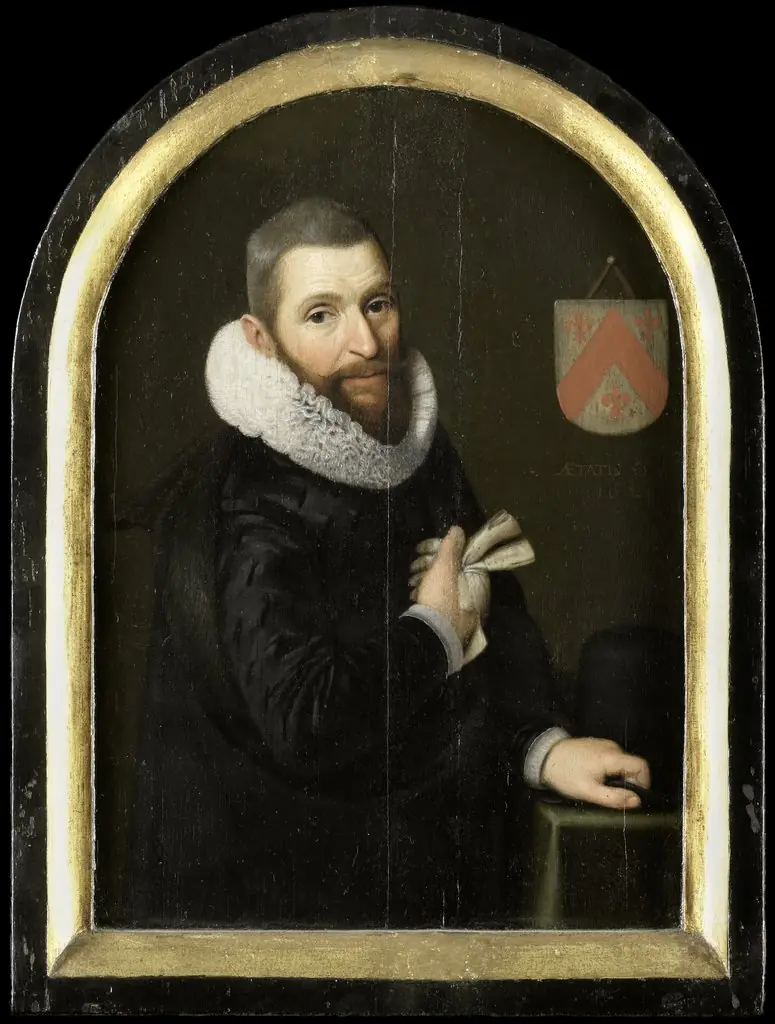
Portrait of Floris Gerritsz Overrijn van Schoterbosch (c. 1562-1618) is an oil painting by the Dutch Golden Age artist Cornelis Engelsz.. It dates from 1620 and is held in the collection of the Rijksmuseum.
About this work
Technique & Style
Cornelis Engelsz. executed this 1620 portrait using oil paint applied to a wooden panel. The work is a relatively small, intimate format, measuring 39 cm in height and 29 cm in width. As a portrait, the painting belongs to a genre frequently produced in the Northern Low Countries during this period.
History & Provenance
It is an oil on panel measuring 39 cm in height and 29 cm in width, executed in the Northern Low Countries during the early seventeenth century.
The portrait of Floris Gerritsz Overrijn van Schoterbosch is dated 1620 and attributed to Cornelis Engelsz. It is an oil on panel measuring 39 cm in height and 29 cm in width, executed in the Northern Low Countries during the early seventeenth century.
The painting is held in the collection of the Rijksmuseum, Amsterdam. Its documented history begins with this institutional holding, where it has remained as part of the national collection.
The Portrait of Floris Gerritsz Overrijn van Schoterbosch is held in the collection of the Rijksmuseum in the Netherlands. The work, an oil painting on panel created by Cornelis Engelsz. in 1620, is part of the museum's permanent holdings. While the specific inventory or accession number is not provided in the available sources, the painting is documented as a portrait genre piece within the Rijksmuseum's collection. No exhibition history is recorded in the provided documentation.
Overview
Cornelis Engelsz. painted this oil portrait in 1620, depicting Floris Gerritsz Overrijn van Schoterbosch (c. 1562–1618). The work is part of the Rijksmuseum collection and measures a modest size typical of early‑17th‑century Dutch portraiture.
Subject & Meaning
The sitter is shown in formal attire: a dark fur‑trimmed coat, a white ruff, and a solemn expression that conveys status and gravitas. A red shield bearing an unfamiliar emblem rests at his side, hinting at a personal or familial heraldic identity.
Context
The painting reflects the Dutch Republic’s early‑modern portrait tradition, where merchants and officials commissioned works to assert their social position. Engelsz., a pupil of Frans Hals, integrates the period’s emphasis on realistic likeness with a modest, dignified setting.
Own this work as a print
Artist & collection