Artwork
Trompe l'oeil of a Letter Rack with Christian V's Proclamation
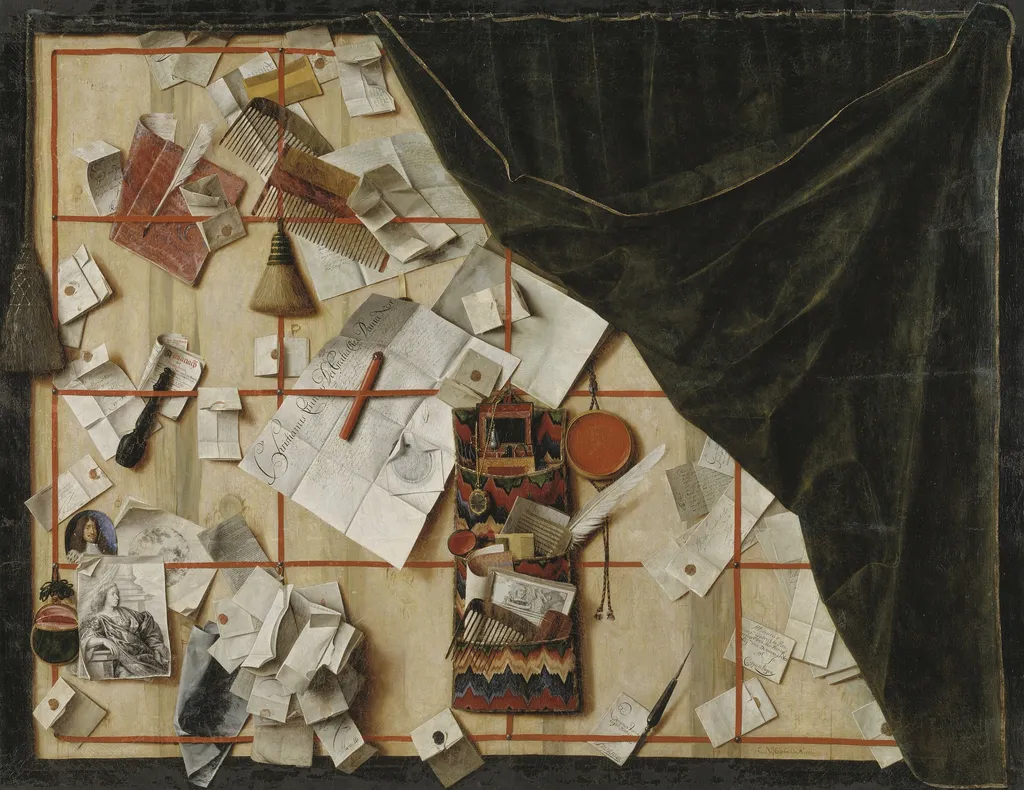
Trompe l'oeil of a Letter Rack with Christian V's Proclamation is an oil painting by the Flemish Baroque painting artist Cornelis Norbertus Gijsbrechts. It dates from 1671 and is held in the collection of the Statens Museum for Kunst.
About this work
Overview
8 centimeters, the work presents a meticulously illusionistic overhead view of a letter rack crowded with documents, personal items, and official papers.
Trompe l'oeil of a Letter Rack with Christian V's Proclamation is a 1671 oil painting on canvas by the Flemish artist Cornelis Norbertus Gijsbrechts, one of the foremost practitioners of trompe-l'œil in Northern Europe during the second half of the seventeenth century. Measuring 143.2 by 185.8 centimeters, the work presents a meticulously illusionistic overhead view of a letter rack crowded with documents, personal items, and official papers. It is held in the collection of the Statens Museum for Kunst in Copenhagen. The painting matters as a prime example of Gijsbrechts's court-period output in Denmark, where he served successive monarchs, and as a sophisticated meditation on the nature of representation, political communication, and the material culture of bureaucracy in the early modern state.
Subject & Meaning
The painting depicts a letter rack viewed from directly above, its surface divided by red horizontal and vertical ribbons into a grid pattern. Numerous folded and unfolded letters, some bearing visible seals and handwriting, are tucked beneath these ribbons or scattered across the light wooden surface. Among the correspondence rest a small broom, a comb, a red sealing wax stick, a pocket watch with a chain, a quill, and a penknife. A decorated fabric pouch with zigzag patterns holds additional items, while printed engravings, including a portrait and architectural scenes, appear alongside the papers. A dark green curtain with gold trim sweeps across the right side, partially covering the rack. The inclusion of Christian V's proclamation anchors the work in the sphere of Danish royal authority, mingling official state documents with personal correspondence and mundane objects to create a complex portrait of bureaucratic and social practices. The curtain device serves a dual function: it enhances the illusion of a real space beyond the painted surface while also suggesting the partial concealment and selective revelation that characterize political communication itself. The assembled objects collectively elevate everyday material to the level of high art, prompting reflection on what constitutes worthy subject matter and whether the painting itself functions as another form of official proclamation about Danish culture and power.
Technique & Style
Gijsbrechts executed the work in oil on canvas, employing the smooth and precise brushwork characteristic of his trompe-l'œil practice. The palette consists of warm wood tones, cream and gray papers, deep reds, and the heavy dark green of the draped fabric. Light falls evenly from above, casting subtle shadows beneath the letters and objects to enhance their three-dimensional presence. The technique is designed to mimic the textures of paper, fabric, wood, and metal with meticulous illusionism, creating what has been described as an almost photographic realism. The signature and date appear in the lower right corner. The artist's handling demonstrates particular attention to the varied surfaces of the assembled objects, from the crisp edges of folded correspondence to the soft drape of the curtain and the metallic gleam of the pocket watch chain. This controlled chaos of meticulously rendered disparate materials showcases Gijsbrechts's mastery of the trompe-l'œil tradition and his ability to challenge viewers' perception of reality.
History & Provenance
The painting is dated 1671, placing it during Gijsbrechts's service as court painter to Christian V of Denmark from 1670 to 1672. Gijsbrechts had arrived in Denmark by 1668 at the latest, having previously worked for Frederik III from 1668 to 1670 and maintained a studio in The Royal Garden by Rosenborg Castle. From 1670 onward he called himself Court painter, and in the period 1670 to 1672 he received payment for several paintings, including works for Rosenborg Castle. The work is now in the collection of the Statens Museum for Kunst, though specific details of its accession history are not recorded in the available sources. The painting's creation during Gijsbrechts's Danish court period suggests it was produced within the orbit of royal patronage, though whether it was a direct commission from Christian V or produced for another member of the court or bourgeoisie remains unspecified.
Context
Gijsbrechts's career trajectory reflects the peripatetic nature of seventeenth-century Northern European court artistry. His oldest known painting dates to 1657, and he is believed to have worked in Germany in the early 1660s, possibly including service to Emperor Leopold I in Regensburg, and to have stayed in Hamburg around 1664 to 1665. His move to Denmark represented a significant phase of stable court employment, during which he produced works that combined his Flemish training in illusionistic painting with the specific political and cultural needs of the Danish monarchy. The letter rack format itself had particular resonance in Northern European art, and Gijsbrechts's 1673 letter rack painted for the bourgeoisie of Stockholm demonstrates his continued exploration of the genre after leaving Copenhagen. Critical reception has emphasized how the painting operates as commentary on representation and the power of images, with scholars noting its engagement with political communication and the symbolic power of objects in late seventeenth-century culture. The work's place in art history rests on its exemplification of trompe-l'œil at its most conceptually sophisticated, merging technical bravura with meditations on state power and visual deception.
Legacy
The painting's legacy is intertwined with Gijsbrechts's broader reputation as a master of trompe-l'œil, an artist whose very name became associated with the most refined illusionistic techniques of his era. Despite the relative obscurity of his biography, even to contemporary art historical literature, his works have come to be recognized as significant contributions to the development of still life and illusionistic painting in Northern Europe. The letter rack with Christian V's Proclamation stands as a key document of his Danish period, preserving through its assembled objects a material record of early modern bureaucratic practice and royal authority. Its current place in the Statens Museum for Kunst ensures its continued accessibility for scholarly and public engagement. The work has prompted curatorial reflection on consumption patterns in the late seventeenth century, particularly the display of paintings depicting everyday items in private chambers as markers of cultural sophistication. Its influence can be traced in the continued critical interest in trompe-l'œil as a genre that interrogates the boundaries between art and reality, and in scholarly attention to the political dimensions of seemingly neutral representational practices.
Own this work as a print
Artist & collection
Artist
Cornelis Norbertus Gijsbrechts
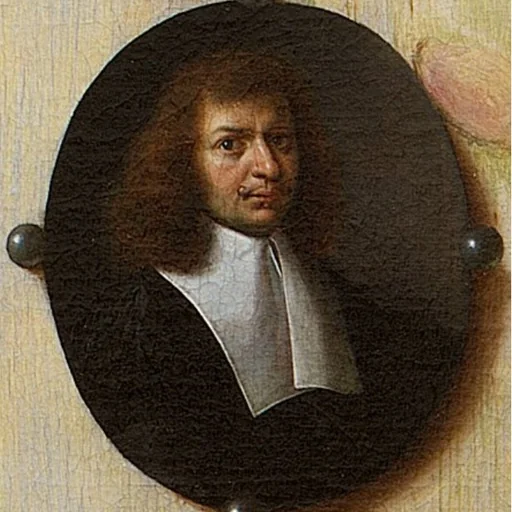
Cornelis Norbertus Gijsbrechts (1625/1629 – after 1675), was a Flemish painter who was active in the Spanish Netherlands, Germany, Denmark and Sweden in the second half of the seventeenth century.

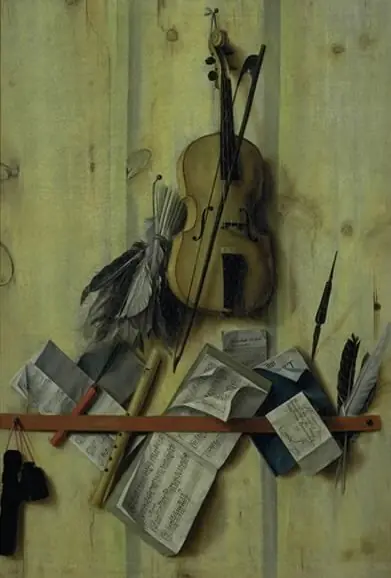 Trompe l'oeil with Violin, Music Book and Recorder
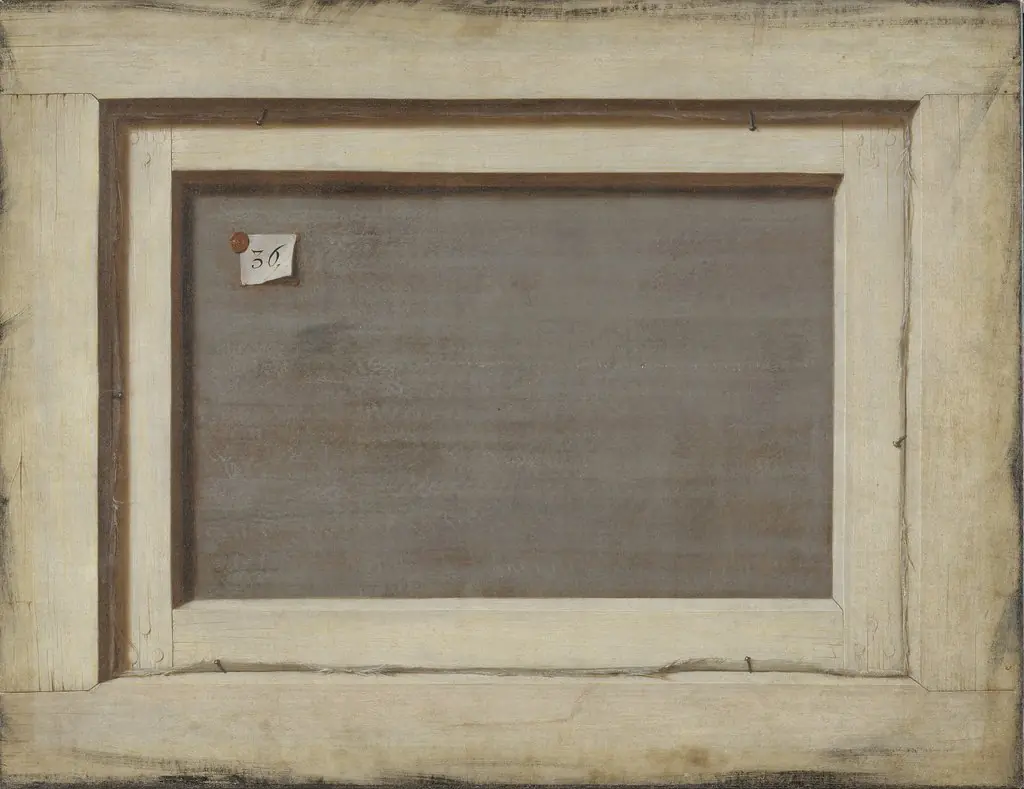 Trompe l'oeil. The reverse of a framed painting.
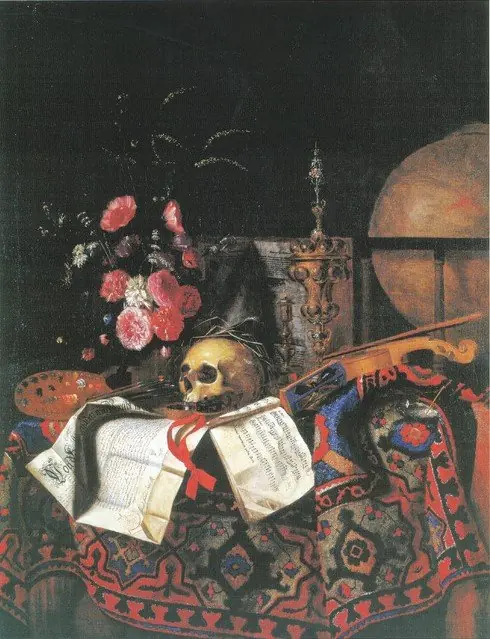 Vanitas still life with bouquet of flowers, painters palette, globe, violin and acorn cup
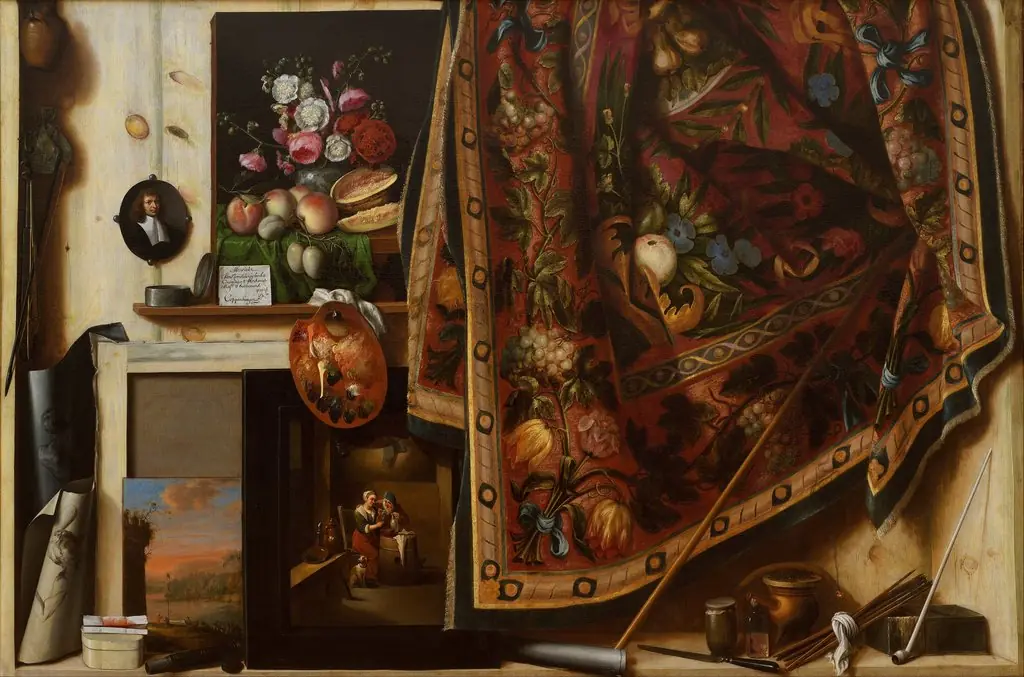 Trompe-l'œil. A Cabinet in the Artist's Studio
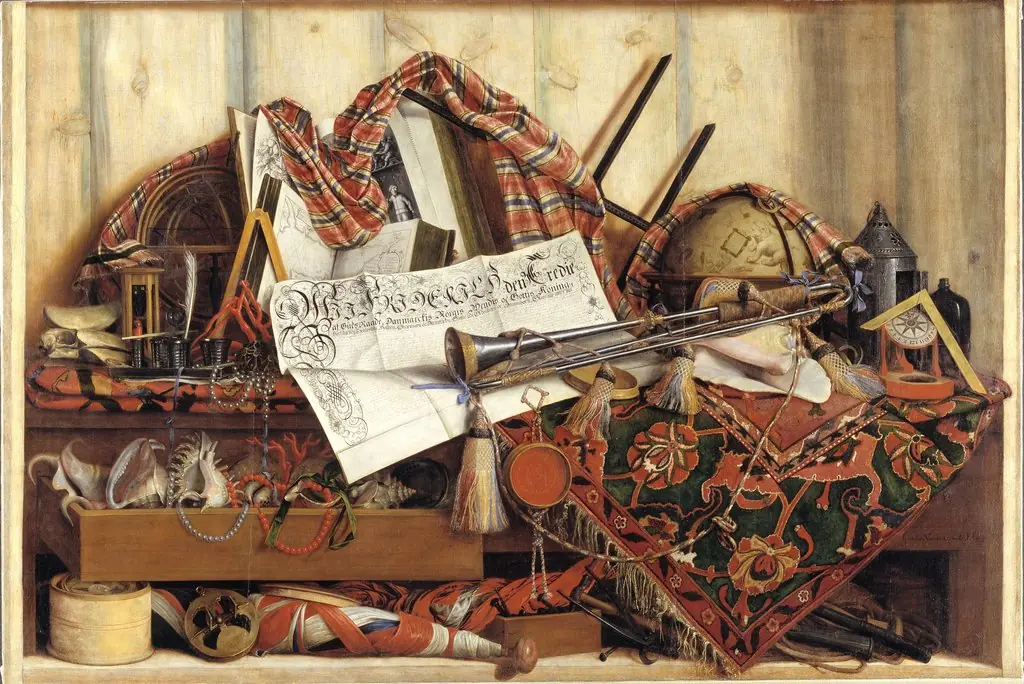 Trompe l'Oeil with Trumpet, Celestial Globe and Proclamation by Frederik III
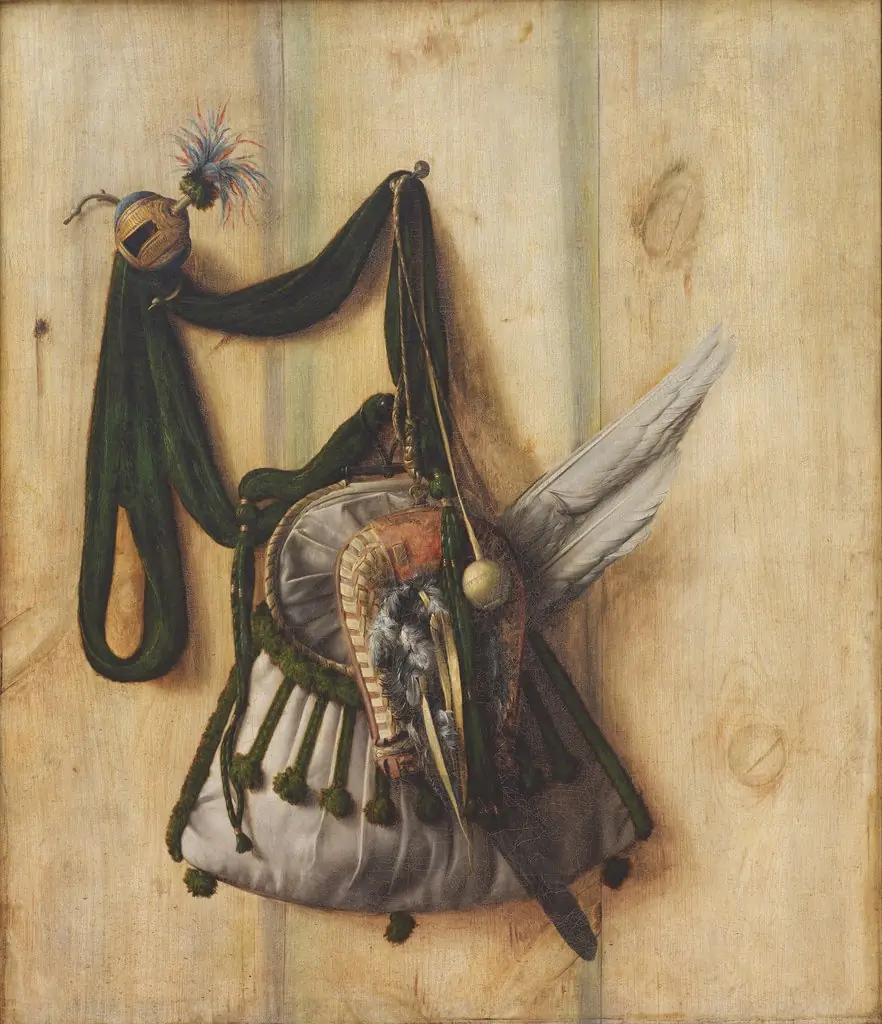 Trompe l'Oeil with Falconer's Bag and other Equipment for Falconry
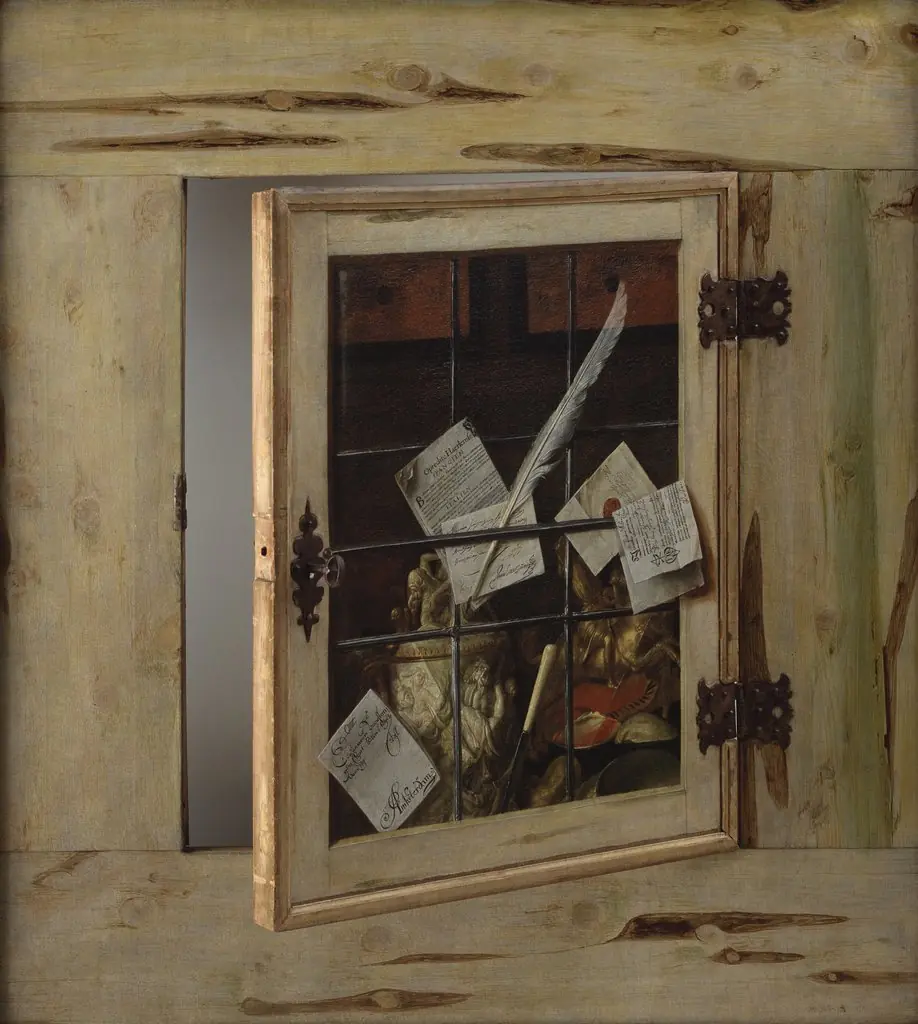 A Cabinet of Curiosities with an Ivory Tankard
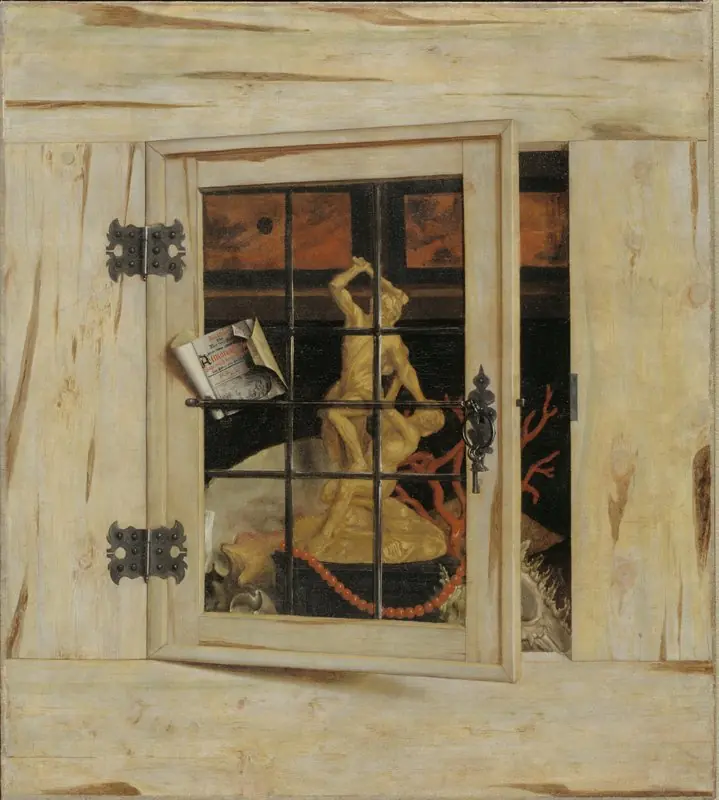 Trompe l'Oeil. An Open Cabinet of Curiosities with a Hercules Group
- Trompe l'oeil of a Letter Rack with Christian V's Proclamation
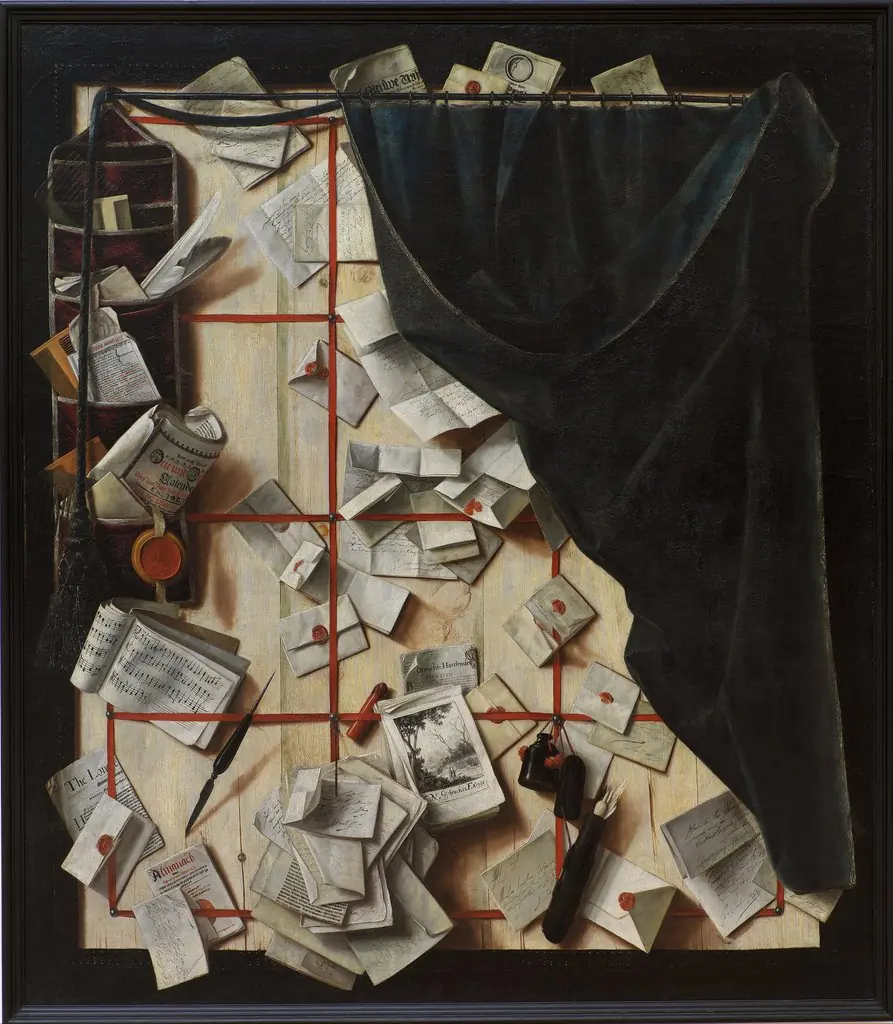 Trompe l'oeil. Board Partition with Letter Rack and Music Book
 Trompe l'oeil of a Letter Rack with Proclamation by Frederik III
 Trompe l'oeil. Letter Rack with a Barber-Surgeon's Instruments
 Trompe l'oeil. Letter Rack with a Barber-Surgeon's Instruments
 Trompe l'oeil of a Letter Rack with Proclamation by Frederik III
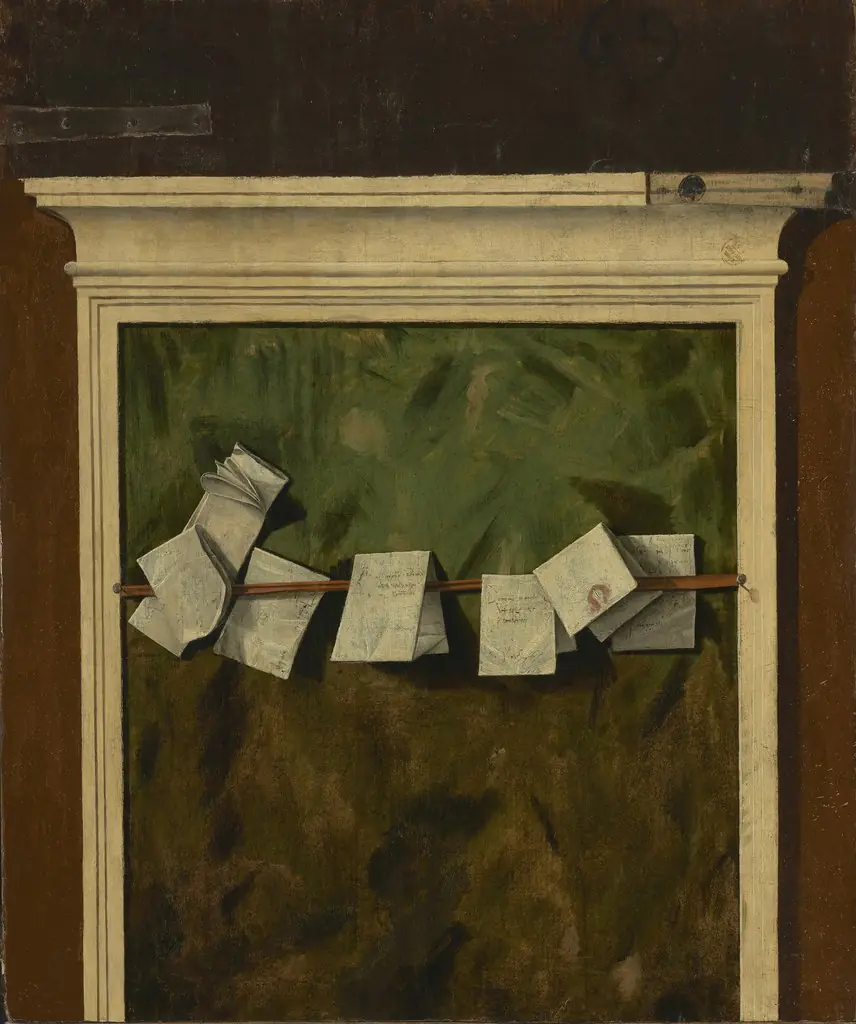 Letter Rack
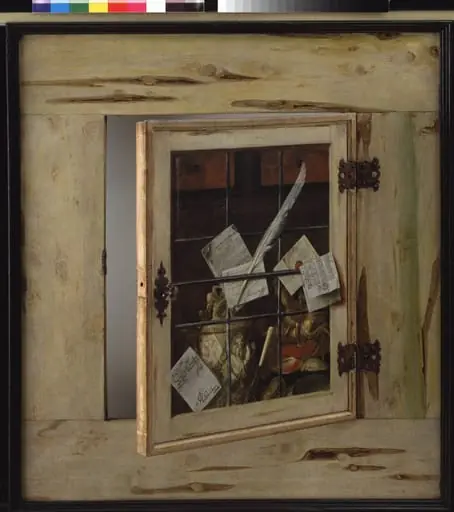 Trompe l'Oeil. A Cabinet of Curiosities with an Ivory Tankard
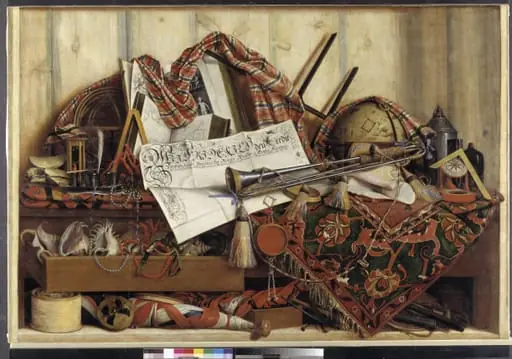 Trompe l'Oeil with Trumpet, Celestial Globe and Proclamation by Frederik III