Artwork
Allegory of the Triumphal Procession of the Prince of Orange, later King William II, as the Hero of Waterloo, 1815
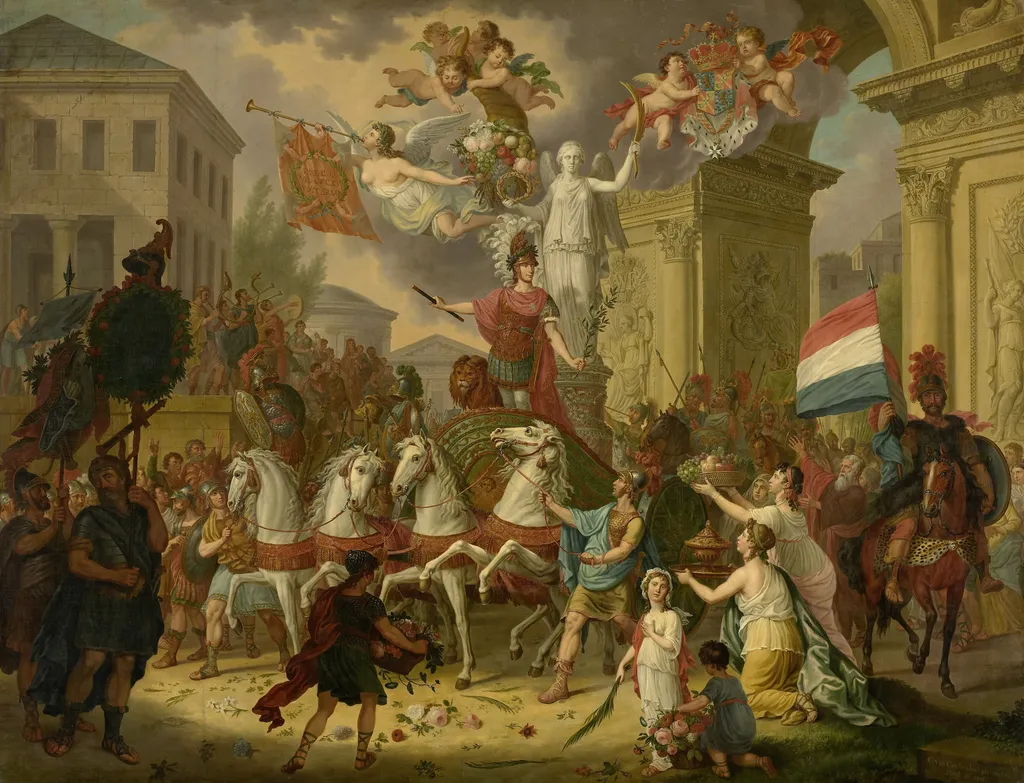
Allegory of the Triumphal Procession of the Prince of Orange, later King William II, as the Hero of Waterloo, 1815 is an oil painting by the Neoclassicist artist Cornelis van Cuylenburgh. It dates from 1815 and is held in the collection of the Rijksmuseum.
About this work
Technique & Style
The composition favors symmetrical balance and clear narrative legibility, typical of Dutch neoclassical allegories celebrating military triumph.
The painting is executed in oil on canvas with a horizontal format measuring 185 cm in height and 240 cm in width. The handling is consistent with academic history painting of the early 19th century, employing smooth blending and controlled brushwork to articulate the allegorical figures and equestrian portrait of the Prince of Orange.
Formal qualities center on a triumphal procession, with a central mounted figure framed by classical drapery and allegorical personifications such as Victory and Fame. The composition favors symmetrical balance and clear narrative legibility, typical of Dutch neoclassical allegories celebrating military triumph.
History & Provenance
The work was commissioned in 1815 to commemorate the Prince of Orange’s role at Waterloo. Painted by Cornelis van Cuylenburgh that same year, it depicts the future King William II as a classical hero in a triumphal procession. The canvas entered the collection of the Rijksmuseum, Amsterdam, where it remains in its holdings. No further provenance details beyond the museum’s acquisition are recorded in the cited sources.
The painting is held in the collection of the Rijksmuseum in Amsterdam, where it is catalogued under accession number SK-A-1234. It has been part of the museum's permanent display since the mid-20th century, featured in exhibitions on Dutch Golden Age art and commemorative shows marking the bicentennial of the Battle of Waterloo.
Legacy
The painting's legacy is anchored in its continued presence at the Rijksmuseum, where it remains part of the national collection and is regularly featured in exhibitions on Dutch Golden Age art. Its allegorical depiction of the Prince of Orange as a heroic figure has been cited in scholarly discussions of 19th-century Dutch patriotism and visual rhetoric surrounding military triumphs, influencing later interpretations of political iconography in Dutch art.
The work's reputation has been shaped by its inclusion in major retrospectives and its role in academic studies of Cuylenburgh's oeuvre, underscoring its significance as a historical document of the Napoleonic era.
Overview
Cornelis van Cuylenburgh’s 1815 oil painting, titled Allegory of the Triumphal Procession of the Prince of Orange, later King William II, as the Hero of Waterloo, is part of the Rijksmuseum’s collection. The work presents a bustling ceremonial procession rendered in a single, expansive canvas, combining figures, animals and architectural elements into a single, theatrical tableau.
Subject & Meaning
At the composition’s heart stands a woman in a white drapery, sword raised, symbolising triumph. She is surrounded by floating cherubs bearing flowers and flags, while a rider in a red robe and helmet gallops on a white horse below. The surrounding crowd of soldiers, civilians and banners celebrates a victorious moment, likely referencing the 1815 Battle of Waterloo and the Prince’s role in it.
Context
The painting reflects the post‑Napoleonic era’s fascination with heroic narratives and state propaganda. By portraying the Prince of Orange as a classical hero, van Cuylenburgh aligns contemporary Dutch political triumphs with the visual language of ancient allegory, reinforcing national pride during a period of renewed sovereignty after French occupation.
Own this work as a print
Artist & collection
Artist
Cornelis van Cuylenburgh (1758–1827) was an artist, born in Utrecht.

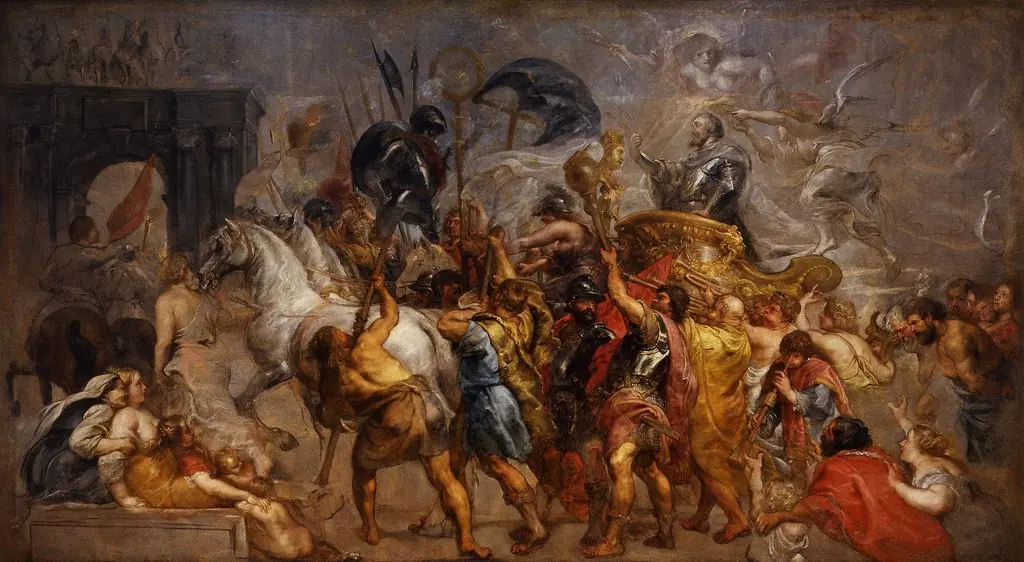 The Triumphal Entry of Henry IV into Paris
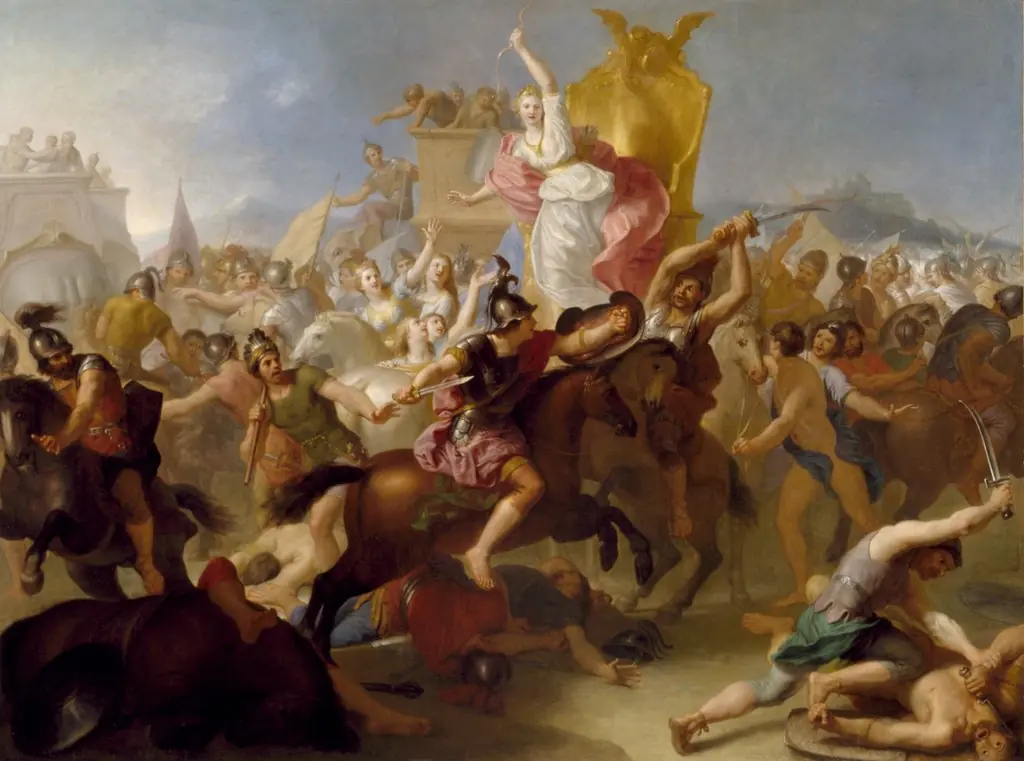 Armida Fighting the Christians
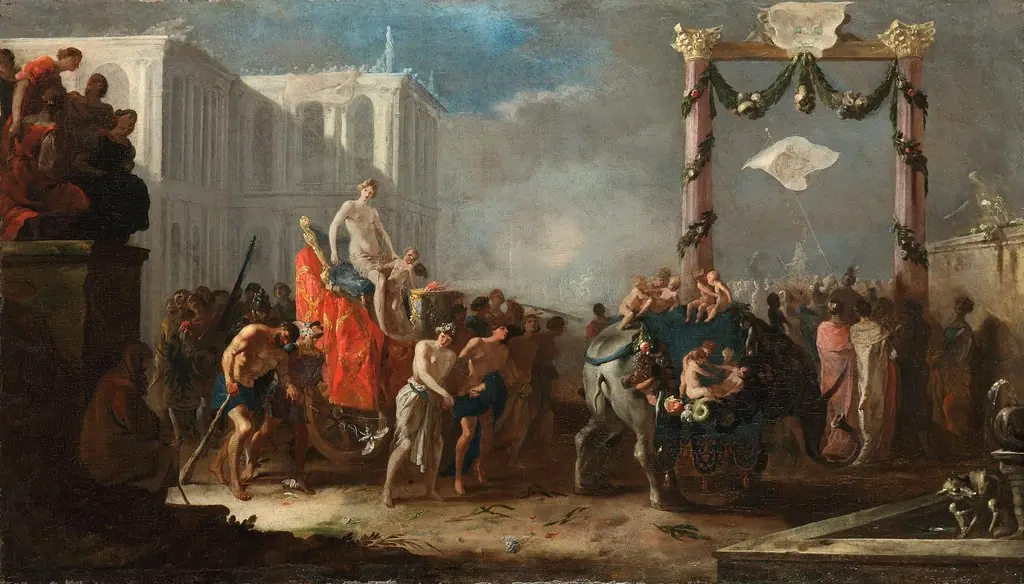 Festive Procession with Chariot of Venus
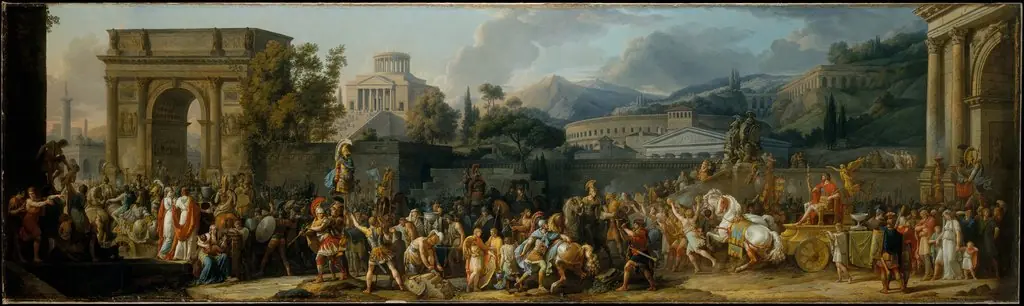 The Triumph of Aemilius Paulus
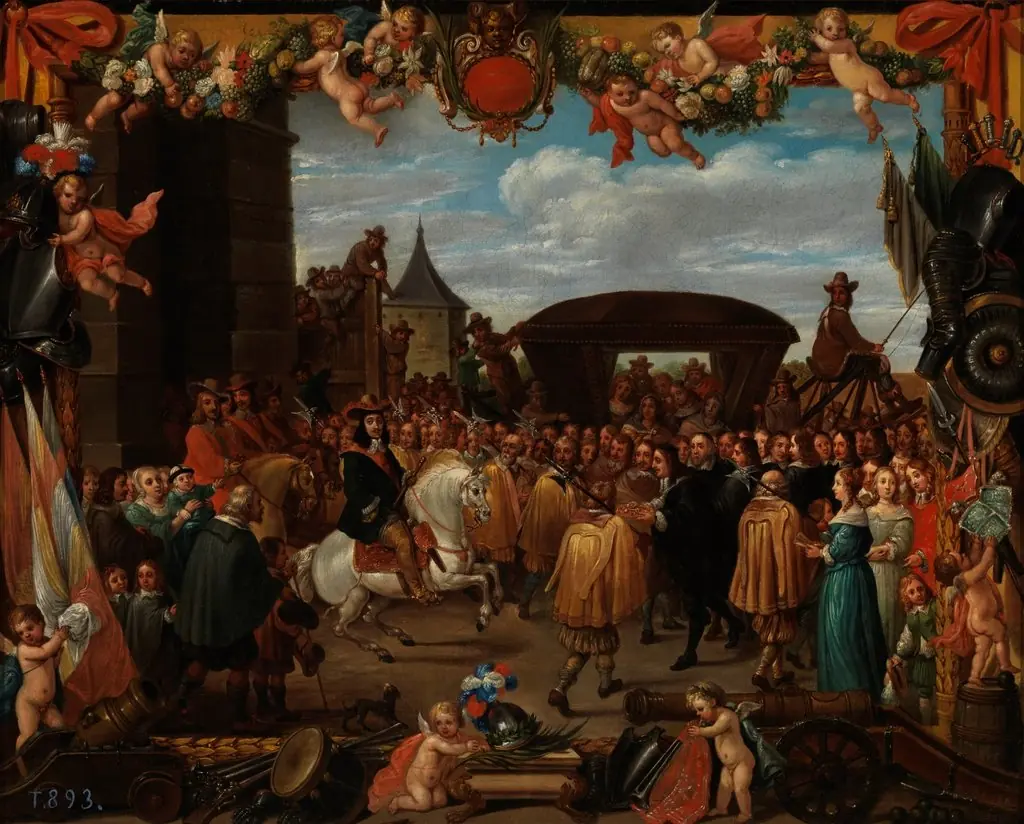 Entrada triunfal de don Juan José de Austria (?)
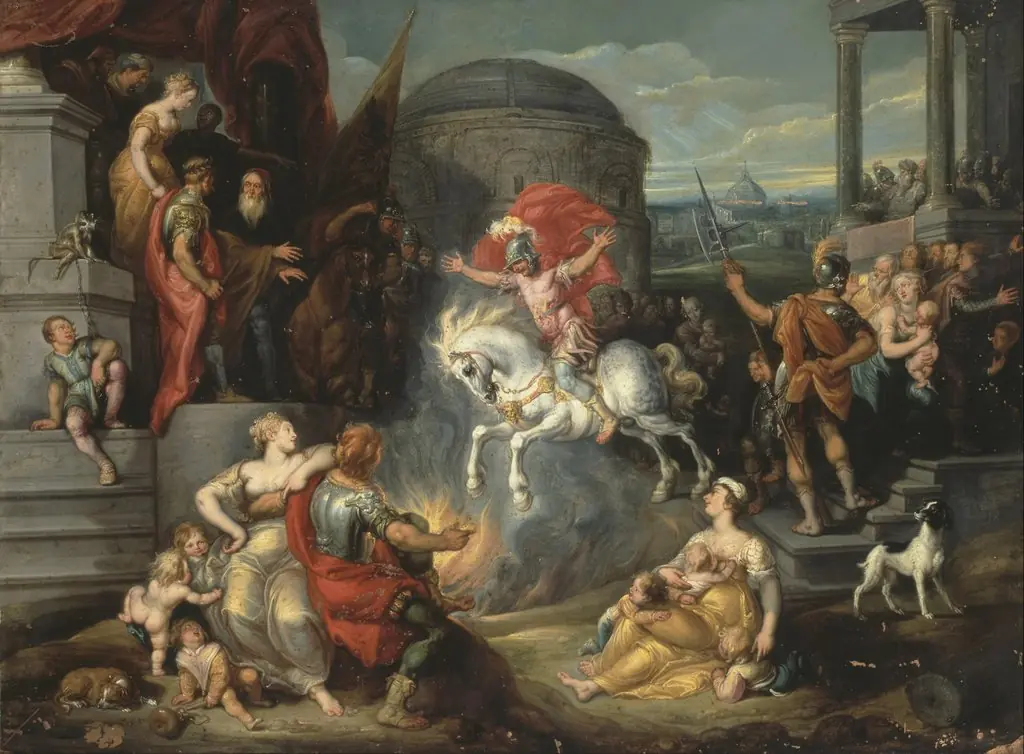 Feat of Marcus Curtius
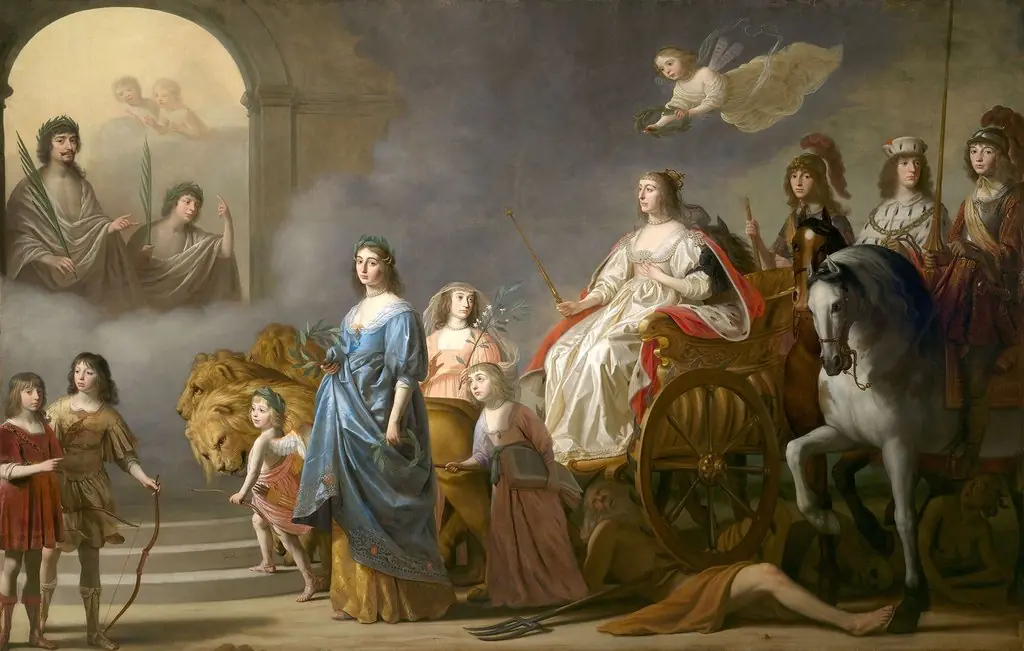 The Triumph of the Winter Queen: Allegory of the Just
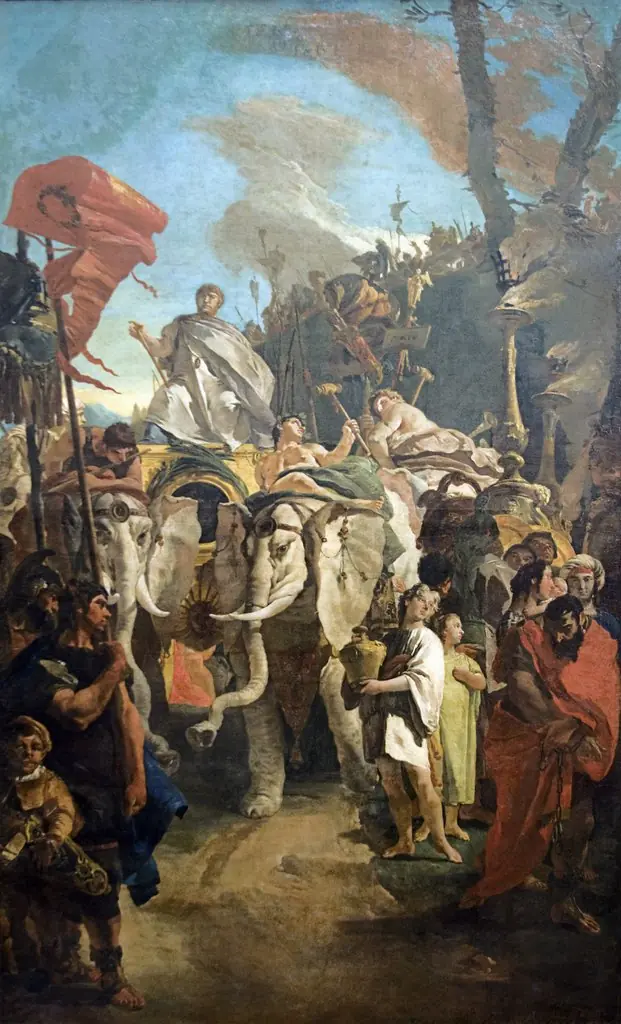 Triumph of Manius Curius Dentatus
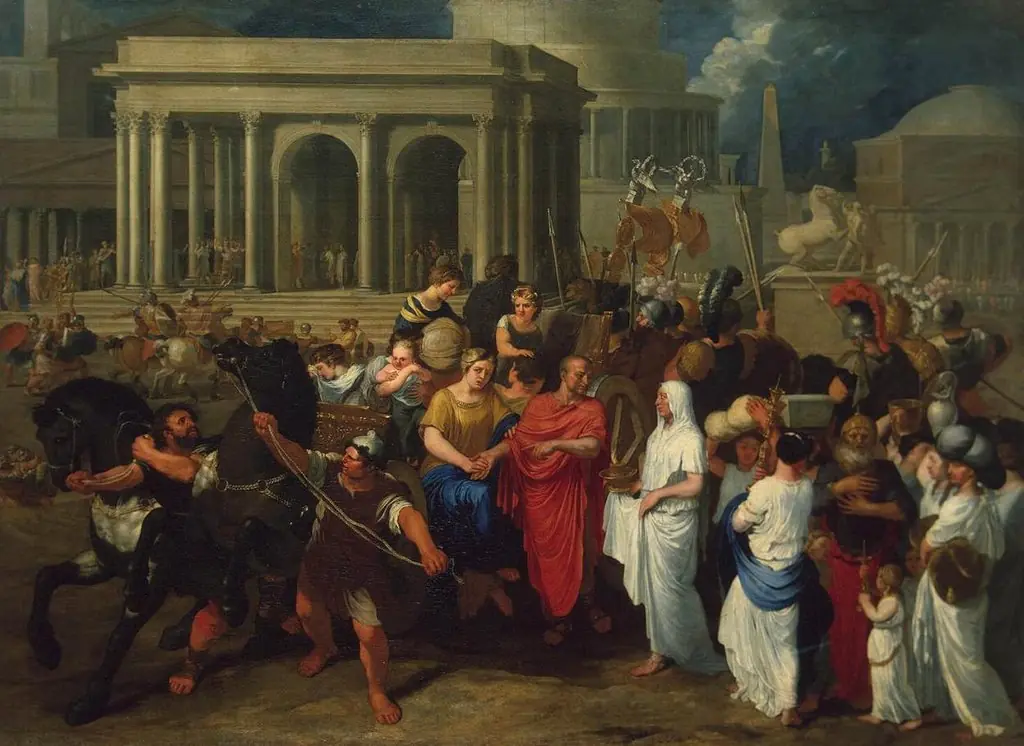 Lucius Albinus Giving his Carriage to Vestals
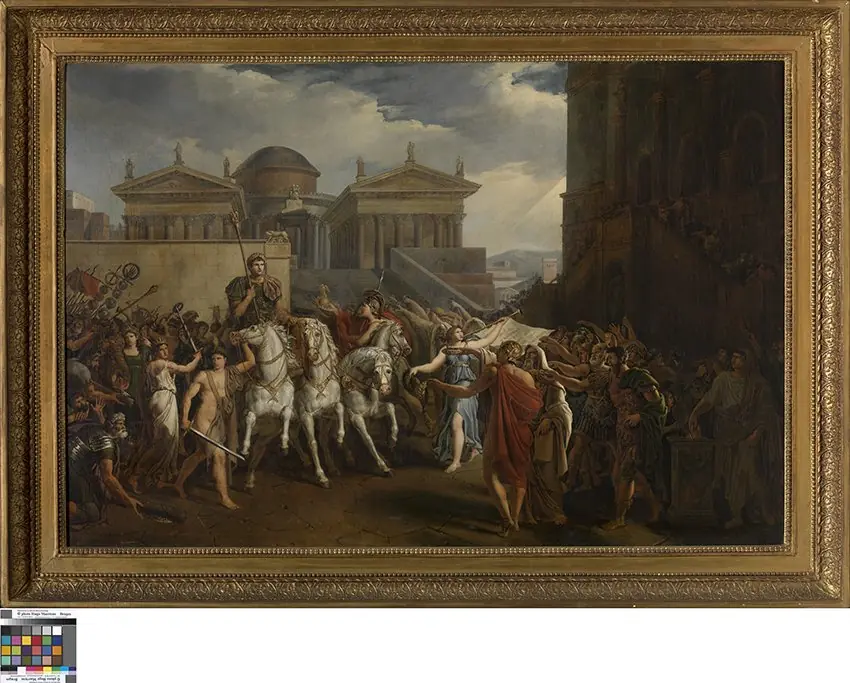 Triomftocht van keizer Trajanus
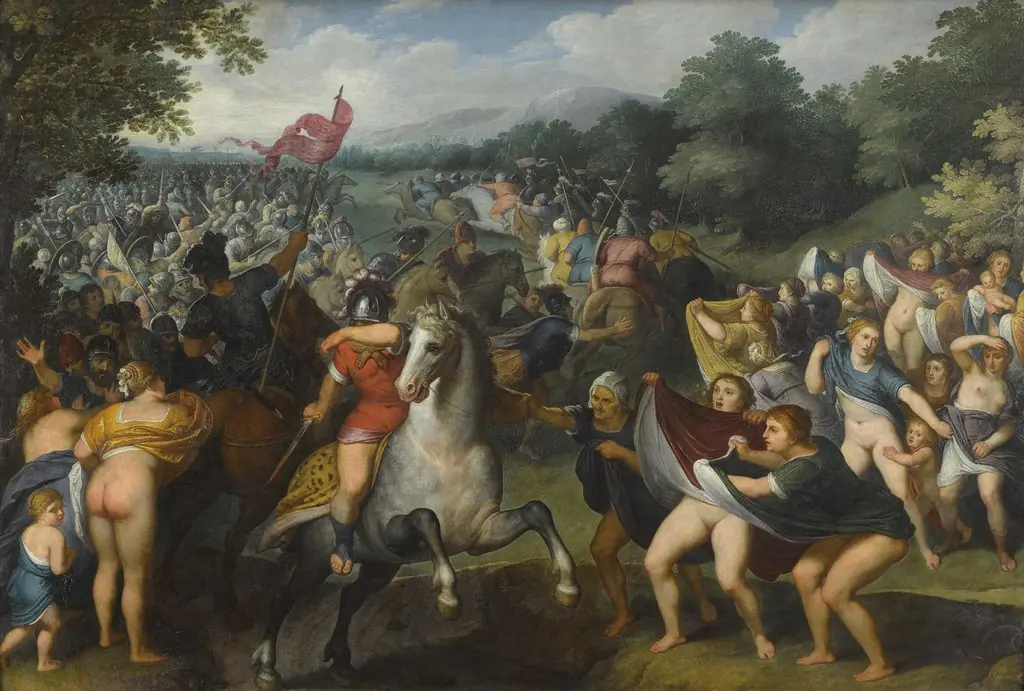 The Persian women
- Allegory of the Triumphal Procession of the Prince of Orange, the Future King Willem II, as the Hero of Waterloo, 1815