Artwork
The Fall of the Titans
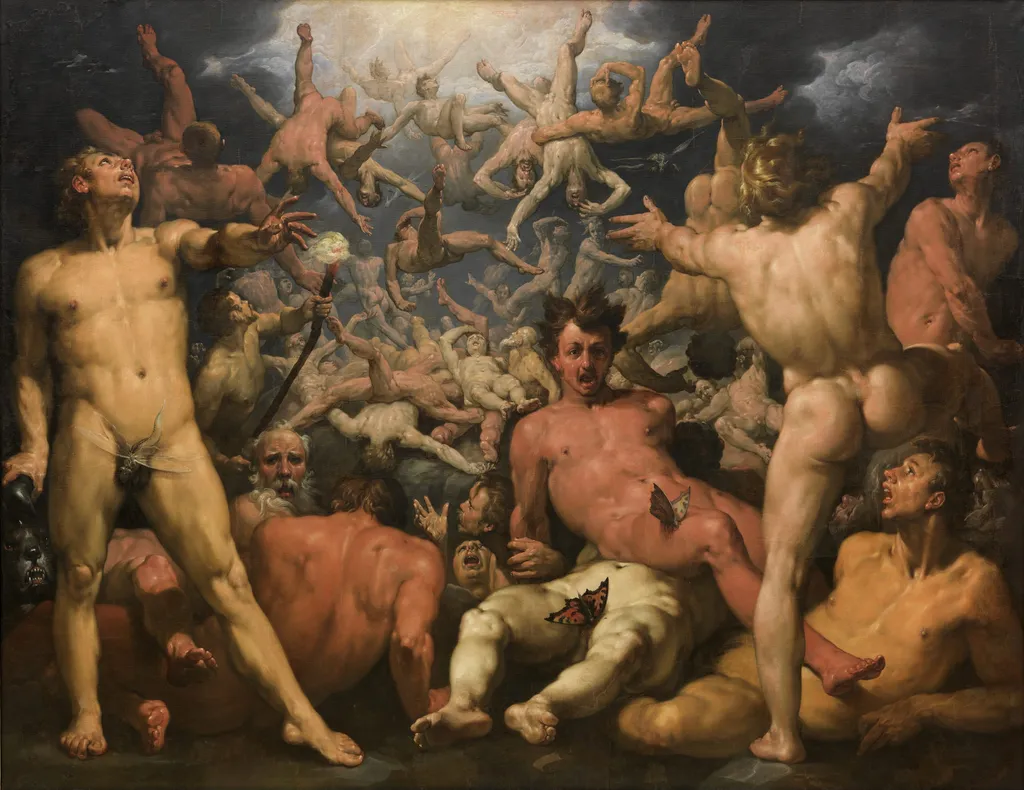
The Fall of the Titans is an oil painting by the Mannerist artist Cornelis van Haarlem. It dates from 1594 and is held in the collection of the Statens Museum for Kunst.
About this work
Subject & Meaning
Based on Greek mythology, the work illustrates the defeated Titans falling from the light of the sky into the dark, infernal depths of Tartarus.
The painting depicts the conclusion of the Titanomachy, the mythological war in which the Olympian deities, led by Zeus, overthrew the preceding generation of Titans. Based on Greek mythology, the work illustrates the defeated Titans falling from the light of the sky into the dark, infernal depths of Tartarus. The composition features numerous male nudes with exaggerated, sculptural musculature and expressions of fear and confusion, characteristic of Haarlem Mannerism.
Iconographically, the scene includes oversized insects, such as butterflies and dragonflies, which cover the figures' genitals. While the butterfly traditionally symbolized the soul in ancient Greece, here their enlarged presence alongside fire-attracted motifs suggests a subversion of classical symbolism, potentially linking them to fire and birth from flames. One figure clutches a flaming staff, reinforcing the elemental chaos of the descent.
Technique & Style
Executed in oil on canvas, this large-scale work measures 239 by 307 cm. Created in 1594, the painting exemplifies Haarlem Mannerism through its ambitious composition of numerous male nudes arranged in varied, complex poses. The figures possess sculptural, muscular physiques with exaggerated anatomy, including swollen muscles and buttocks, while their faces display expressions of fear and confusion.
The scene depicts the Titans falling from a luminous sky into the dark abyss of Tartarus. Distinctive formal elements include oversized insects, such as butterflies and dragonflies, which cover the figures' genitalia; these creatures invert classical symbolism by associating butterflies with fire rather than the soul. The composition also features demonic fauna, including dogs, and a figure holding a flaming staff, enhancing the chaotic descent into the underworld.
History & Provenance
Cornelis van Haarlem executed The Fall of the Titans in 1594. This ambitious oil painting, measuring 239 × 307 cm, depicts the mythological Titanomachy and serves as a prime example of Haarlem Mannerism.
The work entered the Danish royal collection in 1621 when King Christian IV purchased it. It remained part of the royal holdings until the 19th century, at which point it transferred to public ownership along with the majority of the king's collection. Today the painting is preserved in the Statens Museum for Kunst in Copenhagen, where it remains part of the permanent collection; no accession number is given in the available sources.
Context
Completed in 1594, this work stands as a defining example of Haarlem Mannerism and Northern Mannerism. Scholars characterize the canvas as an ambitious demonstration of Cornelis van Haarlem's capacity to devise complex, varied poses for numerous male nudes. The figures are rendered with sculptural, exaggerated musculature and expressions of confusion, falling from light into the darkness of Tartarus.
The painting holds a specific place in art history as a rare Early Modern depiction of the Titanomachy, a subject drawn from Hesiod that was seldom illustrated in antiquity. While later artists such as Rubens and Joachim Wtewael also treated this theme, van Haarlem's version is distinguished by its unique iconography, including oversized insects that invert classical symbolism regarding the soul. Acquired by King Christian IV of Denmark in 1621, the work entered the public Statens Museum for Kunst in the 19th century, where it remains a central holding.
Legacy
The Fall of the Titans is regarded as an ambitious showcase of the Haarlem Mannerist style, demonstrating Cornelis van Haarlem's ability to devise and depict a large number of varied poses for the male nude. The composition became a point of reference for later treatments of the Titanomachy, with the subject gaining wider currency in the early modern period through related works by Peter Paul Rubens, Joachim Wtewael, and Jacob Jordaens, as well as François Dumont's sculpture of a stricken Titan.
The painting entered the Danish royal collection in 1621 when it was acquired by King Christian IV, and it passed with most of that collection into public ownership at the Statens Museum for Kunst in Copenhagen during the nineteenth century, securing its place as a canonical example of Northern Mannerism.
Overview
Cornelis van Haarlem’s oil on canvas, executed between 1588 and 1590, measures roughly 239 by 307 centimetres. The work, titled The Fall of the Titans, is held by Denmark’s national gallery, the Statens Museum, in Copenhagen. It portrays the mythic battle in which the Olympian gods defeat the Titans, a subject drawn from Greek legend.
Own this work as a print
Artist & collection
Artist
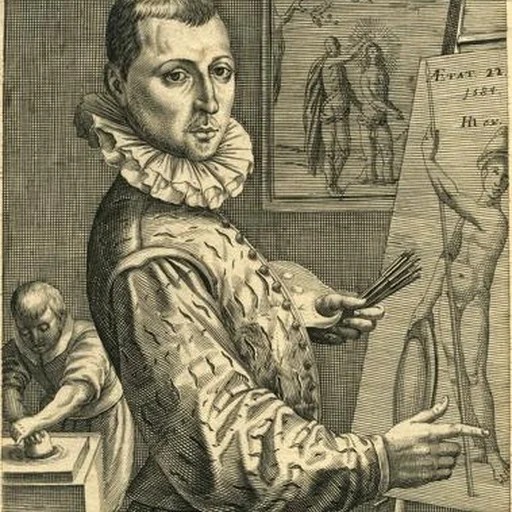
Cornelis Corneliszoon van Haarlem (Dutch:; 1562 – 11 November 1638) was a Dutch Golden Age painter and draughtsman, one of the leading Northern Mannerist artists in the Netherlands, and an important forerunner of Frans Hals as a…

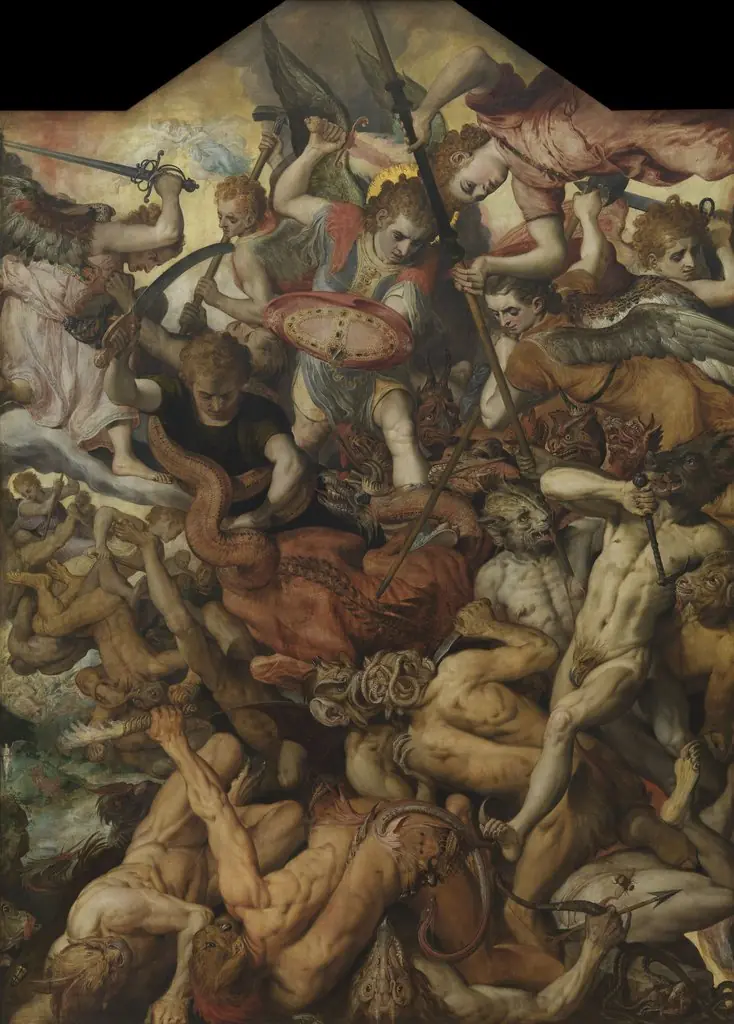 The Fall of the Rebel Angels
 Apollo and Diana Punishing Niobe by Killing her Children
 Last Judgement (Matthew 25:31-33)
 Apollo and Diana Punishing Niobe by Killing her Children
 Last Judgement
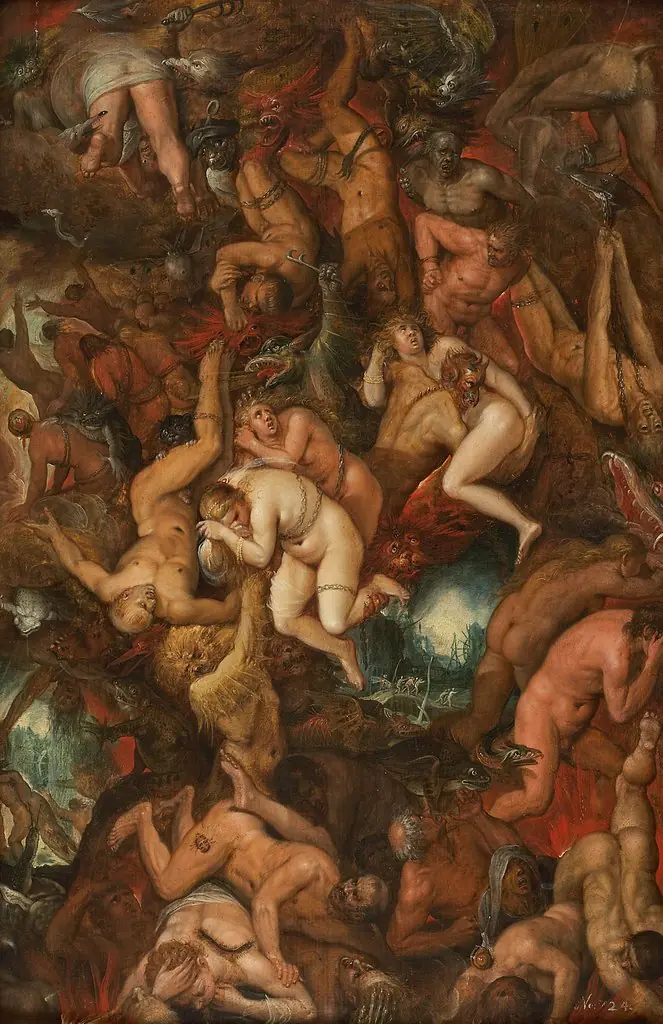 The Damned being cast into Hell
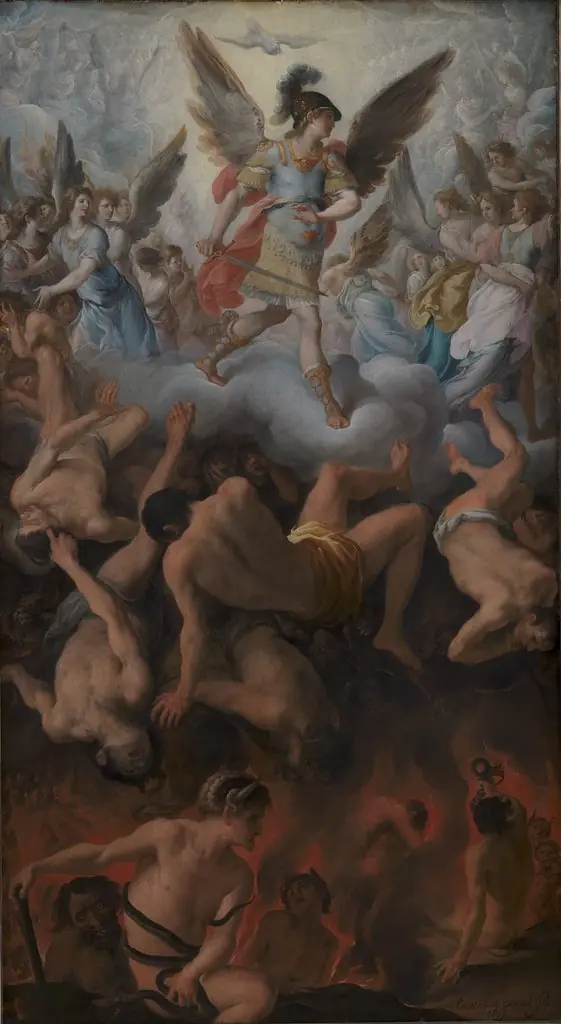 The Fall of the Angels
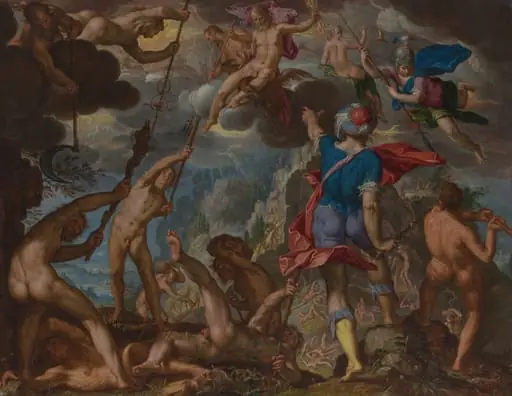 The Battle between the Gods and the Giants
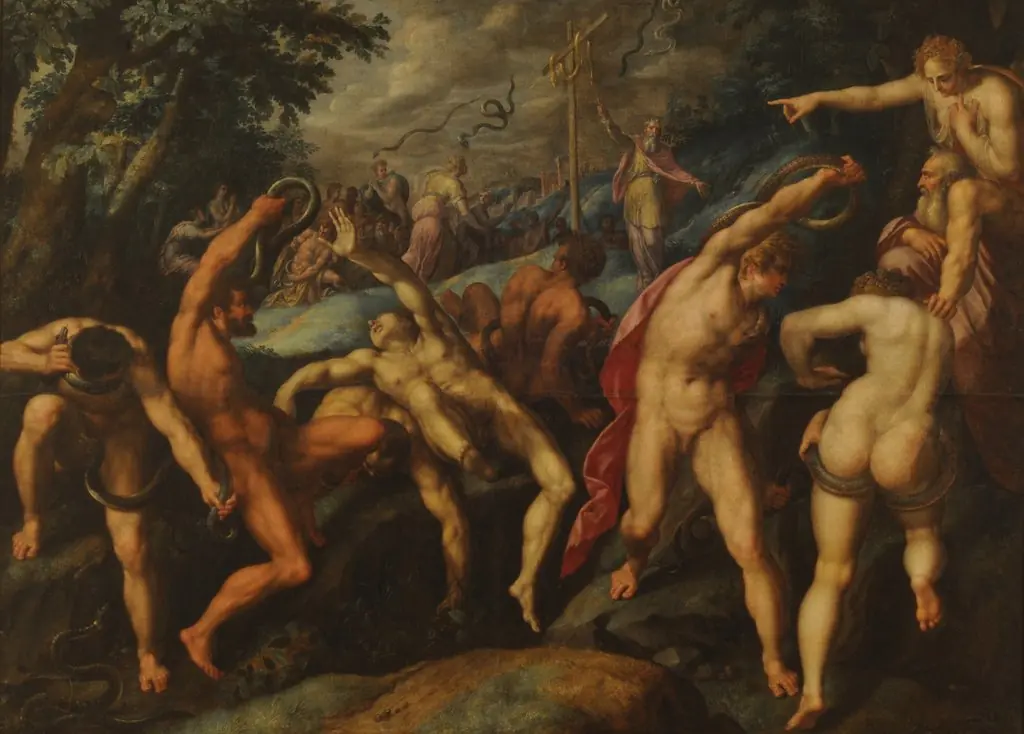 Moisés elevando la serpiente de bronce (Números 21:5-9)