Artwork
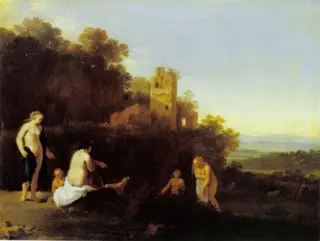
Bathing men
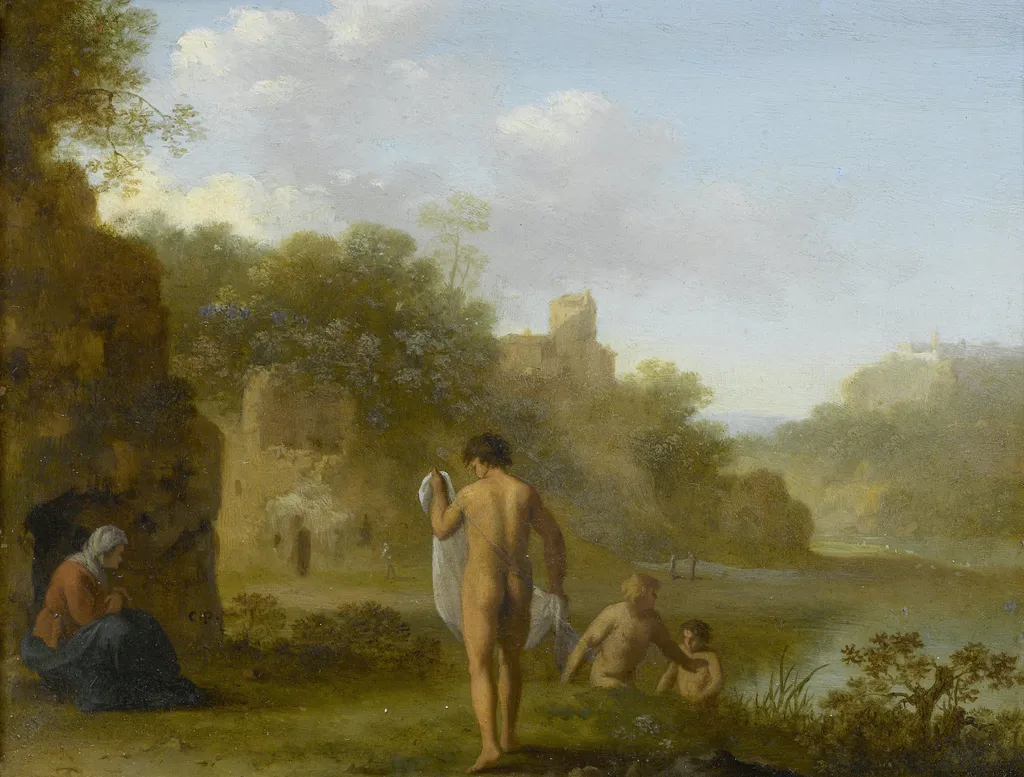
Bathing men is an oil painting by the Dutch Golden Age artist Cornelius van Poelenburgh. It dates from 1646 and is held in the collection of the Rijksmuseum.
About this work
Subject & Meaning
It exemplifies the genre of landscape painting infused with mythological narrative, where natural elements serve as symbolic settings for human activity.
The painting portrays a group of nude male figures engaged in bathing within a classical landscape setting, reflecting 17th-century interpretations of mythological and pastoral ideals. The composition emphasizes the harmonious relationship between humanity and nature, with the surrounding trees and terrain underscoring the idealized, allegorical context of the scene. Its subject aligns with the tradition of poetic and mythological scenes popular in Dutch Golden Age art, particularly those rooted in literary sources such as pastoral poetry and classical mythology.
The work was created by Cornelius van Poelenburgh in 1646 on copper, measuring 14 cm in height and 17 cm in width, and is part of the Kabinet van Heteren Gevers collection housed at the Rijksmuseum. It exemplifies the genre of landscape painting infused with mythological narrative, where natural elements serve as symbolic settings for human activity. The depiction of bathing figures may allude to themes of purification, leisure, or philosophical contemplation, consistent with contemporary artistic conventions.
The painting's provenance and physical details are documented in archival records and its current ownership by Adriaan Leonard van Heteren Gevers, reinforcing its historical significance within the Dutch artistic tradition.
Technique & Style
The painting Bathing men was executed by Cornelius van Poelenburgh on a copper support using oil paint. It measures 14 cm in height by 17 cm in width and dates to 1646. The work depicts a tree and falls within the landscape painting genre.
It is currently held in the collection of the Rijksmuseum as part of the Kabinet van Heteren Gevers.
The technique emphasizes fine detail and naturalistic rendering characteristic of Dutch Golden Age art, with careful modeling of light and foliage. The use of copper as a support was common among 17th-century Dutch painters for its smooth surface and durability, allowing for precise brushwork and rich color saturation.
History & Provenance
Cornelius van Poelenburgh created Bathing men in 1646 on copper support, recorded as a nude genre work. The painting entered the collection of Adriaan Leonard van Heteren Gevers, later becoming part of the Rijksmuseum's Kabinet van Heteren Gevers holdings. Its provenance traces to this family acquisition before institutional consolidation.
The work measures 14 cm in height and 17 cm in width, documented within the Rijksmuseum collection where it remains on display.
The painting is held in the Rijksmuseum collection under the inventory number Kabinet van Heteren Gevers. It was created in 1646 on copper and originally belonged to Adriaan Leonard van Heteren Gevers before entering the museum's holdings. The work has been exhibited as part of the Rijksmuseum's displays of Dutch Golden Age paintings, though specific exhibition titles are not detailed in the source.
Overview
Cornelius van Poelenburgh, a Dutch painter who spent much of his career in Rome, produced the small copper work Bathing men in 1646. Executed in the Italianate landscape tradition typical of his output, the piece presents a quiet, intimate scene of figures in a wooded setting and is part of the Rijksmuseum’s collection.
Context
Van Poelenburgh was known for small-scale, meticulously rendered landscapes populated by mythological or genre figures. Bathing men exemplifies his preference for intimate, narrative scenes set within idealized natural environments, a hallmark of the Dutch artists who incorporated Italianate motifs after their Grand Tour experiences.
Own this work as a print
Artist & collection
Artist
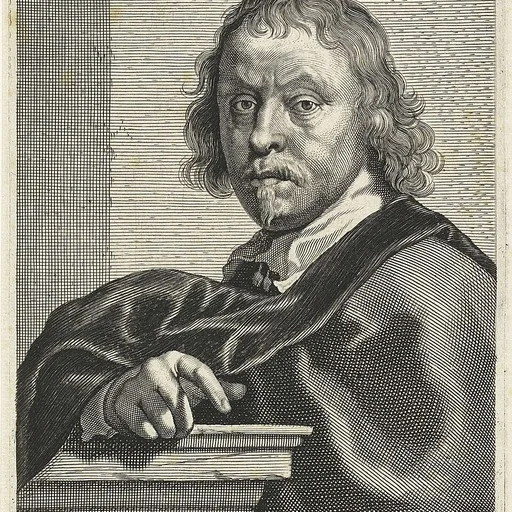
Cornelis van Poelenburgh or Cornelis van Poelenburch (1594 – 12 August 1667), was a Dutch landscape painter and draughtsman.


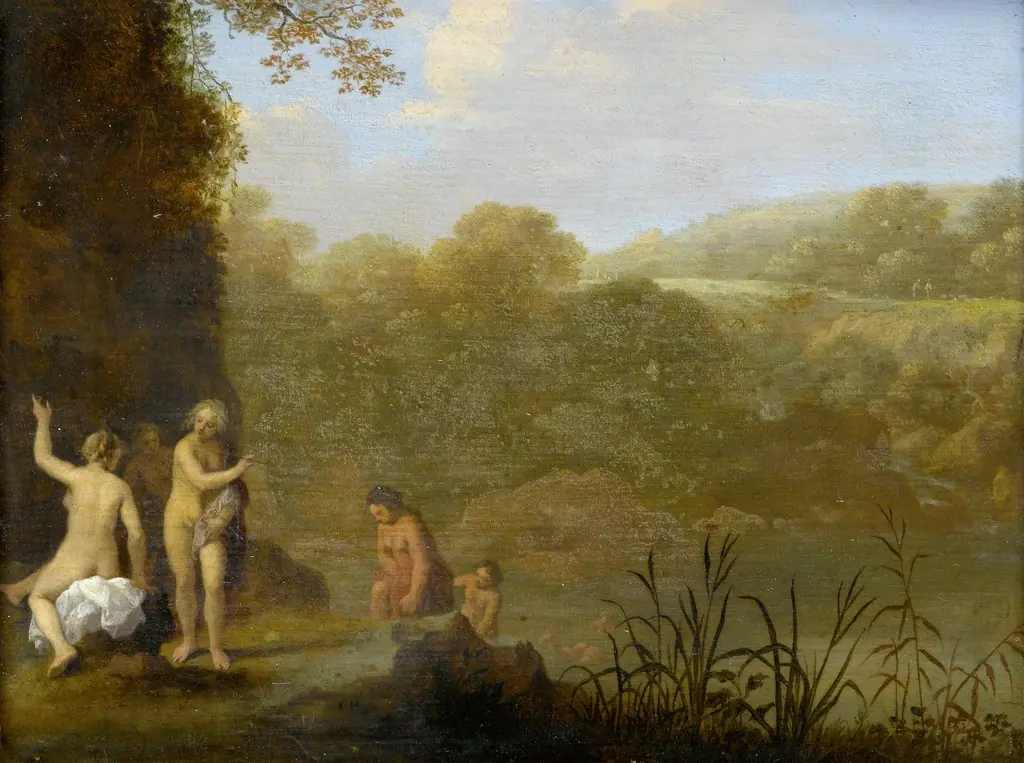
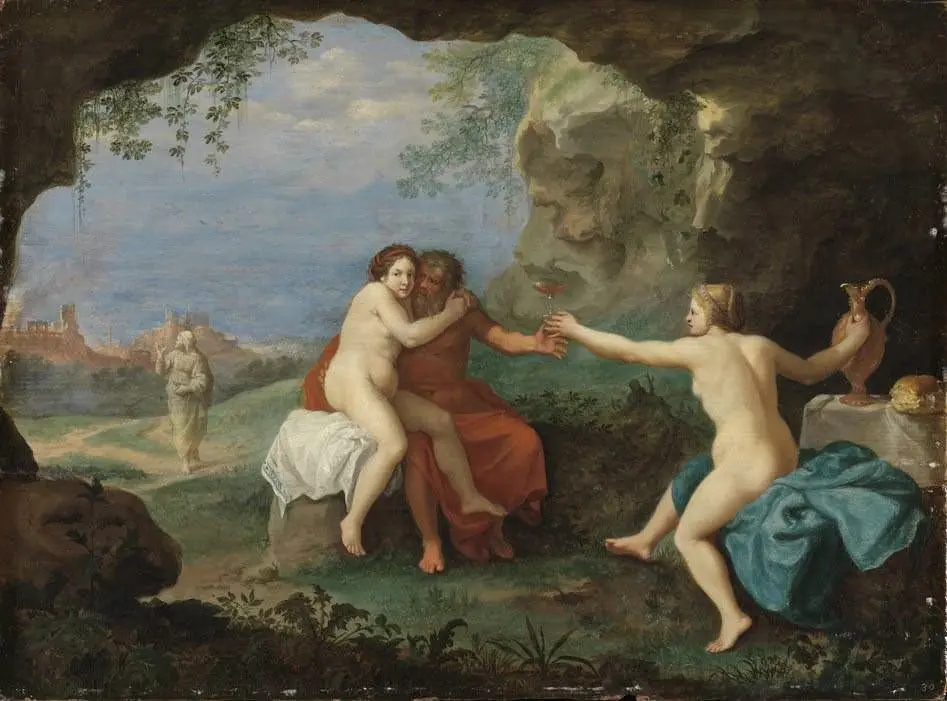
- Roman Landscape with Nymphs
 Nymphs Bathing
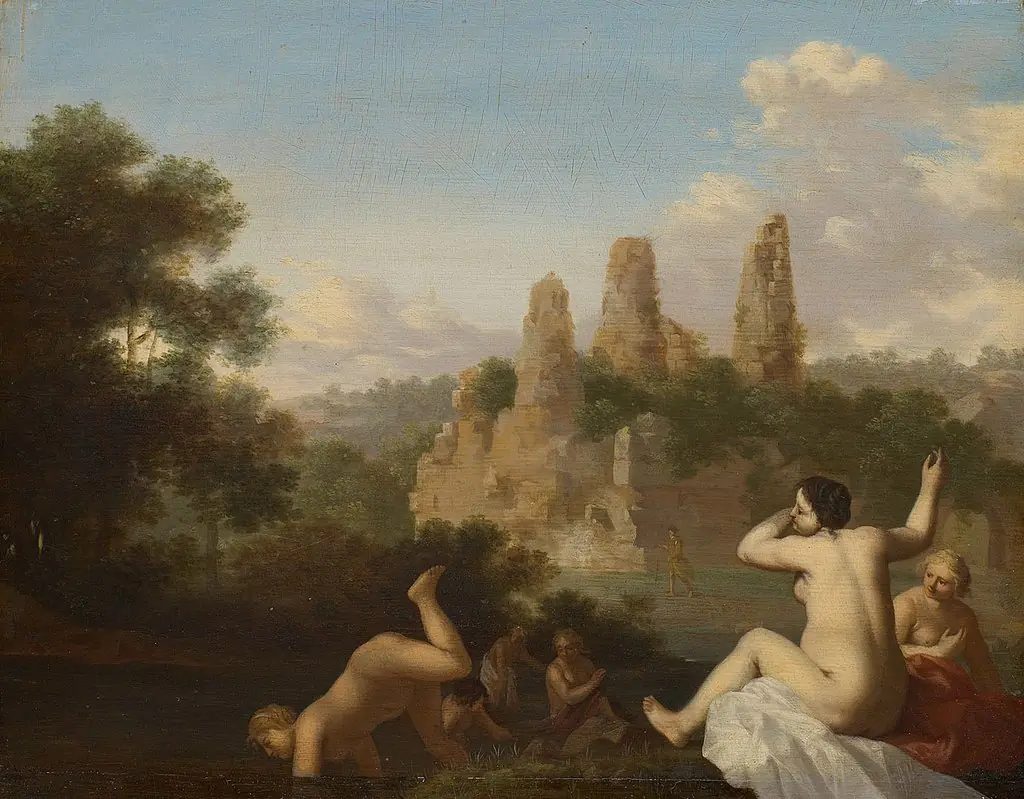 Landschaft bei Albano mit badenden Mädchen (Im Hintergrund das Grabmal der Horatier und Curatier)
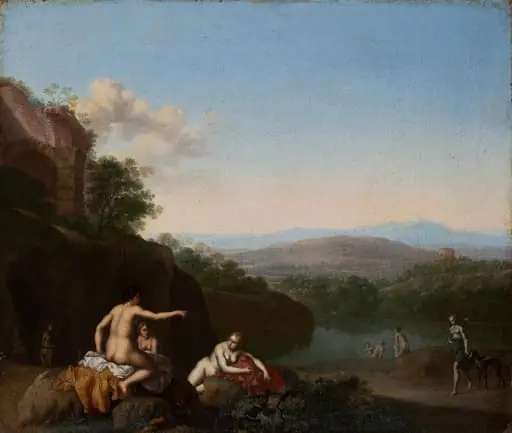 Kylpeviä nymfejä
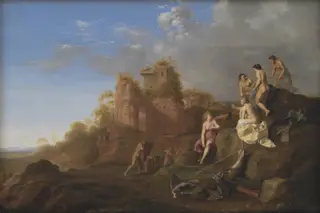 Diana and her Nymphs
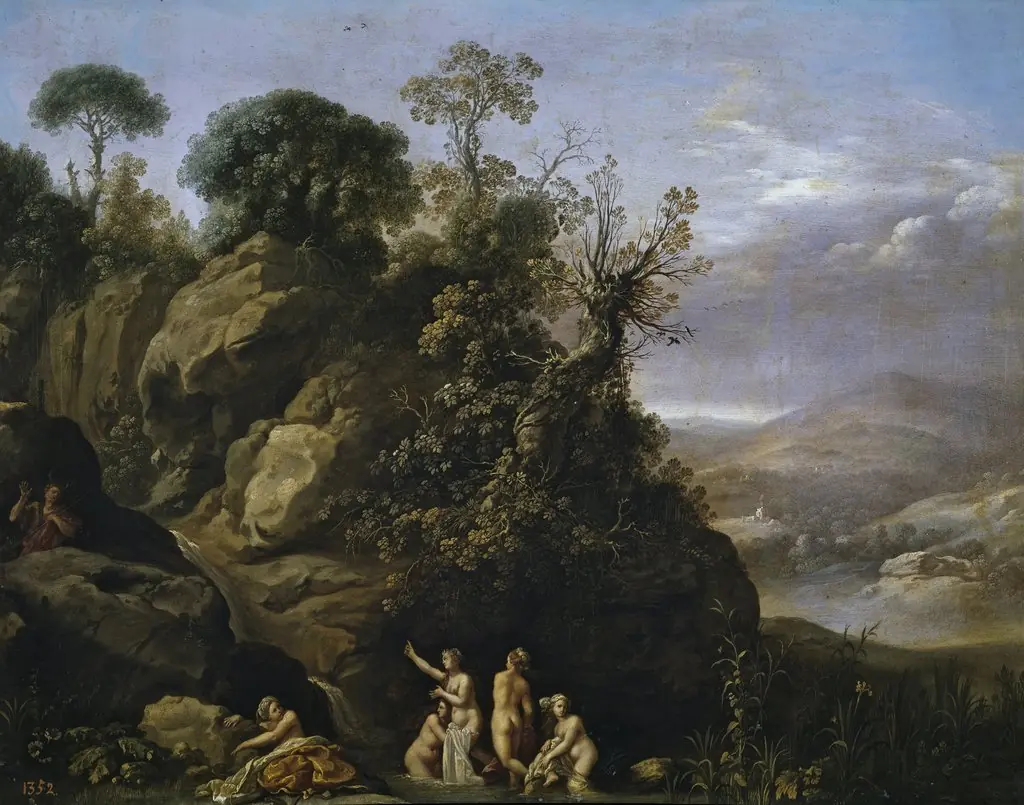 Diana bathing with her Nymphs
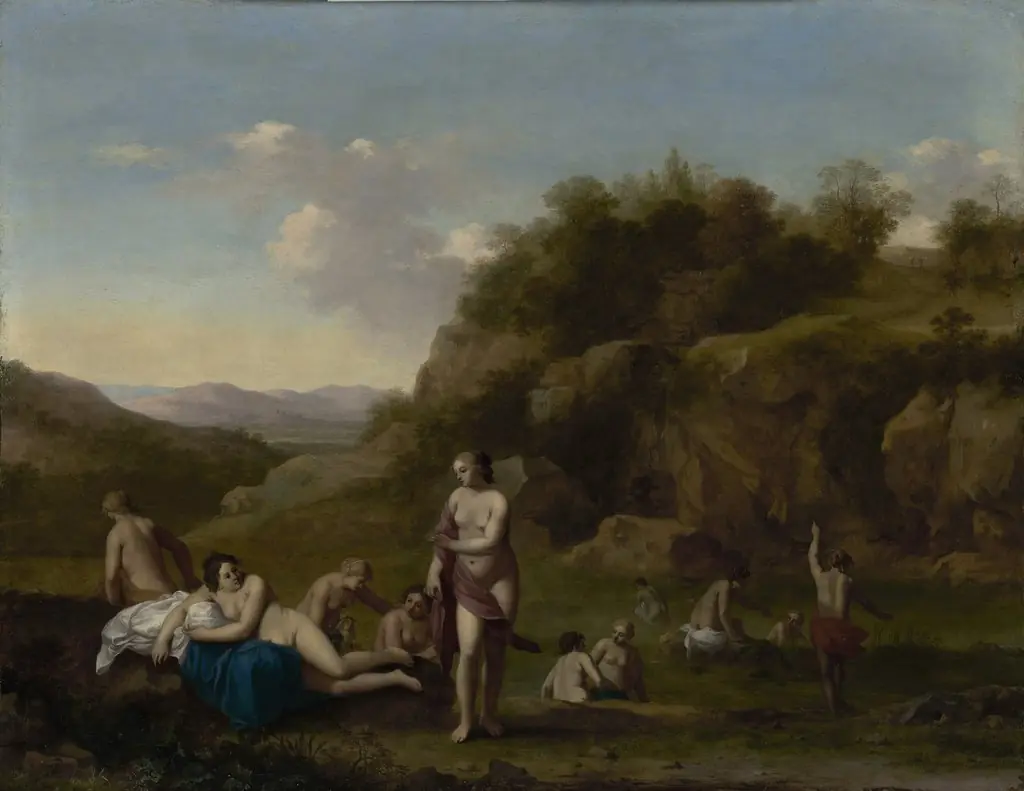 Landscape with Bathing Nudes
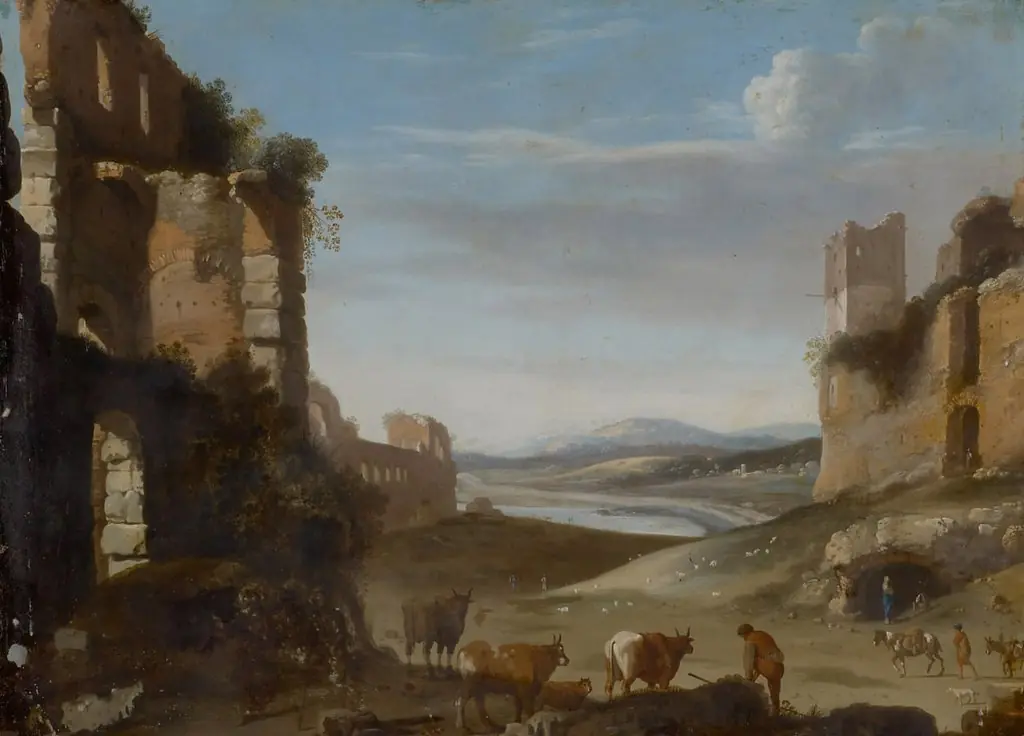 Capriccio Roman landscape with ruins
 Landscape with the Discovery of Callisto’s Pregnancy
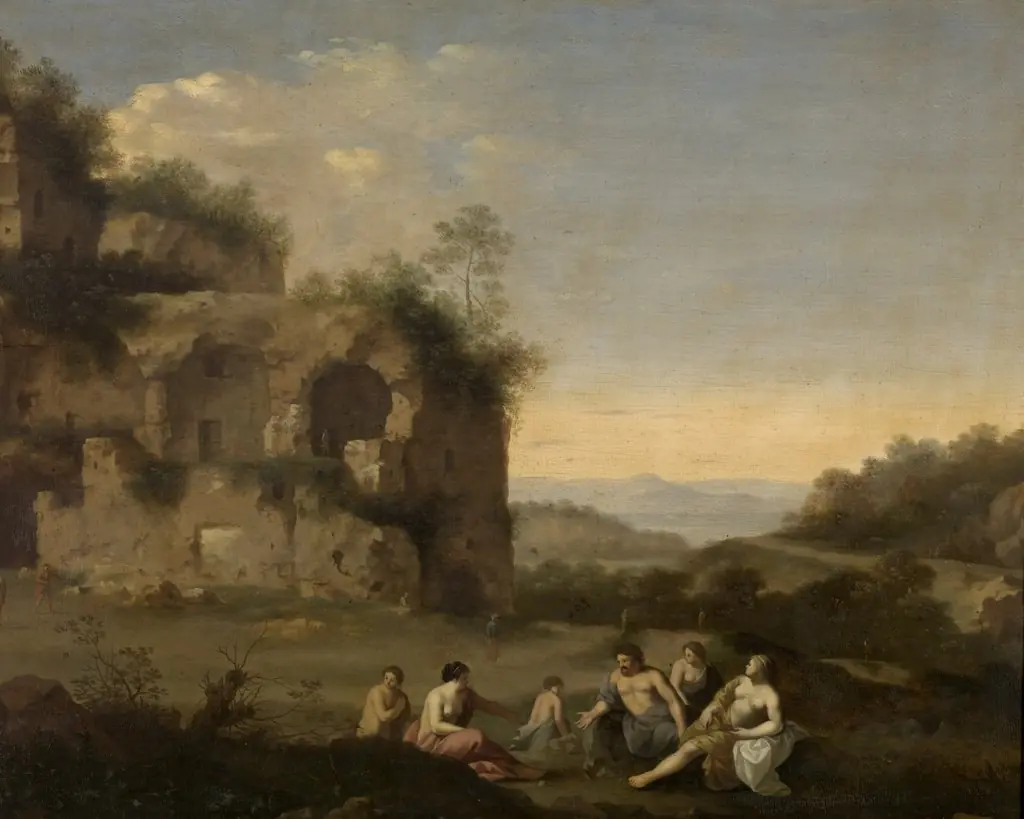 Landscape with ruins
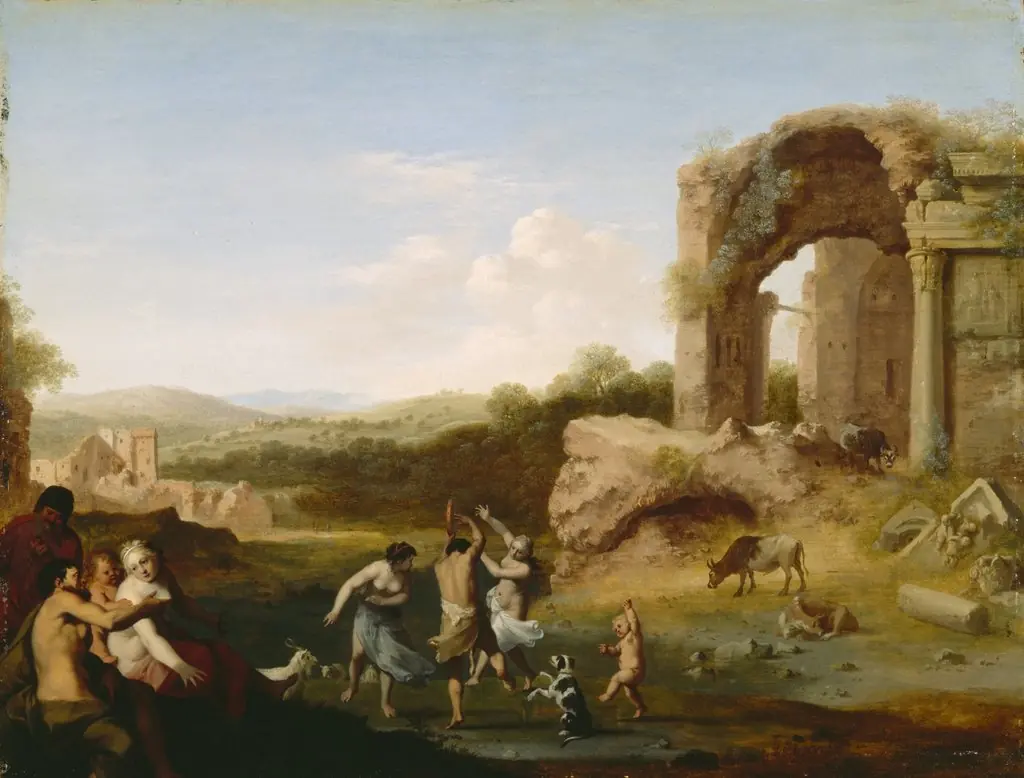 Figures Dancing near a Ruin