Artwork
River View
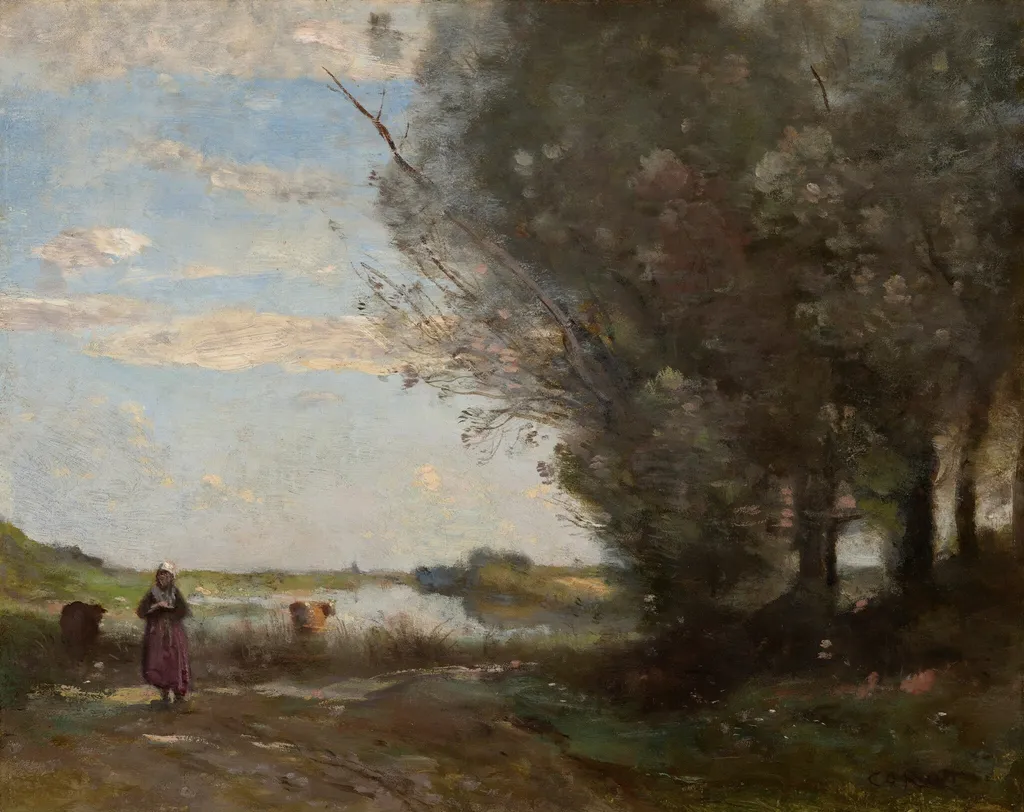
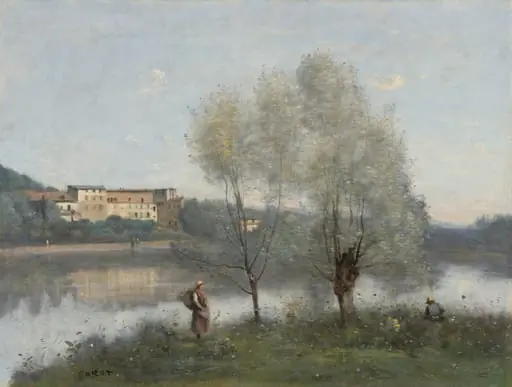
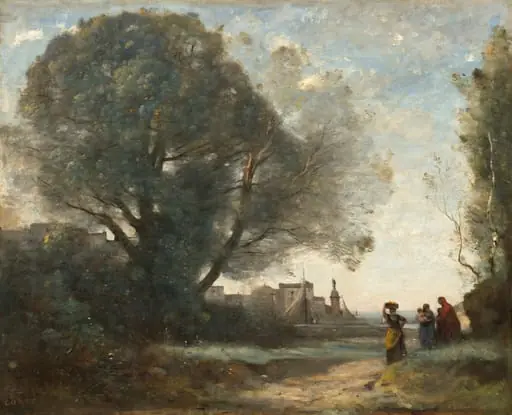
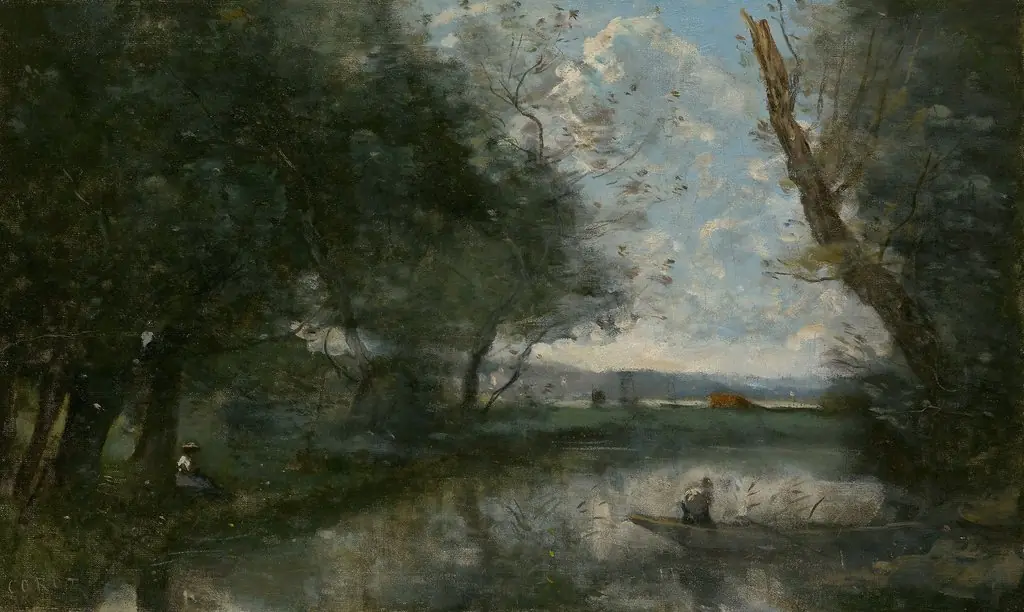
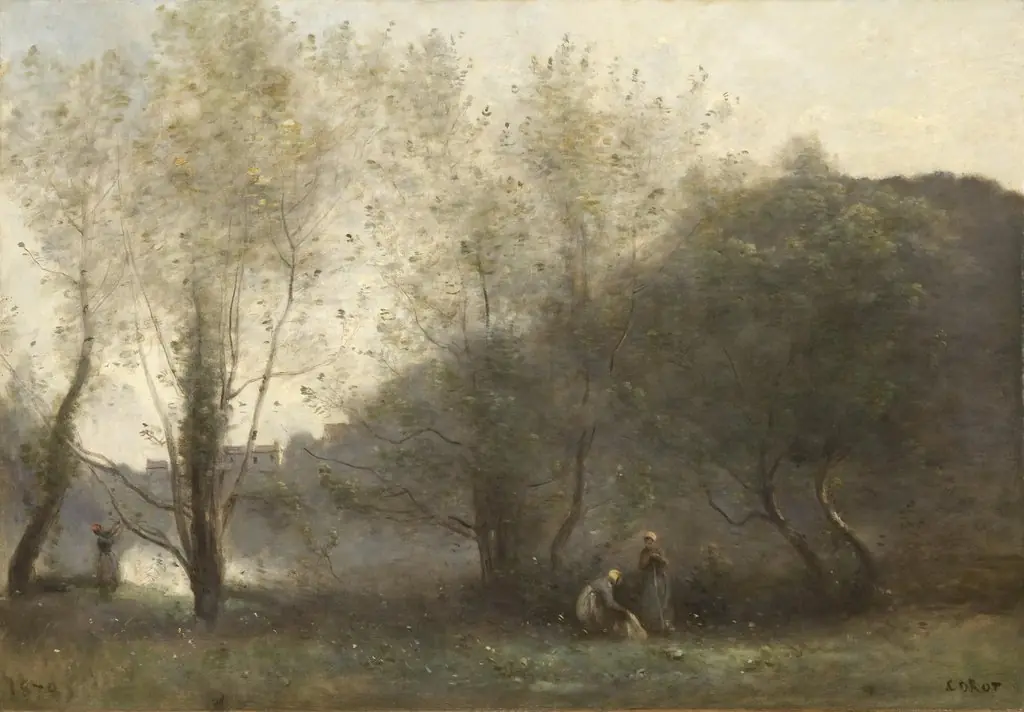
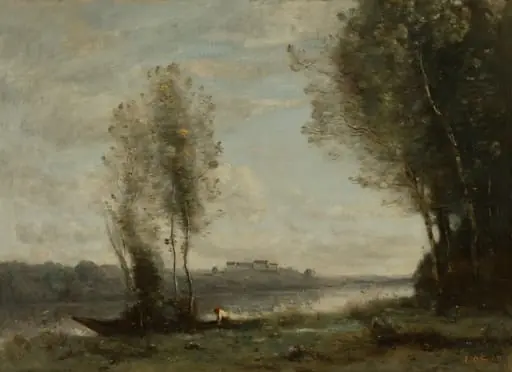
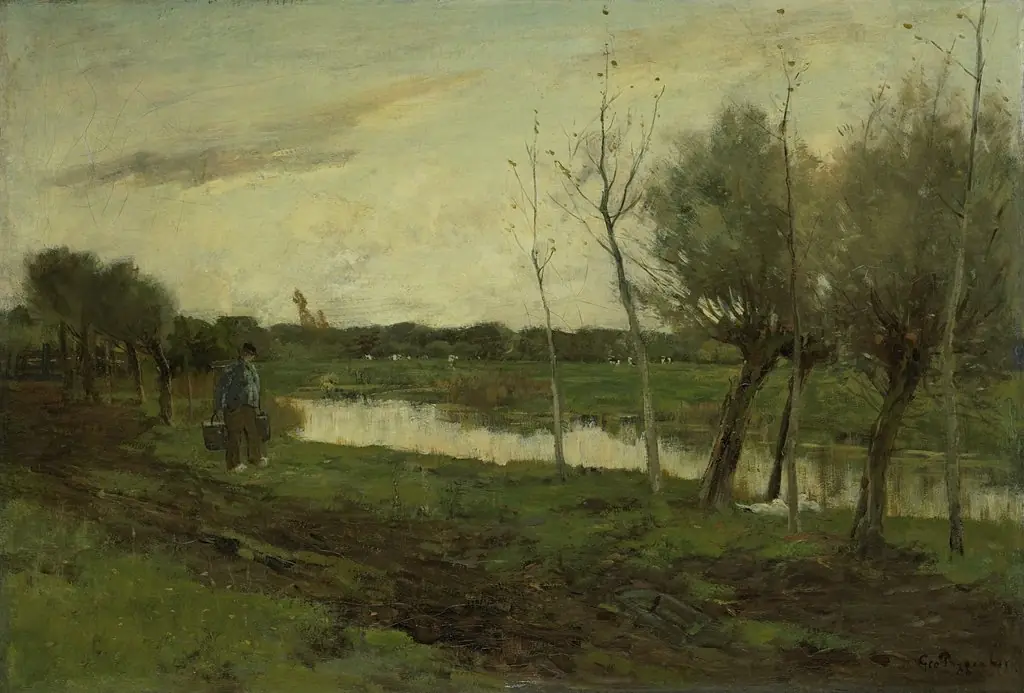
River View is an oil painting by the Barbizon school artist Jean Baptiste Camille Corot. It dates from 1870 and is held in the collection of the National Gallery of Art.
- Inscription
- Inscribed:lower right: COROT
About this work
Technique & Style
As a painting, it is classified as oil on wood, indicating the use of oil pigments bound in linseed oil applied directly to a prepared wood support.
River View (1870) is an oil painting executed on a wooden panel, measuring 32.2 cm by 40.6 cm. The work belongs to the landscape genre and portrays a solitary tree, a motif frequent in Corot’s later output. As a painting, it is classified as oil on wood, indicating the use of oil pigments bound in linseed oil applied directly to a prepared wood support. The piece entered the National Gallery of Art collection through a series of sales and bequests, ultimately arriving via the bequest of R. Horace Gallatin in 1949. No detailed records of handling or current condition are provided in the cited documentation.
History & Provenance
Executed in 1870, this oil on wood landscape by Jean-Baptiste-Camille Corot was documented in Alfred Robaut's 1905 catalogue as belonging to Sir John Charles Frederic Sigismund Day of Falkland Lodge by 1891. Following Day's death, the work appeared in his estate sale at Christie, Manson & Woods in London on May 13, 1909, where it was acquired by the Parisian firm Arnold & Tripp. The painting subsequently passed through E.J. van Wisselingh and Co. in Amsterdam before being sold to M. Knoedler & Co. later that year.
On November 9, 1909, Knoedler sold the piece to R. Horace Gallatin in New York. Gallatin retained ownership until his death, bequeathing the artwork to the National Gallery of Art in 1949.
River View is held by the National Gallery of Art in Washington, D.C. The work entered the museum by bequest in 1949 from R. Horace Gallatin, who had purchased it in 1909. Its accession is recorded as a bequest acquisition, though no specific inventory number is provided in the sources. The National Gallery of Art collection database lists the painting among its holdings.
No exhibition history is documented in the available provenance records, and the work has not been included in any listed exhibitions within the provided documentation.
Overview
Jean-Baptiste-Camille Corot, a French painter and printmaker, created River View in 1870. This oil painting on wood exemplifies his dedication to landscape subjects. The work presents a tranquil natural scene, characterized by a prominent tree and a serene river.
Corot's approach to capturing the natural world often blended established artistic principles with innovative outdoor observation, reflecting his significant role in 19th-century art.
Subject & Meaning
River View depicts a placid natural setting, centered around a distinctive tree positioned in the foreground. The composition invites contemplation of a quiet waterway, conveying a sense of stillness and repose. Corot frequently sought to evoke such serene atmospheres in his landscapes, inviting viewers to engage with the subtle beauty and tranquility of rural environments. The scene's peaceful quality stands in contrast to the dynamic artistic shifts occurring during its creation.
Context
Produced in 1870, River View emerged during a period of considerable transformation within the art world. While many artists were pushing towards new visual languages, Corot continued his personal stylistic evolution, often experimenting with how to best render light and form. The painting's calm and introspective mood offers a counterpoint to the broader artistic ferment of the era, showcasing Corot's enduring commitment to capturing the timeless essence of the landscape amidst changing aesthetic currents.
Own this work as a print
Artist & collection
Artist
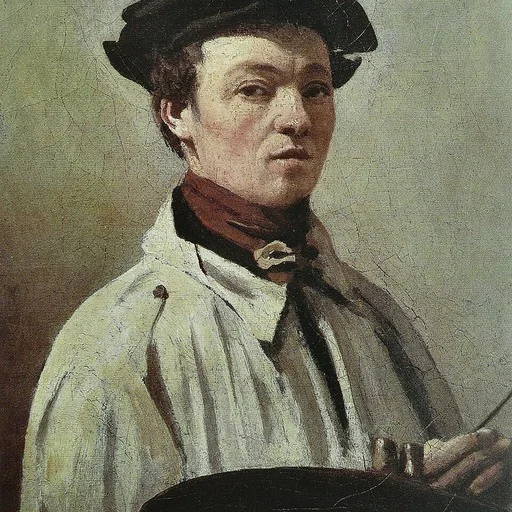
Jean-Baptiste-Camille Corot (UK: KORR-oh, US: kə-ROH, kor-OH; French:; 16 July 1796 – 22 February 1875), or simply Camille Corot, was a French landscape and portrait painter as well as a printmaker in etching.