Artwork
The Island and Bridge of San Bartolomeo, Rome
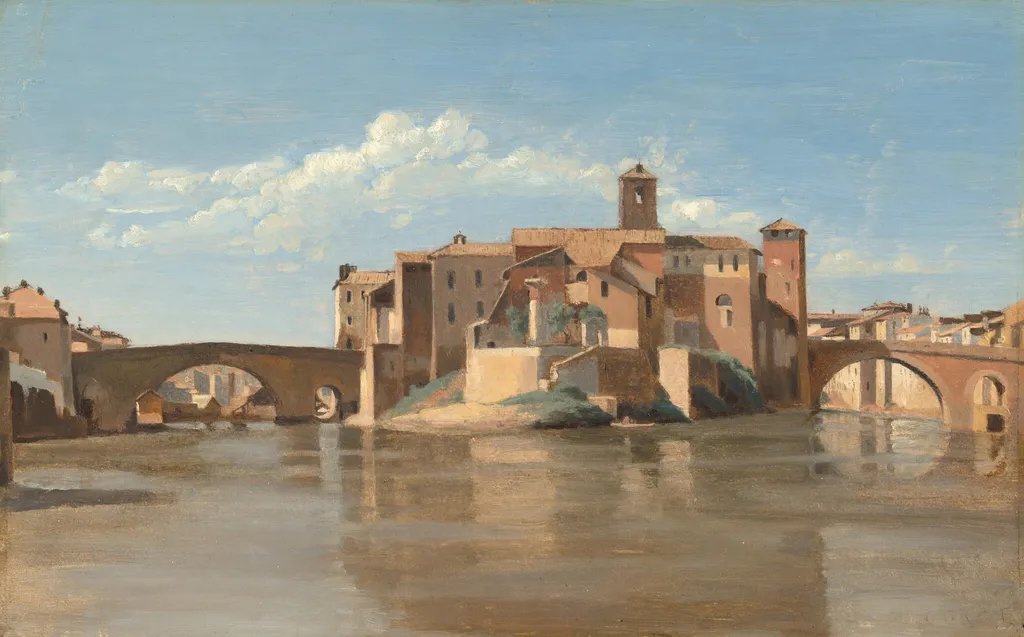
The Island and Bridge of San Bartolomeo, Rome is an oil painting by the Barbizon school artist Jean Baptiste Camille Corot. It dates from 1826 and is held in the collection of the National Gallery of Art.
- Inscription
- Inscribed:lower right: COROT
About this work
Subject & Meaning
The painting portrays the Island and Bridge of San Bartolomeo in Rome, a view that centers on the historic stone bridge spanning the Tiber to the small island.
The painting portrays the Island and Bridge of San Bartolomeo in Rome, a view that centers on the historic stone bridge spanning the Tiber to the small island. Within the landscape, a modest house is visible, anchoring the scene and providing a focal point amid the tranquil river setting. The work captures a quiet, everyday slice of Roman topography, emphasizing the interplay of architecture and water without overt allegory or symbolic embellishment.
Technique & Style
Created in 1826, The Island and Bridge of San Bartolomeo, Rome is executed in oil paint applied to a paper support subsequently mounted on canvas. This technique reflects Corot's practice during his Italian sojourn of working on paper for portability before reinforcing the surface for stability. The work measures 27 cm in height and 43.2 cm in width.
Classified as a landscape, the painting depicts a house and architectural elements within the Roman setting, capturing the scene with the structural and atmospheric qualities characteristic of the artist's early period.
History & Provenance
The Island and Bridge of San Bartolomeo, Rome is an oil-on-paper-on-canvas landscape painted by Jean-Baptiste-Camille Corot in 1826. Its early history places the work in a private French collection before it appeared at the Hôtel Drouot auction in Paris on 16 November 1917 (lot 19), where it was bought in, attributed to Corot, and entered the holdings of Henri Vever. Ownership later passed to a Boston collector, then through Wildenstein & Co. to Dr. Gert-Rudolf Flick in London in 1986, and subsequently to a Japanese private collection by 1996.
The National Gallery of Art, Washington, D.C., purchased the painting on 2 February 2001 through Wildenstein & Co.
The work has been lent to several exhibitions, including The Lefevre Gallery, London (1989); a touring exhibition in Manchester and Norwich (1991); and a touring exhibition in Washington, Brooklyn, and St. Louis (1996).
Overview
Jean-Baptiste-Camille Corot painted The Island and Bridge of San Bartolomeo, Rome in 1826. This oil on paper work, later mounted on canvas, captures a tranquil view along the Tiber River. It represents an early phase in the French artist's career, during which he was developing his distinctive approach to landscape painting.
The piece reflects his interest in depicting specific locales with an emphasis on atmosphere rather than dramatic narrative.
Context
Created during Corot's formative years in Rome, this painting illustrates his engagement with the Italian landscape. His time abroad was crucial for developing his observational skills and his commitment to plein-air techniques. The work aligns with the emerging Barbizon School's focus on naturalism, moving away from idealized classical landscapes towards a more direct and atmospheric portrayal of the environment.
Own this work as a print
Artist & collection
Artist
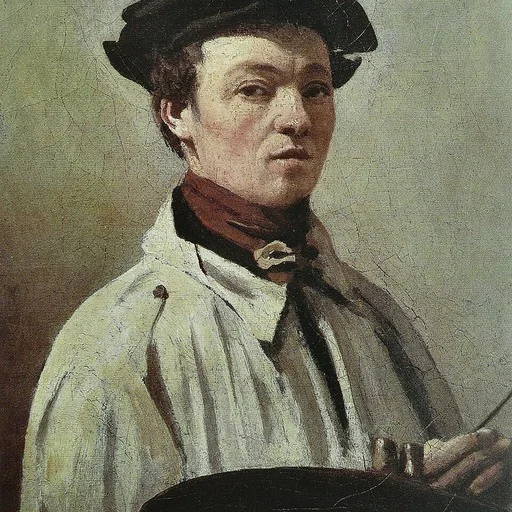
Jean-Baptiste-Camille Corot (UK: KORR-oh, US: kə-ROH, kor-OH; French:; 16 July 1796 – 22 February 1875), or simply Camille Corot, was a French landscape and portrait painter as well as a printmaker in etching.




- View of Ariccia
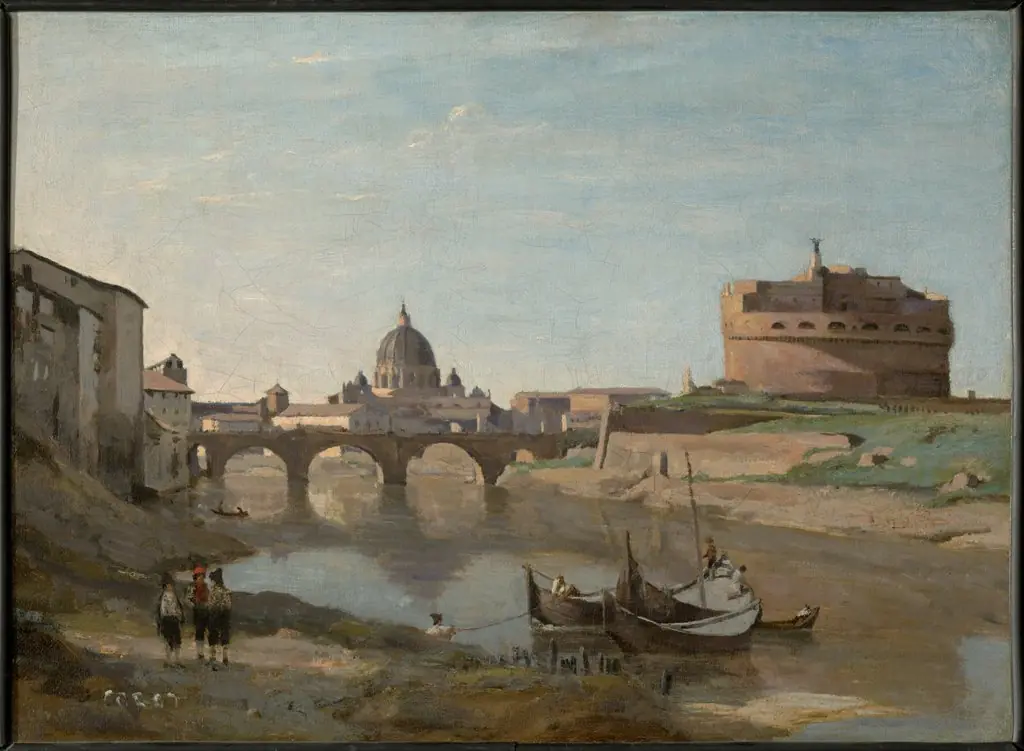 Castel Sant'Angelo, Rome
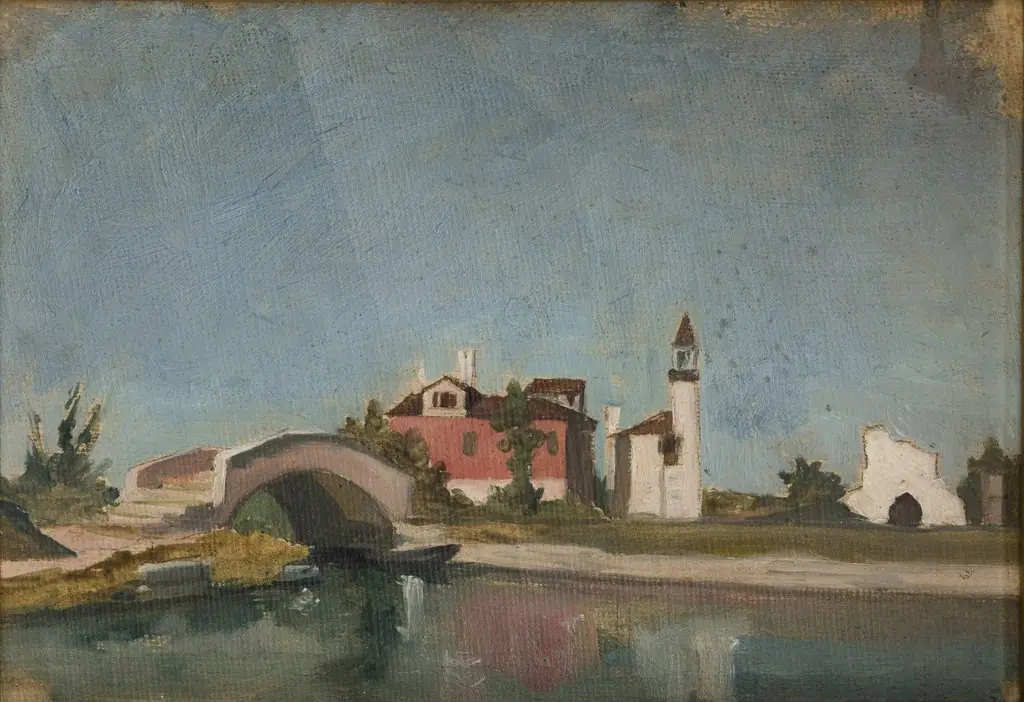 Oriental Landscape
 Porta Angelica and Part of the Vatican
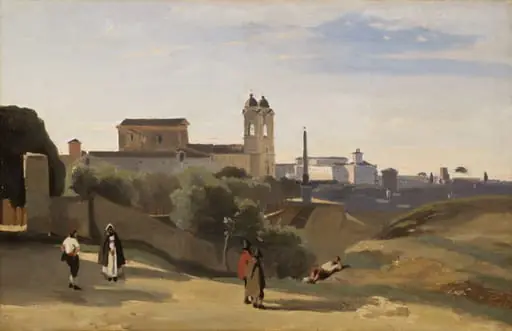 Monte Pincio, Rome
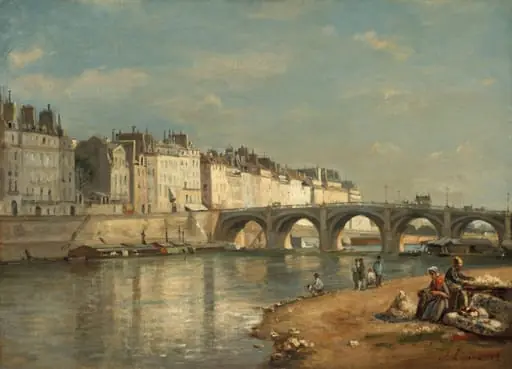 Pont de la Tournelle, Paris
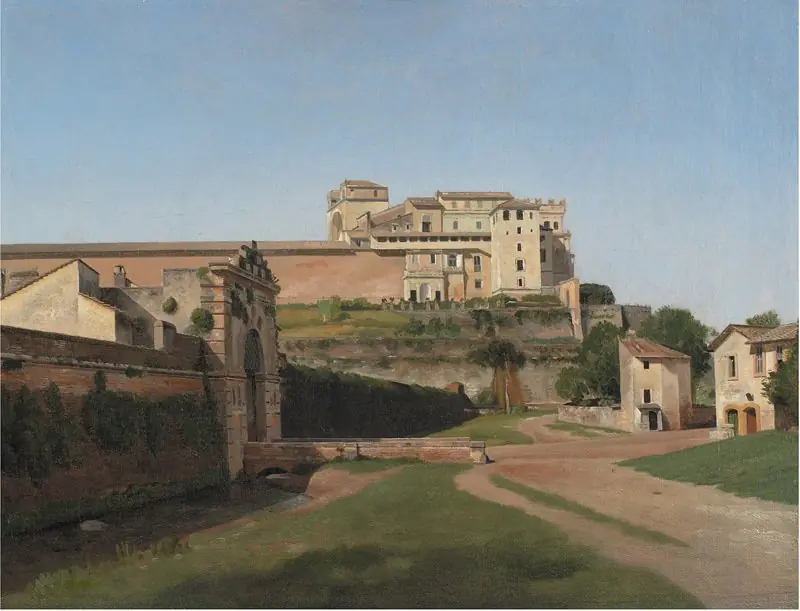 Porta Angelica and Part of the Vatican
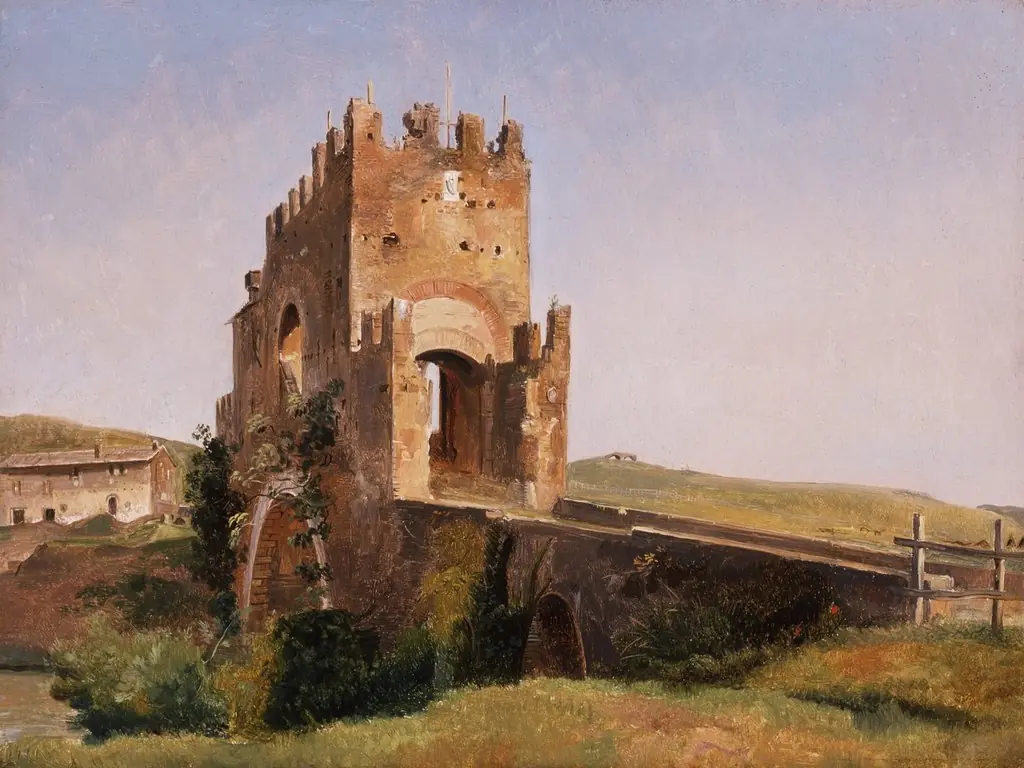 View of the Ponte Nomentano (Roman Campagna)
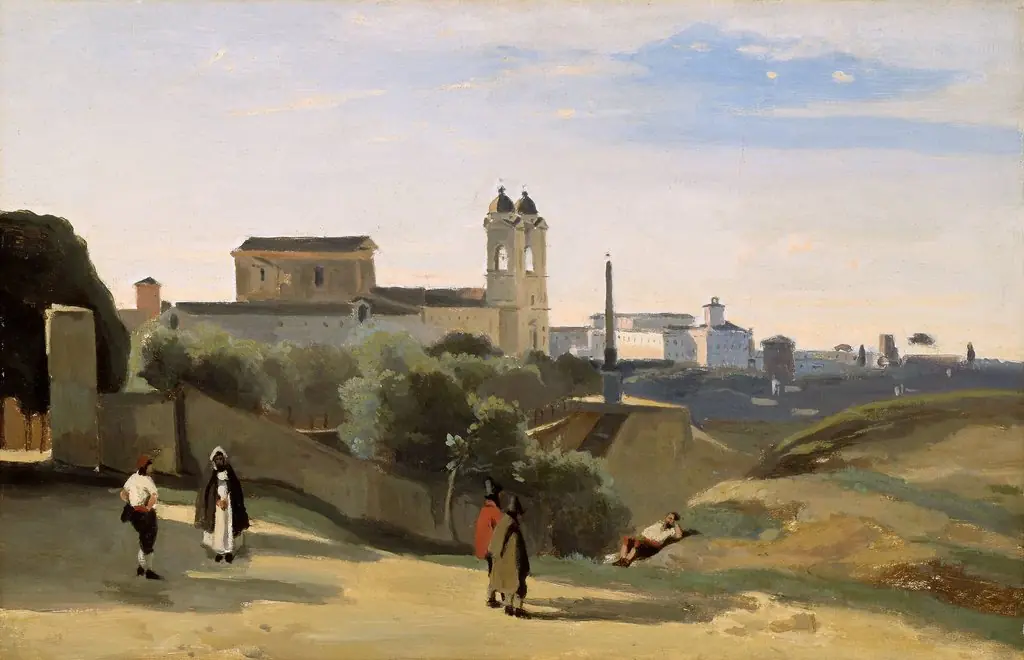 Monte Pincio, Rome
 Italian waterside landscape
 A View of Cairo
 The Rialto Bridge, Venice