Artwork
Peacocks and a Loquat Tree
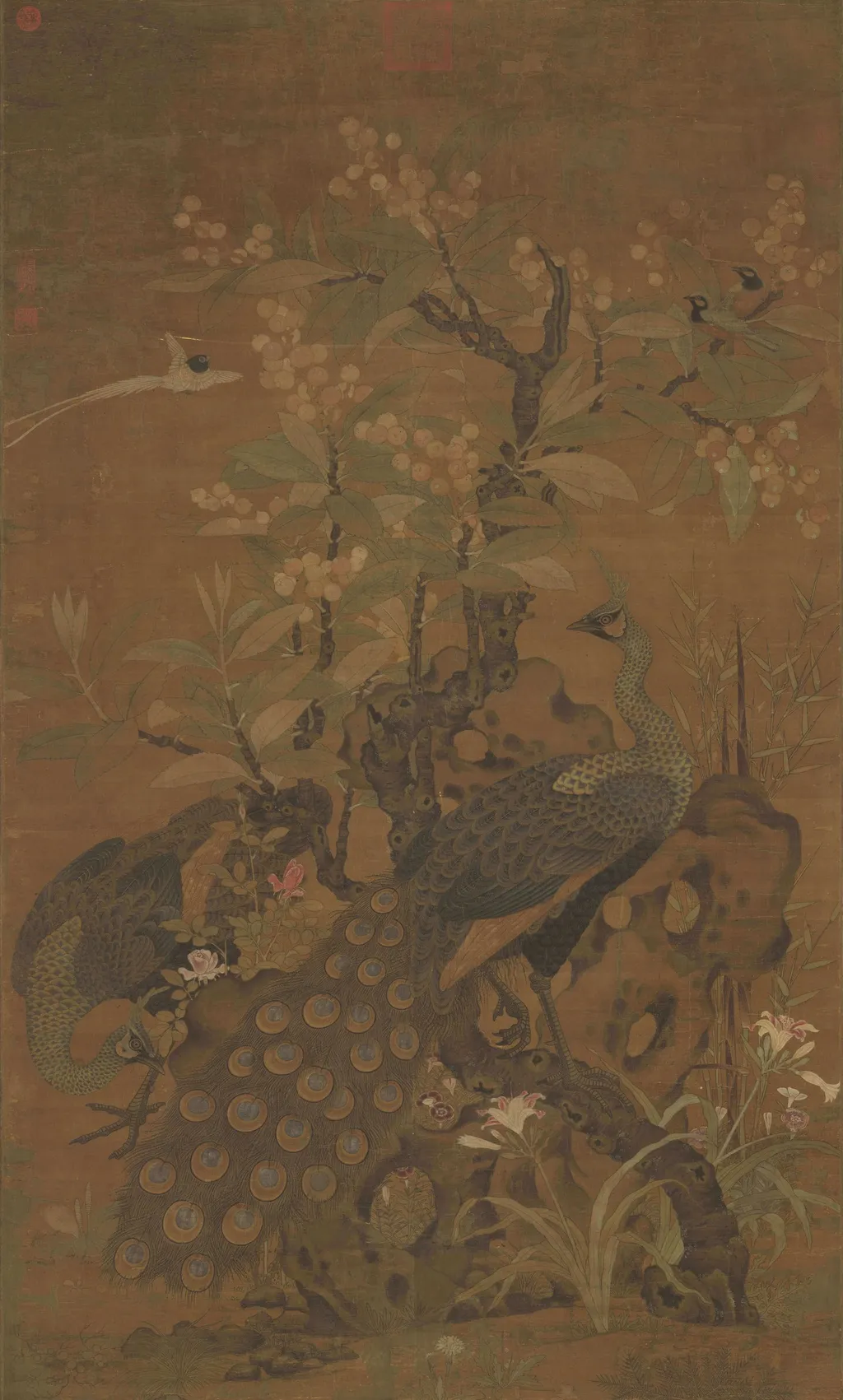
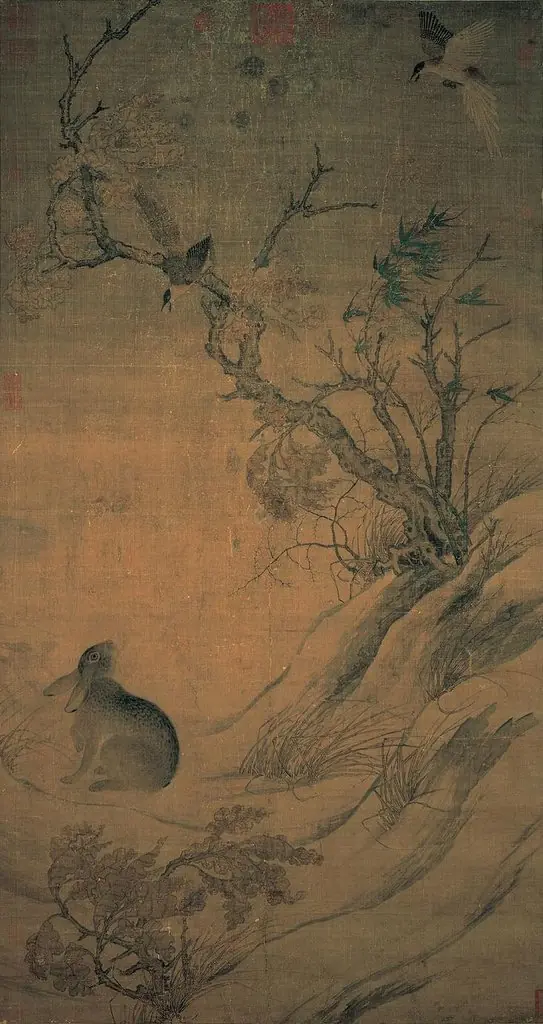
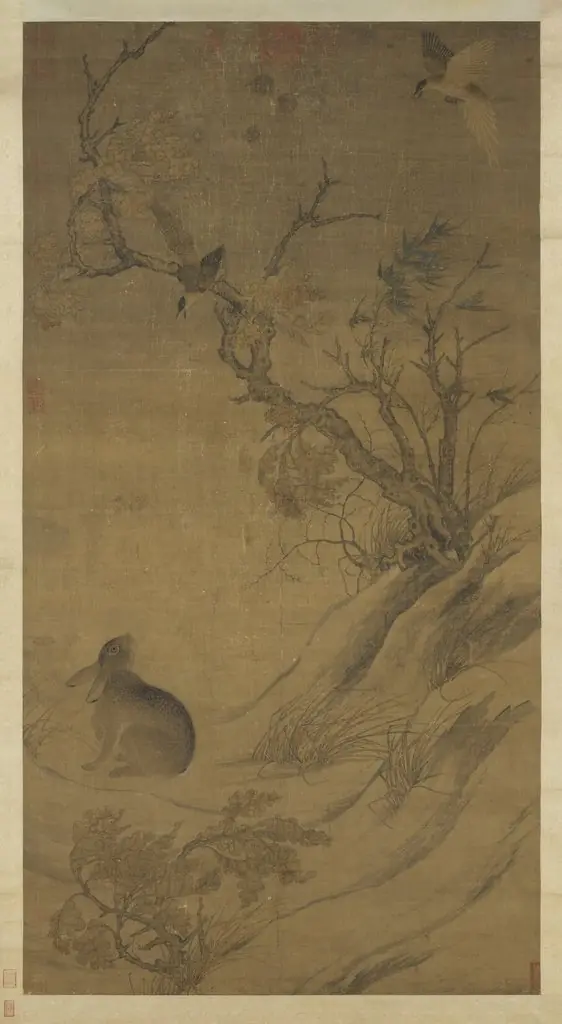
Peacocks and a Loquat Tree is an unspecified painting by the Song dynasty painting artist Cui Bai. It dates from 1050 and is held in the collection of the National Palace Museum.
About this work
Overview
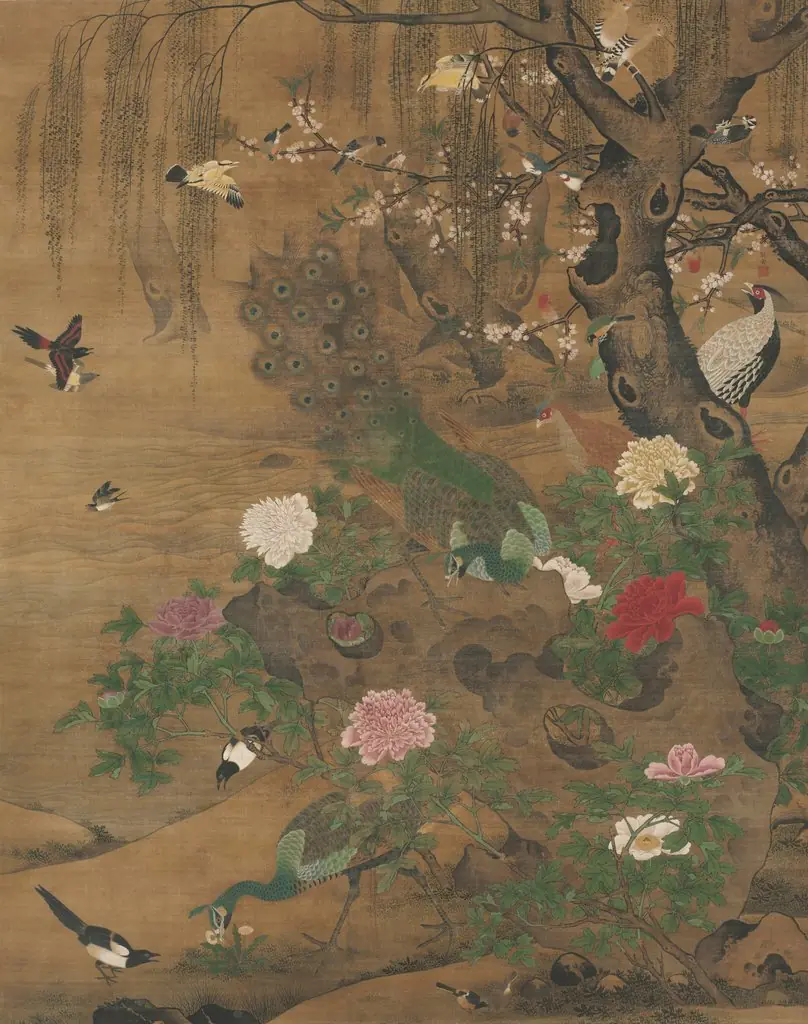
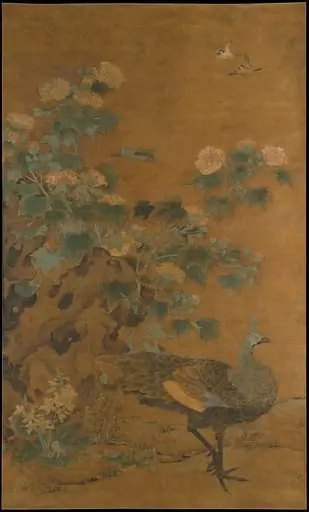
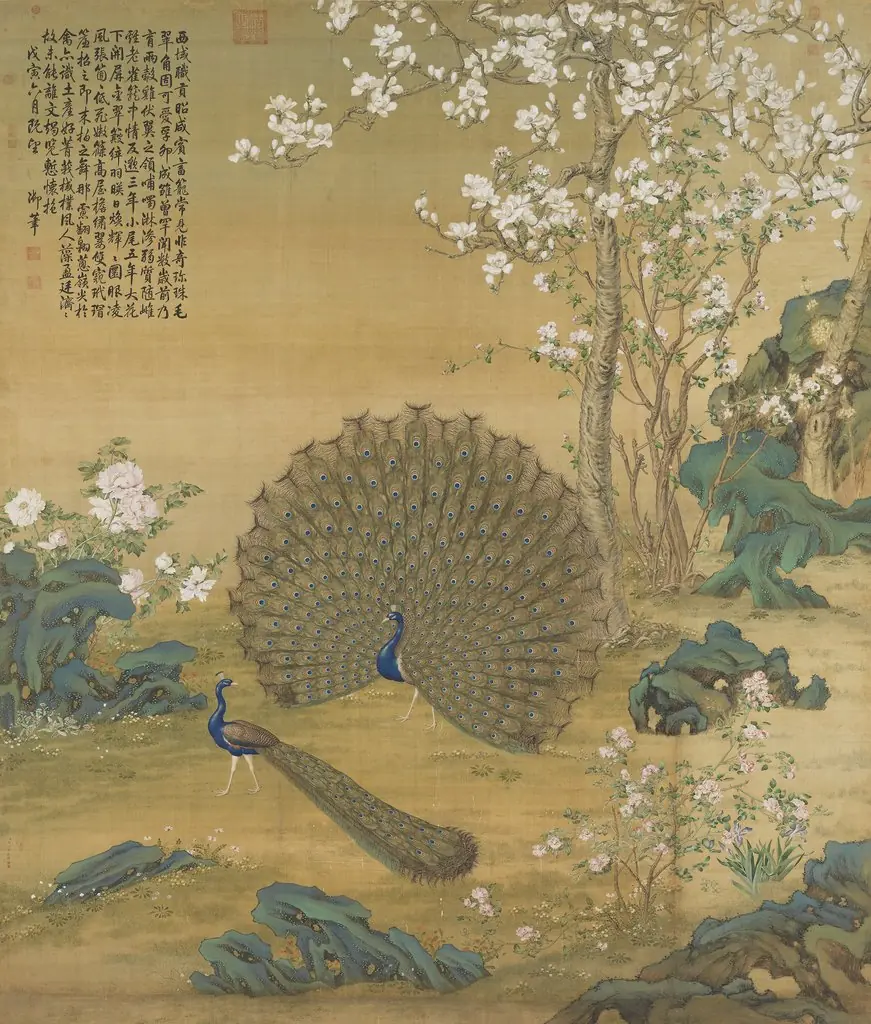
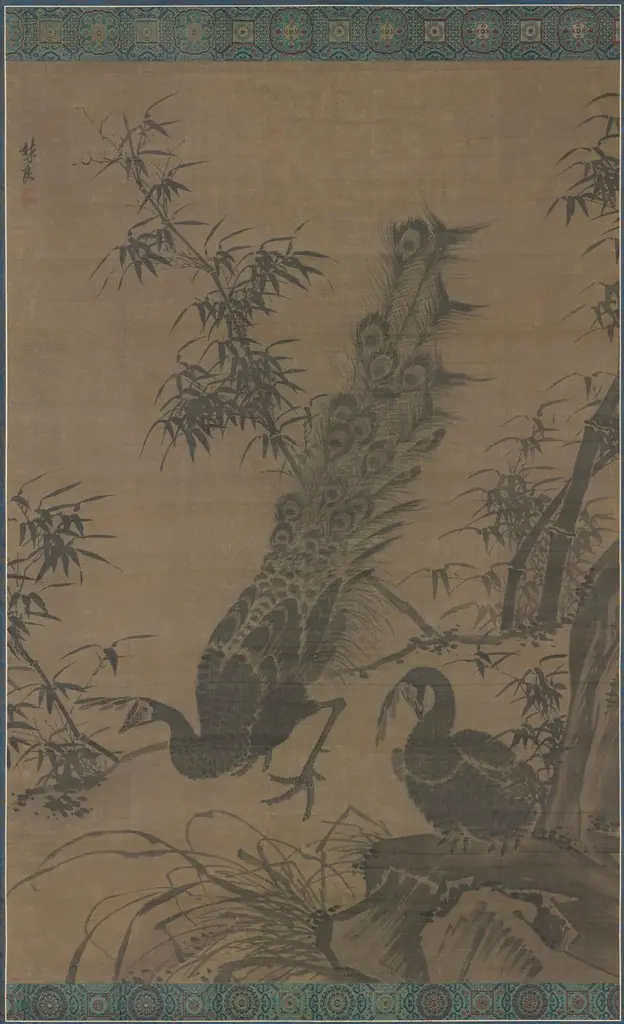
Peacocks and a Loquat Tree is a painting created by Cui Bai, a Northern Song Dynasty artist, around the mid-11th century. It is characterized by a serene depiction of a pair of peacocks amidst lush garden scenery, now housed in the National Palace Museum.
Subject & Meaning
The painting features a pair of peacocks perched on a rocky outcropping, surrounded by a loquat tree with green leaves and white flowers, accompanied by other scattered plants. This composition embodies the refined naturalism valued in Song court art.
Technique & Style
Cui Bai employed precise observation and decorative elegance in the work, typical of the Song court’s artistic tradition. The palette is muted, dominated by shades of brown and green, contributing to an overall atmosphere of serenity and tranquility.
History & Provenance
Created during the Northern Song Dynasty’s flourishing period under Emperor Shenzong, the painting was produced in Kaifeng, the capital, where Cui Bai worked, recognized for his technical skill despite his unconventional reputation.
Context
This work reflects the artistic preferences of the Song court, where naturalistic yet elegant depictions of flora and fauna were highly esteemed. Cui Bai’s style aligns with the court’s emphasis on detailed, harmonious representations of nature.
Legacy
As part of the National Palace Museum’s collection, Peacocks and a Loquat Tree remains a significant example of Northern Song Dynasty painting, illustrating the era’s artistic values and Cui Bai’s contribution to the tradition of depicting nature with precision and grace.
Own this work as a print
Artist & collection
Artist
Cui Bai (Chinese: 崔白; pinyin: Cuī Bái; Wade–Giles: Ts'ui Po, also known as Cui Bo, style name Zixi (子西)) (fl.