Artwork
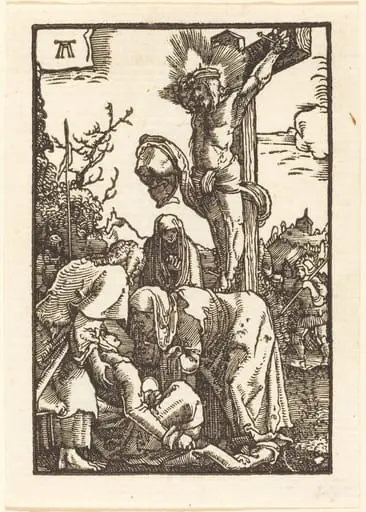
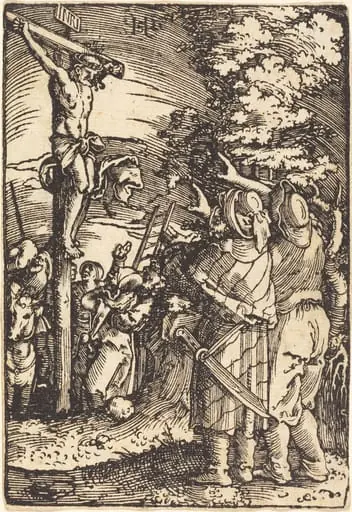
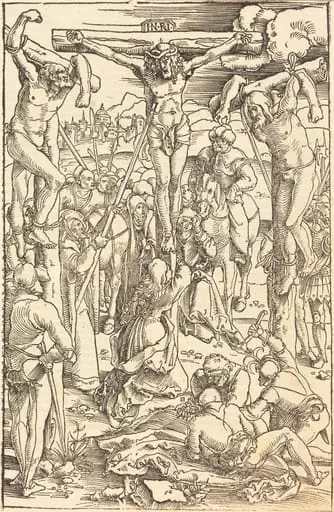
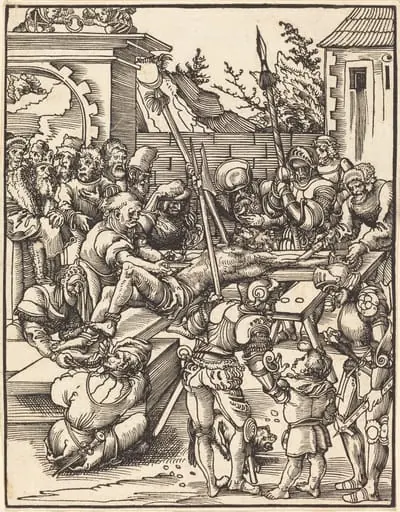
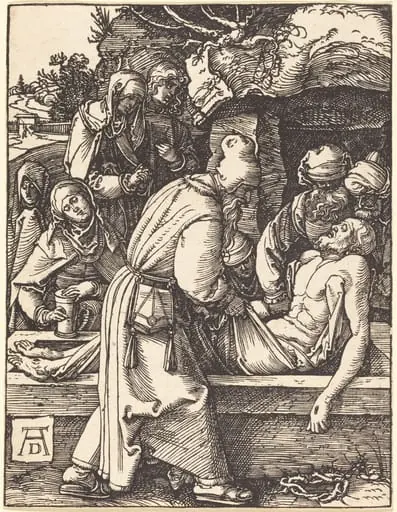
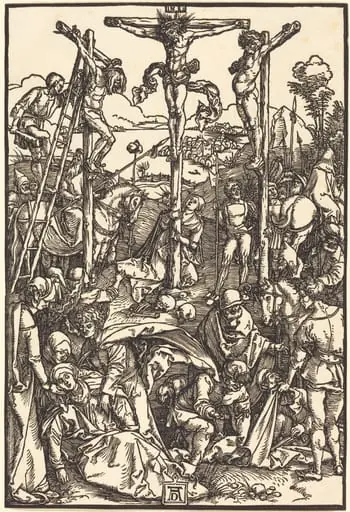
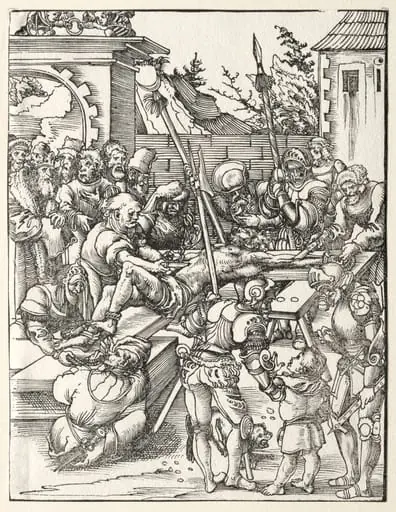
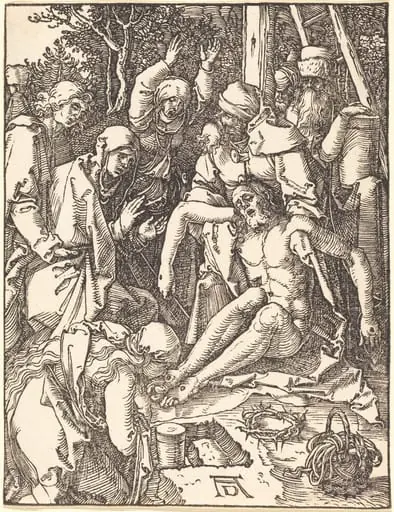
Christ Nailed to the Cross
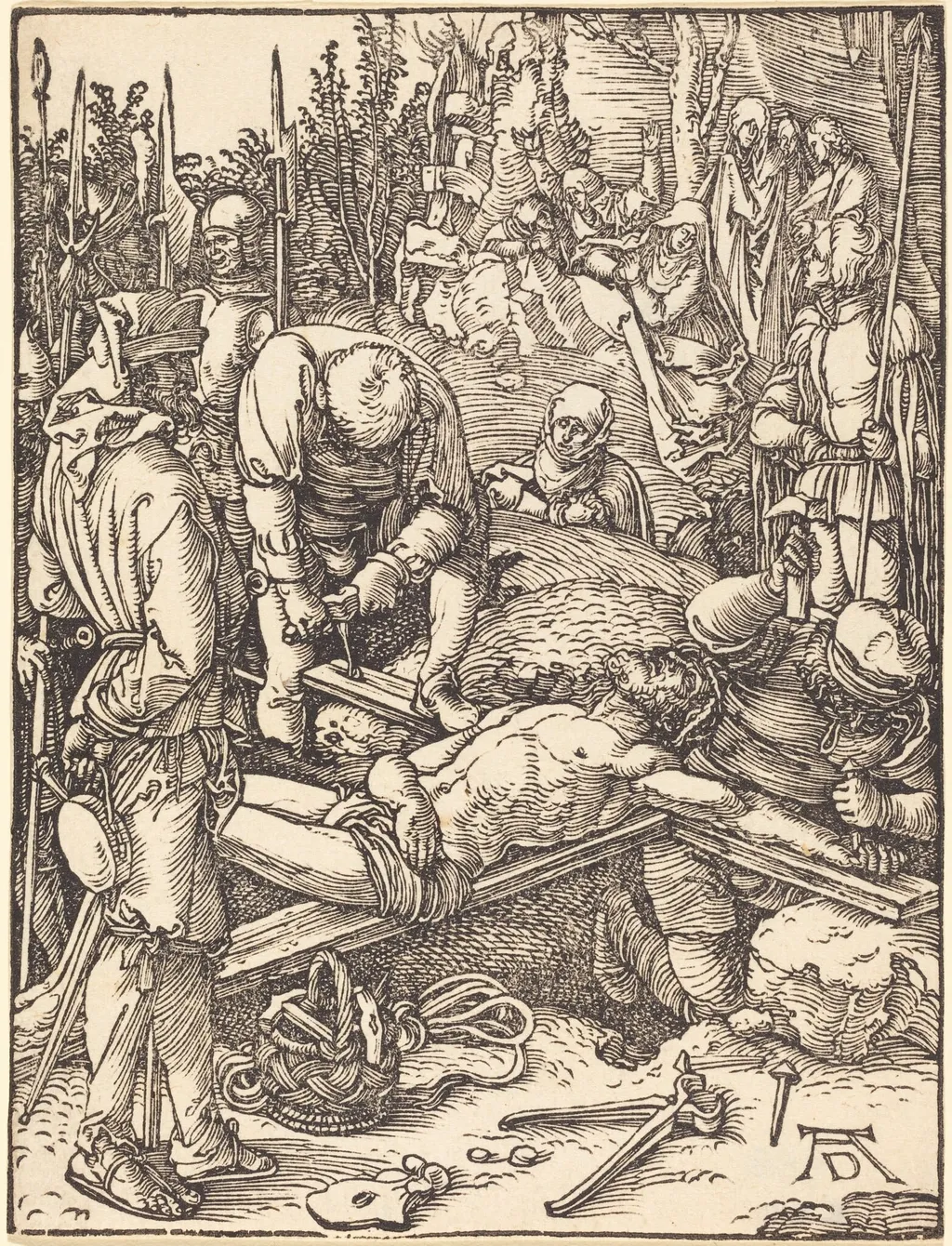
Christ Nailed to the Cross is an ink print by the Northern Renaissance artist Albrecht Dürer. It dates from 1510 and is held in the collection of the Cleveland Museum of Art.
- Inscription
- Inscribed:in block, bottom right, on ground: AD [artist's monogram]; verso, lower center, in graphite by a later hand: 627; verso, bottom left, in graphite by a later hand: B 39; verso, bottom center, in graphite by a later hand: 24
About this work
Subject & Meaning
Albrecht Dürer's 1509 woodcut Christ Nailed to the Cross depicts the crucifixion of Jesus Christ, a central event from the New Testament.
Albrecht Dürer's 1509 woodcut Christ Nailed to the Cross depicts the crucifixion of Jesus Christ, a central event from the New Testament. As part of the Little Passion series, the work functions as a religious narrative within the German Renaissance tradition. The image focuses specifically on the moment of the crucifixion, illustrating the physical act of nailing Christ to the cross rather than the subsequent death or resurrection. This depiction serves as a devotional object, intended to evoke the suffering of Christ for religious contemplation.
Technique & Style
The print is a woodcut executed on laid paper, depicting the crucifixion of Jesus Christ in the Little Passion series. Dürer’s handling of line conveys stark anguish through stark contrasts of black and white, while the composition emphasizes the contorted bodies and expressive gestures of the figures surrounding the cross. The work’s formal qualities reflect the German Renaissance’s focus on intricate detail and emotive realism, and its condition remains stable as recorded in the National Gallery of Art’s Rosenwald Collection holdings.
History & Provenance
The print was created by Albrecht Dürer in 1509 as part of his Little Passion series, depicting Jesus Christ in a religious scene. Its ownership chain begins with Joseph Daniel Böhm in Vienna, later passing to Robert Scholtz in Budapest, then to William Schab in New York, before being acquired by Lessing J. Rosenwald in 1940. Rosenwald subsequently gifted the work to the National Gallery of Art in 1943.
The piece is part of the Rosenwald Collection and is held today at the National Gallery of Art in Washington, D.C.
Christ Nailed to the Cross is held by the National Gallery of Art in Washington, D.C., having entered the collection in 1943 as a gift from Lessing J. Rosenwald. The print bears Rosenwald's collector's marks (Lugt 1760b and Lugt 1932d). Earlier provenance traces through Robert Scholtz in Budapest, then Joseph Daniel Böhm in Vienna, before passing through the dealer William Schab in New York and being purchased by Rosenwald in Jenkintown, Pennsylvania in 1940.
Wikidata records additional impressions or related holdings at the Cleveland Museum of Art and the British Museum, situating impressions within the broader Rosenwald Collection.
No exhibition history is documented in the provided sources.
Context
The print established Dürer's reputation for emotional intensity within the German Renaissance, particularly through its stark portrayal of Christ's suffering. Art historians note its significance as part of the Little Passion series, reflecting the artist's engagement with New Testament narratives and his influence on religious printmaking. Contemporary scholarship emphasizes its technical innovation and role in elevating printmaking to a fine art medium, situating it within Dürer's broader exploration of sacred themes during the early 16th century.
Legacy
Christ Nailed to the Cross has shaped European printmaking through its stark emotional intensity and precise line work, influencing later religious imagery across the continent. Its adoption of New Testament narrative established a visual template for crucifixion scenes in Northern European art, with subsequent artists echoing its compositional rigor and devotional focus. The work's presence in major collections, including the National Gallery of Art and Cleveland Museum of Art, underscores its enduring scholarly and curatorial significance.
Overview
Albrecht Dürer’s woodcut titled Christ Nailed to the Cross, executed around 1510, presents a stark, monochrome portrayal of the crucifixion. Rendered in black ink on laid paper, the image captures the moment of Jesus on the cross, emphasizing the physical suffering through stark lines and deep shadows.
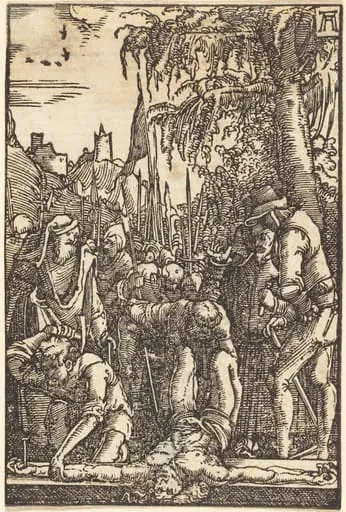
Own this work as a print
Artist & collection
Artist
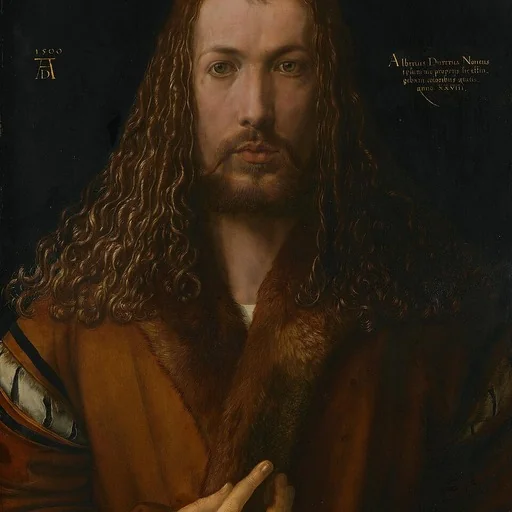
Albrecht Dürer spent his life in Nuremberg, a busy German city where artists traded prints like currency.

![Madonna and Child [obverse], by Albrecht Dürer](https://artifactworldgallery.com/img/albrecht-durer--madonna-and-child-obverse--d7b8ebf05d22ebe5-w320.webp)
![Lot and His Daughters [reverse], by Albrecht Dürer](https://artifactworldgallery.com/img/albrecht-durer--lot-and-his-daughters-reverse--b4ebf9b282faa17a-w320.webp)