Artwork
The Betrothal of the Virgin
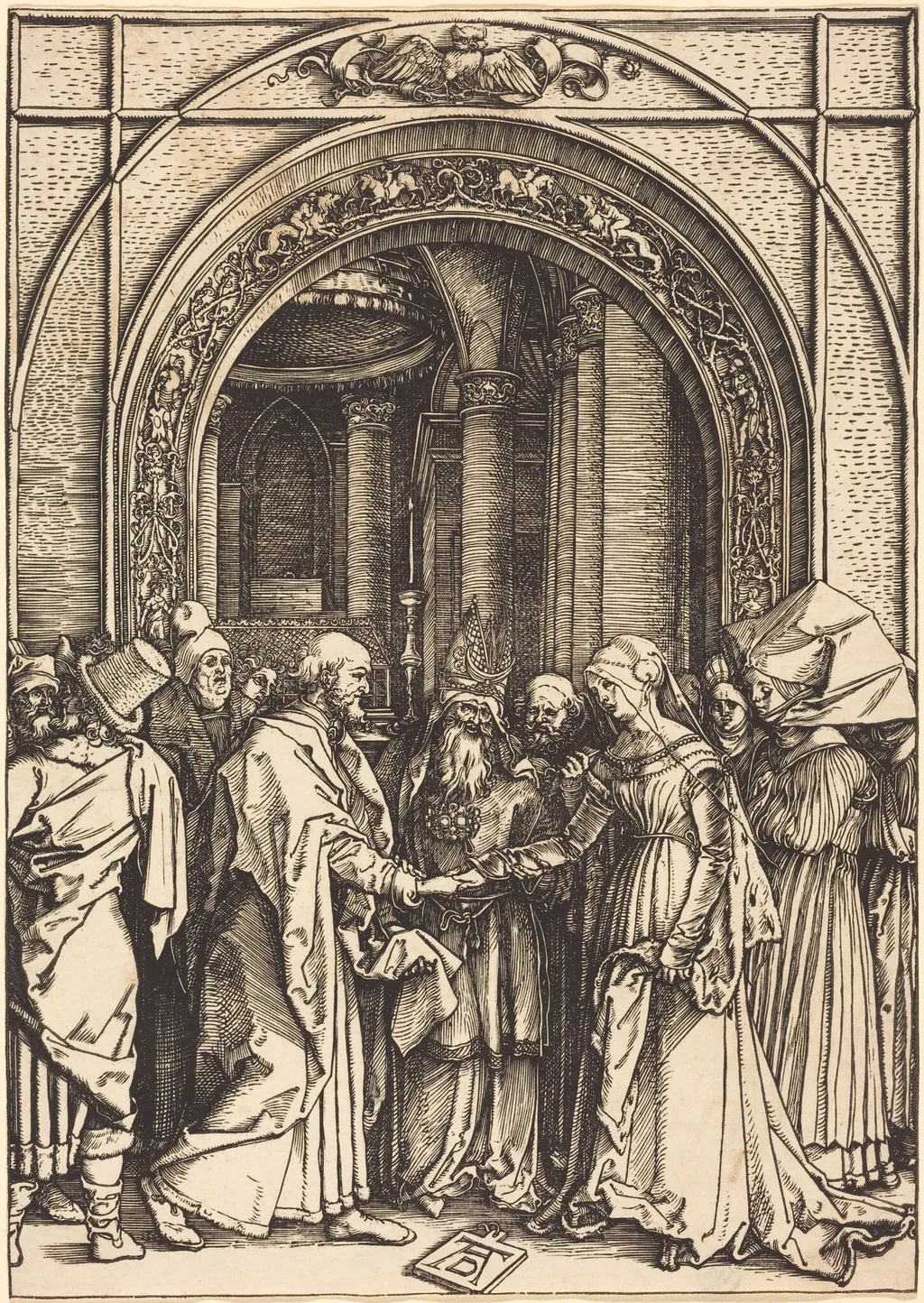
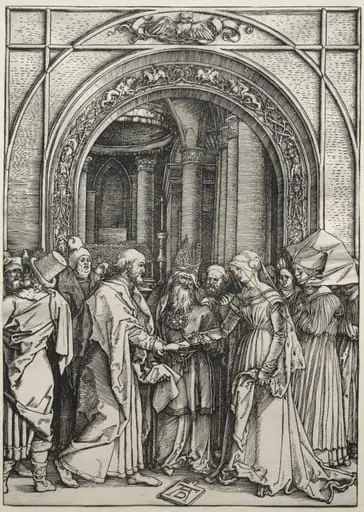
The Betrothal of the Virgin is an ink print by the Northern Renaissance artist Albrecht Dürer. It dates from 1504 and is held in the collection of the Museum of Fine Arts, Houston.
- Markings
- Marked:recto: none; verso: Vincent Mayer (Lugt 2525); Wilhelm August Ackermann (Lugt 791)
About this work
Subject & Meaning
The composition frames the couple as the devotional core of the image, presenting their betrothal as a holy rite within the early life of the Virgin.
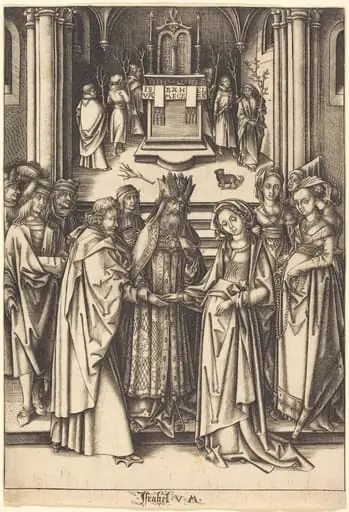
Dürer's woodcut depicts the marriage of the Virgin Mary to Joseph, the central event that gives the work its title. The scene shows the betrothal ceremony, a moment drawn from the New Testament in which Mary and Joseph are joined in matrimony. The print belongs to the religious genre and forms part of Dürer's Life of the Virgin series, treating the subject as a sacred episode rather than a secular genre scene.
Iconographically, the work focuses on the union of Mary and Joseph, with the act of marriage itself serving as the principal subject. The composition frames the couple as the devotional core of the image, presenting their betrothal as a holy rite within the early life of the Virgin. As a religious print, it conveys the sanctity of the marriage and the theological significance of Mary as the chosen bride of Joseph, a foundational moment in Christian narrative.
Technique & Style
The Betrothal of the Virgin is a woodcut print executed by Albrecht Dürer in 1504, produced on paper in Nuremberg. The work belongs to Dürer's Life of the Virgin series and is classified as a religious print.
The image measures approximately 29.9 cm in height by 21.1 cm in width, a relatively intimate scale typical of Dürer's refined woodcut practice. Stylistically, the print is associated with the German Renaissance movement, and its subject matter centers on the marriage of the Virgin Mary to Joseph, drawn from the New Testament.
As a woodcut, the image was produced by carving a design into a wooden block, inking the raised surfaces, and transferring the composition onto paper under pressure, a technique Dürer elevated through precise cutting and the use of fine contour lines to achieve subtle tonal and textural effects.
History & Provenance
Albrecht Dürer created The Betrothal of the Virgin in 1504 in Nuremberg as a woodcut, part of his Life of the Virgin series. The work is based on the New Testament subject of the marriage of the Virgin Mary and Joseph.
The print is now held in multiple institutional collections. These include the National Gallery of Art in Washington, D.C., the Cleveland Museum of Art, the Metropolitan Museum of Art, the Albertina, the Museum of Fine Arts, Houston, the Musée des Beaux-Arts de la ville de Paris, the Chester Beatty Library, and the Rosenwald Collection (also at the National Gallery of Art). Specific locations documented are the National Gallery of Art and the Cleveland Museum of Art.
The woodcut is held by the National Gallery of Art, Washington, D.C., and the Cleveland Museum of Art.
In Washington, D.C., the work is accessioned as part of the Rosenwald Collection with inventory number 1943.3.119. It has been exhibited by the Gallery on multiple occasions, including in the 1945 exhibition “Rosenwald Collection” and in the 2010 display “Rosenwald: 75th Anniversary Acquisitions.”
Overview
The Betrothal of the Virgin is a woodcut print created by Albrecht Dürer around 1504.
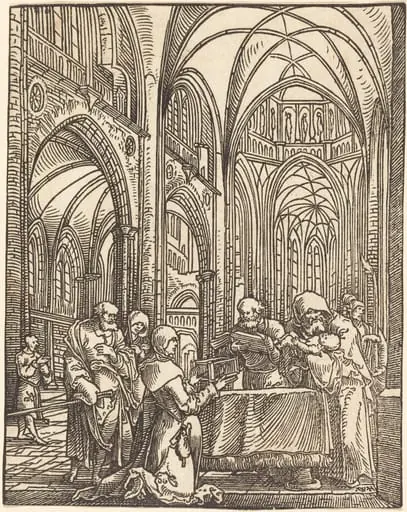
Own this work as a print
Artist & collection
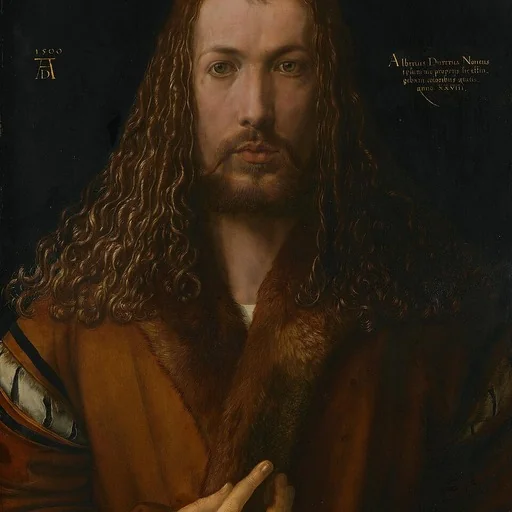
Artist
Albrecht Dürer spent his life in Nuremberg, a busy German city where artists traded prints like currency.

![Madonna and Child [obverse], by Albrecht Dürer](https://artifactworldgallery.com/img/albrecht-durer--madonna-and-child-obverse--d7b8ebf05d22ebe5-w320.webp)
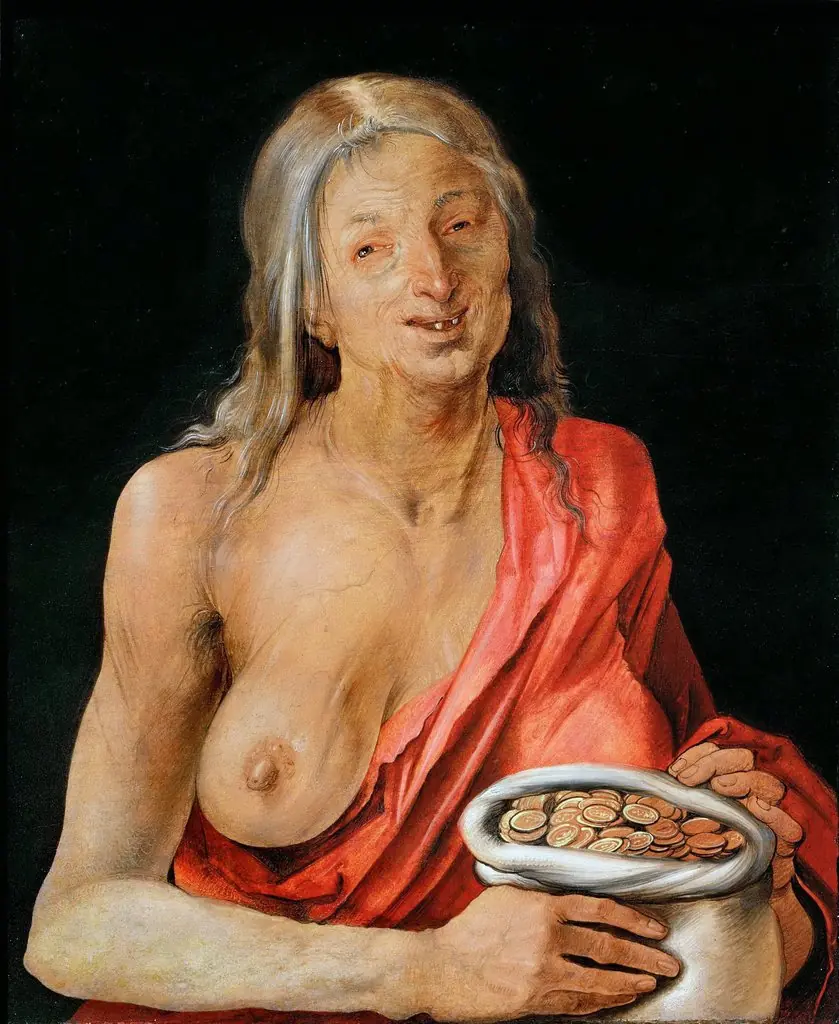
![Lot and His Daughters [reverse], by Albrecht Dürer](https://artifactworldgallery.com/img/albrecht-durer--lot-and-his-daughters-reverse--b4ebf9b282faa17a-w320.webp)
 The Betrothal of the Virgin
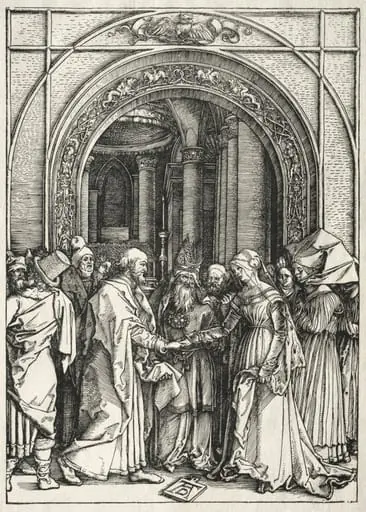 Life of the Virgin: Marriage of the Virgin and St. Joseph
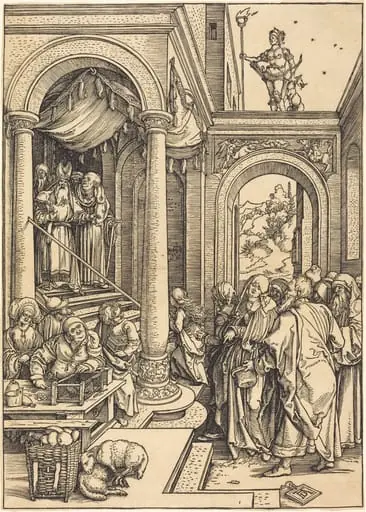 The Presentation of the Virgin in the Temple
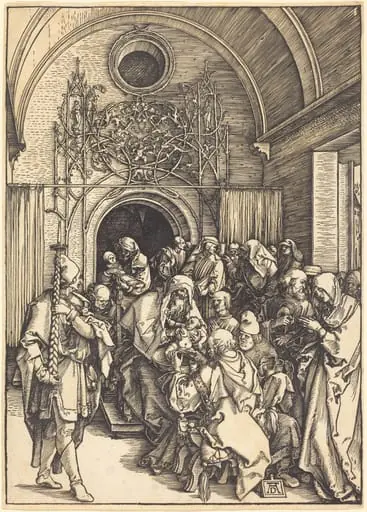 The Circumcision
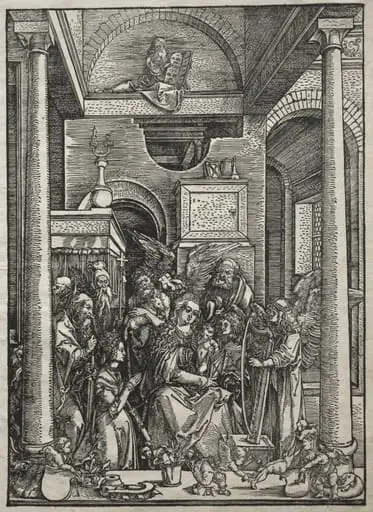 Life of the Virgin: Adoration of the Virgin and Child by Saints and Angels
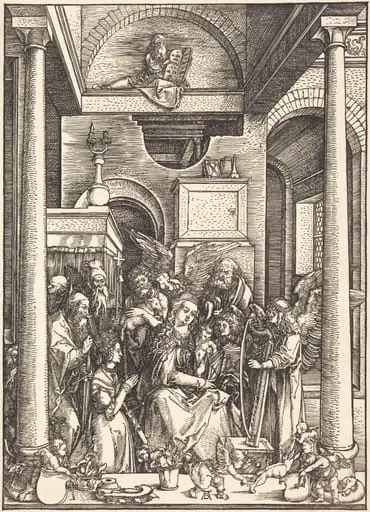 The Glorification of the Virgin
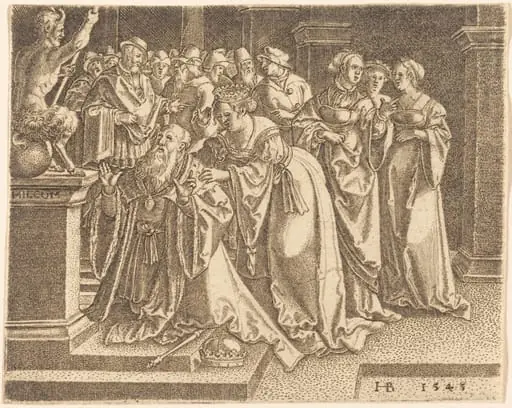 Solomon Worshipping Idols
 The Archbishop Blessing the Child after the Baptism
 The Visitation
 The Marriage of the Virgin