Artwork
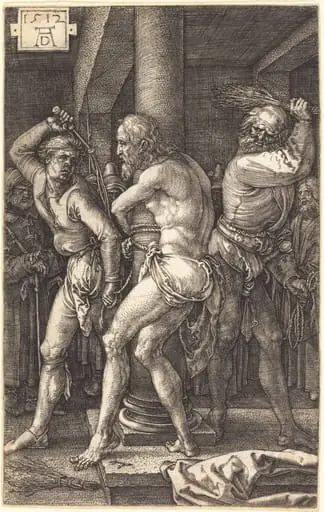
The Flagellation
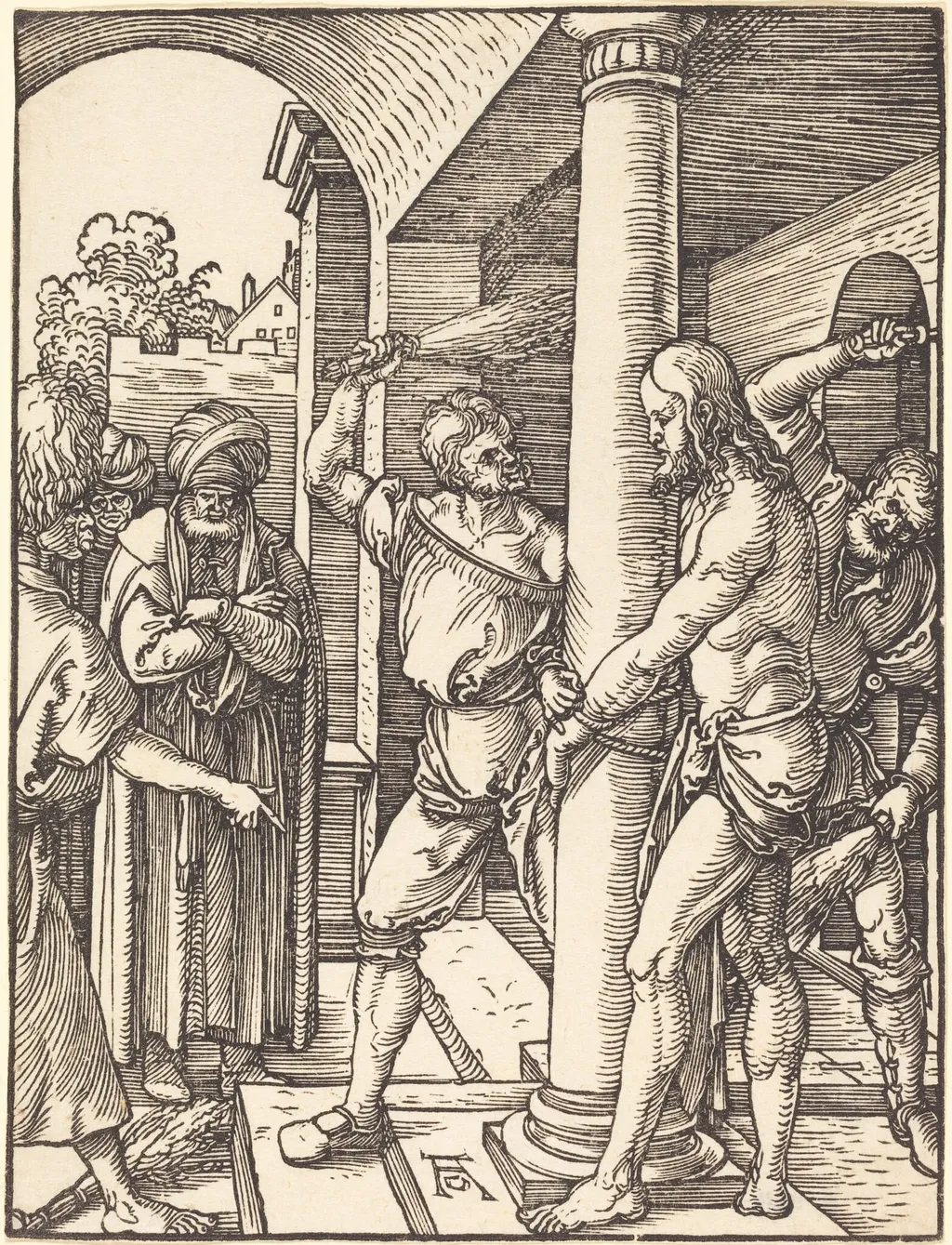
The Flagellation is an ink print by the Northern Renaissance artist Albrecht Dürer. It dates from 1510 and is held in the collection of the British Museum.
- Inscription
- Inscribed:in block, bottom center, on ground: AD [artist's monogram]; verso, lower center, in graphite by a later hand: 627; verso, bottom left, in graphite by a later hand: 33; verso, bottom center, in graphite by a later hand: 18
About this work
Subject & Meaning
As part of the artist's Little Passion series, the work focuses on the religious event where Christ is bound and beaten prior to his crucifixion.
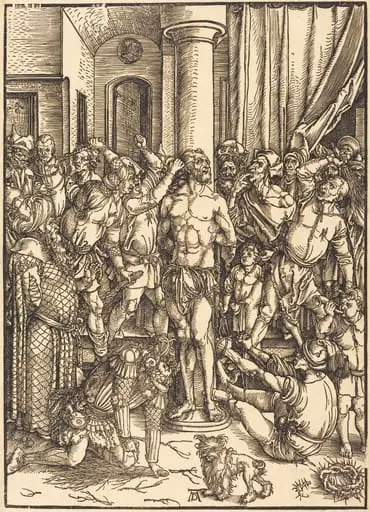
Albrecht Dürer's 1509 woodcut, titled The Flagellation, depicts the scourging of Jesus Christ as narrated in the New Testament. As part of the artist's Little Passion series, the work focuses on the religious event where Christ is bound and beaten prior to his crucifixion. The print serves as a visual meditation on this specific moment of suffering, adhering to the conventions of German Renaissance religious art.
By isolating this episode, Dürer emphasizes the physical torment endured by the central figure, presenting a direct and intense interpretation of the biblical account.
Technique & Style
Albrecht Dürer created The Flagellation as a woodcut printed on laid paper in 1509, a technique characteristic of early Northern Renaissance printmaking. The work measures 124 cm in height and 95 cm in width, depicting the flagellation of Christ with stark compositional focus and intricate line work that emphasizes the physical torment of the scene. Executed in the German Renaissance style, the print demonstrates Dürer’s mastery of woodcut technique, where the image is carved into a wooden block, inked, and pressed onto paper to produce multiple impressions.
The handling of light and shadow through layered cross-hatching enhances the dramatic intensity, while the formal balance of figures reflects the period’s emphasis on emotional depth and narrative clarity. The piece is part of Dürer’s Little Passion series, a collection of prints illustrating moments from the Passion of Christ, and is held in major institutions including the National Gallery of Art, where it was acquired through the Rosenwald Collection.
History & Provenance
Albrecht Dürer created the woodcut Flagellation in 1509 as part of his Little Passion series. The print entered the collection of Joseph Daniel Böhm in Vienna, later passed to Robert Scholtz in Budapest, and was acquired by William Schab in New York before being purchased by Lessing J. Rosenwald in 1940; Rosenwald subsequently gifted the work to the National Gallery of Art in 1943.
The National Gallery of Art holds the piece as part of the Rosenwald Collection.
The print is held by the National Gallery of Art in Washington, D.C. Its accession number is recorded as Lugt 1760b and Lugt 1932d. The work entered the collection via purchase by Lessing J. Rosenwald in 1940 and was subsequently gifted to the museum in 1943. It has been exhibited as part of the Rosenwald Collection and is categorized within the German Renaissance religious prints.
Overview
The Flagellation is a woodcut print created by Albrecht Dürer around 1510. It is a religious work executed on laid paper.
Context
The Flagellation was produced as part of a series of religious scenes by Dürer, reflecting his interest in exploring themes related to faith through his art.
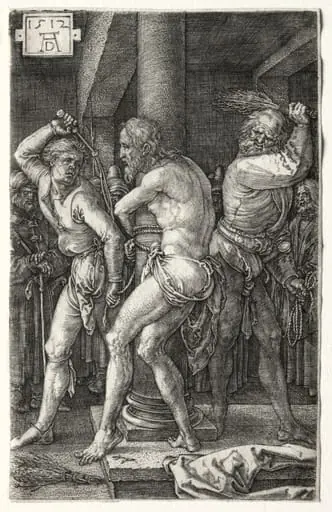
Own this work as a print
Artist & collection
Artist
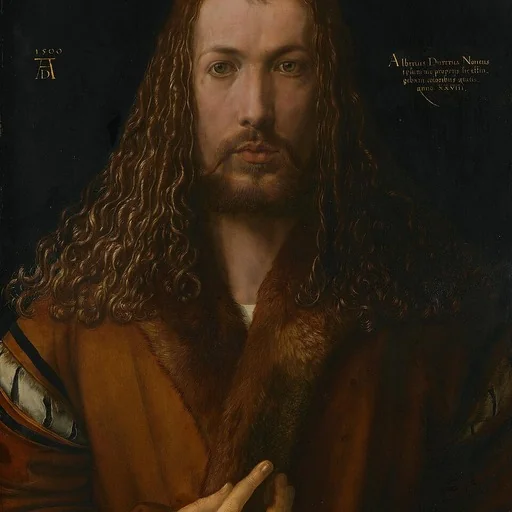
Albrecht Dürer spent his life in Nuremberg, a busy German city where artists traded prints like currency.

![Madonna and Child [obverse], by Albrecht Dürer](https://artifactworldgallery.com/img/albrecht-durer--madonna-and-child-obverse--d7b8ebf05d22ebe5-w320.webp)
![Lot and His Daughters [reverse], by Albrecht Dürer](https://artifactworldgallery.com/img/albrecht-durer--lot-and-his-daughters-reverse--b4ebf9b282faa17a-w320.webp)