Artwork
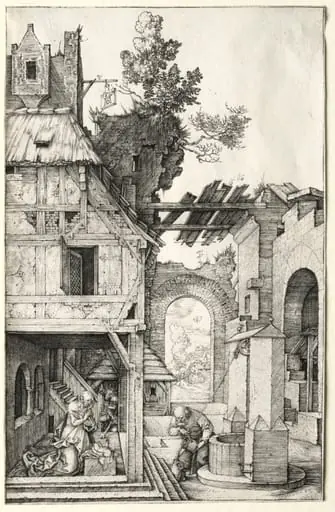
The Nativity
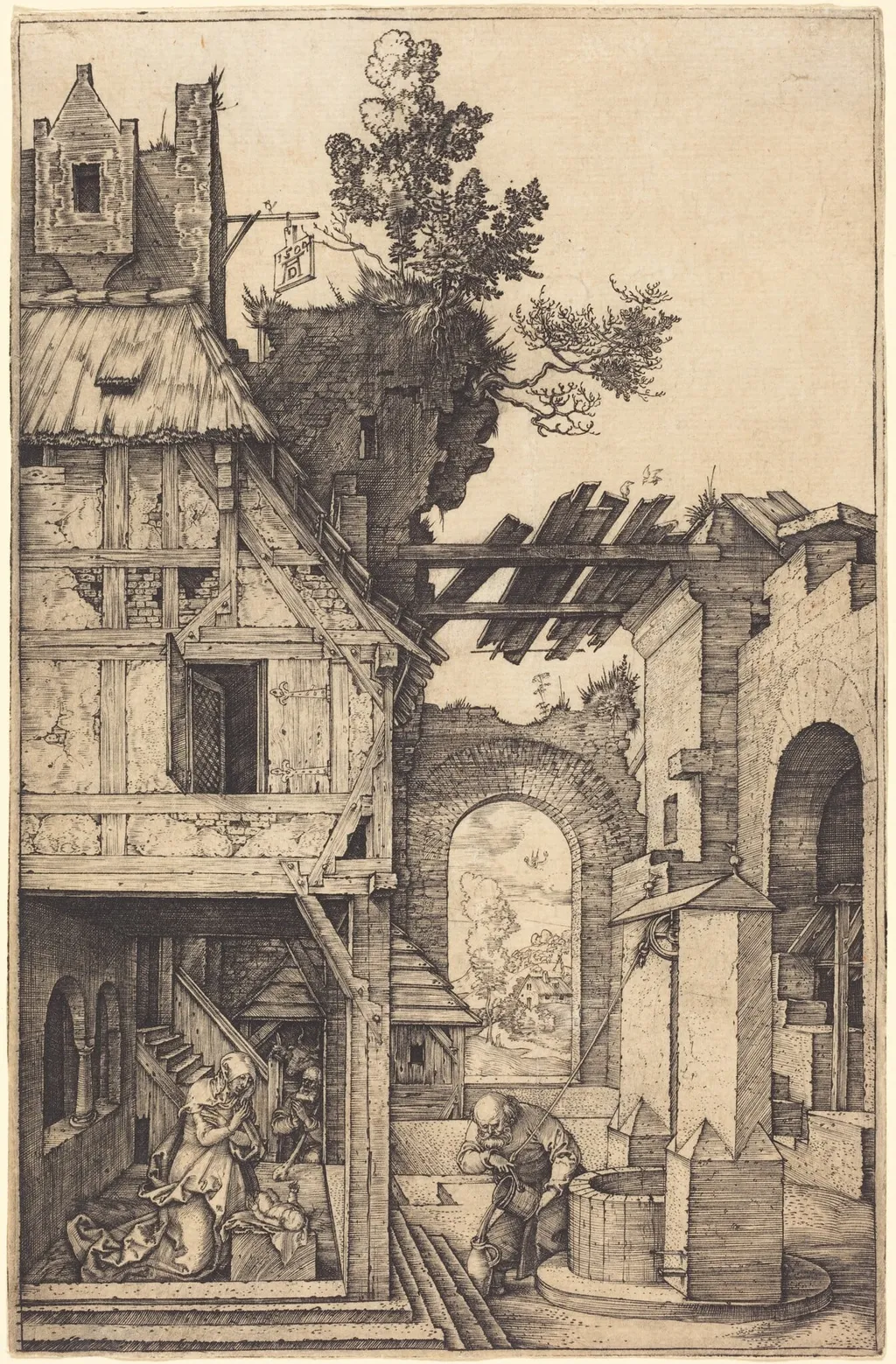
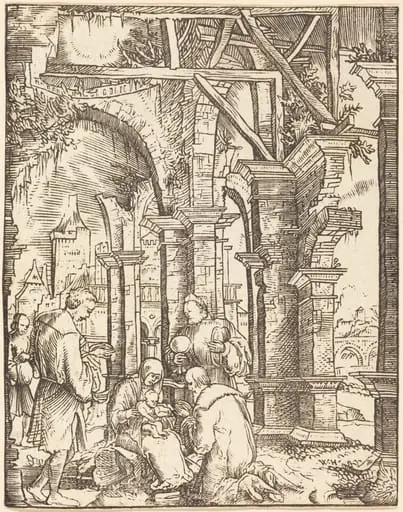
The Nativity is an ink print by the Northern Renaissance artist Albrecht Dürer. It dates from 1504 and is held in the collection of the British Museum.
- Inscription
- Inscribed:in plate, at upper left, on hanging tablet: 1504 / AD [artist's monogram]; verso, bottom left, in graphite by a later hand: 56 [upside down]; verso, lower center, in graphite, by a later hand: B.2 / D.38; lower right, in graphite, by a later hand:353 [encircled]; bottom left, in graphite, by a later hand: 95
About this work
Subject & Meaning
Albrecht Dürer's 1504 engraving The Nativity depicts the birth of Jesus Christ, centering on the Holy Family within a rustic setting.
Albrecht Dürer's 1504 engraving The Nativity depicts the birth of Jesus Christ, centering on the Holy Family within a rustic setting. The composition explicitly includes the Christ Child, the Virgin Mary, and Joseph gathered around the manger, adhering to the traditional narrative found in the New Testament. Iconographic elements such as a water well are integrated into the scene alongside the central figures.
As a work of religious art from the German Renaissance, the print represents the theological event of the Nativity of Jesus, focusing on the intimate and humble circumstances of the divine birth.
Technique & Style
The Nativity is an engraving executed in 1504 on laid paper, measuring 185 × 120 mm. The work exemplifies Dürer's mastery of the engraving medium during the German Renaissance, demonstrating his characteristic precision in line work and intricate detail. The composition depicts the Christ Child, Mary, Joseph, the Holy Family, the manger, and a water well, drawn from New Testament subject matter. As a print, the image was produced through the incised-metal-plate process that allowed for fine control of tone and texture through varied line density and cross-hatching.
History & Provenance
Albrecht Dürer created the engraving The Nativity in 1504. The work's documented provenance begins with Richard von Passavant-Gontard of Frankfurt, who held the print until his sale of it at C.G. Boerner in Leipzig on May 10, 1929. During that auction, the piece was acquired by Lessing J. Rosenwald of Jenkintown, Pennsylvania, who added his collector's marks to the impression.
Rosenwald subsequently donated the engraving to the National Gallery of Art in Washington, D.C., in 1943, where it remains part of the Rosenwald Collection. At that 1929 sale it appeared as lot 353.
While this specific provenance tracks one impression, other examples of the print are located in major institutions including the Städel Museum, the British Museum, the Cleveland Museum of Art, the Chester Beatty Library, and the Metropolitan Museum of Art.
Context
The work's reception has been shaped by its status as a seminal German Renaissance print, celebrated for its technical mastery and devotional intensity. Scholarship emphasizes Dürer's innovative use of engraving to render intricate detail and emotional depth, situating the piece within his broader exploration of biblical narratives and humanist themes. As part of the Rosenwald Collection, it underscores the artist's enduring influence on print studies and religious art discourse, reflecting both the devotional practices of the early 16th century and the evolving appreciation for printmaking as a fine art medium.
Overview
Albrecht Dürer’s 1504 engraving titled The Nativity presents a traditional biblical scene on laid paper. The composition centers on the infant Christ in a manger, accompanied by Mary, Joseph and attendant figures. Rendered in black-and-white line work, the print reflects the devotional purpose common to early sixteenth‑century religious imagery.
Own this work as a print
Artist & collection
Artist
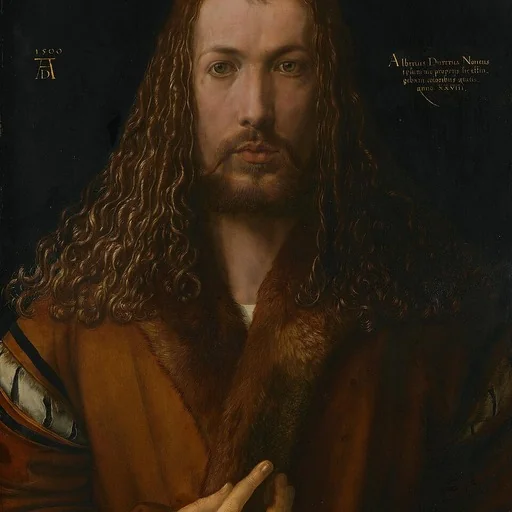
Albrecht Dürer spent his life in Nuremberg, a busy German city where artists traded prints like currency.

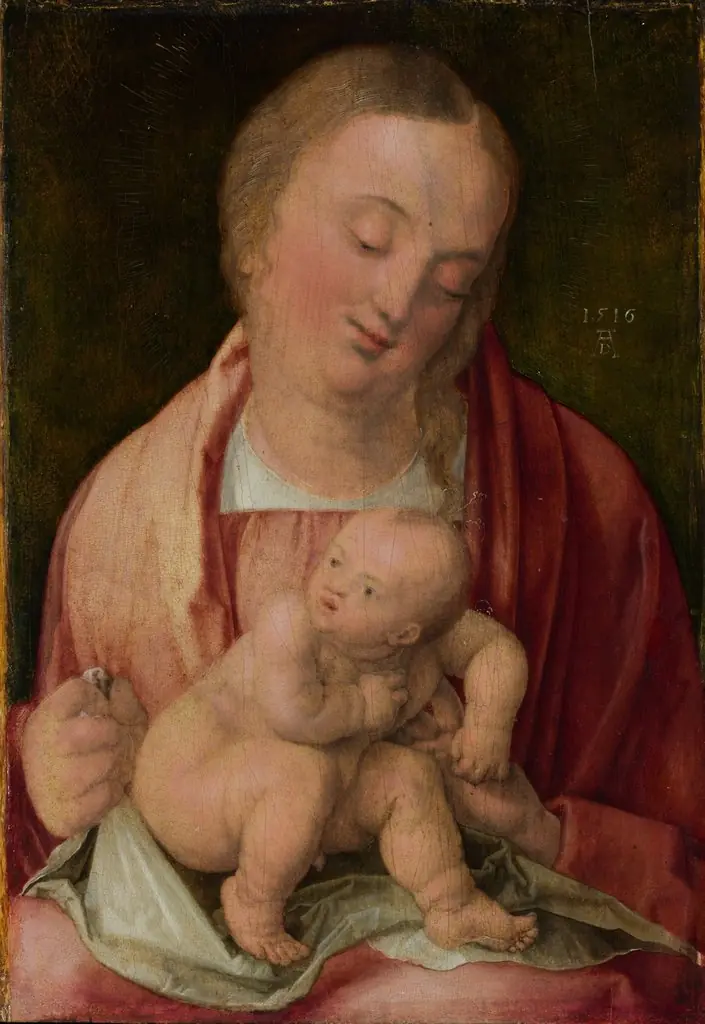
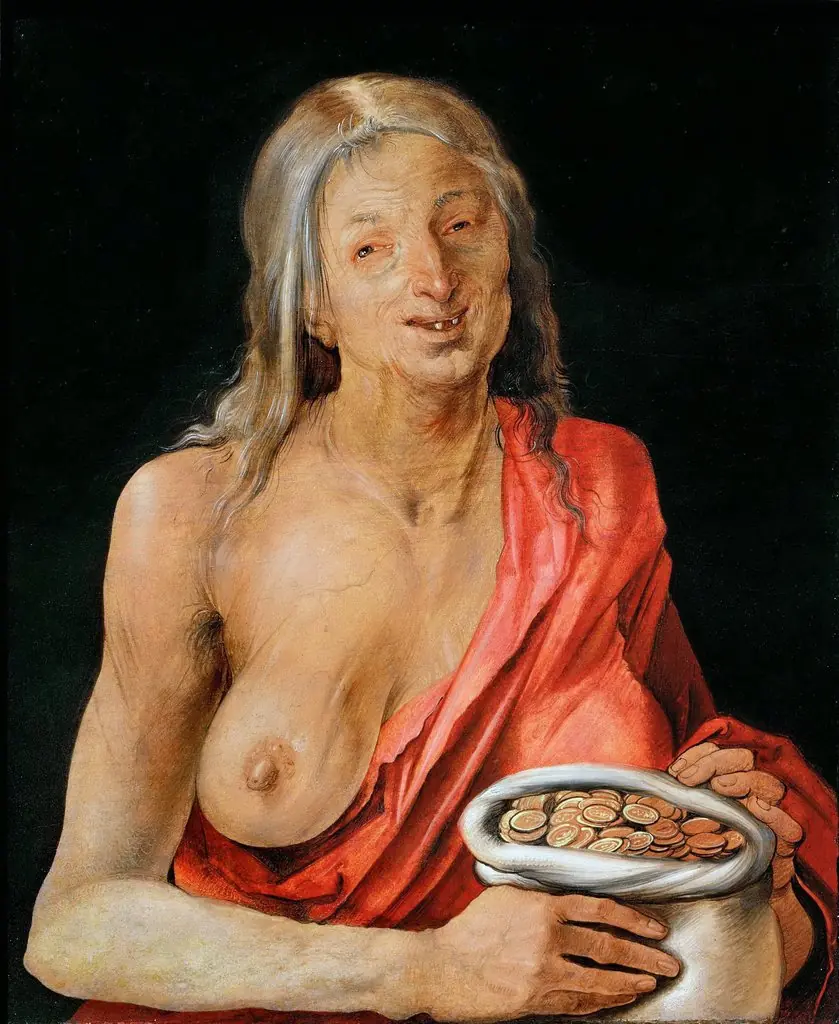
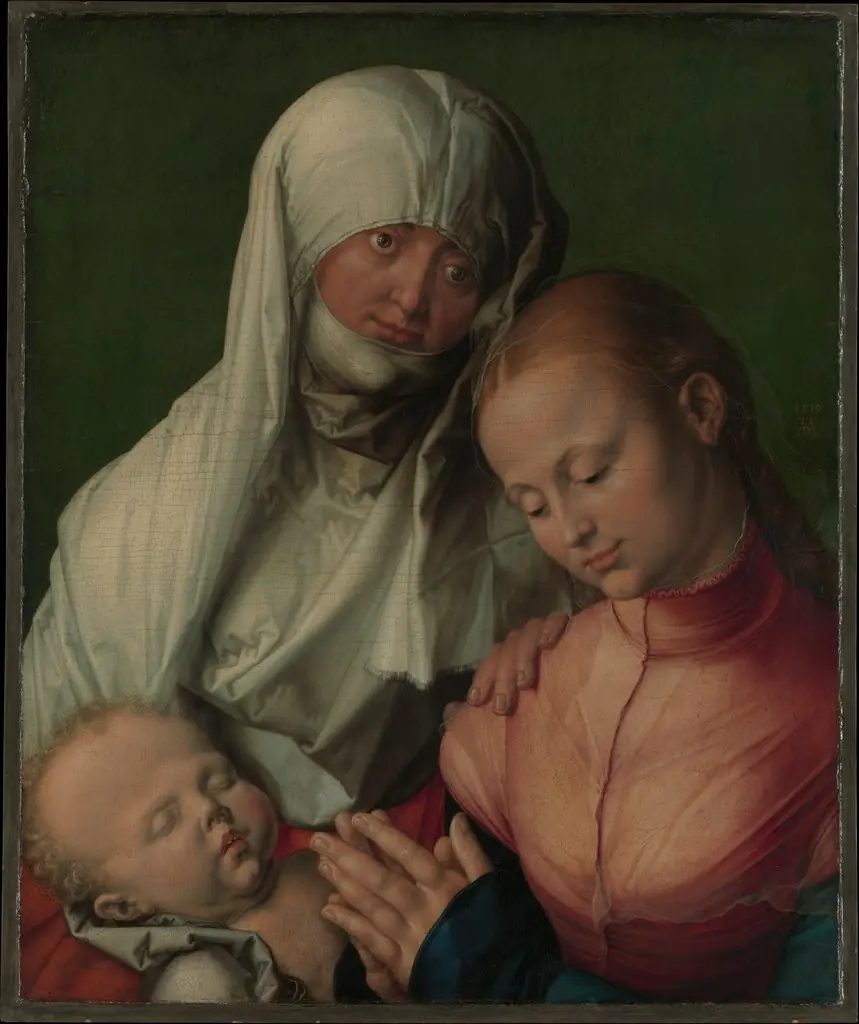
![Madonna and Child [obverse], by Albrecht Dürer](https://artifactworldgallery.com/img/albrecht-durer--madonna-and-child-obverse--d7b8ebf05d22ebe5-w320.webp)
![Lot and His Daughters [reverse], by Albrecht Dürer](https://artifactworldgallery.com/img/albrecht-durer--lot-and-his-daughters-reverse--b4ebf9b282faa17a-w320.webp)