Artwork
The Resurrection
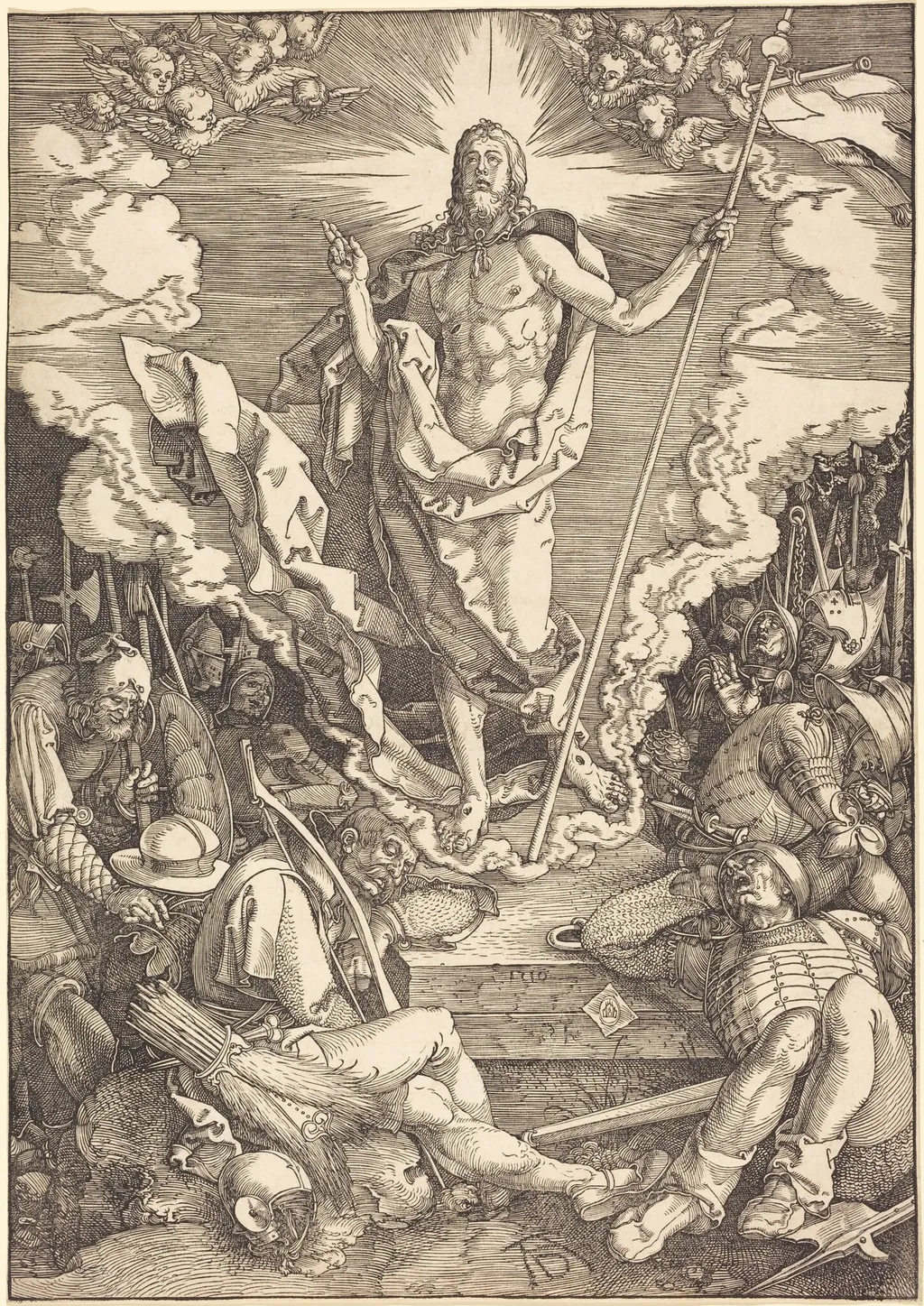
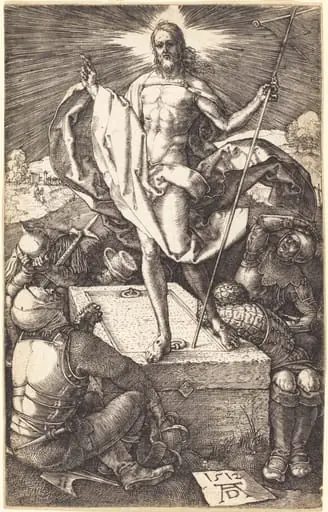
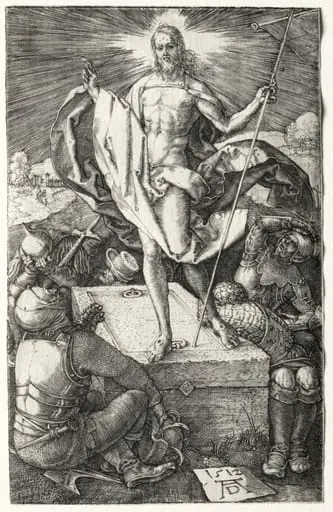
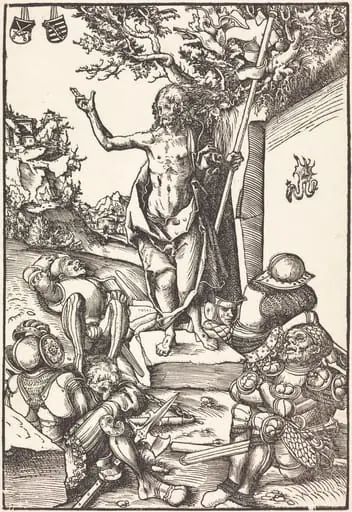
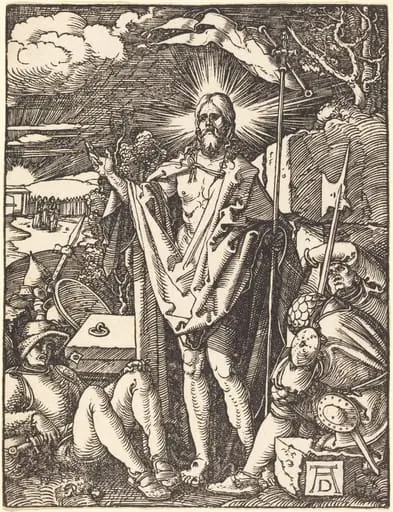
The Resurrection is an ink print by the Northern Renaissance artist Albrecht Dürer. It dates from 1510 and is held in the collection of the Metropolitan Museum of Art.
About this work
Subject & Meaning
Through this print, Dürer invites contemplation of faith and redemption, positioning the resurrection as both a historical event and a timeless emblem of hope.
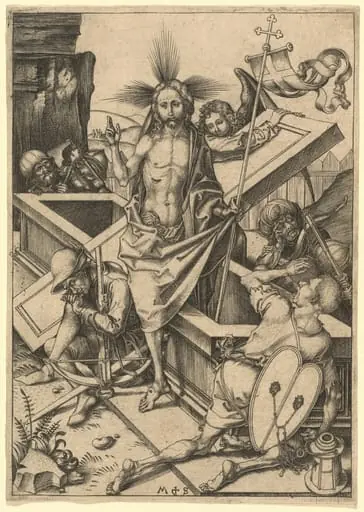
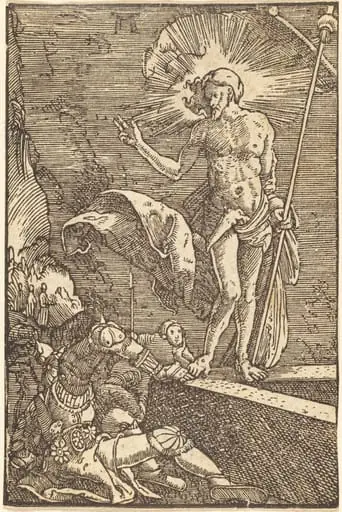
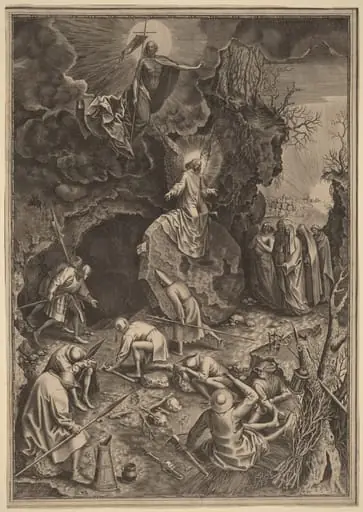
The Resurrection depicts the risen Jesus Christ emerging from the tomb, a pivotal moment drawn from the New Testament narrative of Easter.
The subject is identified as the Resurrection of Jesus, a central event in Christian theology symbolizing triumph over death and the promise of salvation.
Iconographically, Dürer emphasizes the divine light radiating from Christ’s body, surrounded by a mandorla and accompanied by the guards in a state of awe, underscoring the miraculous nature of the event.
The work conveys theological meaning through its composition: the upward movement and radiant aura represent spiritual awakening and divine authority, while the meticulous rendering of the landscape and figures reflects the German Renaissance’s blend of empirical detail and symbolic depth.
Through this print, Dürer invites contemplation of faith and redemption, positioning the resurrection as both a historical event and a timeless emblem of hope.
Technique & Style
The Resurrection is a woodcut printed on paper that exemplifies German Renaissance technique and religious subject matter. The work measures 39 cm in height and 28 cm in width and was produced in Nuremberg in 1510. Dürer’s handling of line and stark contrast conveys the dramatic moment of Christ’s emergence from the tomb, while the composition’s formal balance and chiaroscuro modeling reflect the print’s mastery of woodcut medium and its stylized, narrative clarity.
History & Provenance
The Resurrection is a woodcut by Albrecht Dürer dated 1510, produced on paper in Nuremberg. It belongs to Dürer's Great Passion series and depicts the Resurrection of Jesus, a subject drawn from the New Testament. The sources do not specify a commission, patron, or original acquisition history for the work.
Impressions of the print are held by several major institutions, including the Metropolitan Museum of Art, the National Gallery of Art in Washington, D.C., the Albertina in Vienna, the Cleveland Museum of Art, and the Prints in the National Gallery of Art / Rosenwald Collection. The National Gallery of Art in Washington, D.C., and the Cleveland Museum of Art are identified as the specific locations of holdings.
The Resurrection is held in the collections of the National Gallery of Art in Washington, D.C. and the Cleveland Museum of Art. It is cataloged under accession numbers within those institutions' print divisions. The work has been exhibited in major retrospectives of Dürer's graphic art, including shows at the Albertina and the Metropolitan Museum of Art, highlighting its significance within the German Renaissance.
Overview
Albrecht Dürer's woodcut The Resurrection, created in 1510, depicts the moment Christ rises from the tomb. The composition centers on the figure of Jesus, who emerges from a stone sarcophagus with arms raised and eyes open, encircled by a radiant halo. Below, sleeping and startled Roman soldiers react with varied expressions of shock and confusion, some clutching their weapons while others remain slumbering.
Dürer employs fine, precise hatching to render the dramatic interplay of light and shadow, emphasizing the divine illumination surrounding the resurrected figure against the darker foreground. Executed during the height of his career in Nuremberg, this work exemplifies the technical mastery and theological depth characteristic of the German Renaissance. The woodcut medium allowed for wide dissemination of this religious narrative, reflecting Dürer's commitment to merging Northern European detail with Italianate compositional balance.
As part of his series on the Passion, the piece underscores the triumph of light over darkness and serves as a significant example of early 16th-century religious printmaking.
Context
The early sixteenth century saw a surge in print production, and Dürer was at the forefront of elevating woodcut from a commercial craft to an art form. The Resurrection exemplifies his skill in integrating intricate detail with the medium’s graphic possibilities.
Own this work as a print
Artist & collection
Artist
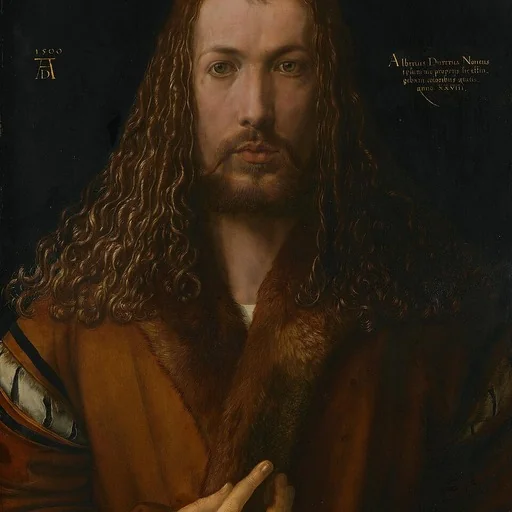
Albrecht Dürer spent his life in Nuremberg, a busy German city where artists traded prints like currency.

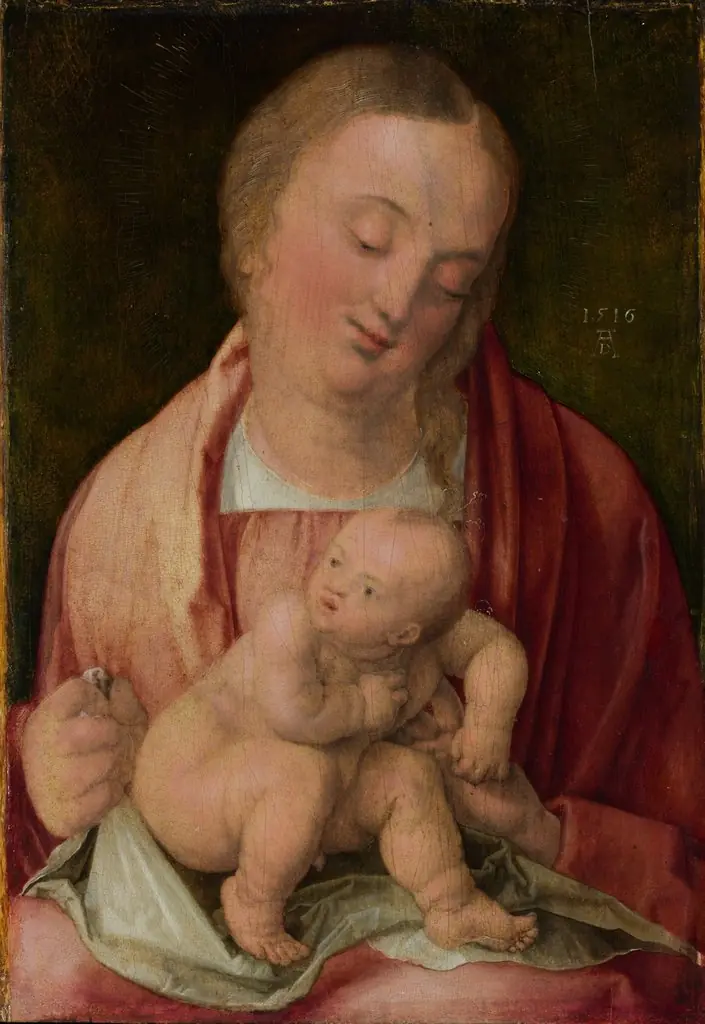
![Madonna and Child [obverse], by Albrecht Dürer](https://artifactworldgallery.com/img/albrecht-durer--madonna-and-child-obverse--d7b8ebf05d22ebe5-w320.webp)
![Lot and His Daughters [reverse], by Albrecht Dürer](https://artifactworldgallery.com/img/albrecht-durer--lot-and-his-daughters-reverse--b4ebf9b282faa17a-w320.webp)