Artwork
Cyrus W. Field
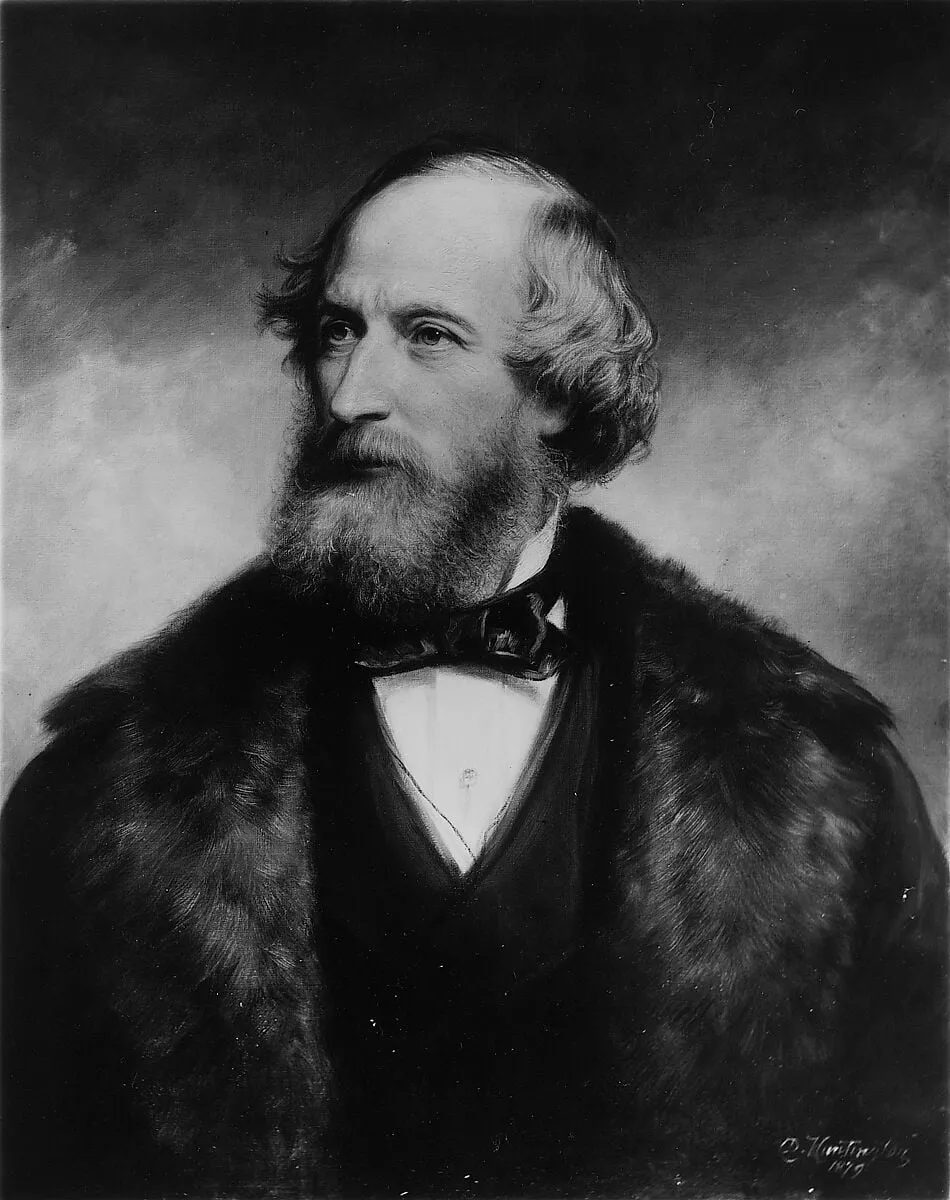
Cyrus W. Field is an oil painting by the American Impressionist artist Daniel Huntington. It dates from 1879 and is held in the collection of the Metropolitan Museum of Art.
- Accession no.
- 92.10.41
- Credit line
- Gift of Cyrus W. Field, 1892
About this work
If you like portraits of inventors and businessmen, look up other works in the subject men, portraits, american, man, portrait.
You see a man in a dark suit sitting in a red chair, one hand resting on a table with papers and a globe.
This is Cyrus Field, the businessman who laid the first transatlantic telegraph cable in 1858. The painting was made over twenty years later, when Field was in his sixties. The globe and papers hint at his work, but his face looks tired, like someone who’s seen both triumph and failure.
If you like portraits of inventors and businessmen, look up other works in the subject men, portraits, american, man, portrait.
Technique & Style
Daniel Huntington's Cyrus W. Field (1879) is executed in oil paint on a medium-weight, rectangular canvas measuring 74.9 by 62.2 centimeters. The artist employed a smooth, blended technique characteristic of mid-nineteenth-century American portraiture, favoring subtle tonal transitions over visible brushwork. The handling of flesh tones and textiles demonstrates controlled glazing, while the dark background is rendered with thin, even washes to emphasize the sitter's volumetric presence.
The palette remains restrained, dominated by deep browns, blacks, and muted flesh hues, with strategic accents of white in the collar and cravat to direct the viewer's gaze.
History & Provenance
The painting is held by the Metropolitan Museum of Art, where it is classified under The American Wing. Its inventory or accession number is not specified in the provided sources. No exhibition history is documented in the available sources.
Context
The 1879 oil portrait by Daniel Huntington, listed in The American Wing and catalogued in the Metropolitan Museum of Art, exemplifies mid-nineteenth-century American portraiture. Its dimensions of 74.9 × 62.2 cm and oil-on-canvas medium are documented in the museum's classification record. The portrait's inclusion in a major museum collection underscores scholarly interest in documenting American artistic production of the period.
Overview
Daniel Huntington's 1879 oil on canvas portrait depicts Cyrus W. Field, a prominent American businessman. Created for The American Wing, this work showcases Huntington's later career focus on individual likenesses after his earlier association with landscape painting. The painting captures Field in his sixties, offering a visual record of a significant figure from the era of industrial and technological expansion.
Subject & Meaning
The portrait features Cyrus W. Field, recognized for his instrumental role in laying the first transatlantic telegraph cable in 1858. Painted over two decades after this achievement, Field is shown seated in a red chair, with a globe and papers on a nearby table, subtly referencing his global endeavors. His expression conveys a sense of weariness, suggesting a life marked by both considerable success and challenges.
Artist & collection

Artist
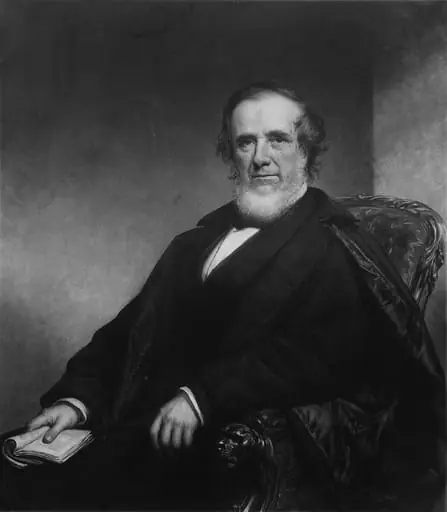
Daniel Huntington (October 4, 1816 – April 19, 1906) was an American artist who belonged to the art movement known as the Hudson River School and later became a prominent portrait painter.



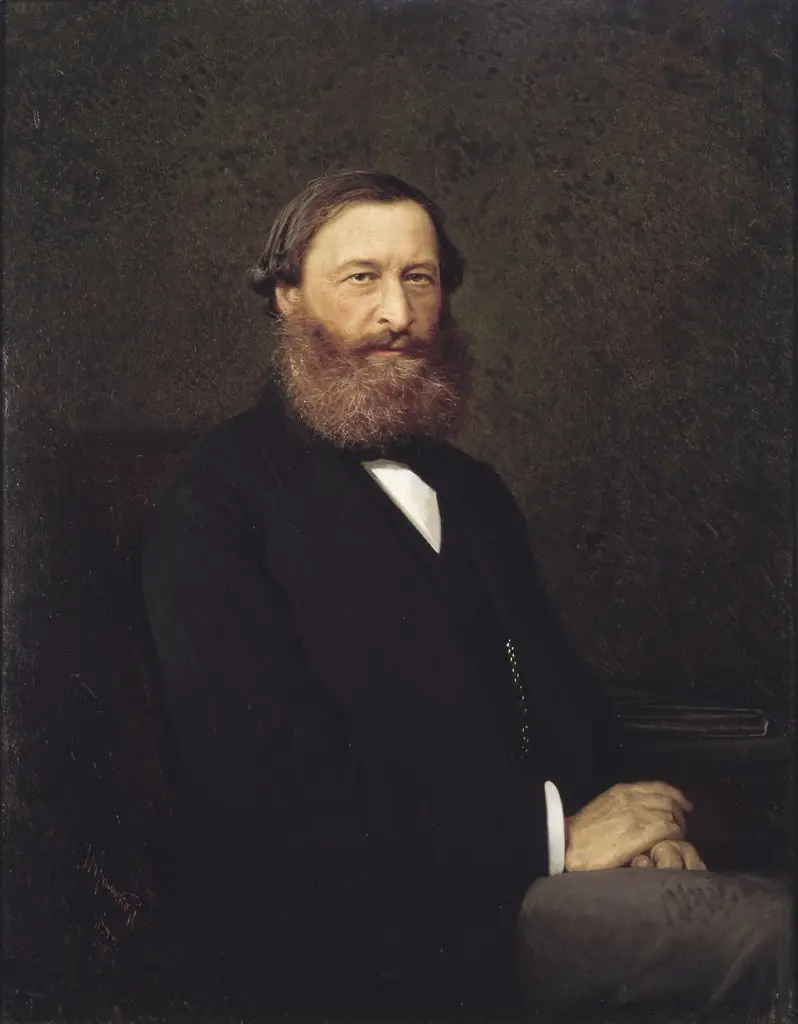 Portrait of the writer Y.F. Samarin
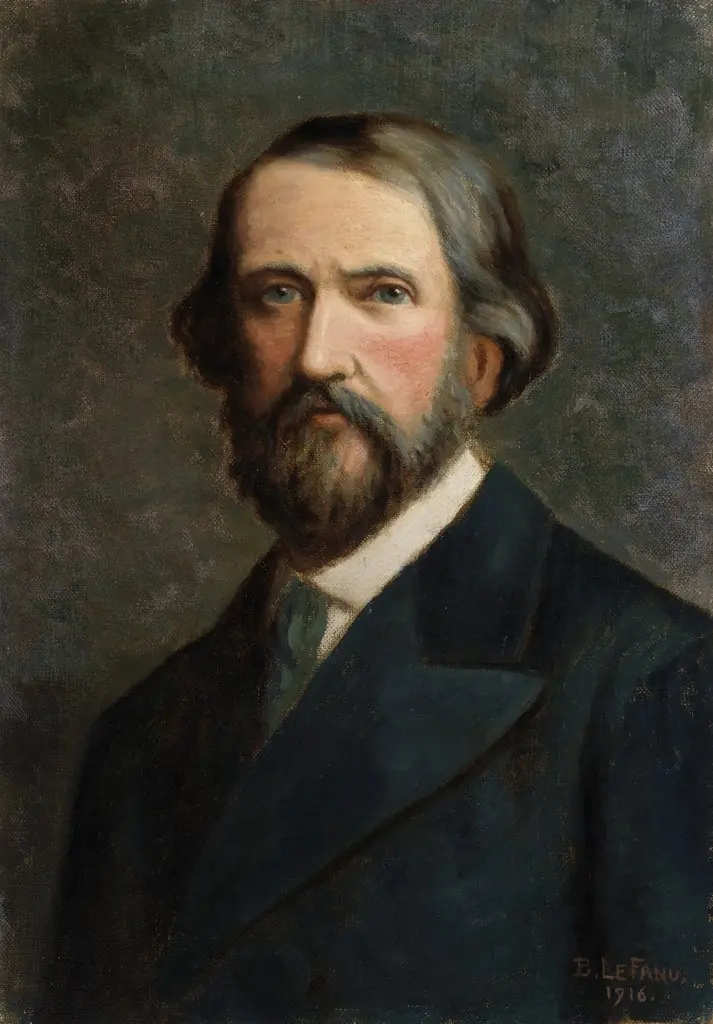 Joseph Sheridan Le Fanu
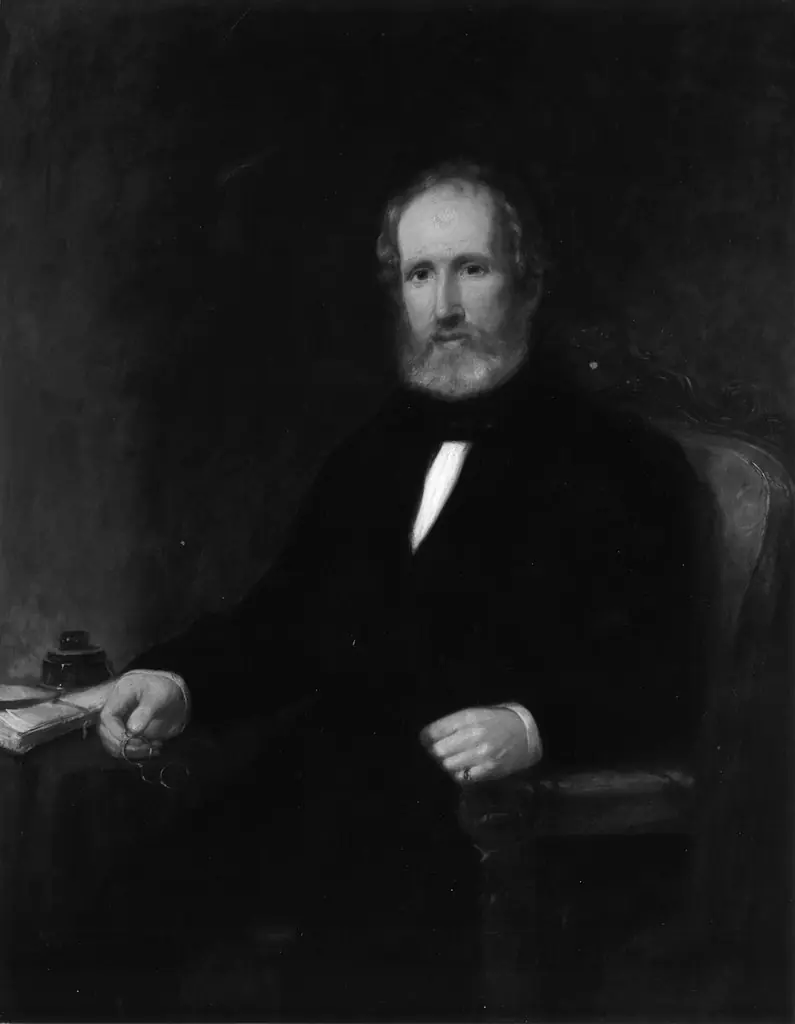 Alexander N. Fullerton
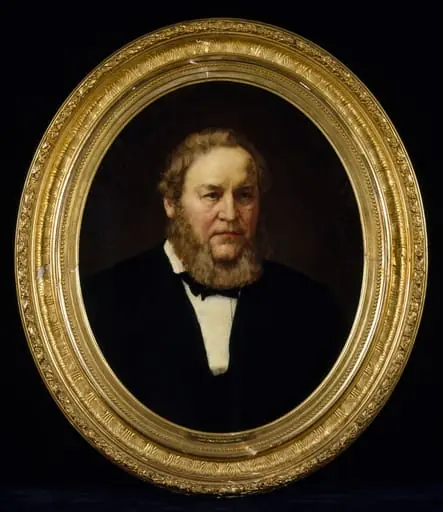 Gustaf Johan Mechelin
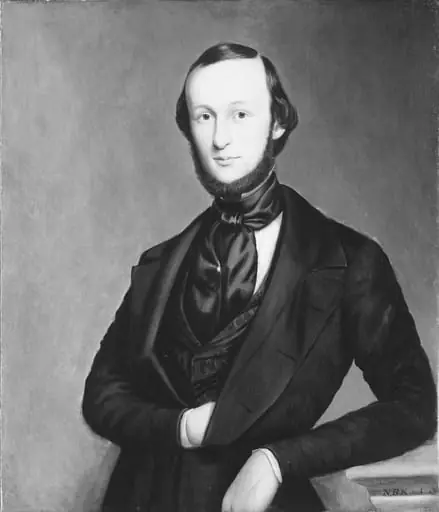 Charles Henry Augustus Carter
 Præsten Gjerløv Christian Krog Schiøler
 Præsten Gjerløv Christian Krog Schiøler
 John F. Kensett
 Professor Franciscus Donders (1818-89), Physiologist and Opthalmologist
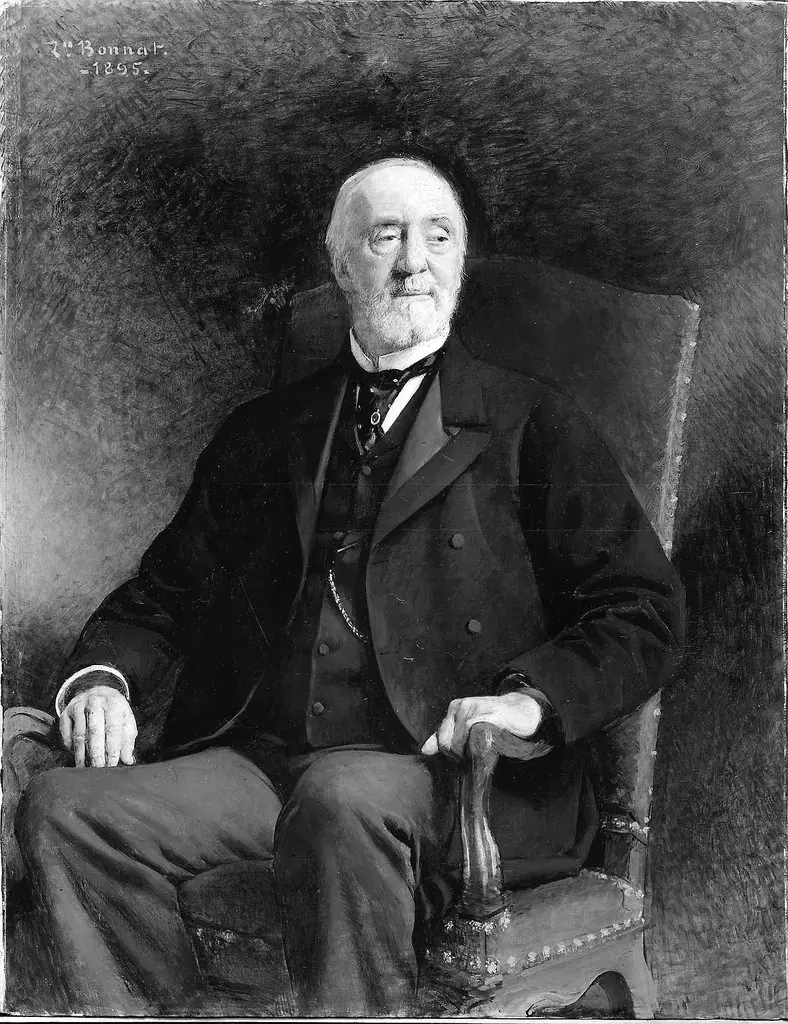 Henry Lillie Pierce
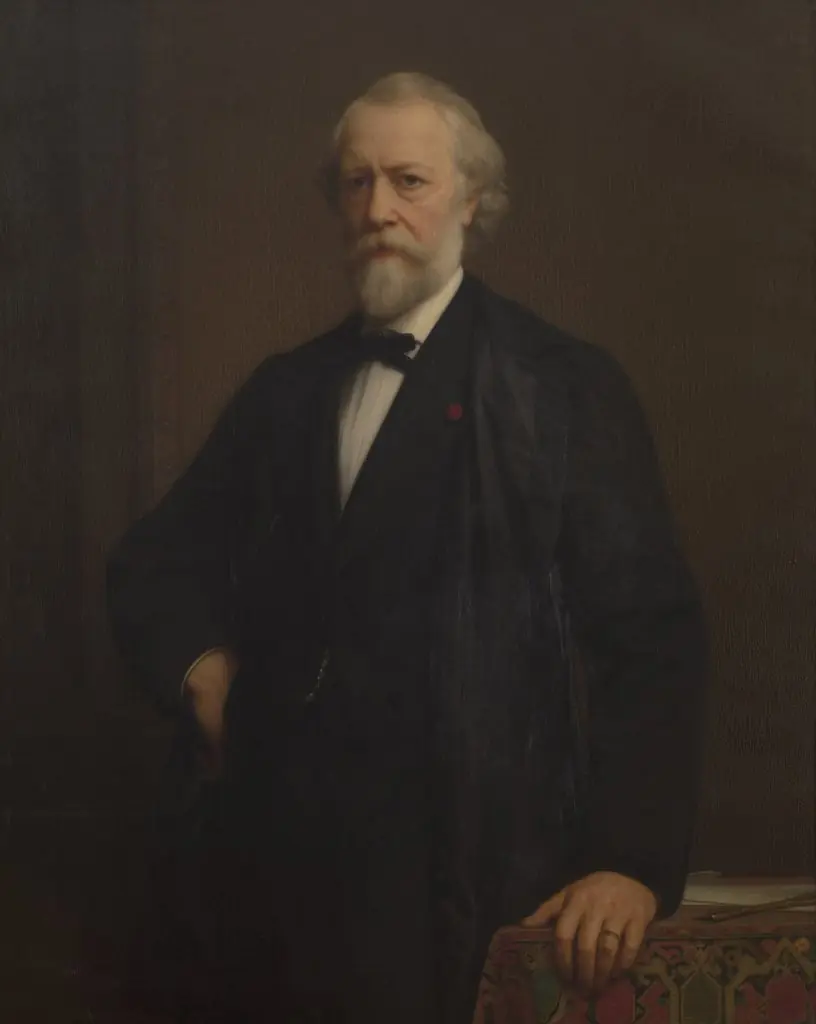 Self Portrait