Artwork
Cephalus and Procris
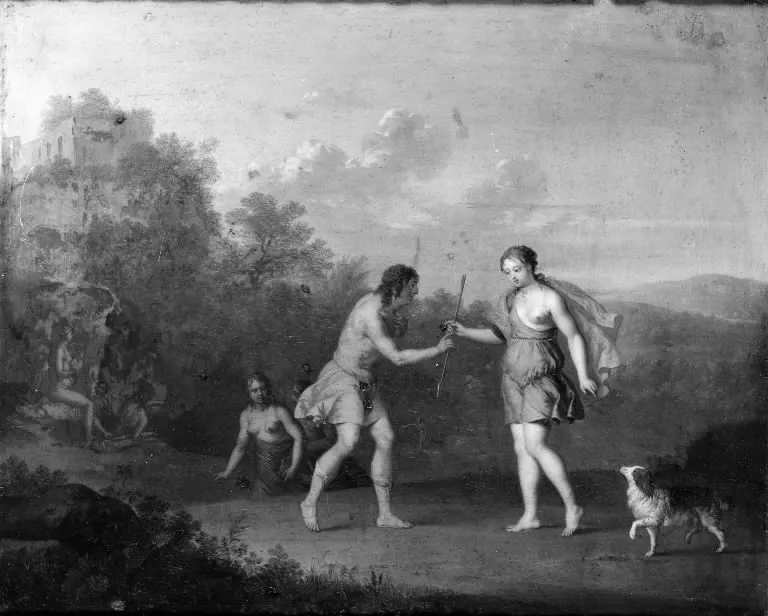
Cephalus and Procris is an unspecified painting by the Dutch Golden Age artist Daniel Vertangen. It dates from 1647 and is held in the collection of the Statens Museum for Kunst.
About this work
Subject & Meaning
The mythological scene portrays the tragic lovers Cephalus and Procris, daughter of the mythical king Erechtheus, in the moment of their fatal misunderstanding.
The mythological scene portrays the tragic lovers Cephalus and Procris, daughter of the mythical king Erechtheus, in the moment of their fatal misunderstanding. The composition shows Procris holding a dog, a symbol of fidelity, while Cephalus, identified by his attributes as a hunter, turns away, unaware of her presence. Their story, drawn from Ovid's Metamorphoses, illustrates themes of secrecy, mistrust, and the destructive consequences of mistaken identity in love.
The painting, executed by Daniel Vertangen in 1647, resides in the Statens Museum for Kunst, where it is classified as a mythological artwork that captures the poignant climax of the narrative.
The work emphasizes the tragic irony of their relationship, where Procris's attempt to test Cephalus's fidelity leads to her accidental death, underscoring the fragility of trust. The inclusion of the dog reinforces domestic devotion, contrasting with the fatal misunderstanding that defines their fate. This interpretation aligns with the broader Baroque fascination with emotional depth and narrative complexity in mythological subjects.
History & Provenance
The mythological painting Cephalus and Procris was created by the artist Daniel Vertangen in 1647. The work depicts the figures of Cephalus and Procris accompanied by a dog. It is currently held in the collection of the Statens Museum for Kunst, where it remains located.
The painting Cephalus and Procris by Daniel Vertangen is housed in the collection of the Statens Museum for Kunst, where it is recorded under the inventory number 1845. The work entered the museum's holdings in 1845 and was first exhibited there in 1896.
The work was displayed in the museum's inaugural exhibition of mythological paintings in 1896, and later featured in the 1932 retrospective of 17th-century Dutch and Flemish art.
It was included in the 1975 exhibition "Mythological Paintings from the Dutch Golden Age" at the same institution.
Legacy
The myth of Cephalus and Procris, depicted by Daniel Vertangen in 1647, has been recognized as a significant example of Dutch Golden Age mythological painting. Its inclusion in the collection of the Statens Museum for Kunst underscores its historical importance, and the work continues to be referenced in scholarly discussions of 17th‑century narrative art. The painting’s composition and thematic treatment have influenced later interpretations of the myth within European art history.
Overview
Daniel Vertangen’s 1647 canvas entitled Cephalus and Procris presents a quiet woodland tableau in which the mythic couple is rendered in a moment of tension. The composition is anchored by three figures, two barefoot humans and a small dog, set against a dense forest backdrop, with an additional, partially obscured figure visible in the distance.
Technique & Style
Vertangen employs a delicate gradation of light, allowing the figures to emerge softly from the surrounding trees. The use of muted, earth‑toned pigments and subtle chiaroscuro creates a sense of depth, while the fine rendering of foliage and the animal’s motion convey a restrained dynamism typical of mid‑seventeenth‑century Dutch narrative painting.
Artist & collection

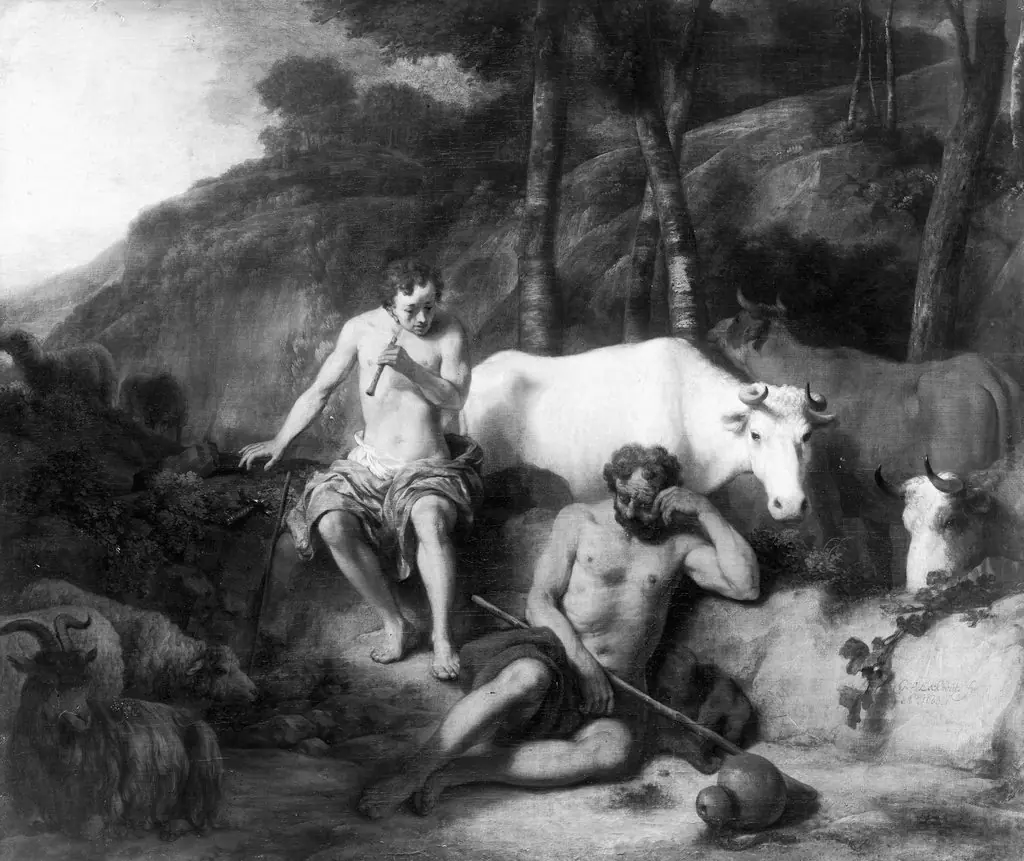 Mercury and Argus
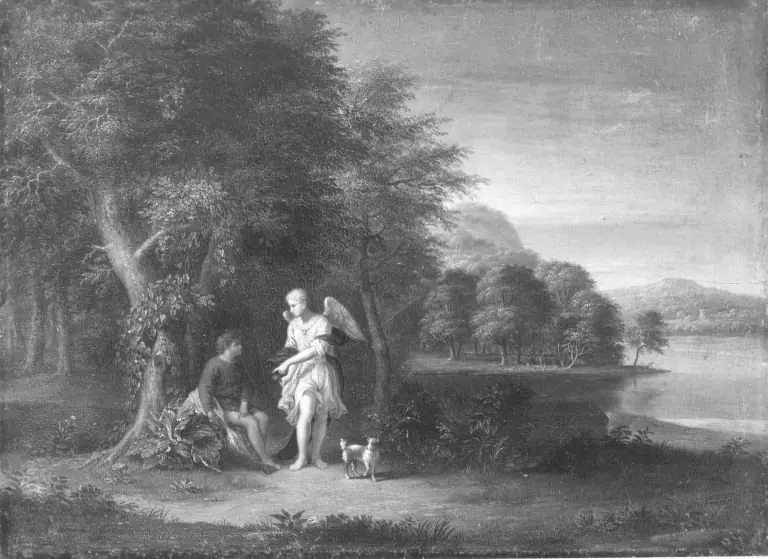 Landschaft mit Tobias und Engel
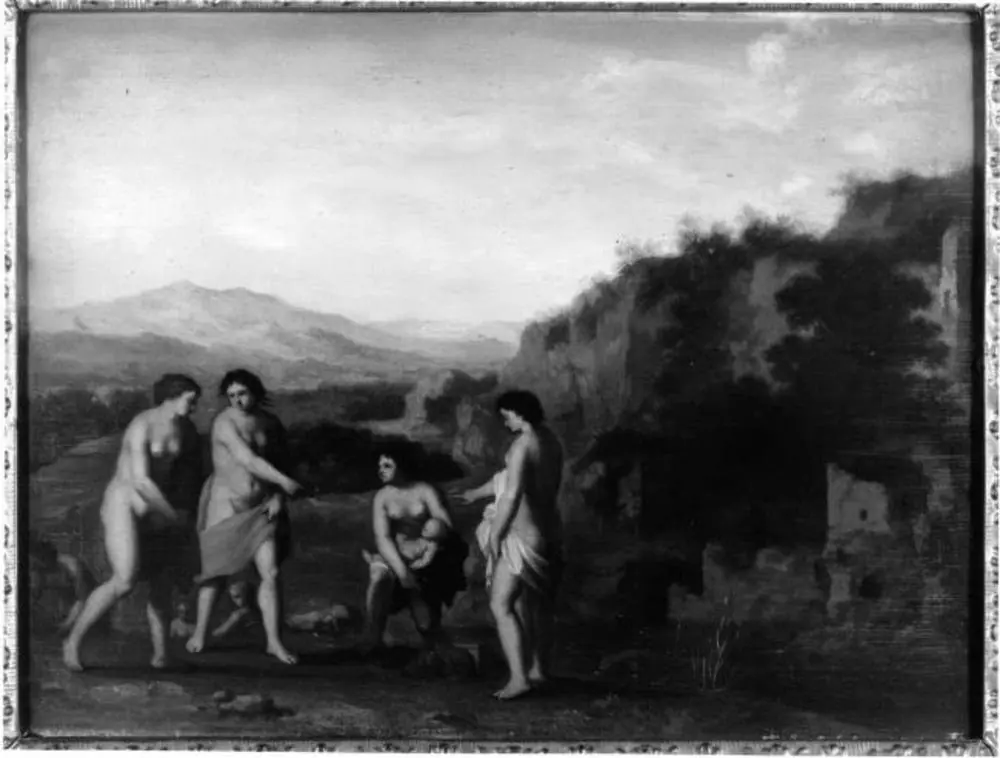 Landscape, with the finding of Moses
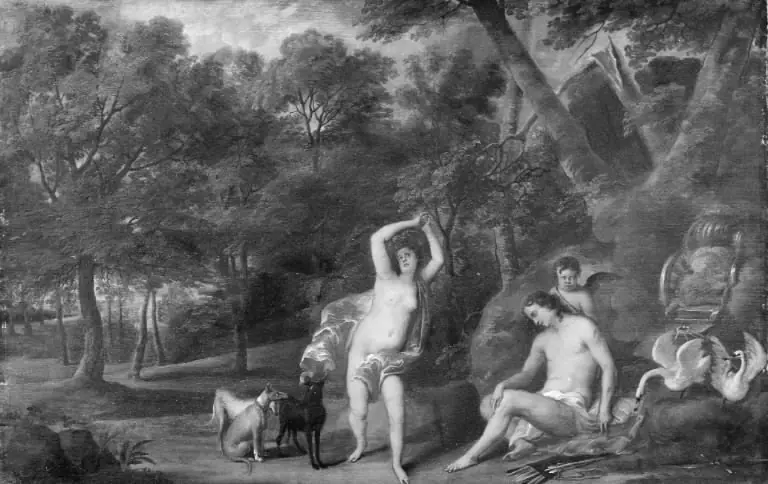 Venus Bewailing the Slain Adonis
 Nymphs Bathing
 Hunting Party with Diana
 Landscape of the Roman "Compagna"
 Granida and Daiphilo. Daiphilo Bringing Water to Princess Granida
 John the Baptist preaches in the wilderness
 Narcissus
 Schindung des Marsyas (?)
- Cephalus and Procris