Artwork
Apple Trees in Auvers (Pommiers a Auvers)
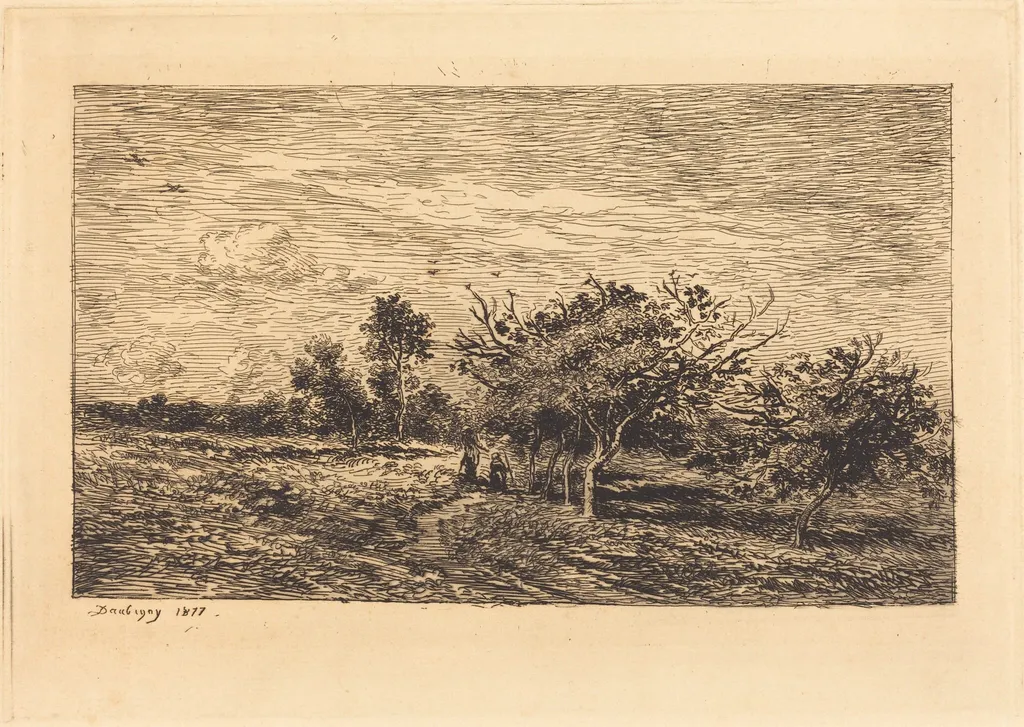
Apple Trees in Auvers (Pommiers a Auvers) is an ink print by the Impressionist artist Charles François Daubigny. It dates from 1877 and is held in the collection of the National Gallery of Art. Created in 1877, Apple Trees in Auvers is an etching by Charles‑François Daubigny, a French landscape painter linked to the Barbizon school.
About this work
Overview
Created in 1877, Apple Trees in Auvers is an etching by Charles‑François Daubigny, a French landscape painter linked to the Barbizon school. The work presents a tranquil riverside scene where twisted apple‑tree branches frame a smooth stretch of water. Rendered entirely in fine black lines, the image conveys a sketch‑like quality that emphasizes atmosphere over detail.
Subject & Meaning
The composition centers on a cluster of apple trees standing beside a calm river, their tangled limbs suggesting the quiet vigor of a rural landscape. By isolating the trees and water, Daubigny draws attention to the subtle play of light and shadow, inviting contemplation of the everyday countryside and its fleeting moods.
Technique & Style
Daubigny employed traditional etching methods, incising the design into a metal plate and allowing ink to fill the carved lines. The resulting prints display crisp, linear marks against a pale ground, producing a contrast that highlights the foliage and water surface. This approach reflects his broader interest in atmospheric effects and the immediacy of hand‑drawn lines.
History & Provenance
Daubigny produced the etching while frequently working in the village of Auvers, a locale that inspired many of his landscape studies. Though primarily known for oil paintings, he explored printmaking throughout his career, experimenting with techniques such as cliché verre alongside conventional etching.
Context
Situated within the late‑19th‑century shift toward Impressionism, Daubigny's work bridges the detailed realism of the Barbizon tradition and the emerging focus on light, color, and perception. His rural subjects and emphasis on mood anticipate the concerns of later Impressionist artists, marking him as a transitional figure in French art.
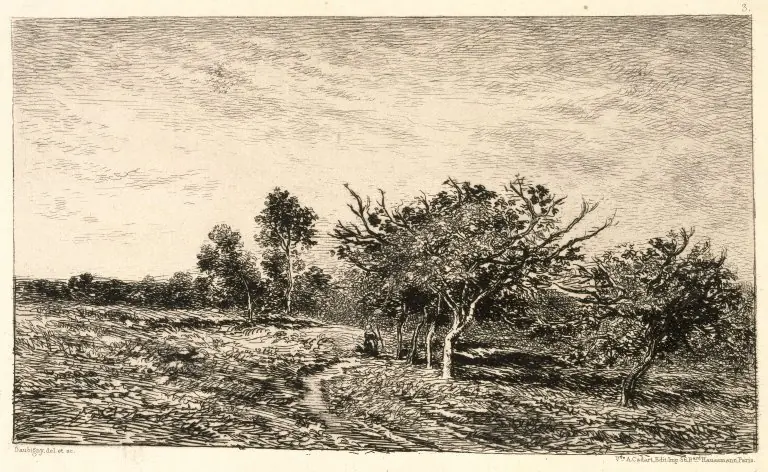
Own this work as a print
Artist & collection
Artist
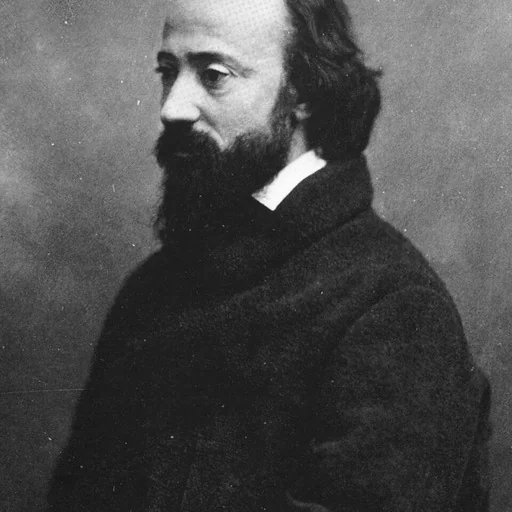
Charles-François Daubigny ( DOH-bin-yee, US: DOH-been-YEE, doh-BEEN-yee, French:; 15 February 1817 – 19 February 1878) was a French painter, one of the members of the Barbizon school, and is considered an important precursor of…

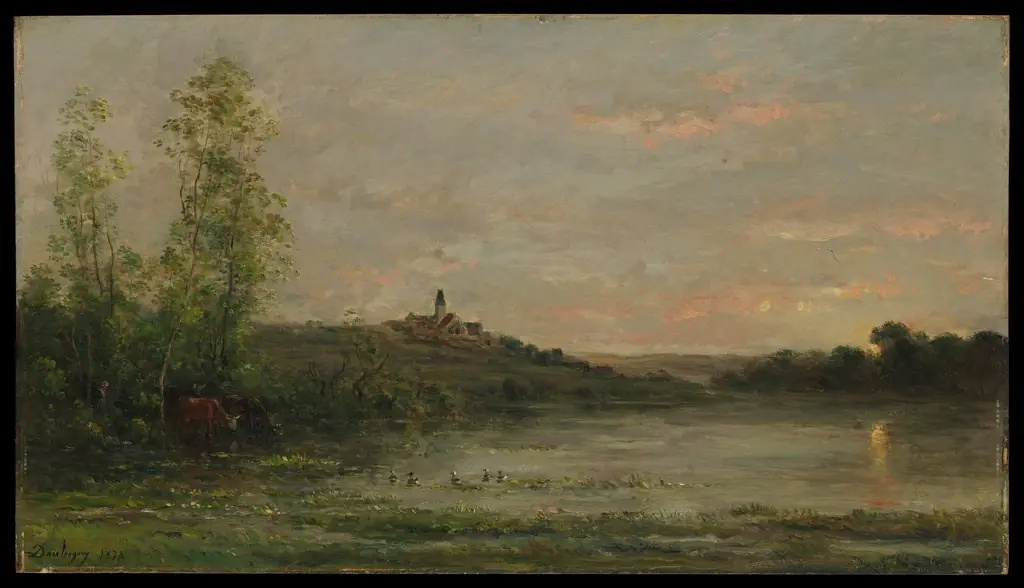
 The Meadow at Grave, near Villerville (Le Pre des Graves, a Villerville)
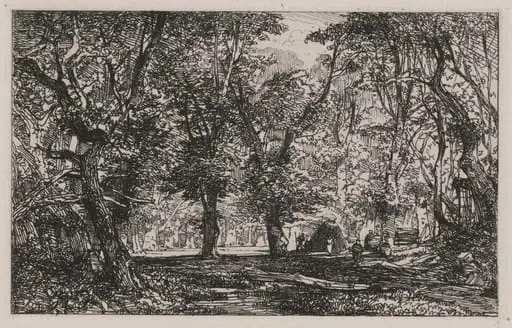 View from a Forest Stream Into a Clearing
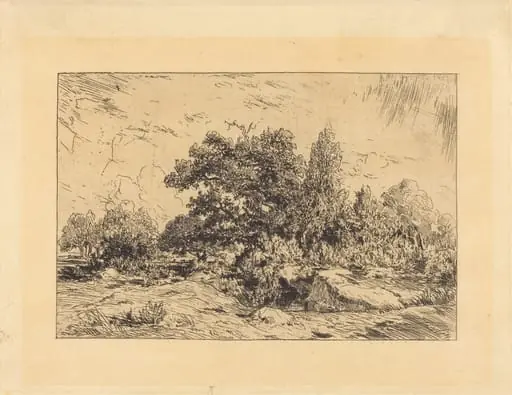 Vue du Plateau de Bellecroix
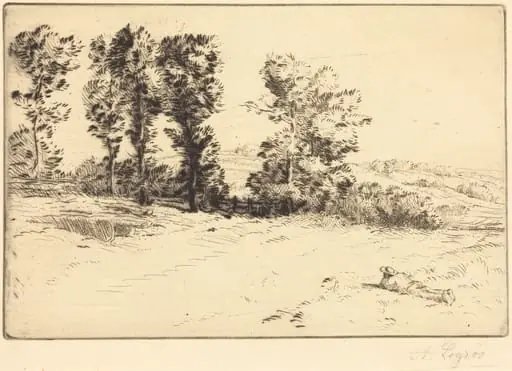 Meadow in Sunshine (Le pre ensoleille)
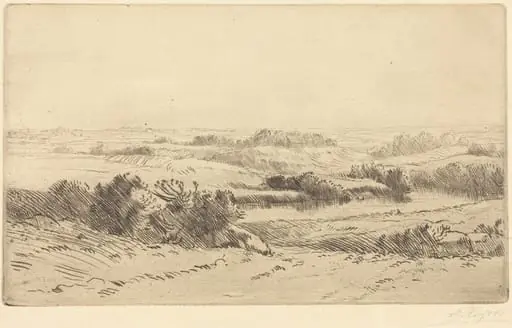 Banks of the Yanne (Les bords de la Yanne)
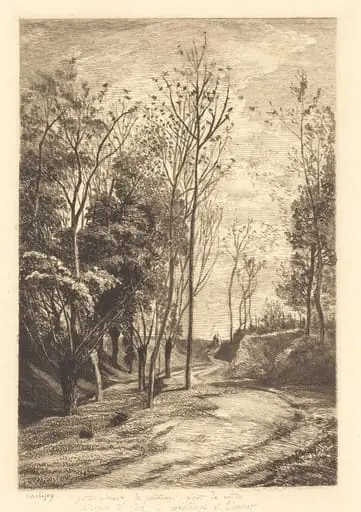 Little Birds (Les Petits oiseaux)
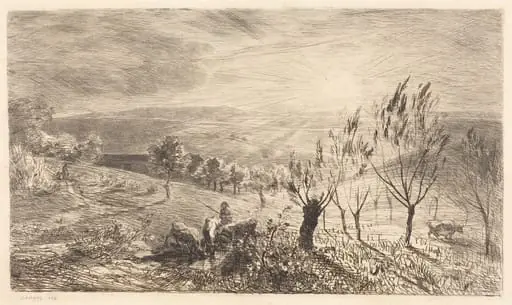 Sunrise (Le Lever du soleil)
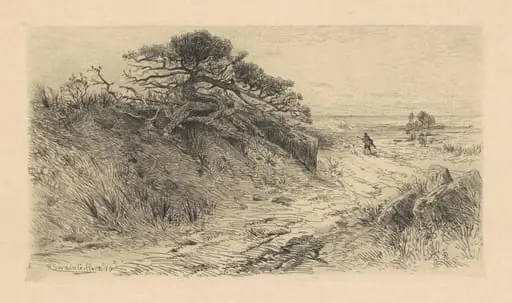 The Path to the Shore
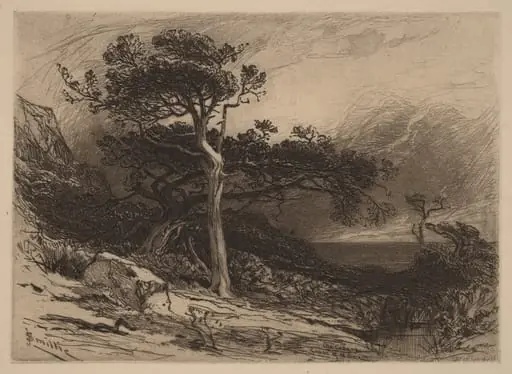 Old Cedars, Coast of Maine
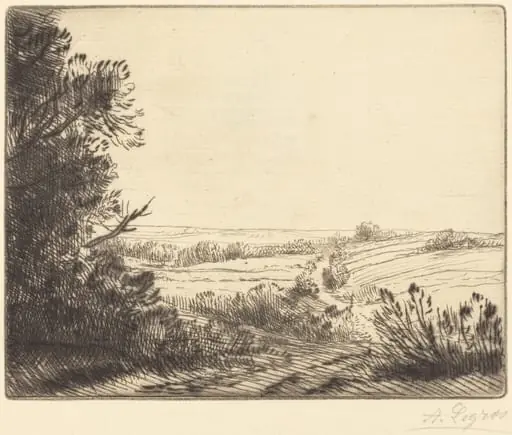 Landscape: Road to Horville (Paysage: Chemin d'Horville)
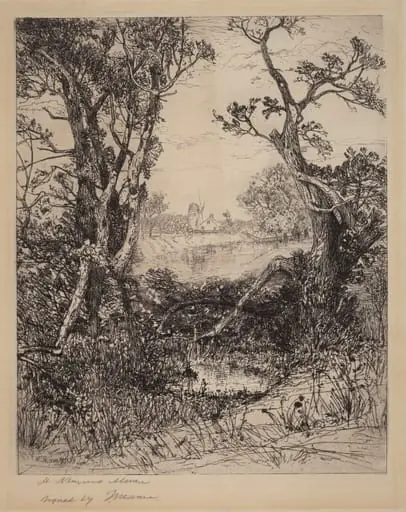 Summer—Easthampton
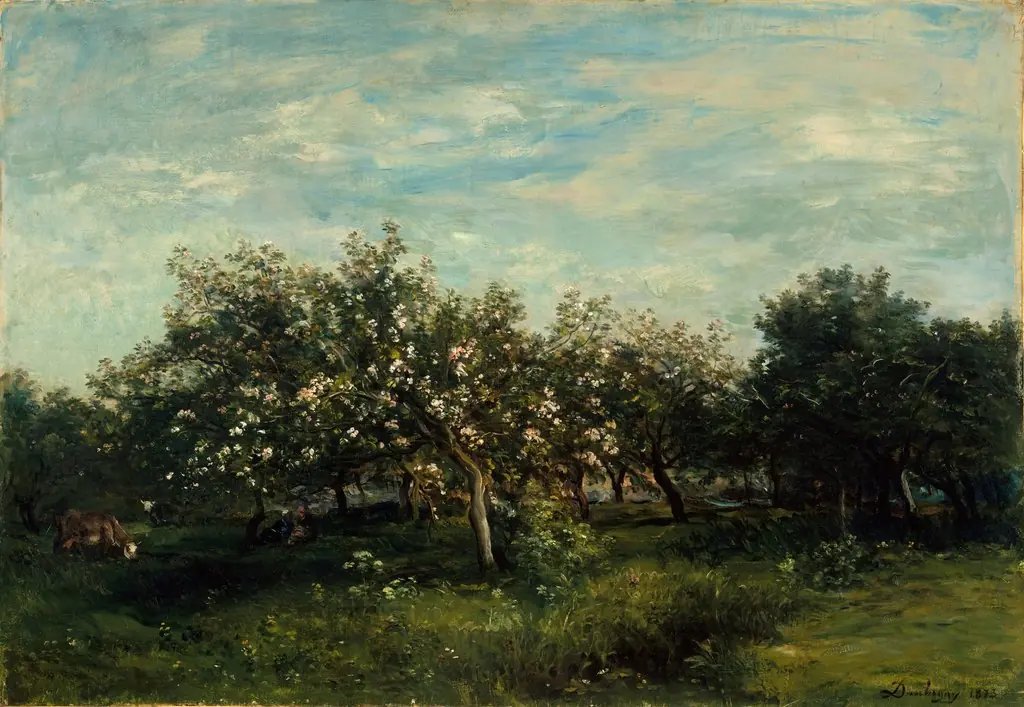
- Apple Trees at Auvers