Artwork
La Nouvelle Cendrillon
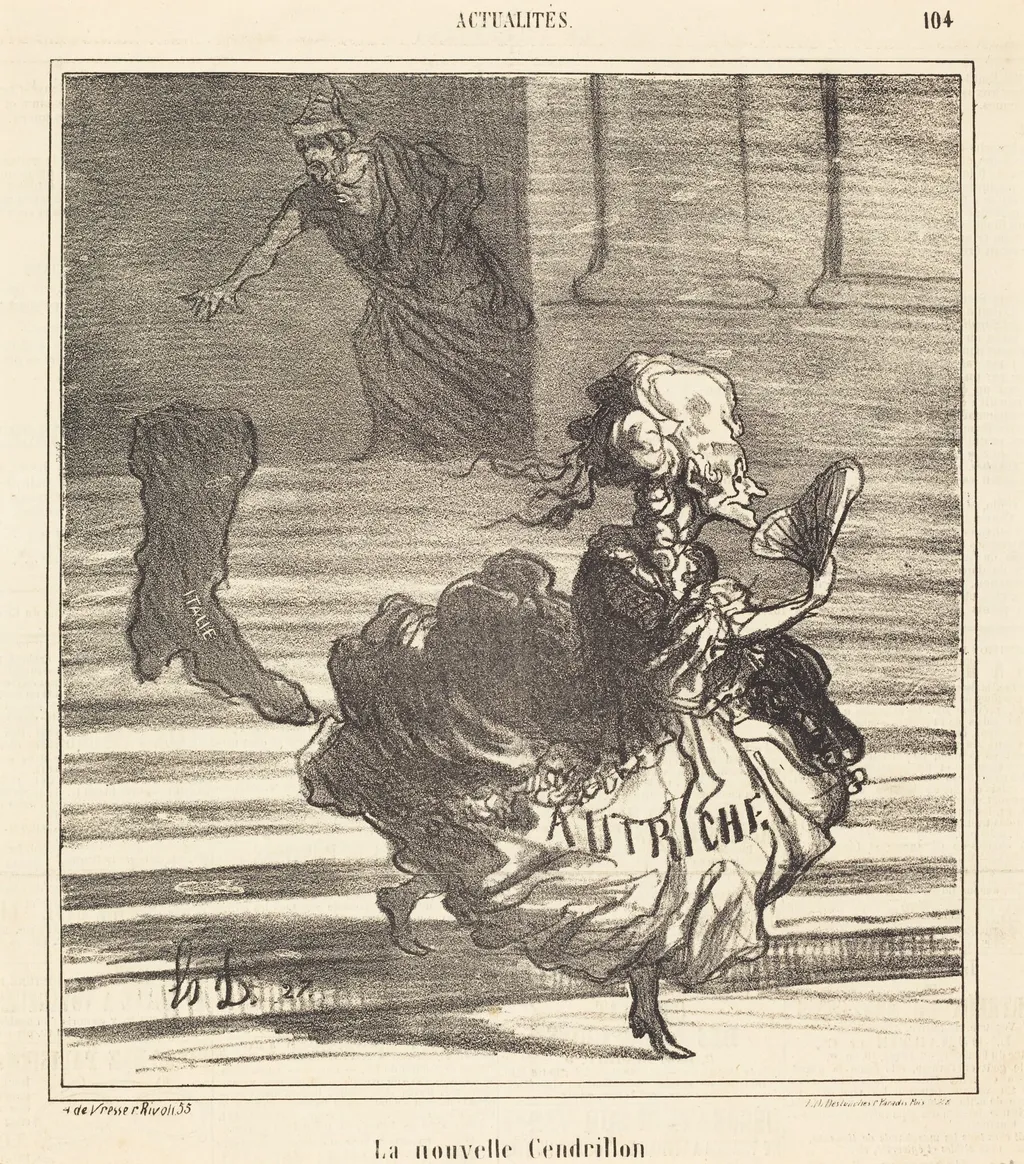
La Nouvelle Cendrillon is an ink print by the Impressionist artist Honoré Daumier. It dates from 1866 and is held in the collection of the National Gallery of Art.
About this work
Overview
As a prolific contributor to French periodicals like Le Charivari, Daumier used accessible, mass-produced imagery to critique contemporary power structures.
Created in 1866, La Nouvelle Cendrillon is a lithograph printed on newsprint by Honoré Daumier, reflecting his long-standing engagement with political satire through print media. As a prolific contributor to French periodicals like Le Charivari, Daumier used accessible, mass-produced imagery to critique contemporary power structures. This work exemplifies his shift from overt caricature to more layered, symbolic commentary during the later years of the Second Empire.
Subject & Meaning
The image reimagines the Cinderella tale as a political allegory: a crowned chicken labeled 'AUTRICHE' looms over a hunched, disheveled figure, possibly representing France or a marginalized political faction. The chicken, a recurring symbol for Austria in French satirical prints, suggests foreign dominance, while the tangled figure evokes helplessness amid political upheaval. The title mocks the idea of redemption or transformation, implying that true liberation remains elusive.
Technique & Style
Daumier employed lithography on inexpensive newsprint to achieve immediacy and wide circulation. His brushwork is loose and energetic, with minimal detail in the background, suggesting a stage set rather than a realistic space. Exaggerated forms and stark contrasts heighten the absurdity of the scene.
The rough, sketch-like quality underscores the urgency of the message and the ephemeral nature of the medium, aligning with journalistic rather than fine art conventions.
History & Provenance
Produced during the final years of Napoleon III’s regime, the print emerged from a climate of censorship and political repression. Daumier had faced imprisonment for earlier satires, yet continued to publish under veiled metaphors. La Nouvelle Cendrillon likely appeared in Le Charivari, where his work reached a broad readership.
Its survival on fragile newsprint speaks to its initial disposability and later recognition as a document of political dissent.
Context
In mid-19th century France, Austria was viewed with suspicion following its role in suppressing liberal uprisings and supporting conservative monarchies. Daumier’s use of animal symbolism drew from a tradition of political cartoons that used familiar, often grotesque imagery to bypass censorship. The fairy-tale framing allowed him to critique current events without direct reference, making the satire both accessible and defensible under repressive press laws.
Legacy
Daumier’s satirical prints, including this one, influenced later generations of political illustrators and cartoonists by demonstrating how visual wit could convey complex social critique. Though created for daily consumption, works like La Nouvelle Cendrillon endure as historical records of public sentiment during a turbulent era. Their raw aesthetic and unflinching symbolism continue to inform how art engages with power and propaganda.
Own this work as a print
Artist & collection
Artist
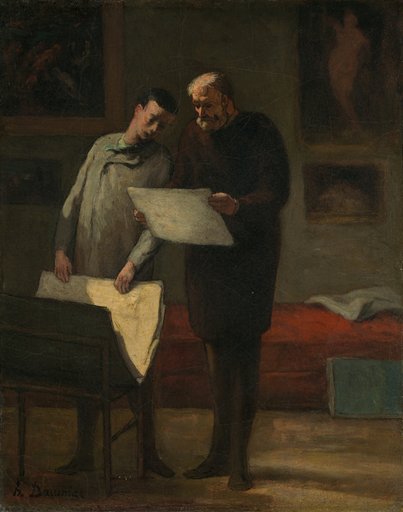
Honoré-Victorin Daumier (French: ; 26 February 1808 – 10 or 11 February 1879) was a French painter, sculptor, and printmaker, whose many works offer commentary on the social and political life in France, from the…









- Courant rejoindre les insurgés
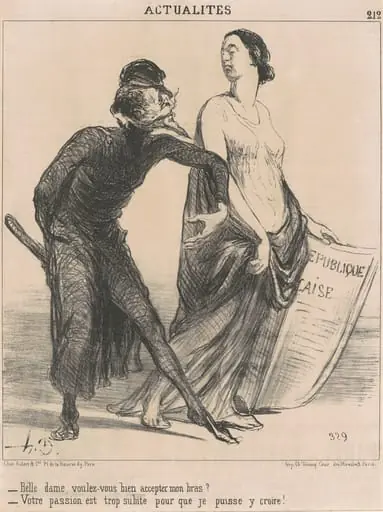 Belle dame voulez-vous ... accepter mon bras?
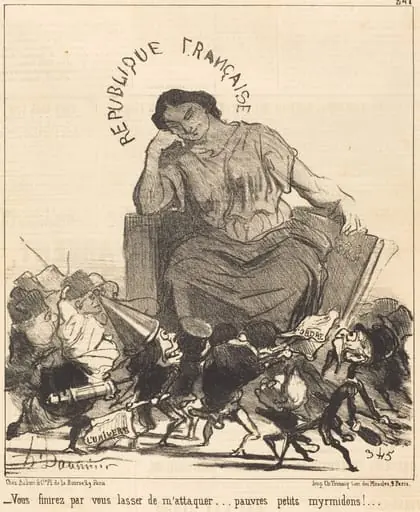 Vous finirez par vous lasser de m'attaquer...
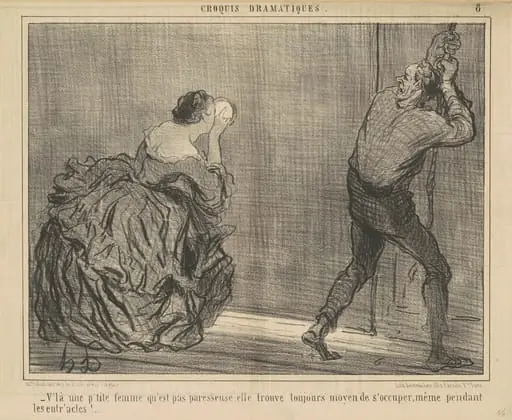 V'la une p'tite femme qu'est pas paresseuse ...
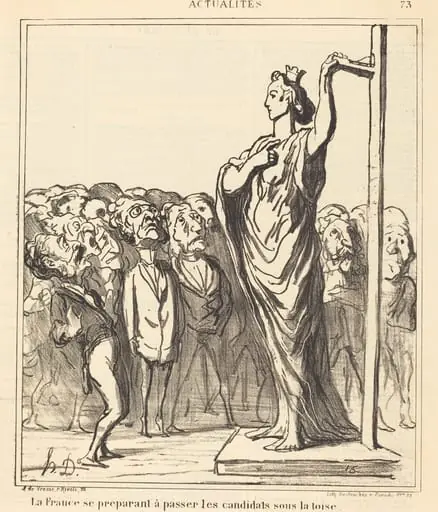 La France se préparant a passer...
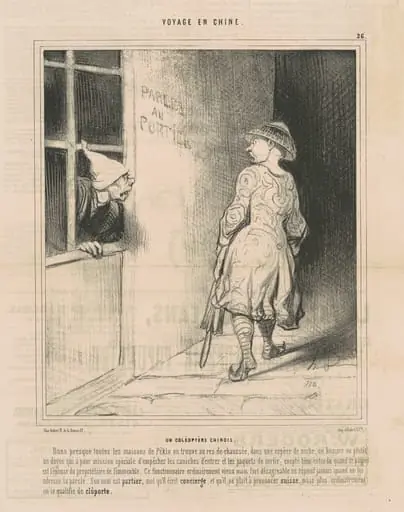 Un coléoptère chinois
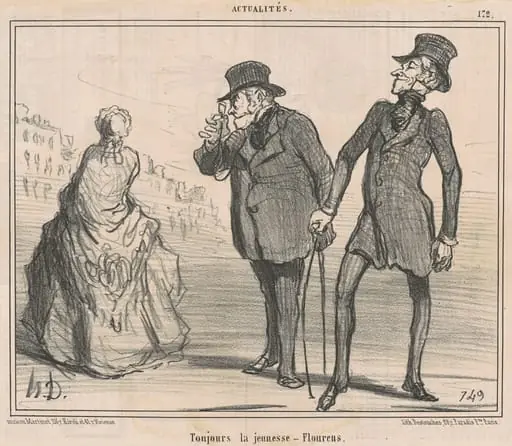 Toujours la heunesse-flourens
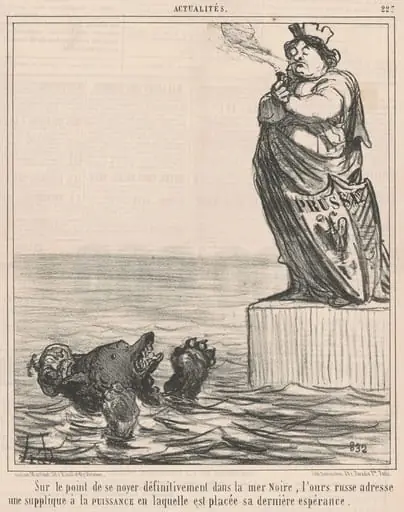 Sur le point de se noyer ...
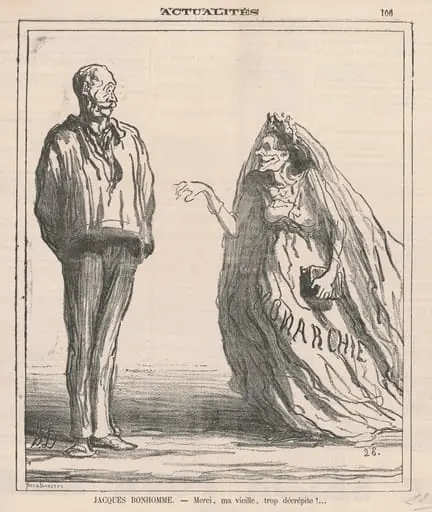 Merci, ma vieille, trop décrépite! ...
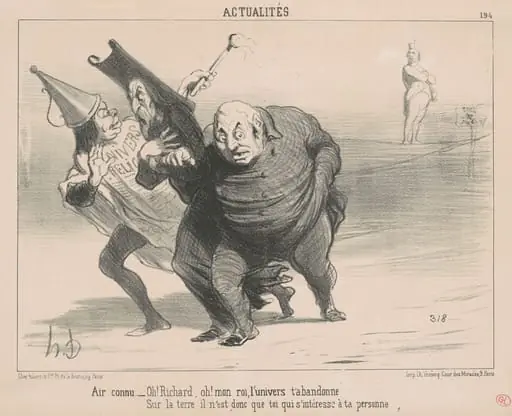 Air connu: Oh! Richard, Oh! Mon roi ...
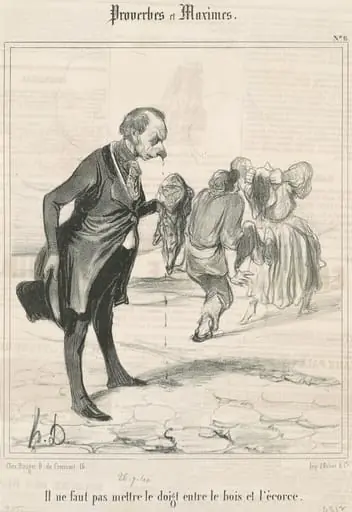 Il ne faut pas mettre le doigt ...
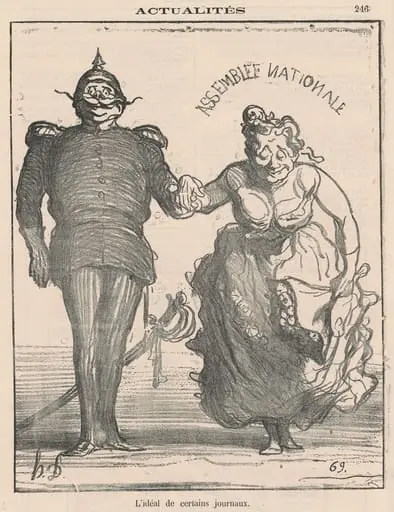 L'idéal de certains journaux