Artwork
La perche
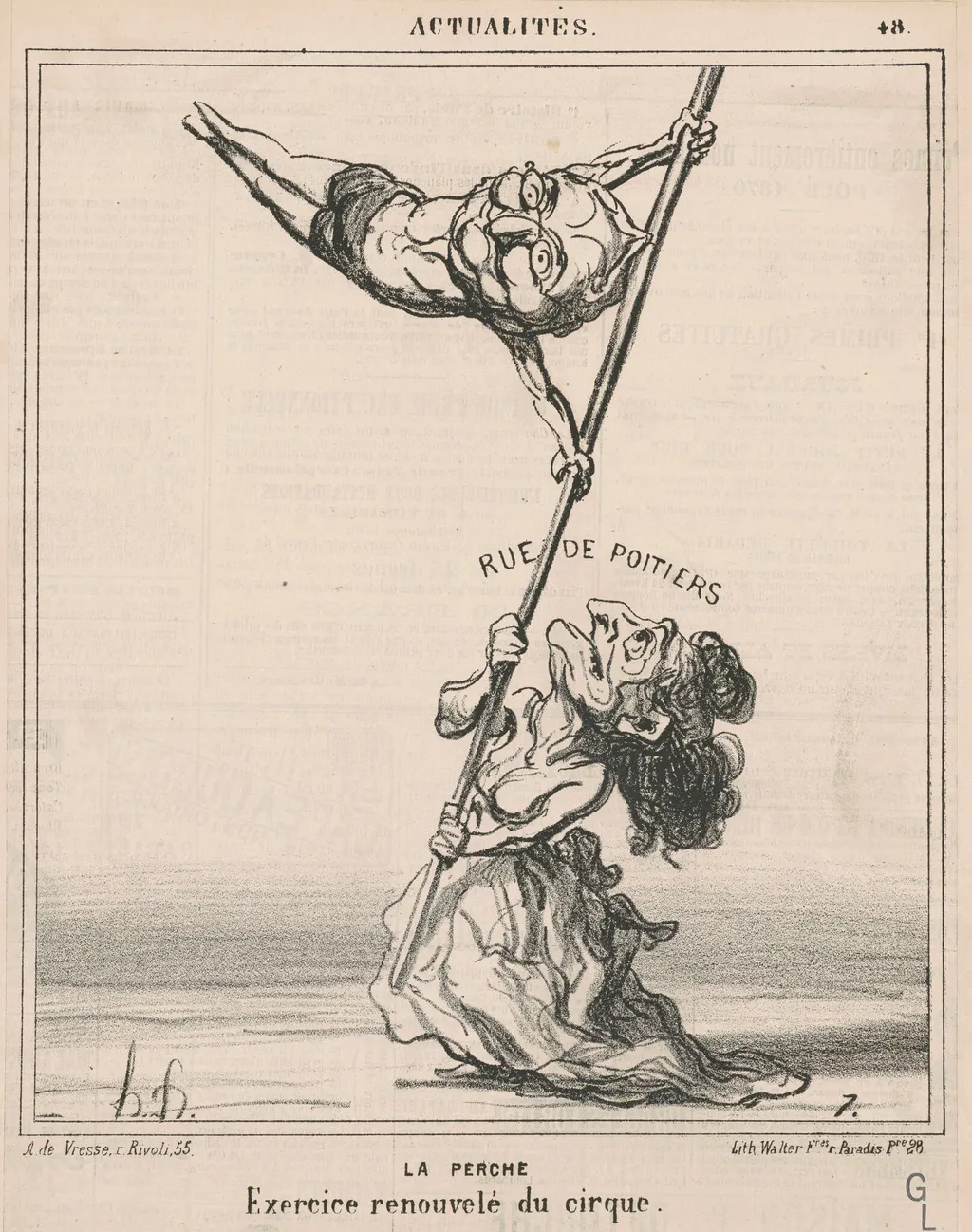
La perche is an ink print by the Impressionist artist Honoré Daumier. It dates from 1870 and is held in the collection of the National Gallery of Art.
About this work
Overview
Honoré Daumier’s 1870 lithograph La perche captures a moment of circus acrobatics on a single pole. The composition features two performers: one suspended upside‑down, the other perched below, both caught in exaggerated, contorted poses that emphasize the physical dexterity and theatricality of the act.
Subject & Meaning
The work presents a light‑hearted, satirical view of circus life, using the performers’ twisted faces and bodies to evoke humor. Daumier’s emphasis on caricature highlights the spectacle’s absurdity, turning a display of skill into a playful commentary on entertainment and the human capacity for balance and inversion.
Technique & Style
Executed in lithography, the image relies on bold, rough lines that convey immediacy, as if drawn in a single, swift gesture. Daumier’s characteristic exaggeration of facial expressions and posture aligns with his broader 19th‑century caricature style, where simplicity of line serves to amplify comedic effect.
History & Provenance
Created in the year of the Franco‑Prussian War, La perche reflects Daumier’s continued production of socially observant prints during a turbulent period. The lithograph was part of his series of circus and theatrical subjects, which were circulated among the Parisian press and later entered museum collections devoted to 19th‑century French graphic art.
Own this work as a print
Artist & collection
Artist
Honoré-Victorin Daumier (French: ; 26 February 1808 – 10 or 11 February 1879) was a French painter, sculptor, and printmaker, whose many works offer commentary on the social and political life in France, from the…

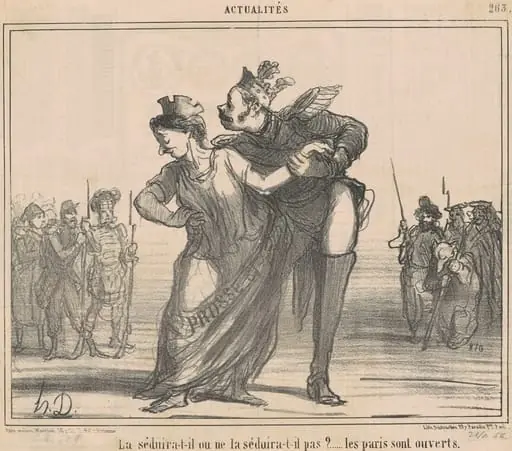 Le séduira-t-il? Les Paris sont ouverts
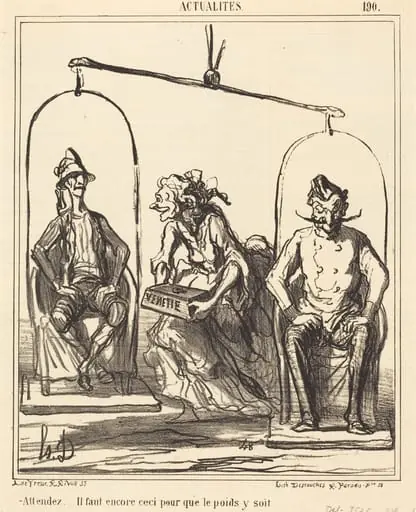 Attendez... il faut encore ceci...
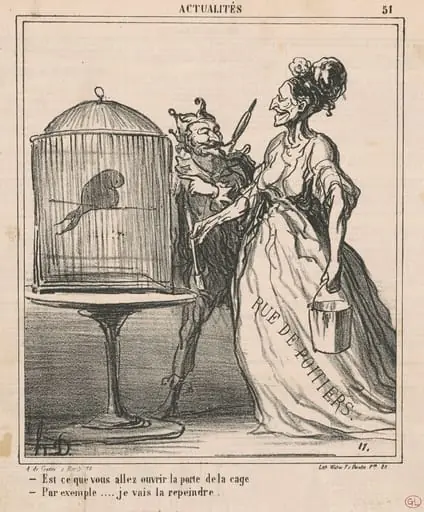 Est-ce que vous allez ouvrir la porte de la cage ...
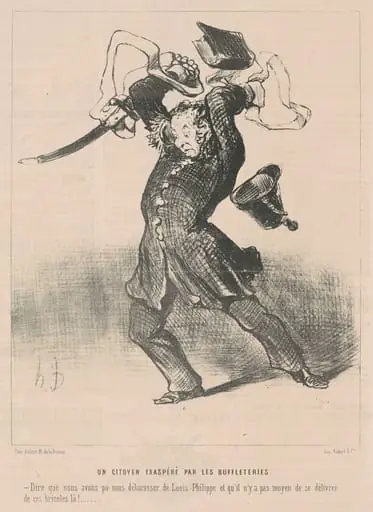 Un citoyen exaspéré par les buffleteries
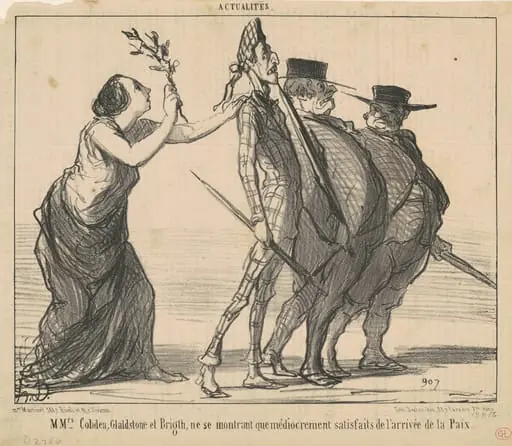 Mmrs. Cobden, Gladsone et Brigth ...
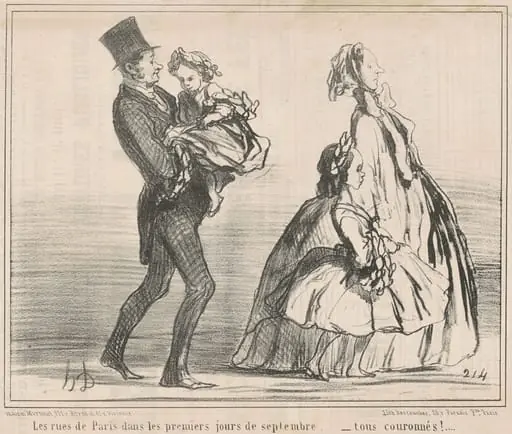 Le rues de Paris dans les premiers jours de Septembre ...
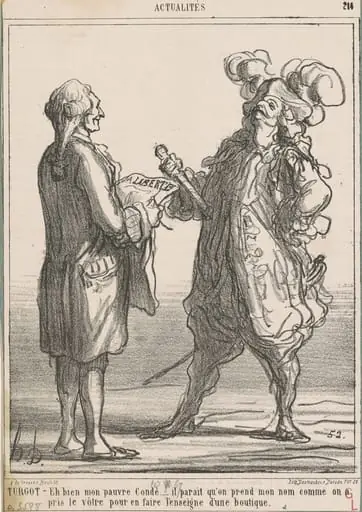 Turgot -- Eh bien mon pauvre condé ...
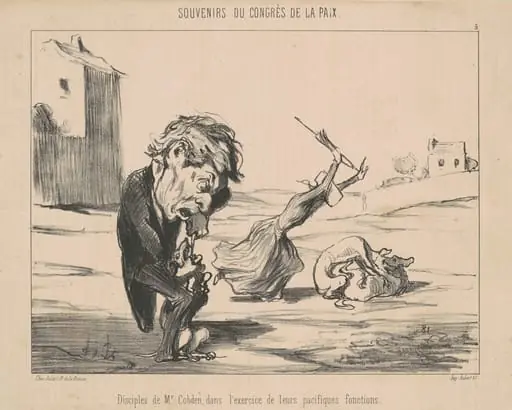 Disciples de M. Cobden