Artwork
The Saint Anne Altarpiece: Saint Anthony of Padua [right panel]
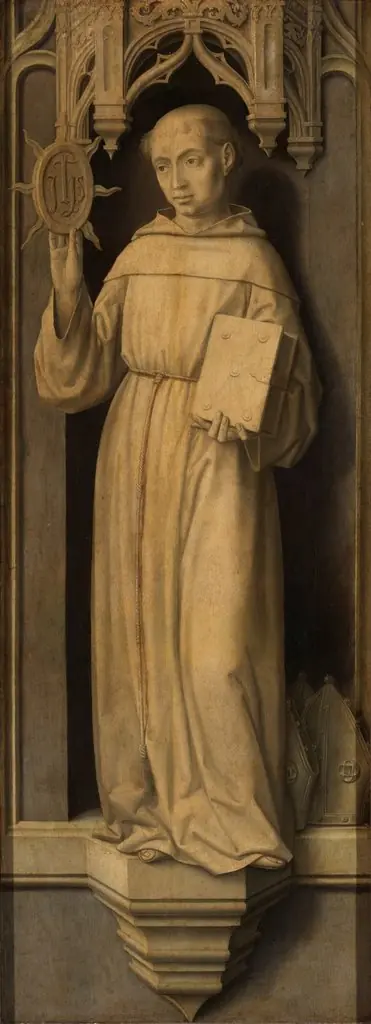
![The Saint Anne Altarpiece: Saint Anthony of Padua [right panel], by Gerard David, oil, 1510](https://artifactworldgallery.com/img/gerard-david--the-saint-anne-altarpiece-saint-anthony-of-padua-right-panel--124c5dfd1de29e92-w1024.webp)
The Saint Anne Altarpiece: Saint Anthony of Padua [right panel] is an oil painting by the Northern Renaissance artist Gerard David. It dates from 1510 and is held in the collection of the National Gallery of Art.
About this work
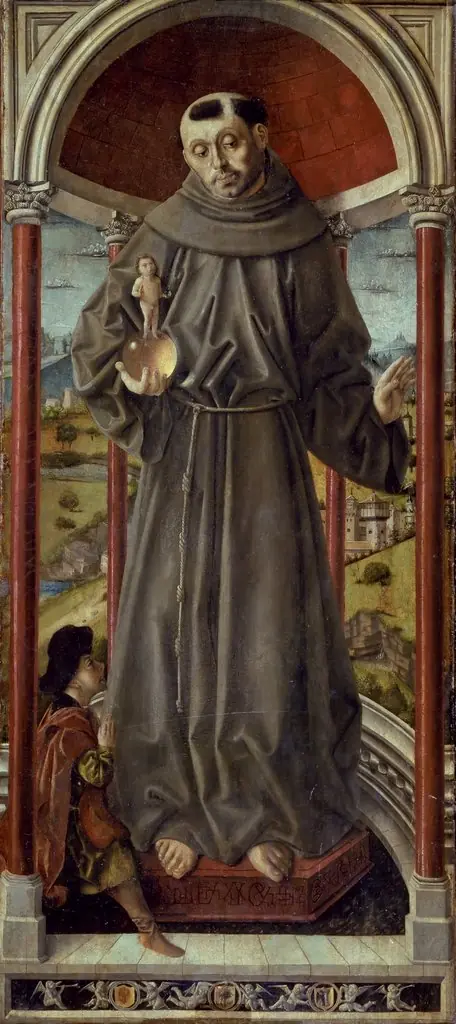
Saint Anthony of Padua stands in a red robe holding a white lily and a book, his gaze calm, while a small Christ child perched on the book blesses him. Gerard David painted the panel around 1510 in Bruges. Note how soft the light stays on Anthony's face.
Technique & Style
Created in 1510, the right panel of The Saint Anne Altarpiece depicting Saint Anthony of Padua is executed in oil paint on a wooden panel support.
Created in 1510, the right panel of The Saint Anne Altarpiece depicting Saint Anthony of Padua is executed in oil paint on a wooden panel support. The work measures 234 cm in height and 73.8 cm in width, characteristic of the large-scale devotional panels produced by Gerard David during this period. As a religious painting, the piece demonstrates the technical precision and material quality associated with the artist's mature style.
The medium of oil on panel allowed for the detailed rendering required for the depiction of the saint and the surrounding iconography. The physical dimensions and the specific choice of materials reflect the formal conventions of early 16th-century Flemish religious art, ensuring the durability and visual impact of the altarpiece component.
History & Provenance
The right‑panel of the Saint Anne Altarpiece depicting Saint Anthony of Padua was painted by Gerard David around 1510 as an oil work on panel. Its early ownership began with Cardinal Antonio Despuig y Dameto, later passing by inheritance to the Counts of Montenegro, and then to Léon de Somzée in Brussels by 1899. The work was exhibited in 1899‑1900, entered the collection of Gaston de Somzée, and was sold in May 1902 through Charles Fairfax Murray to Agnew & Sons, subsequently to the Sedelmeyer Gallery in 1906, and to Eugene Fischhof before being acquired by Peter A. B. Widener in 1907.
Widener’s estate later gifted the painting to the National Gallery of Art in 1942. The dating of 1510 is corroborated by cataloguing data.
The right panel of the Saint Anne Altarpiece has been held by the National Gallery of Art in Washington, D.C., since 1942, when it entered the collection as a gift from Joseph E. Widener of Elkins Park, Pennsylvania, through an inheritance from the Estate of Peter A. B. Widener. Its earlier provenance traces from Cardinal Antonio Despuig y Dameto at Raxa in Palma de Mallorca, descending through the Counts of Montenegro, to the Brussels collector Léon de Somzée by 1899, and subsequently to his son Gaston de Somzée. In May 1902 the work was purchased through Charles Fairfax Murray by Agnew & Sons in London, then sold in January 1906 to the Sedelmeyer Gallery in Paris, before being acquired in April 1907 by Peter A. B. Widener.
Documented exhibitions include the 1899–1900 show of Flemish and British masters at the New Gallery in London and the 1902 Exposition des Primitifs flamands at the Hôtel de Gouvernement Provincial in Bruges.
Overview
The Saint Anthony of Padua panel is the right wing of the Saint Anne Altarpiece, painted by Gerard David around 1510 in Bruges. Executed in oil on panel, the work depicts the Franciscan saint standing in a three-quarter view, clad in a voluminous red robe that contrasts with the muted background. Anthony holds a white lily, symbolizing his purity, and a book representing his theological scholarship.
Resting upon the open book is the Christ Child, who gestures in blessing toward the saint, emphasizing the theological connection between the two figures. David employs the characteristic soft, diffused light of the Early Netherlandish tradition to model Anthony's serene facial features and the delicate textures of the drapery. Created during the artist's mature period in Bruges, this panel exemplifies David's synthesis of the detailed realism inherited from Jan van Eyck and Hugo van der Goes with a more restrained, devotional calmness.
As part of a larger altarpiece dedicated to Saint Anne, this specific wing served a liturgical function, guiding the viewer's meditation on the saint's life and virtues within the context of the church's interior.
Subject & Meaning
The panel portrays Saint Anthony of Padua dressed in a vibrant red robe, a traditional attribute. He holds a white lily, symbolizing purity, and a book, representing his scholarly and preaching roles. A small figure of the Christ Child sits upon the book, extending a blessing towards the saint. Anthony's serene expression conveys a sense of spiritual contemplation and devotion.
Context
Gerard David produced this painting around 1510 while active in Bruges, a significant yet increasingly quiet port city in the Southern Netherlands. His workshop was a prominent center for religious commissions, reflecting the enduring demand for devotional art during a period of transition for the city's economic and artistic landscape. This context shaped the contemplative nature of his works.
Artist & collection

Artist
Gerard David (c. 1460 – 13 August 1523) was an Early Netherlandish painter and manuscript illuminator known for his brilliant use of color. Only a bare outline of his life survives, although some facts are known. He may…

 Virgin and Child with Four Angels
 The Nativity with Donors and Saints Jerome and Leonard
 Christ Carrying the Cross, with the Crucifixion; The Resurrection, with the Pilgrims of Emmaus
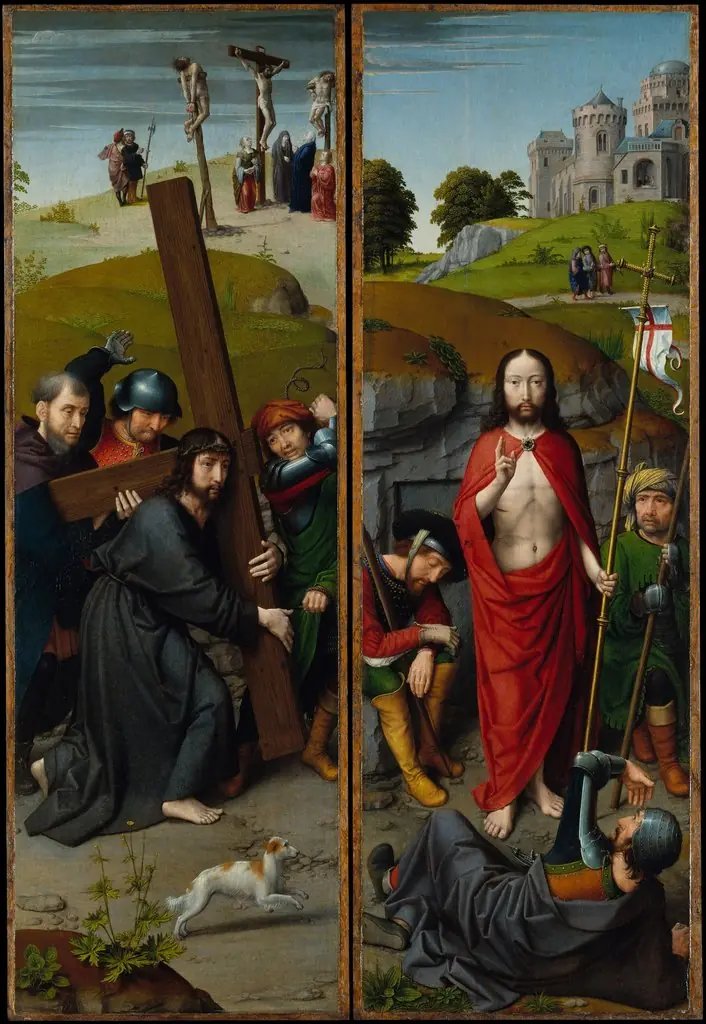
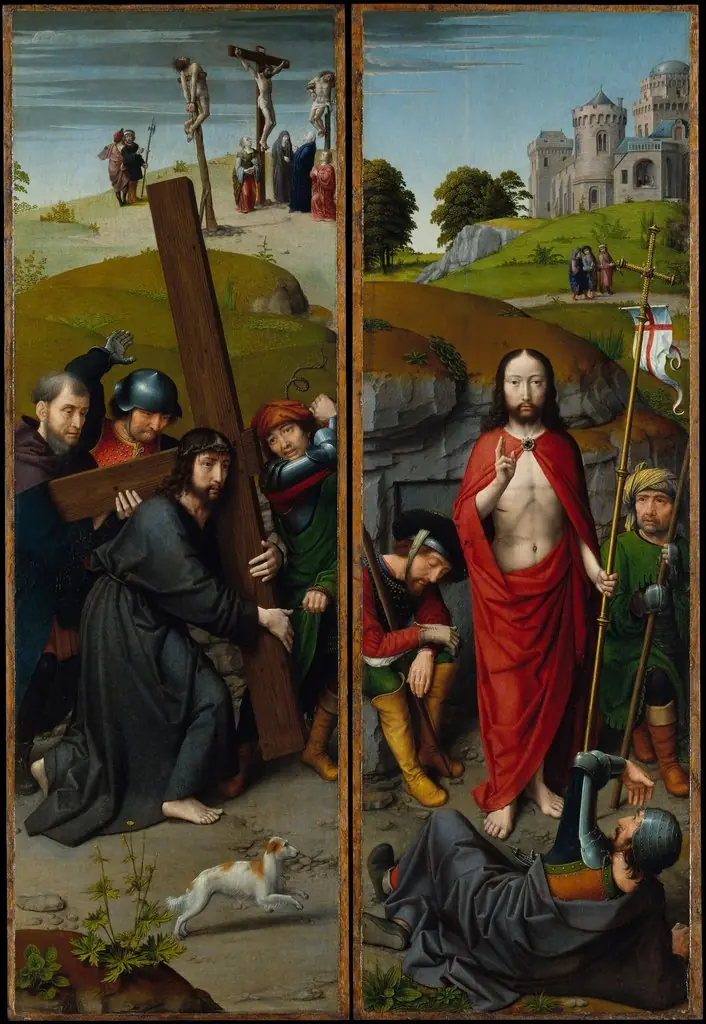 Christ Carrying the Cross, with the Crucifixion; The Resurrection, with the Pilgrims of Emmaus
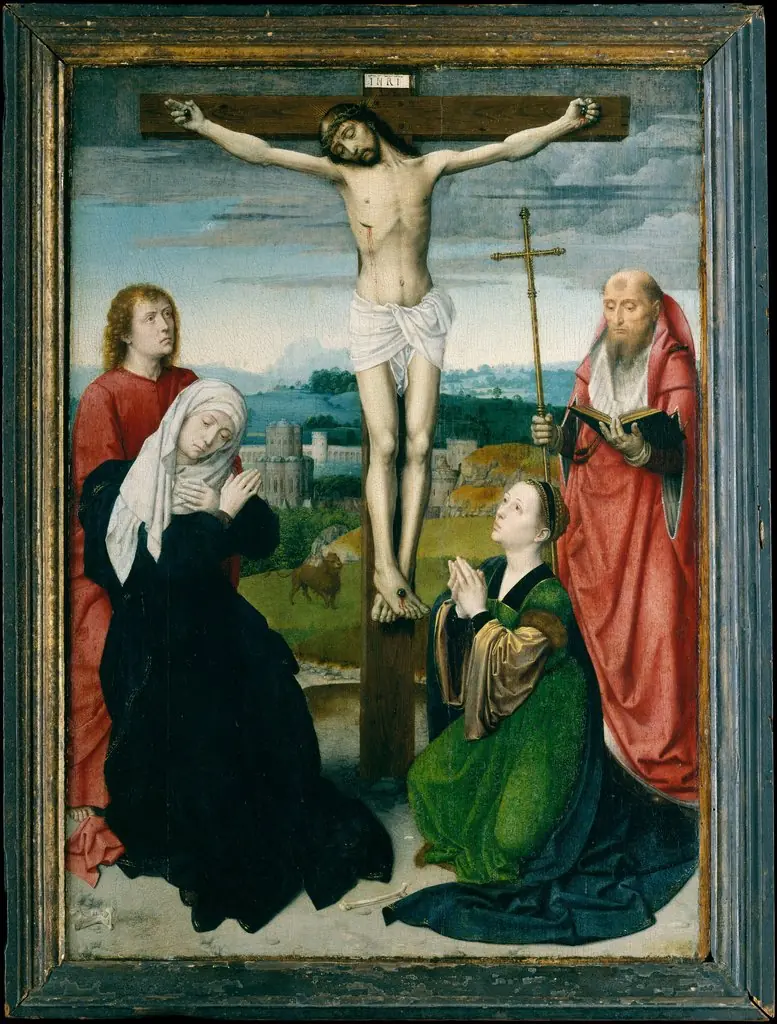 The Crucifixion
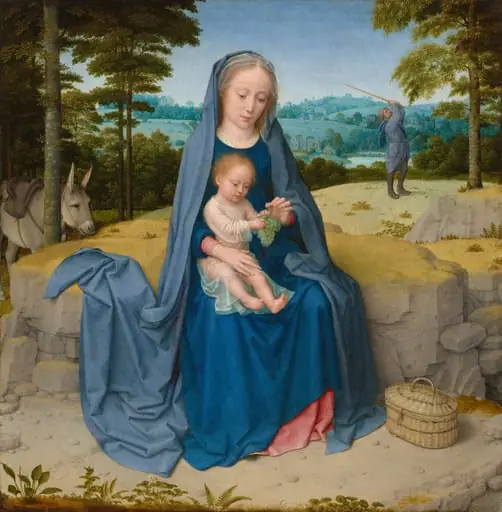 The Rest on the Flight into Egypt
![The Saint Anne Altarpiece: Saint Anne with the Virgin and Child [middle panel], by Gerard David](https://artifactworldgallery.com/img/gerard-david--the-saint-anne-altarpiece-saint-anne-with-the-virgin-and-chi--781e919f9012a004-w320.webp) The Saint Anne Altarpiece: Saint Anne with the Virgin and Child [middle panel]
The Saint Anne Altarpiece: Saint Anne with the Virgin and Child [middle panel]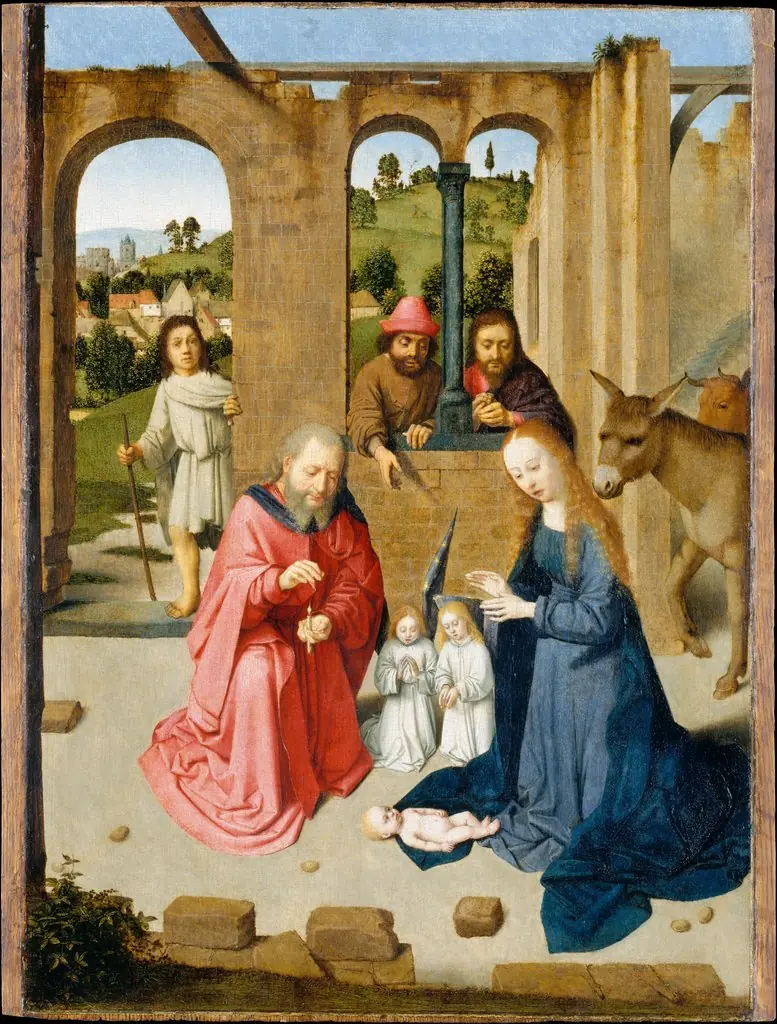 The Nativity
 Saint Anthony of Padua with a Nun
 Saint Philip Benizzi (1233-1285)
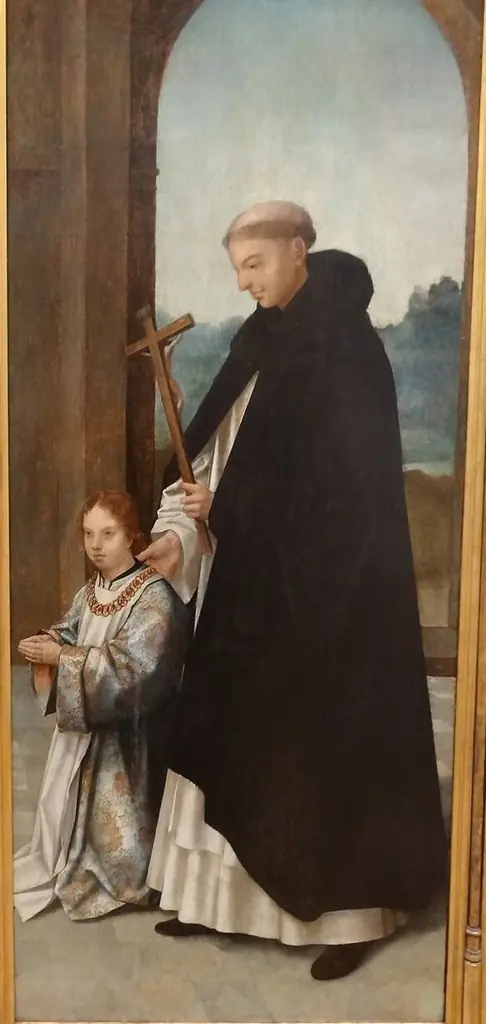 O Príncipe D. Luís e um santo Dominicano
 Der heilige Hieronymus
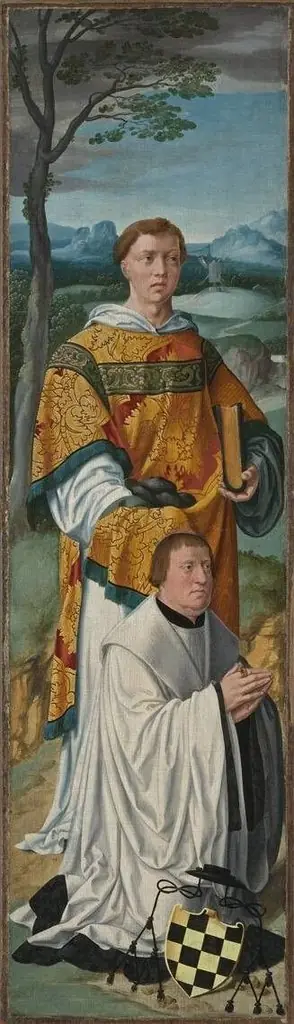 Beweinungsaltar: Hl. Stephanus mit dem Stifter Stephan Vell von Wevelinghoven
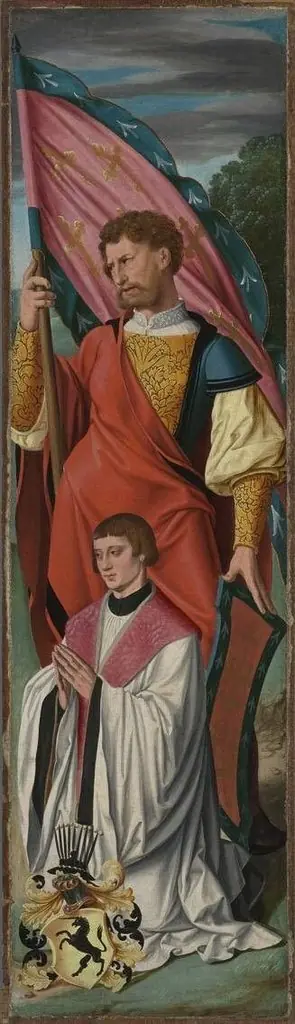 Beweinungsaltar: Ein Heiliger mit dem Stifter Bernhard (?) von Huchtenbroich
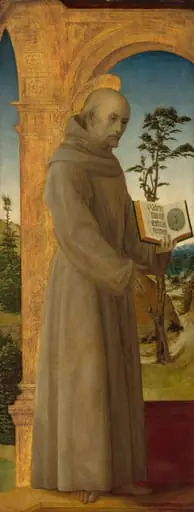 Saint Bernardino of Siena
 Zechariah