Artwork
Near Squam Lake, New Hampshire
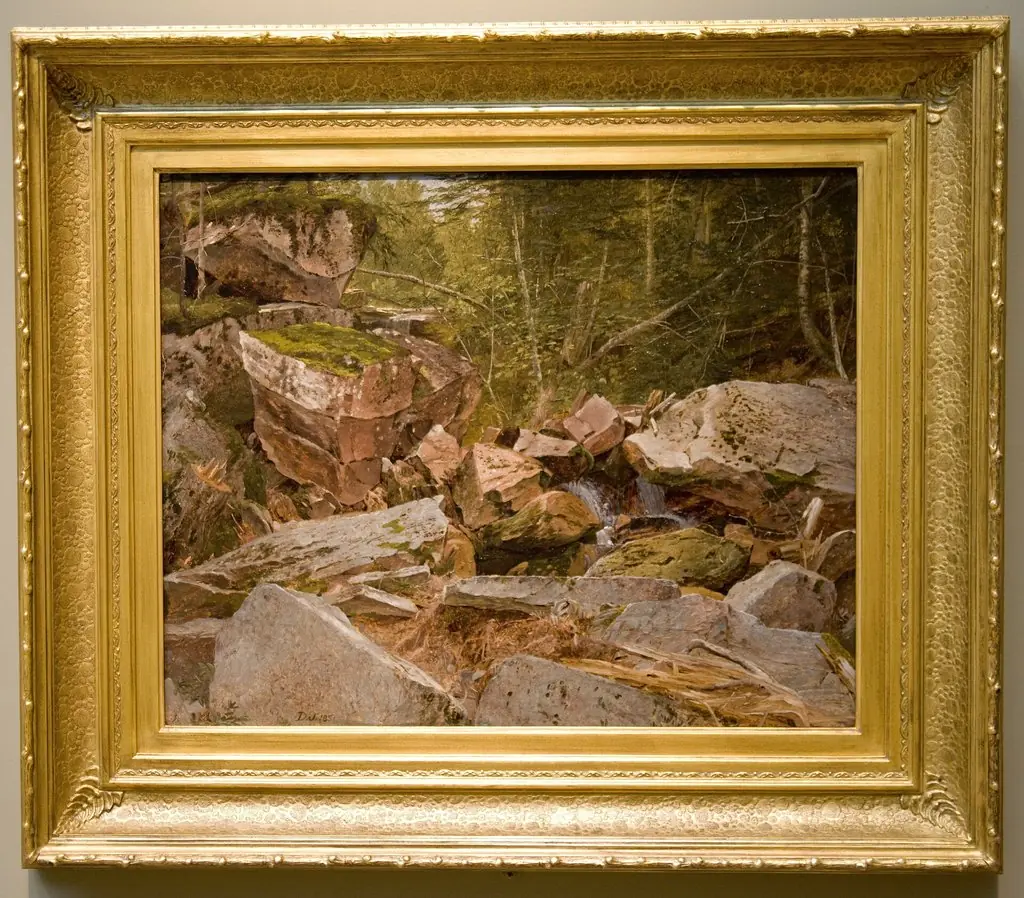
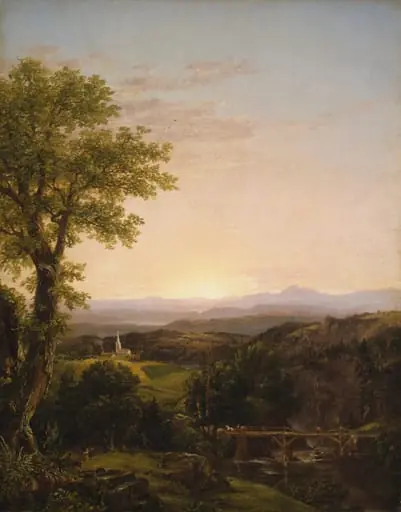
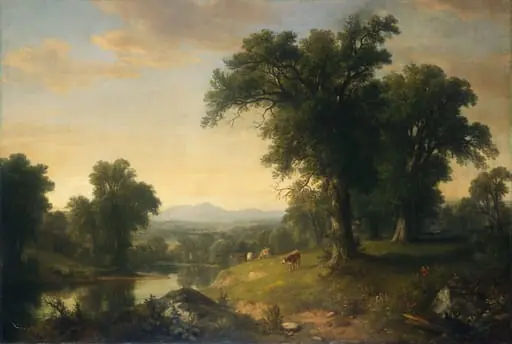
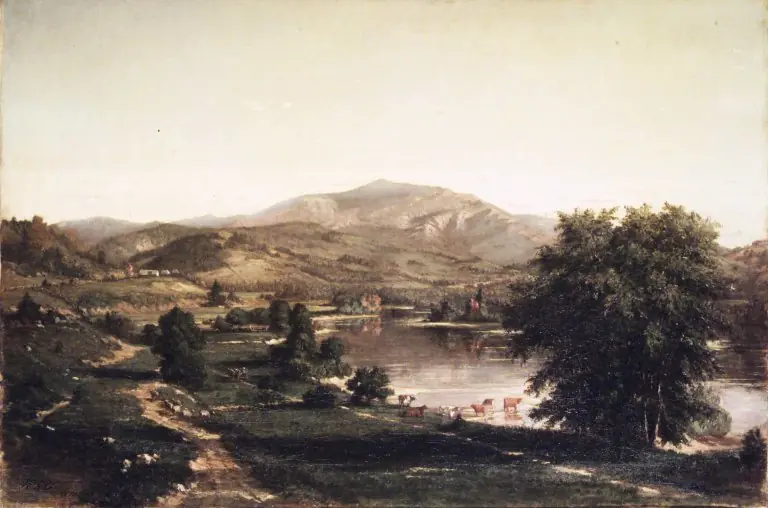
Near Squam Lake, New Hampshire is an oil painting by the Hudson River School artist David Johnson. It dates from 1856 and is held in the collection of the Metropolitan Museum of Art.
About this work
A quiet lake framed by tall pines, their trunks glowing in late-afternoon light. Johnson painted the spot in 1856, just as railroads began bringing city dwellers to New Hampshire. The trees look almost too perfect, as if he smoothed the rough edges of real wilderness to make it feel welcoming. Look up landscapes, american.
Subject & Meaning
The composition records a specific geographic location together with a tree, reflecting the natural scenery observed in the mid‑19th century.
The painting presents a view of Near Squam Lake, New Hampshire, rendered as a landscape that includes a solitary tree. It is categorized under the landscape genre and is part of the American Wing collection at the Metropolitan Museum of Art. The composition records a specific geographic location together with a tree, reflecting the natural scenery observed in the mid‑19th century.
No additional allegorical or symbolic meaning is documented in the sources, and the work is identified simply as a landscape depiction of the lake and its surroundings.
Technique & Style
Near Squam Lake, New Hampshire is an 1856 oil painting on canvas measuring 48.1 × 71.1 cm. The work, catalogued in The American Wing as a landscape, portrays a tree within a broader topographical view of the New Hampshire lake region. Its execution employs traditional oil pigments applied to a stretched canvas support, a technique typical of mid‑nineteenth‑century American landscape practice. The composition balances naturalistic detail with a loose handling of atmosphere, emphasizing the tree as a central motif.
The painting’s formal qualities reflect the genre’s focus on expansive scenery, while its material integrity is documented by the Metropolitan Museum of Art’s collection records.
History & Provenance
The painting was created in 1856 by David Johnson, an American artist (1827–1908), as an oil on canvas measuring 48.1 × 71.1 cm and classified within the landscape genre. Its subject depicts Near Squam Lake, New Hampshire, and the work is recorded in The American Wing of the Metropolitan Museum of Art. The piece is listed in the museum’s collection and appears in the Wikidata entry for the artist, which notes its inception date, dimensions, and material (oil paint, canvas).
Overview
David Johnson's Near Squam Lake, New Hampshire, painted in 1856, is an oil on canvas landscape. This work exemplifies the artist's contribution to the Hudson River School, a movement known for its portrayals of the American wilderness. The painting captures a tranquil natural setting, reflecting the detailed and expansive style characteristic of Johnson's output during this period.
Context
Johnson created this work in 1856, a period when the expansion of railroads began to open up previously remote natural areas, such as New Hampshire, to a wider urban public. His painting reflects a broader cultural interest in the American landscape, offering a visual experience of nature that was becoming increasingly accessible, yet perhaps also subject to idealization for public appreciation.
Artist & collection
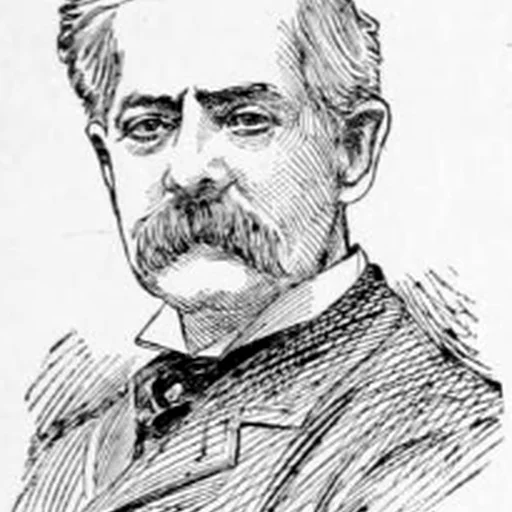
Artist
David Johnson (May 10, 1827 – January 30, 1908) was an American painter, a member of the second generation of Hudson River School painters.