Artwork
Abraham's Sacrifice of Isaac
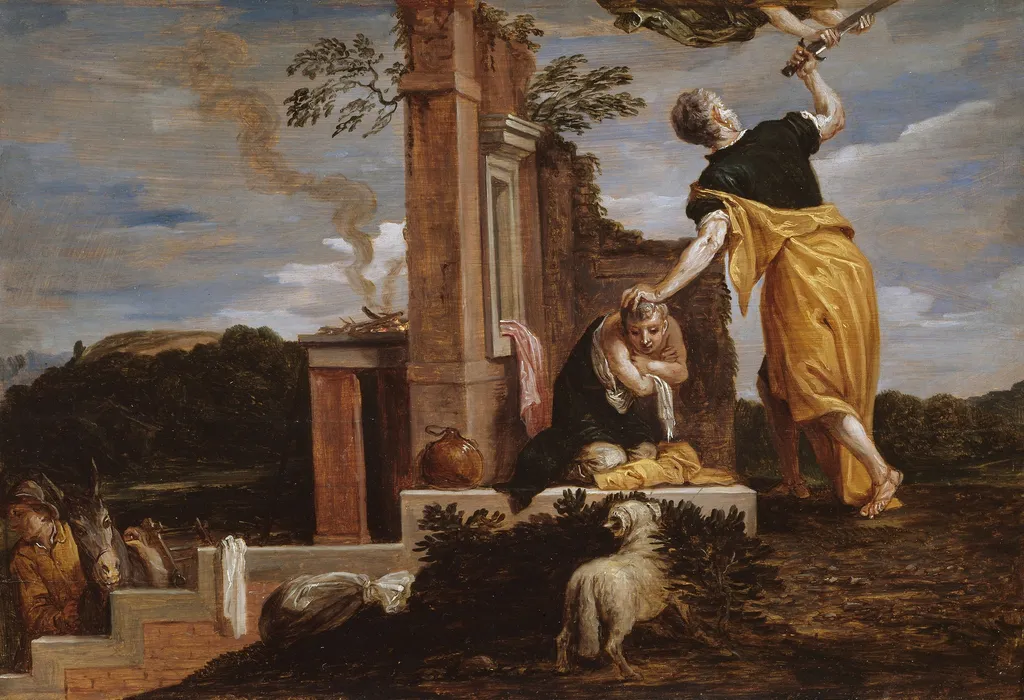
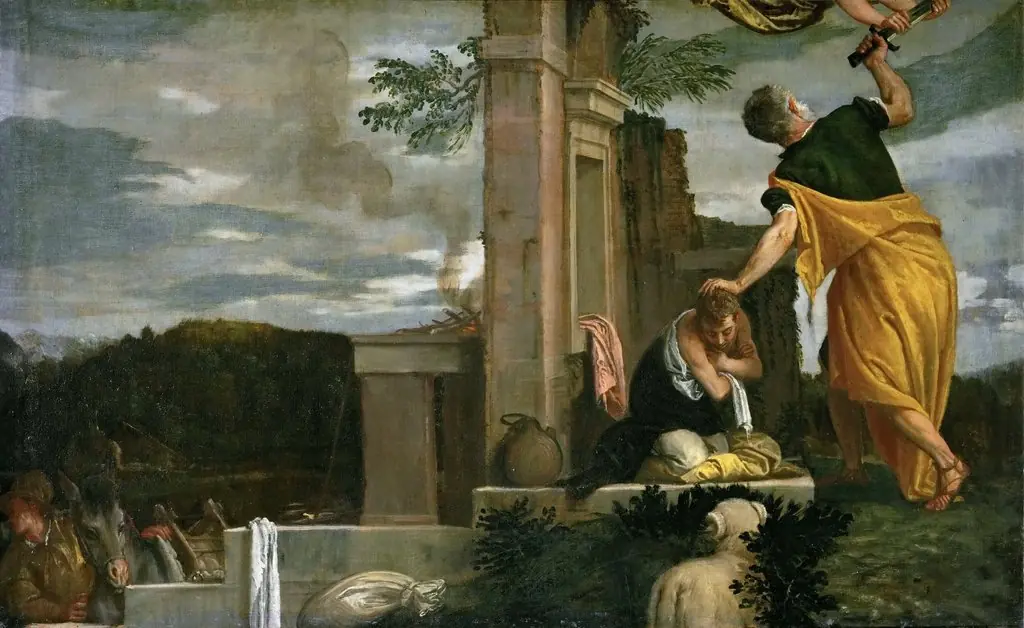
Abraham's Sacrifice of Isaac is an oil painting by the Flemish Baroque painting artist David Teniers the Younger. It dates from 1655 and is held in the collection of the Art Institute of Chicago.
About this work
Subject & Meaning
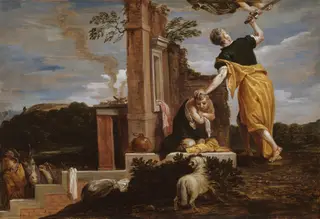
The painting depicts the Binding of Isaac, the biblical episode in which Abraham prepares to sacrifice his son Isaac at God's command.
The painting depicts the Binding of Isaac, the biblical episode in which Abraham prepares to sacrifice his son Isaac at God's command. David Teniers the Younger's 1655 work is a religious painting that portrays the moment of sacrifice, with the figures of Abraham and Isaac as its central subjects. The work is not an original invention but rather follows a composition by Paolo Veronese and his workshop, indicating Teniers was working after an established Renaissance model of the same subject.
Technique & Style
The work is an oil painting executed on wood panel, measuring 21.5 cm by 31.3 cm. It depicts the biblical Binding of Isaac, drawing its composition from Veronese's Sacrifice of Isaac. The painting was created by David Teniers the Younger in 1655 and entered the collection of the Art Institute of Chicago.
History & Provenance
The work Abraham's Sacrifice of Isaac, painted in 1655 by David Teniers the Younger, is an oil on panel religious artwork depicting the binding of Isaac. It measures 21.5 cm by 31.3 cm and was created after a composition by Paolo Veronese and his workshop. The painting entered the collection of the Art Institute of Chicago through the lineage of John Spencer-Churchill, 7th Duke of Marlborough, and his successors, including George Spencer-Churchill, 8th Duke of Marlborough. Its provenance traces back to these aristocratic owners before its acquisition by the museum.
Abraham's Sacrifice of Isaac by David Teniers the Younger is held by the Art Institute of Chicago. According to provenance records, the panel was previously owned by John Spencer-Churchill, 7th Duke of Marlborough, and later by George Spencer-Churchill, 8th Duke of Marlborough, before entering the Art Institute of Chicago's collection. No specific inventory or accession number, and no exhibition history, is documented in the available sources.
Context
Scholarship on David Teniers the Younger's 1655 painting Abraham's Sacrifice of Isaac emphasizes its dialogue with Veronese's compositional legacy while tracing its provenance through British aristocracy. The work entered the collection of the Art Institute of Chicago via the Spencer-Churchill dukes of Marlborough, linking it to transatlantic collecting practices of the early 20th century. Its depiction of the Binding of Isaac aligns with Baroque interpretations of Old Testament narratives, situating Teniers within a tradition of biblical scene painting that engaged with Renaissance precedents.
The painting's miniature format and oil-on-panel technique reflect specialized devotional practices, underscoring its role in the artist's broader exploration of religious subjects beyond his more celebrated genre scenes.
Legacy
The painting Abraham's Sacrifice of Isaac by David Teniers the Younger, created in 1655, became part of the collection of the Art Institute of Chicago through the ownership lineage of the Spencer-Churchill dukes. Its depiction of the biblical Binding of Isaac draws on earlier compositions, including those by Paolo Veronese, establishing a lineage of religious interpretation across European art. The work is recognized as a significant example of 17th-century Flemish religious painting and continues to be studied for its technical execution and narrative depth.
Overview
David Teniers the Younger's 'Abraham's Sacrifice of Isaac,' executed in 1655, depicts the climactic moment from Genesis 22 where the patriarch prepares to slay his son before being stayed by an angel. The composition centers on Abraham, whose arm is outstretched with a knife, his expression conveying intense anguish and resolve, while the kneeling Isaac looks upward in submission. Teniers renders the scene with the characteristic clarity and textured brushwork of the Flemish Baroque, grounding the biblical narrative in a tangible, earthly setting.
Unlike the grand, theatrical interpretations of his contemporaries, Teniers often infused religious subjects with a sense of intimate drama and observed detail, reflecting his versatility across history painting and genre scenes. This work exemplifies his mid-career ability to balance emotional gravity with the precise rendering of figures and landscape that defined his output during the 1650s. The painting serves as a testament to the artist's engagement with scriptural themes, moving beyond mere illustration to explore the psychological weight of the sacrifice.
Own this work as a print
Artist & collection
Artist
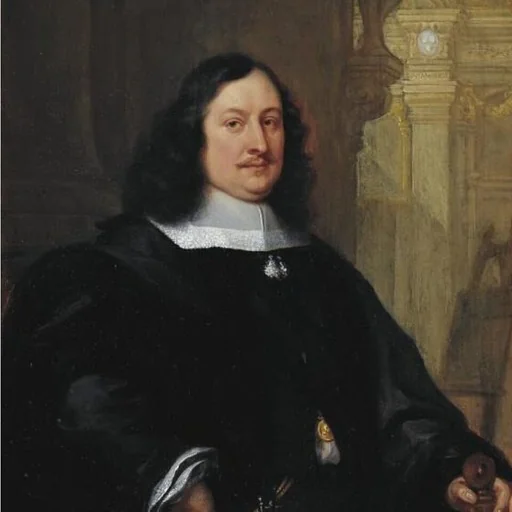
David Teniers the Younger or David Teniers II was a Flemish Baroque painter, printmaker, and artist.