Artwork
The Sacrifice of Isaac
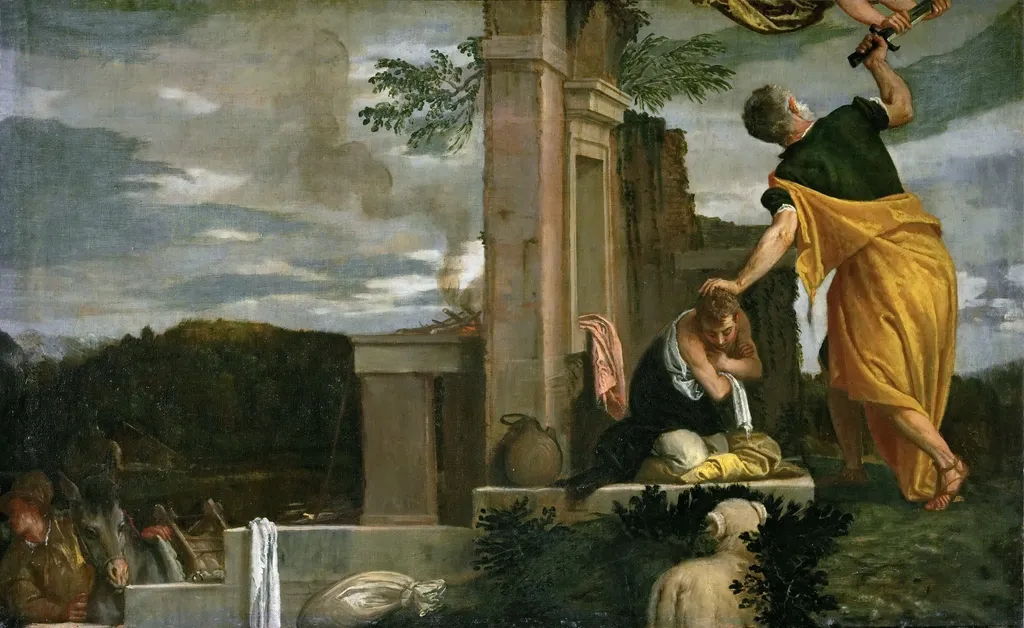
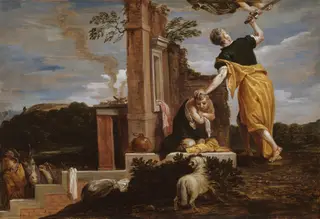
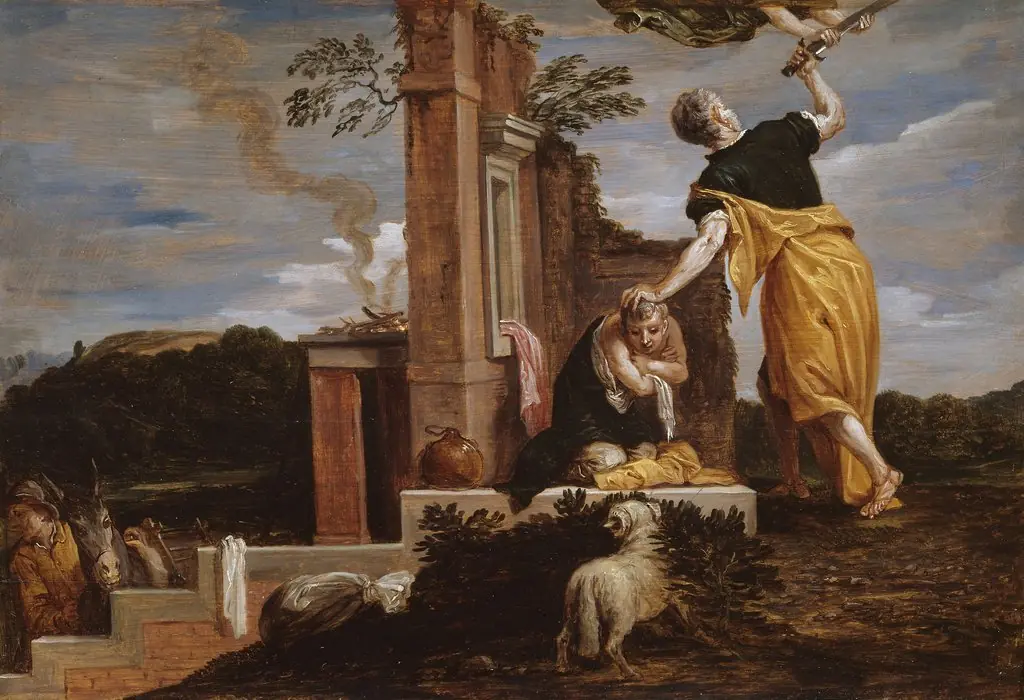
The Sacrifice of Isaac is an oil painting by the Early Baroque Italian artist Paolo Veronese. It is held in the collection of the Kunsthistorisches Museum.
About this work
Subject & Meaning
As a work of religious art, the image symbolizes the testing of divine loyalty and the tension between paternal love and spiritual duty.
Paolo Veronese's 1588 oil painting depicts the biblical Binding of Isaac, a foundational narrative of faith and obedience. The composition features the patriarch Abraham and his son Isaac as the central figures, illustrating the moment of intended sacrifice. As a work of religious art, the image symbolizes the testing of divine loyalty and the tension between paternal love and spiritual duty.
The specific iconography focuses on the dramatic interaction between the two protagonists at the climax of the story, serving as a visual meditation on the virtues of submission to God's will.
Technique & Style
Paolo Veronese's The Sacrifice of Isaac, executed in 1588, is an oil painting on canvas. The work measures 103 cm in height and 167 cm in width. Created within a religious genre, the piece depicts the biblical binding of Isaac, featuring the figures of Abraham and Isaac.
The painting is attributed to Veronese and his workshop, reflecting the collaborative production methods common in such religious commissions of the late sixteenth century.
History & Provenance
Paolo Veronese executed The Sacrifice of Isaac in 1588, with contributions from his workshop. The oil painting on canvas depicts the biblical Binding of Isaac.
The work's early ownership history includes possession by Daniël Nijs and Bartolomeo della Nave. It subsequently entered the collection of Archduke Leopold Wilhelm of Austria. The painting is currently held in the Kunsthistorisches Museum.
The Sacrifice of Isaac is held in the collection of the Kunsthistorisches Museum. The painting, executed in oil on canvas in 1588, measures 103 cm in height and 167 cm in width.
Historical ownership records indicate the work was once possessed by Daniël Nijs and Bartolomeo della Nave before entering the collection of Archduke Leopold Wilhelm of Austria. No specific exhibition history or inventory accession numbers are provided in the available sources.
Legacy
The Sacrifice of Isaac has shaped religious art through its dramatic composition and narrative clarity. Veronese's depiction of the binding of Isaac influenced Baroque interpretations of Old Testament themes, emphasizing emotional tension and divine intervention. The work's provenance among notable collectors, including Archduke Leopold Wilhelm, contributed to its visibility in European collections, reinforcing its role in shaping connoisseurship and the study of Venetian painting techniques.
Overview
Paolo Veronese completed The Sacrifice of Isaac in 1594, near the end of his long career. Executed in oil on canvas, the work portrays the biblical moment when Abraham prepares to offer his son Isaac as a sacrifice. It is part of the collection of the Kunsthistorisches Museum in Vienna.
Context
Own this work as a print
Artist & collection
Artist
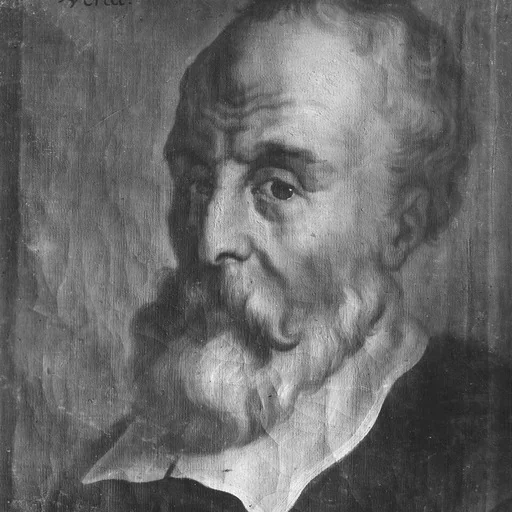
Paolo Caliari (1528 – 19 April 1588), known as Paolo Veronese ( VERR-ə-NAY-zay, -zee, US also -see; Italian: ), was an Italian Renaissance painter based in Venice, known for extremely large history paintings of…