Artwork
La Crucifixión
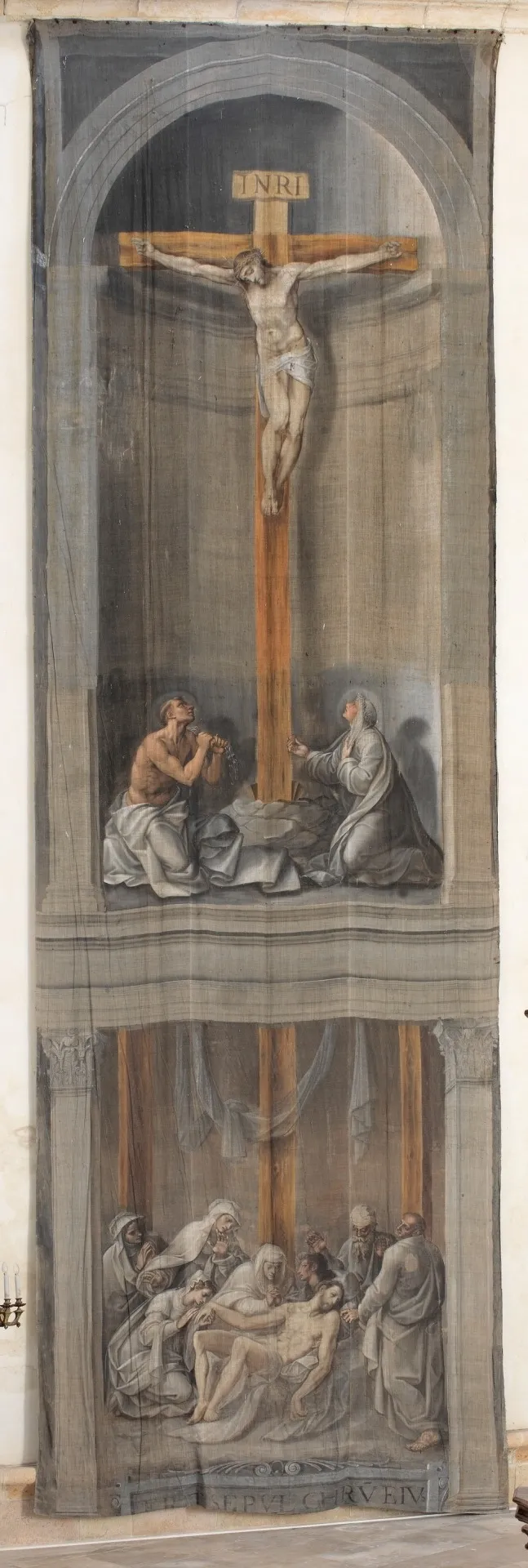
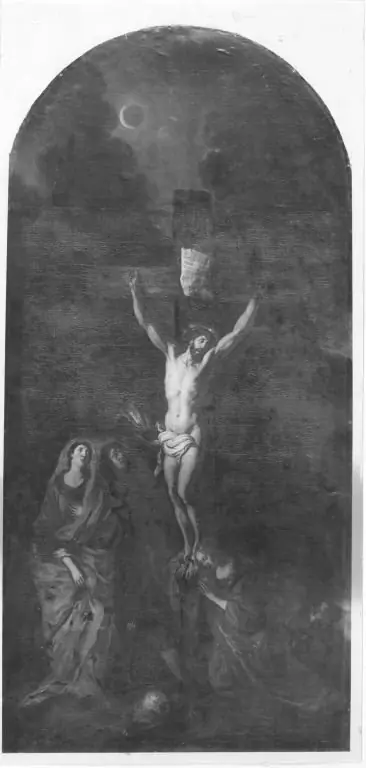
La Crucifixión is an oil painting by the Early Baroque Italian artist Diego de Urbina. It dates from 1569 and is held in the collection of the Museo del Prado.
About this work
Subject & Meaning
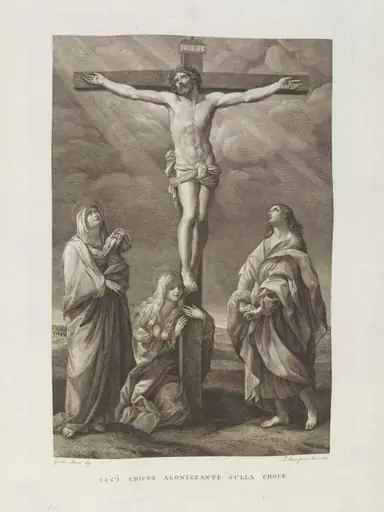
The painting depicts the crucifixion of Jesus Christ, a central event in Christian theology representing sacrifice and redemption.
The painting depicts the crucifixion of Jesus Christ, a central event in Christian theology representing sacrifice and redemption. Diego de Urbina's work, created in 1569, is classified as religious art, emphasizing its devotional purpose within a monastic context at the Monastery of Santa María del Parral. The composition underscores the solemnity of the subject through traditional iconography associated with the Passion narrative, reflecting Counter-Reformation themes of faith and martyrdom.
Technique & Style
La Crucifixión is executed in oil paint on a twill-weave support, a textile ground rather than a conventional panel or canvas, which is consistent with mid-sixteenth-century Iberian devotional practice. The unusually elongated format, measuring roughly 1230 mm in height by 325 mm in width, produces a markedly vertical, columnar composition that emphasizes the tallity of the cross. Stylistically, the work belongs to the religious tradition of the period, depicting the crucifixion of Jesus in a manner aligned with Diego de Urbina's documented production.
No specific handling notes, surface condition, or stylistic descriptors beyond the medium, support, and dimensions are documented in the available sources.
Source citations are limited to the medium (oil paint), support (twill weave), dimensions, and date.
History & Provenance
Diego de Urbina executed the oil painting La Crucifixión in 1569. The work, which depicts the crucifixion of Jesus Christ, was originally situated at the Monastery of Santa María del Parral. It is currently held in the collection of the Museo del Prado.
The painting is rendered on a twill weave support and measures 1230 cm in height by 325 cm in width.
The work is held in the collection of the Museo del Prado in Madrid, where it is recorded under accession number P006918.
It was first documented in the holdings of the Monastery of Santa María del Parral, from which it later entered the Prado’s collection.
Legacy
La Crucifixión by Diego de Urbina exerted limited documented influence on later Spanish religious painting, with its legacy primarily anchored in archival records at the Museo del Prado rather than widespread artistic imitation. The work's reputation shifted from 19th-century obscurity to 20th-century recognition as a rare example of High Renaissance compositional daring within Counter-Reformation Sevillian circles, though no direct stylistic lineage to subsequent artists is cited in the sources. Its enduring scholarly attention stems from being one of few surviving large-scale crucifixion paintings from 16th-century Spain, preserving original twill-weave canvas support and oil technique despite later transfers to The Met.
Contemporary assessments emphasize its historical significance as a devotional object rather than aesthetic innovation, with exhibitions at major institutions reinforcing its status as a key artifact of Iberian Counter-Reformation visual culture.
Overview
Created in 1569, La Crucifixión is an oil on canvas executed by the Spanish painter Diego de Urbina. The work belongs to the early Baroque period and is currently housed in Madrid’s Museo del Prado. It presents the traditional Christian scene of the crucifixion, rendered with a restrained palette and a pronounced play of light and shadow.
Context
Diego de Urbina, though Spanish, was influenced by the emerging Baroque tendencies of Italy, integrating dramatic lighting and emotional intensity into his religious subjects. La Crucifixión reflects this cross‑cultural exchange, situating a traditional biblical narrative within the evolving visual language of the period.
Artist & collection
Artist
Urbin is a surname. Notable people with the surname include: Péter Urbin (born 1984), Hungarian footballer Snejana Urbin, Russian dancer

![Chapel of Saint Sebastian (Cappella di San Sebastiano) [plate N], by Jacopo Ligozzi](https://artifactworldgallery.com/img/jacopo-ligozzi--chapel-of-saint-sebastian-cappella-di-san-sebastiano-plate-n--144b97ba4a91d67b-w320.webp)