Artwork
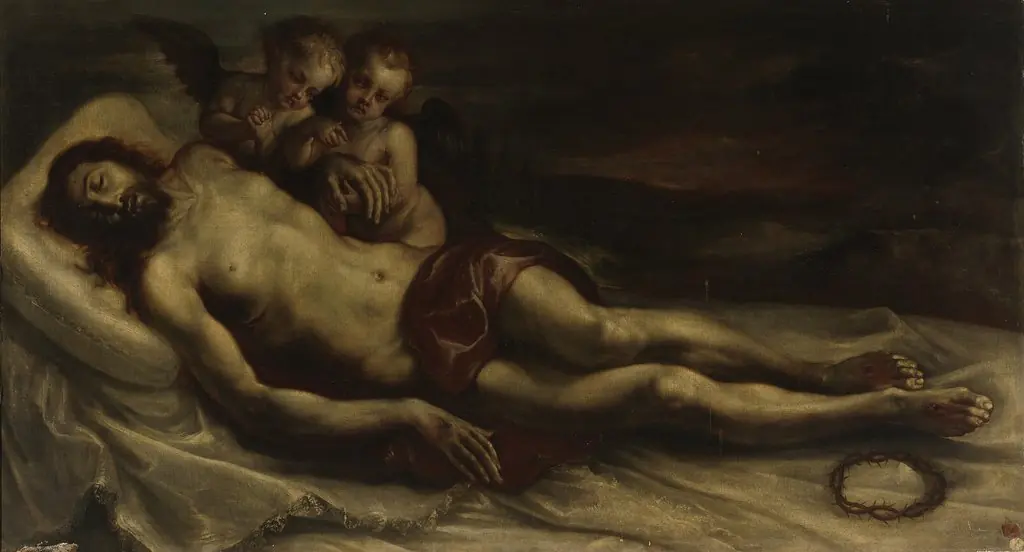
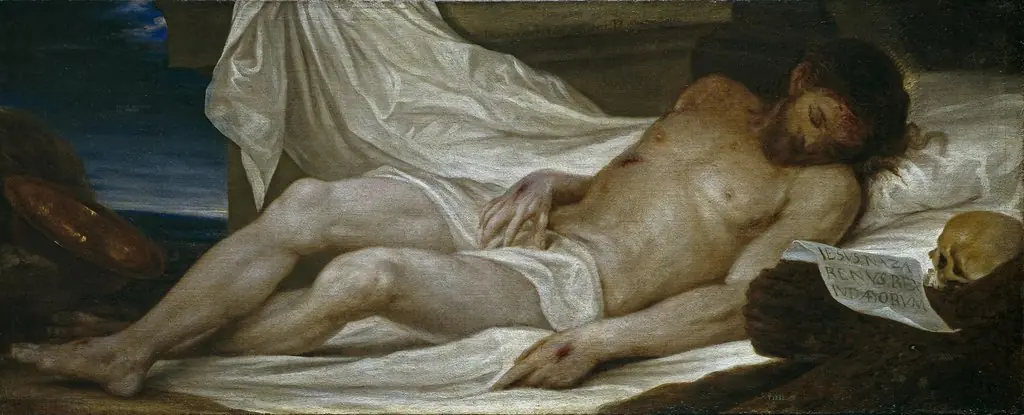
Cristo yacente
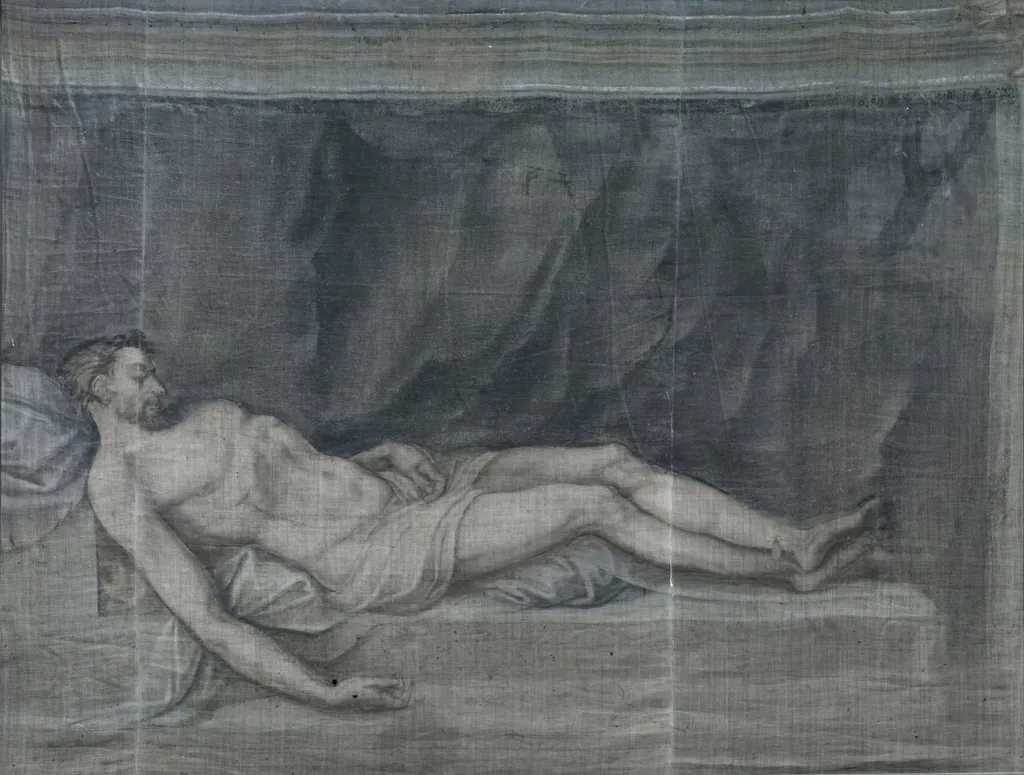
Cristo yacente is a tempera painting by the Early Baroque Italian artist Diego de Urbina. It dates from 1569 and is held in the collection of the Museo del Prado.
About this work
Overview
Painted in 1569 by Diego de Urbina, Cristo yacente is a tempera-on-panel work depicting the dead Christ in repose.
Painted in 1569 by Diego de Urbina, Cristo yacente is a tempera-on-panel work depicting the dead Christ in repose. It belongs to the early Baroque tradition in Italy, characterized by emotional restraint and devotional focus. The painting is held in the collection of the Museo del Prado in Madrid, where it remains a quiet example of 16th-century religious imagery, emphasizing contemplation over drama.
Subject & Meaning
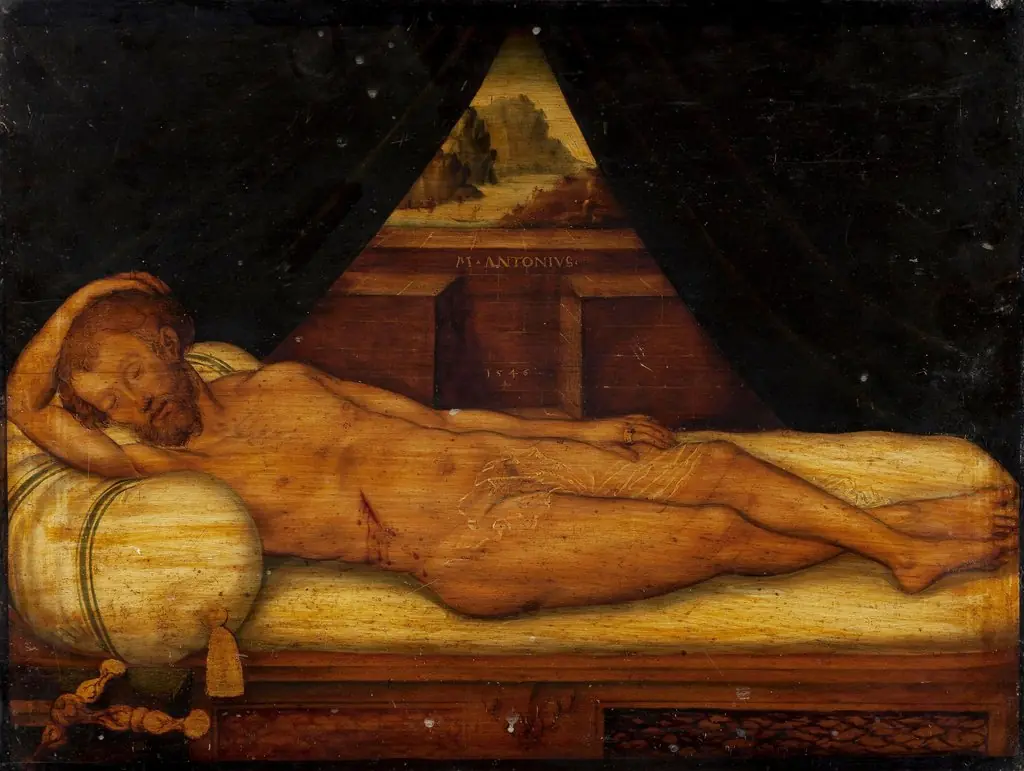
The painting presents Christ lying on his side, draped in a thin linen sheet, his body relaxed yet lifeless. His bearded face, turned gently toward the viewer, conveys a sense of peaceful surrender rather than suffering. The absence of narrative elements or symbolic accessories directs attention to the humanity of the deceased Christ, inviting quiet meditation on mortality and divine sacrifice.
Technique & Style
Tempera, a fast-drying medium made from pigment and egg yolk, allowed Urbina to achieve a smooth, matte surface with precise edges. The forms are rendered with minimal modeling, giving the flesh and fabric a sculptural, almost stone-like quality. Colors are subdued, pale grays, off-whites, and muted ochres, creating a somber stillness that enhances the meditative tone of the image.
History & Provenance
The painting was completed in 1569 and entered the Spanish royal collection before eventually being transferred to the Museo del Prado. Its presence in Spain suggests it may have been acquired during a period of artistic exchange between Italian and Spanish courts. No significant alterations or later additions are recorded, preserving its original intent and condition.
Context
Created during the Counter-Reformation, the image aligns with Church efforts to foster personal devotion through accessible religious imagery. While Italian Mannerism influenced its composition, the work’s simplicity reflects a broader trend toward austerity in sacred art. Unlike dramatic crucifixions or resurrection scenes, this quiet portrayal of Christ’s body served as a focus for private prayer.
Legacy
Though not widely reproduced or celebrated in major art historical narratives, Cristo yacente remains a representative example of devotional painting from late Renaissance Italy. Its restrained aesthetic influenced later Spanish religious art, particularly in its emphasis on emotional understatement and physical presence over theatricality. It continues to be studied for its quiet power and technical discipline.
Own this work as a print
Artist & collection
Artist
Urbin is a surname. Notable people with the surname include: Péter Urbin (born 1984), Hungarian footballer Snejana Urbin, Russian dancer

![Two Reclining Figures [verso], by French 17th Century](https://artifactworldgallery.com/img/french-17th-century--two-reclining-figures-verso--06163eb1c0b367f2-w320.webp)