Artwork
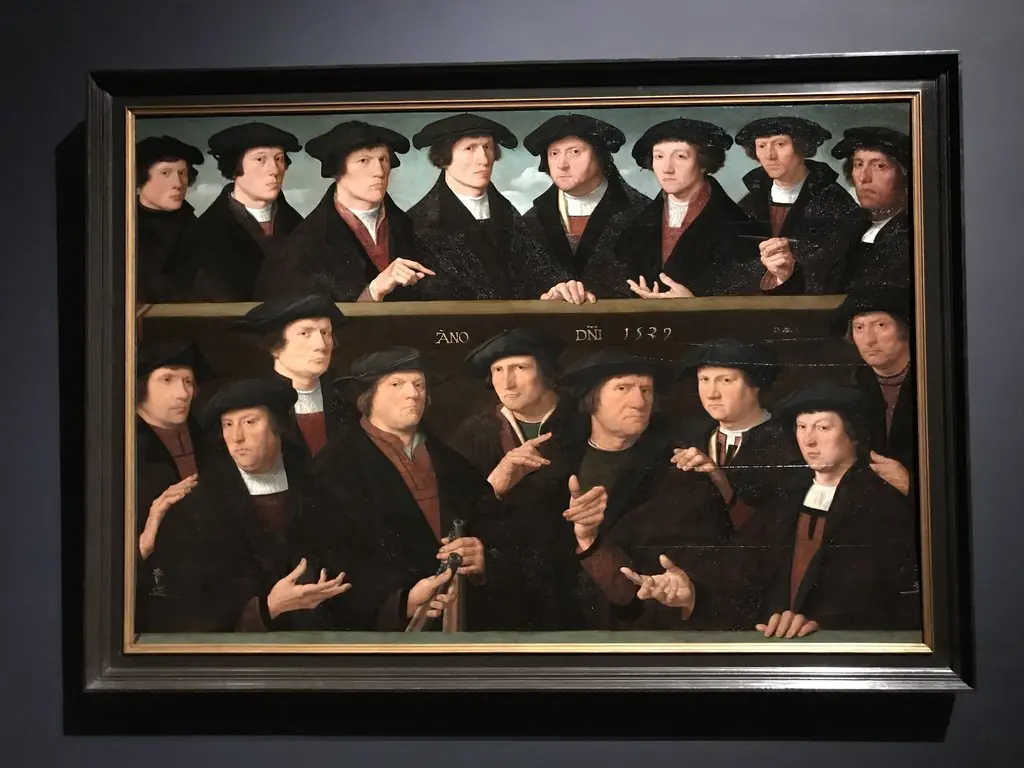
Triptych with guardsmen of the Amsterdam Kloveniersdoelen (headquarters of the arquebusiers’ civic guard)
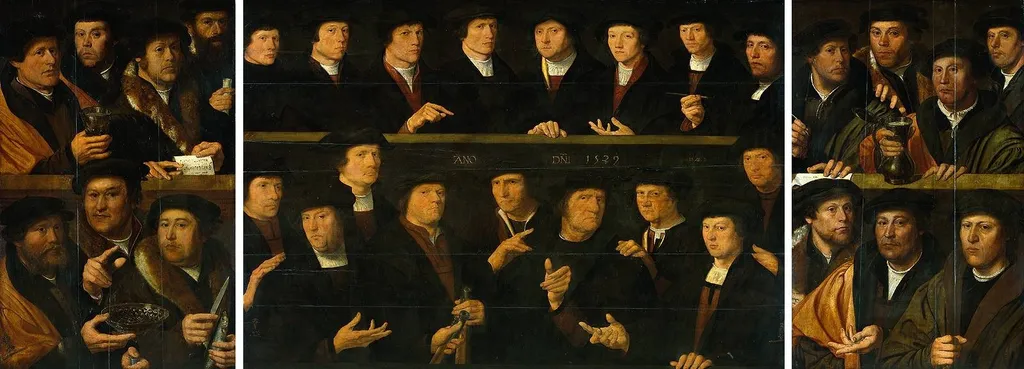
Triptych with guardsmen of the Amsterdam Kloveniersdoelen (headquarters of the arquebusiers’ civic guard) is an oil painting by Dirck Jacobsz. It dates from 1529 and is held in the collection of the Rijksmuseum.
About this work
Subject & Meaning
The artwork’s meaning is rooted in its historical context, representing the organizational structure and civic responsibilities of the Amsterdam militia.
The triptych portrays a schutterij, a civic guard company depicted as a coordinated group of armed men, symbolizing collective military readiness and civic duty in 16th-century Amsterdam. Its iconography emphasizes the role of the Kloveniersdoelen as a headquarters for the arquebusiers’ militia, highlighting themes of communal protection and civic pride. The work reflects historical practices of civic guard assemblies and their significance within Dutch urban culture.
The composition, rendered in oil on oak panel, captures the guardsmen in a dynamic arrangement that underscores their function as a civic defense force. The depiction aligns with the genre of schutterstuk, a type of group portrait popular in the Netherlands during this period.
The artwork’s meaning is rooted in its historical context, representing the organizational structure and civic responsibilities of the Amsterdam militia. Its creation in 1529 situates it within the early Renaissance period of Dutch art, showcasing Dirck Jacobsz’s contribution to civic portraiture.
Technique & Style
The work is an oil painting executed on oak panel, reflecting the traditional materials of Dutch Renaissance art. It depicts the Amsterdam Kloveniersdoelen, the headquarters of the city's arquebusiers' civic guard, and is classified as a schutterstuk, a civic guard portrait. The composition centers on a group of figures in coordinated attire, rendered with precise detail that emphasizes both individual character and collective identity.
The formal arrangement and use of light highlight the narrative tension within the militia scene, aligning with the stylistic conventions of early 16th-century Dutch group portraiture.
The painting measures 120.4 cm in height and 76.1 cm in width, confirming its substantial scale for a work of this genre.
History & Provenance
The triptych was commissioned to commemorate the Amsterdam Kloveniersdoelen, the headquarters of the city’s arquebusiers’ civic guard, and is dated 1529 by the artist Dirck Jacobsz.
The work entered the collection of the Rijksmuseum, Amsterdam, where it has remained. Inventory records at the Rijksmuseum list the painting under its permanent holdings, with dimensions recorded as 120.4 cm in height and 76.1 cm in width.
The triptych depicting the guardsmen of the Amsterdam Kloveniersdoelen is held jointly by the Rijksmuseum and the Amsterdam Museum. While the work is attributed to the collection of both institutions, specific inventory or accession numbers are not provided in the available records. The painting, created in 1529, is classified as a schutterstuk, a genre depicting civic guard members.
The sources do not contain information regarding a specific exhibition history for this work, nor do they list past display locations or loan records beyond its current institutional custody.
Context
Dirck Jacobsz.'s Triptych with guardsmen of the Amsterdam Kloveniersdoelen stands as a pivotal early example of the schutterstuk genre, depicting the Amsterdam militia company at the headquarters of the arquebusiers’ civic guard in 1529. Executed in oil on oak panel, its dimensions of 120.4 cm by 76.1 cm establish it as a substantial work within the Rijksmuseum Amsterdam collection, which also houses related civic guard pieces by artists such as Rembrandt. The painting’s creation coincides with the flourishing of Amsterdam’s militia culture and civic pride during the Dutch Golden Age, reflecting both the economic prosperity and social organization of the period.
Contemporary scholarship emphasizes its significance as a precursor to more complex narrative-driven militia portraits, influencing later developments in Dutch group portraiture. Its presence in the Rijksmuseum and Amsterdam Museum collections underscores its enduring cultural resonance.
Scholars have analyzed the work’s composition and historical context to understand its role in the evolution of civic identity in the Netherlands, noting its departure from traditional static group arrangements toward more dynamic spatial organization. The attribution to Dirck Jacobsz is well-documented in both the Rijksmuseum’s catalog and authoritative studies of Dutch Renaissance painting, though some debate persists regarding the precise identification of all figures depicted. The painting’s subject matter, a schutterstuk, directly relates to the civic guard’s function as a defensive and ceremonial institution, making it a key artifact for understanding 16th-century Dutch urban life.
The work’s placement in art history reflects broader scholarly interest in how visual culture documented and shaped collective identity, with this triptych exemplifying the intersection of art, politics, and civic duty in the Netherlands.
Overview
The Triptych with guardsmen of the Amsterdam Kloveniersdoelen is a three-panel oil painting created in 1529 by Dirck Jacobsz, a Dutch Renaissance painter. It is part of the Rijksmuseum's collection.
Artist & collection
Artist
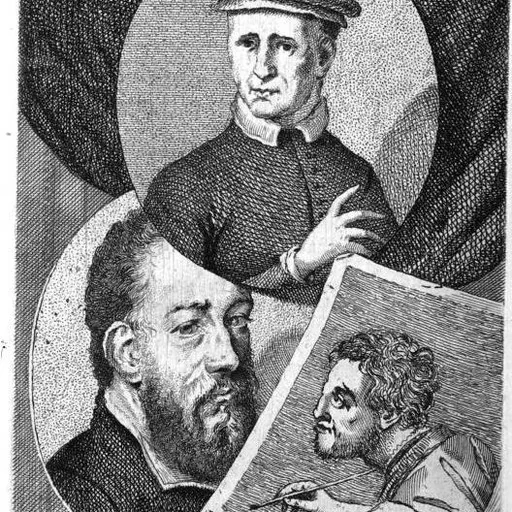
Dirck Jacobsz (1496–1567) was a Dutch Renaissance painter. His exact birthplace is unknown, but it was somewhere near Amsterdam.

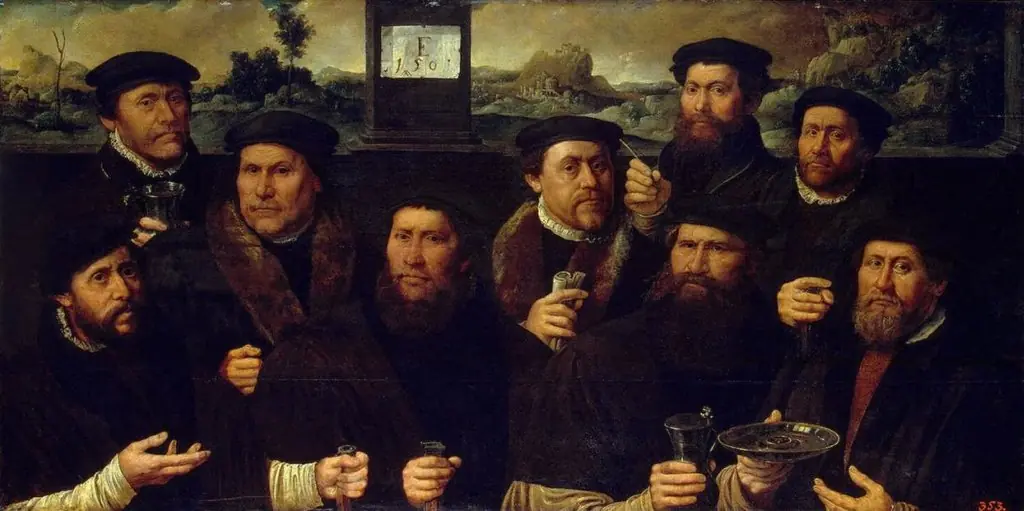
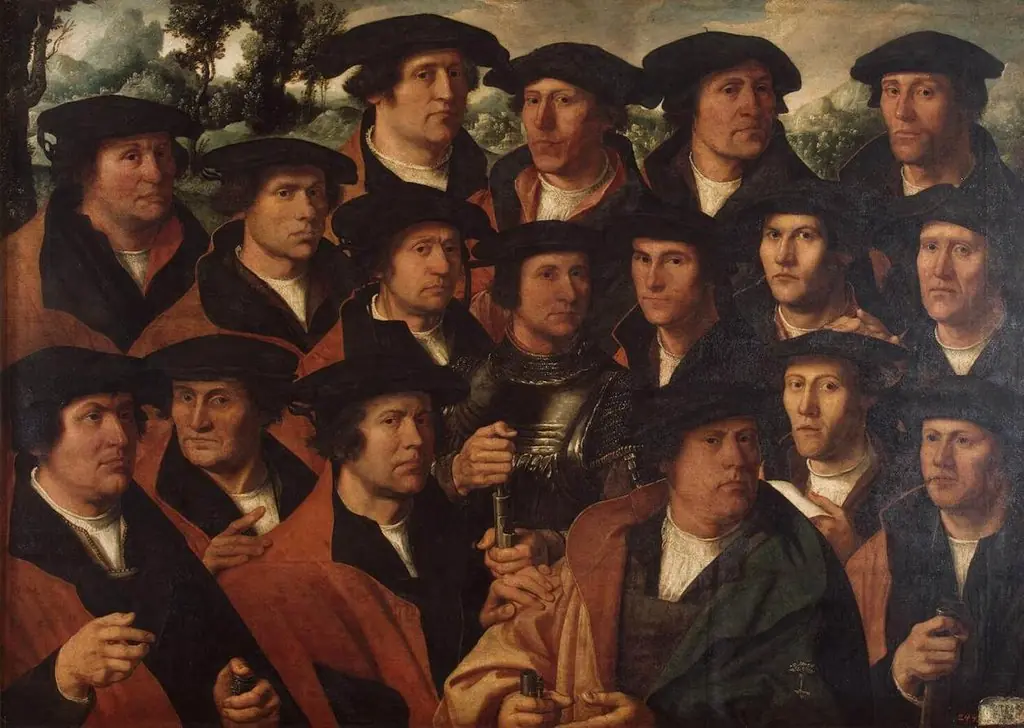
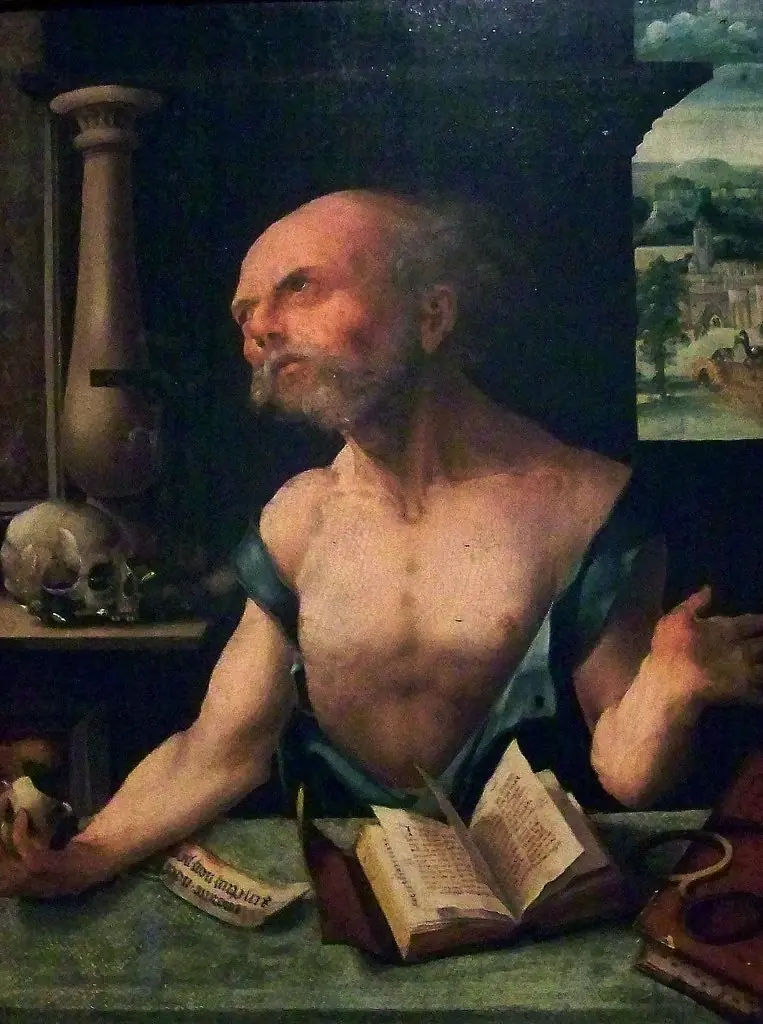
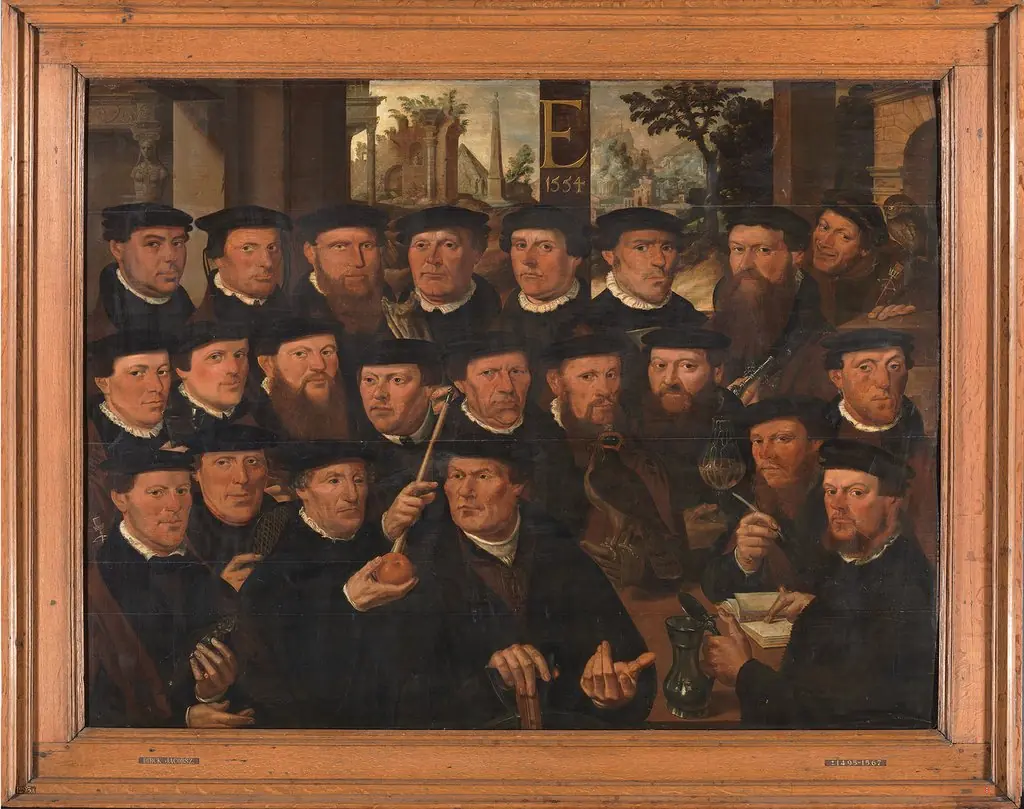
- Guardsmen of Company E
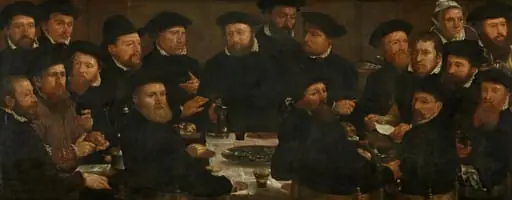 Banquet of Eighteen Guardsmen of Squad L, Amsterdam 1566, known as 'The Perch Eaters'
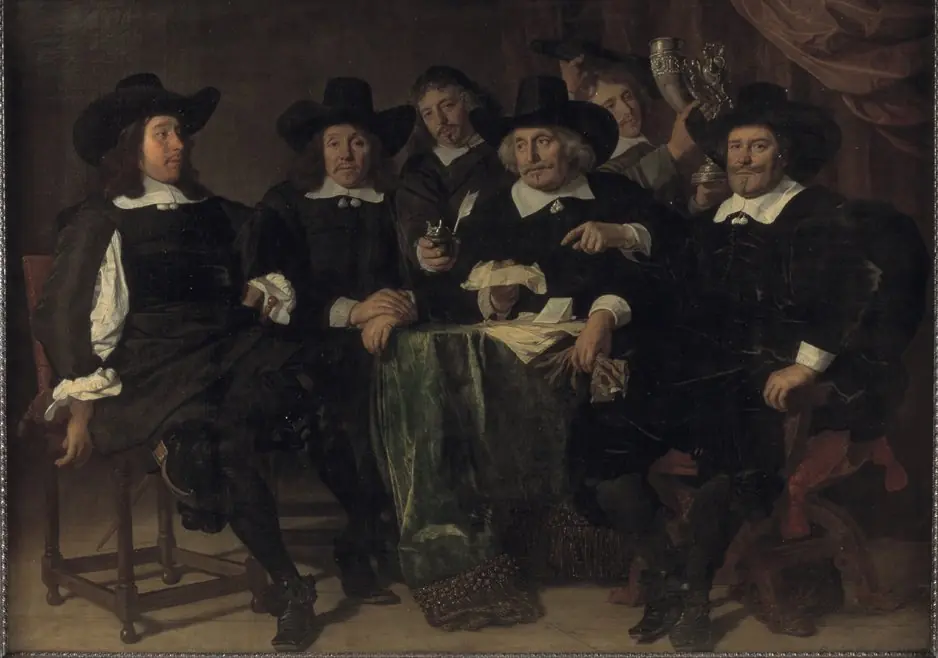 The directors of the Amsterdam civic guard of St. George in 1656
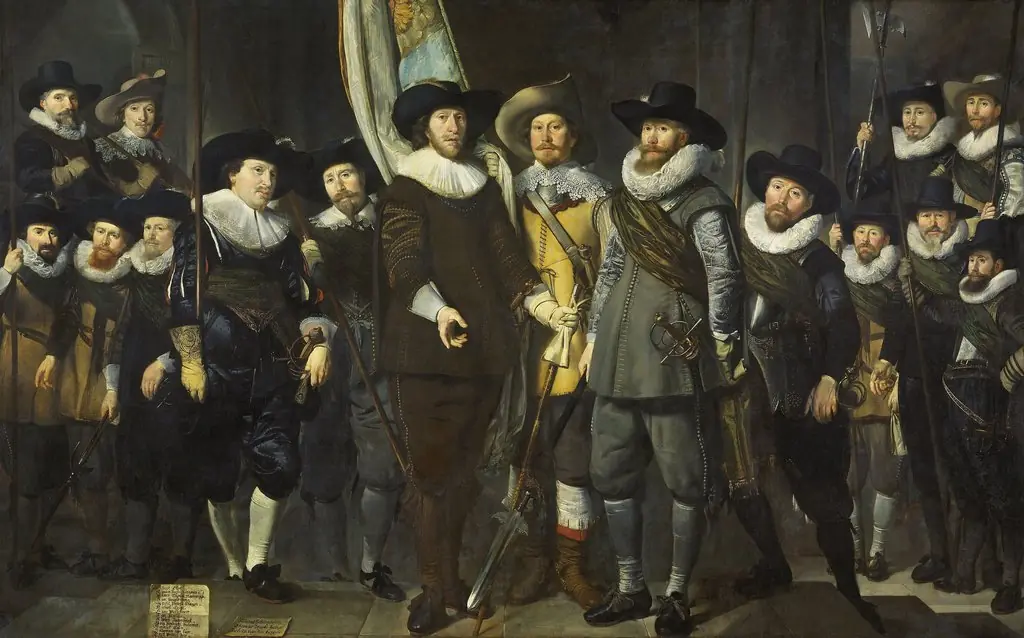 Officers and other civic guardsmen of the IIIrd District of Amsterdam, under the command of Captain Allaert Cloeck and Lieutenant Lucas Jacobsz Rotgans
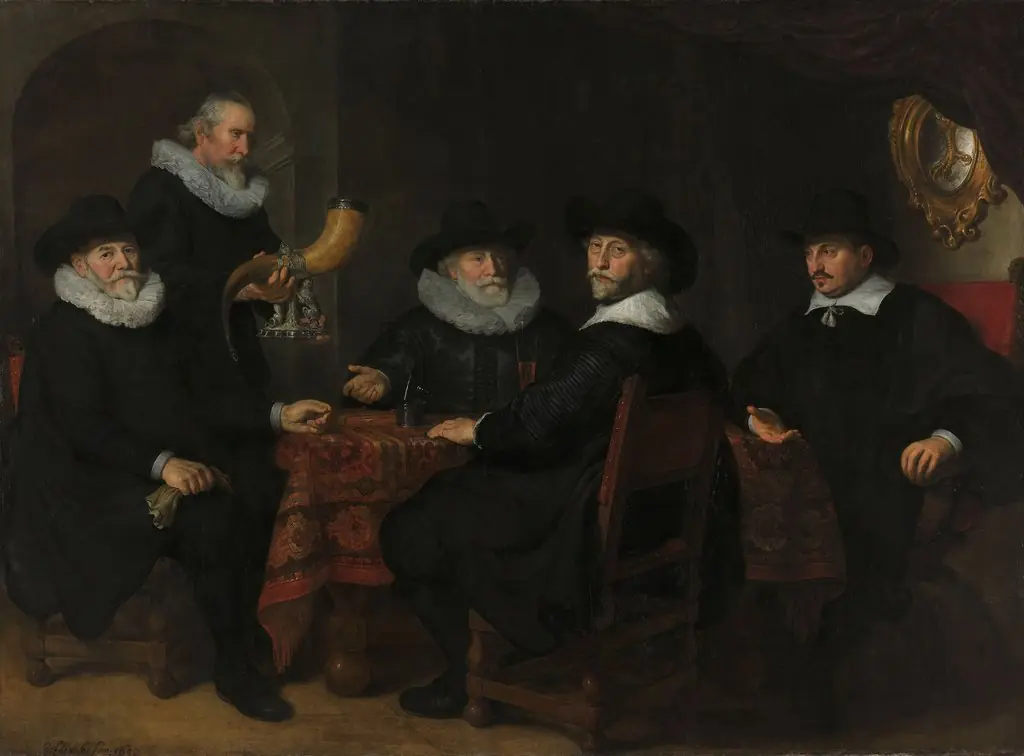 Four directors of the arquebusier's guild, Amsterdam, 1642
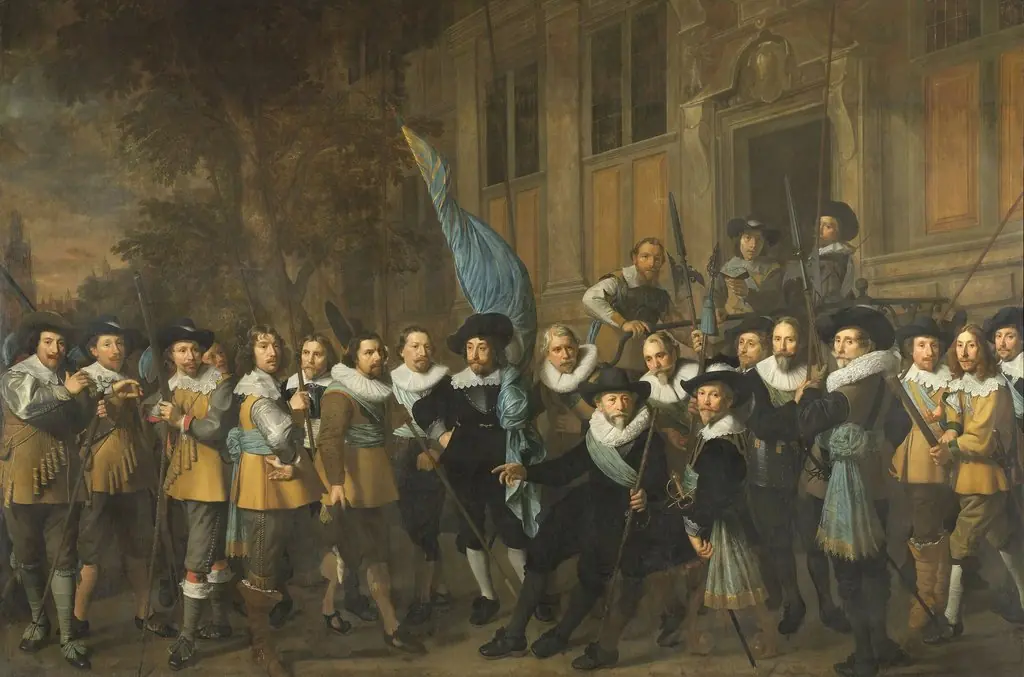 Officers and other civic guardsmen of the IVth District of Amsterdam, under the command of Captain Jan Claesz van Vlooswijck and Lieutenant Gerrit Hudde
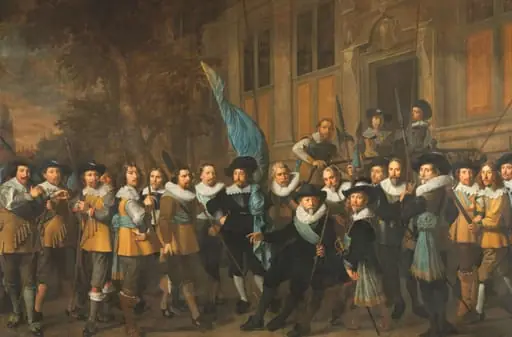 Officers and Other Civic Guardsmen of the IVth District of Amsterdam, under the Command of Captain Jan Claesz van Vlooswijck and Lieutenant Gerrit Hudde