Artwork
Group Portrait of the Amsterdam Shooting Corporation
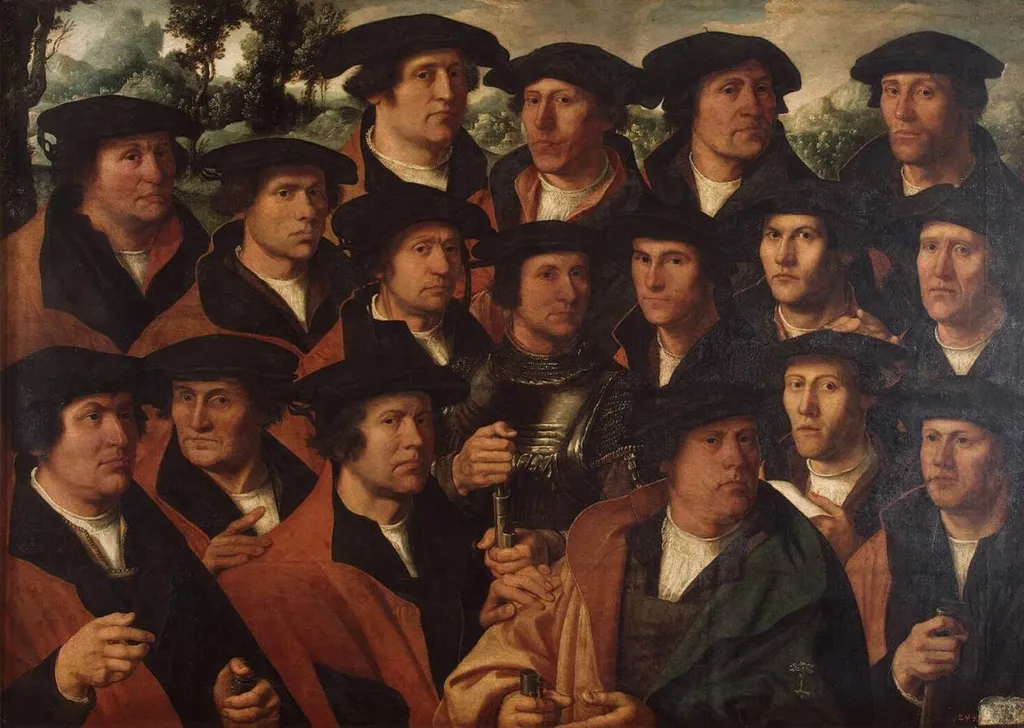
Group Portrait of the Amsterdam Shooting Corporation is an oil painting by the Northern Renaissance artist Dirck Jacobsz. It dates from 1532 and is held in the collection of the Hermitage Museum.
About this work
Overview
The work depicts seventeen members of a civic militia, arranged in a dense, three-tiered composition that balances individual likeness with collective identity.
The Group Portrait of the Amsterdam Shooting Corporation is an oil painting on canvas by Dirck Jacobsz, dated 1532, now held in the Hermitage Museum in Saint Petersburg. Measuring 115 by 160 centimeters, it is widely recognized as one of the earliest surviving examples of the Dutch group portrait, a genre that would become a distinctive specialty of Netherlandish art. The work depicts seventeen members of a civic militia, arranged in a dense, three-tiered composition that balances individual likeness with collective identity. Its significance lies in its pioneering role in establishing conventions for civic guard portraiture, a format that responded to the growing self-awareness and social ambitions of the urban middle classes in the sixteenth-century Netherlands.
Subject & Meaning
The painting portrays seventeen marksmen of the Amsterdam Shooting Corporation, a volunteer militia whose duties included maintaining public order and defending the city against external threats. The figures wear the corporation's uniform of dark beret-style hats, heavy outer garments in black, brown, or russet tones, and white collars, with several sources noting distinctive red and blue capes. At the center stands the guild's head, distinguished by metallic armor and his grip on a firearm barrel, a pose that asserts his authority. Several other members hold gun barrels or firing mechanisms, underscoring the military function of the association. Iconographic details carry specific meaning: the eagle's talon embroidered on the cape of one foreground figure serves as the corporation's emblem, marking collective belonging. The men's varied ages, expressions, and physical features suggest individual character, yet their uniform dress, overlapping placement, and shared outward gazes project solidarity and civic pride. The shallow landscape backdrop of green trees and cloudy sky isolates the group, directing attention to their social significance rather than situating them in a specific place.
Technique & Style
Dirck Jacobsz executed the work in oil on canvas, a support that at this early date was still relatively unusual in the Netherlands and would become more common for large-scale works only later in the century. The smooth, controlled brushwork evident everywhere, particularly in the rendering of flesh and fabric textures, demonstrates the artist's technical accomplishment. Light falls evenly across the faces with soft modeling that carefully records wrinkles, individual features, and subtle expressions. The palette is dominated by deep browns, blacks, and muted oranges, relieved by touches of white at the collars and the metallic sheen of the central figure's armor. The horizontal format accommodates the three-tiered, densely packed arrangement of figures, whose overlapping shoulders and varied angles of head and gaze create a sense of informal connection despite the compositional formality. The polished finish and precise detail in textiles and metalwork reveal Jacobsz's background in panel painting and his commitment to recording material specificity.
History & Provenance
The painting was created in 1532 in the Netherlands, during a period when Amsterdam's civic institutions were increasingly commissioning visual records of their membership. The work entered the Hermitage Museum in 1769, having been acquired from the collection of Count Heinrich von Brühl in Dresden. Its accession number at the Hermitage is ГЭ-414, though one institutional source lists a different number and dimensions for a related work, suggesting possible confusion with another painting by Jacobsz in the same collection. The painting has been exhibited and reproduced as part of the Hermitage's permanent display of Western European art, and its image has circulated widely through digital collections and scholarly databases.
Context
Dirck Jacobsz, son of the painter Jacob Cornelisz van Oostsanen, was among the first artists in the Netherlands to specialize in portraiture, and in 1529 he painted what is considered the first portrait of a civic guard association, a genre that would flourish in Dutch art for centuries. The Group Portrait of the Amsterdam Shooting Corporation of 1532 represents a critical early stage in this development, predating the more famous civic guard group portraits of the Dutch Golden Age by over a century. The emergence of such group portraits has been linked to the growing self-awareness of burghers and their sense of shared class and business interests. Payment practices reinforced the format's practicality: each depicted member contributed individually to the commission fee, with placement determining cost, making the first plane the most expensive position. This economic structure influenced compositional choices and encouraged artists to accommodate as many likenesses as possible. Jacobsz's achievement lay in preserving individual psychological presence within a collective framework, a balance that later masters of the genre would refine. He was eventually eclipsed in reputation by Anthonis Mor of Utrecht, court painter to the Spanish Netherlands, but his foundational role in establishing the schutterstuk tradition remains secure.
Legacy
The Group Portrait of the Amsterdam Shooting Corporation occupies a pivotal position in the history of Dutch art as one of the earliest surviving schutterstukken, the group portraits of civic militias that would become a defining genre of the Netherlands' visual culture. Its influence is measured less through direct stylistic emulation than through its establishment of a compositional and conceptual template: the collective portrait that honors individual members while asserting corporate identity. The work's survival in the Hermitage, rather than in a Dutch institution, reflects the dispersal of Netherlandish art through European collections over centuries. Its presence in Count von Brühl's Dresden collection by the mid-eighteenth century indicates early recognition of its importance. Today, the painting is studied as a primary document of emerging civic identity in early modern Europe and as evidence of the social functions of art in a burgeoning mercantile society. The conventions Jacobsz pioneered, hierarchical placement, uniform dress as social signifier, and the balance between individual characterization and group solidarity, would persist and evolve through the group portraits of Frans Hals and Rembrandt van Rijn, making this canvas a distant but direct ancestor of some of the most celebrated works in Western art.
Artist & collection
Artist
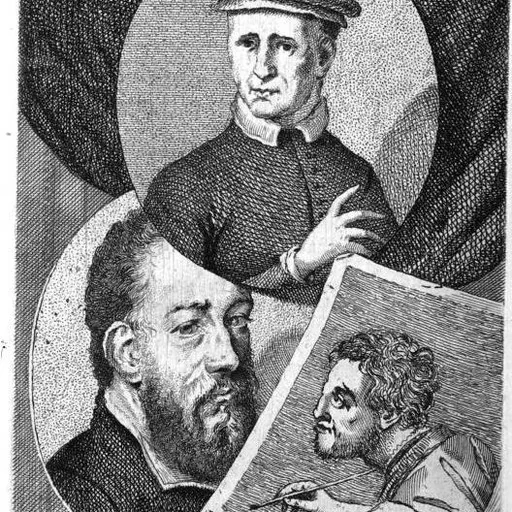
Dirck Jacobsz (1496–1567) was a Dutch Renaissance painter. His exact birthplace is unknown, but it was somewhere near Amsterdam.

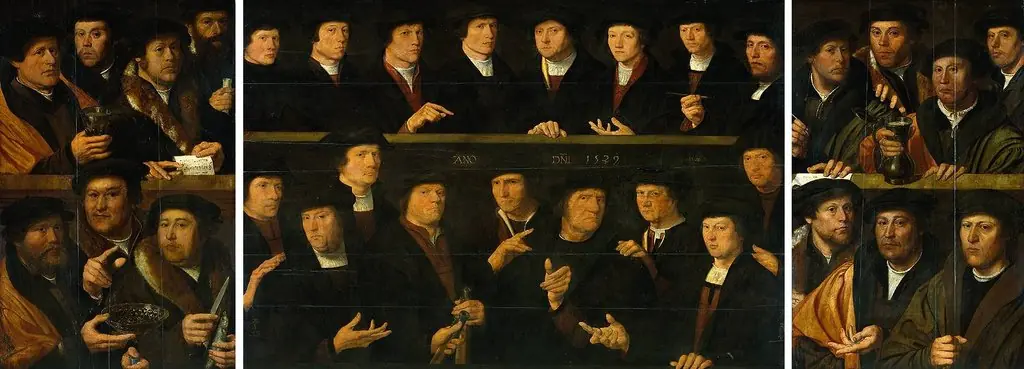
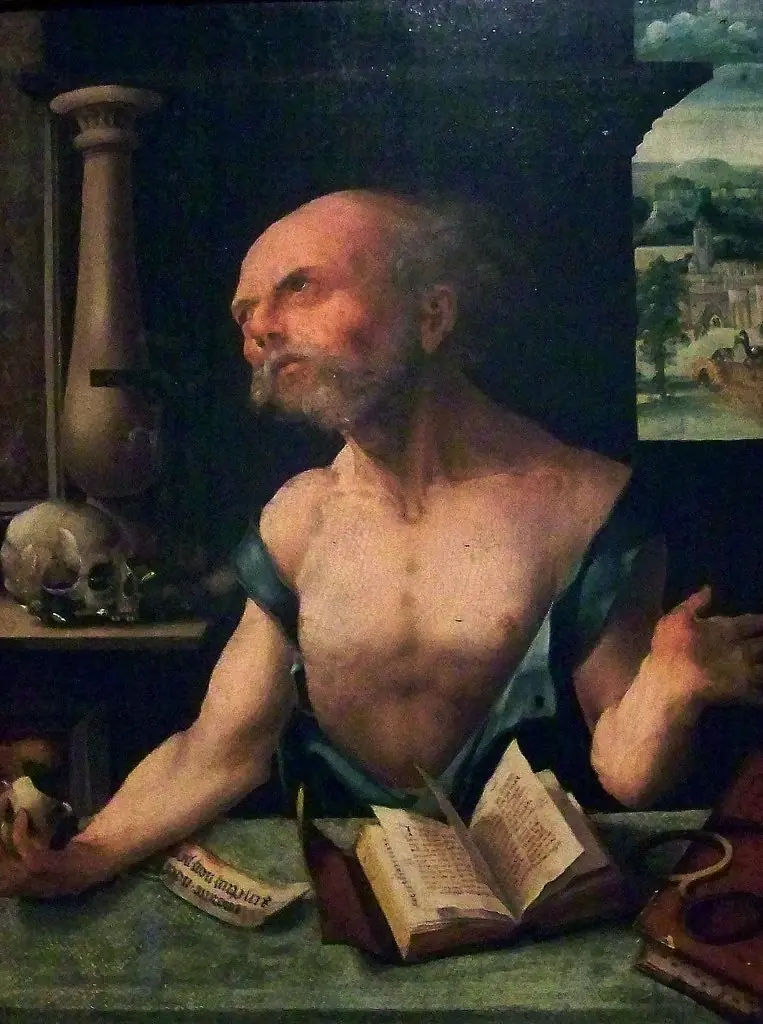
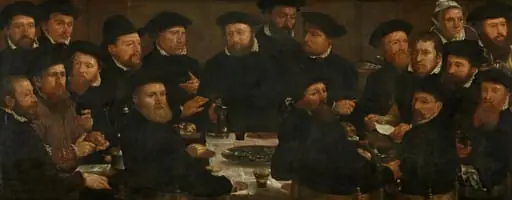 Banquet of Eighteen Guardsmen of Squad L, Amsterdam 1566, known as 'The Perch Eaters'
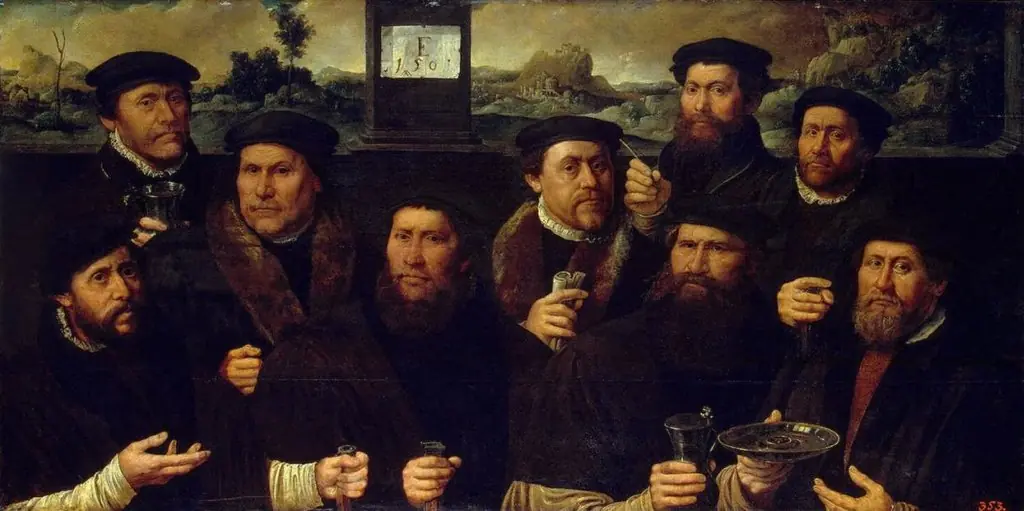
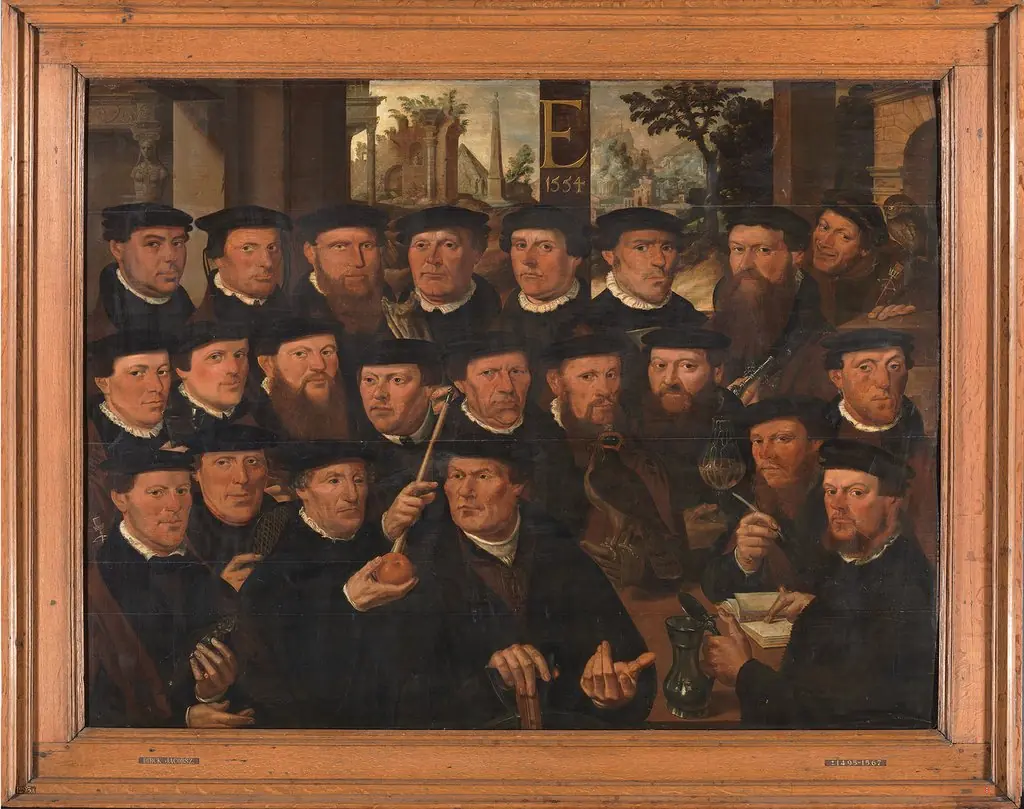 Guardsmen of Company E
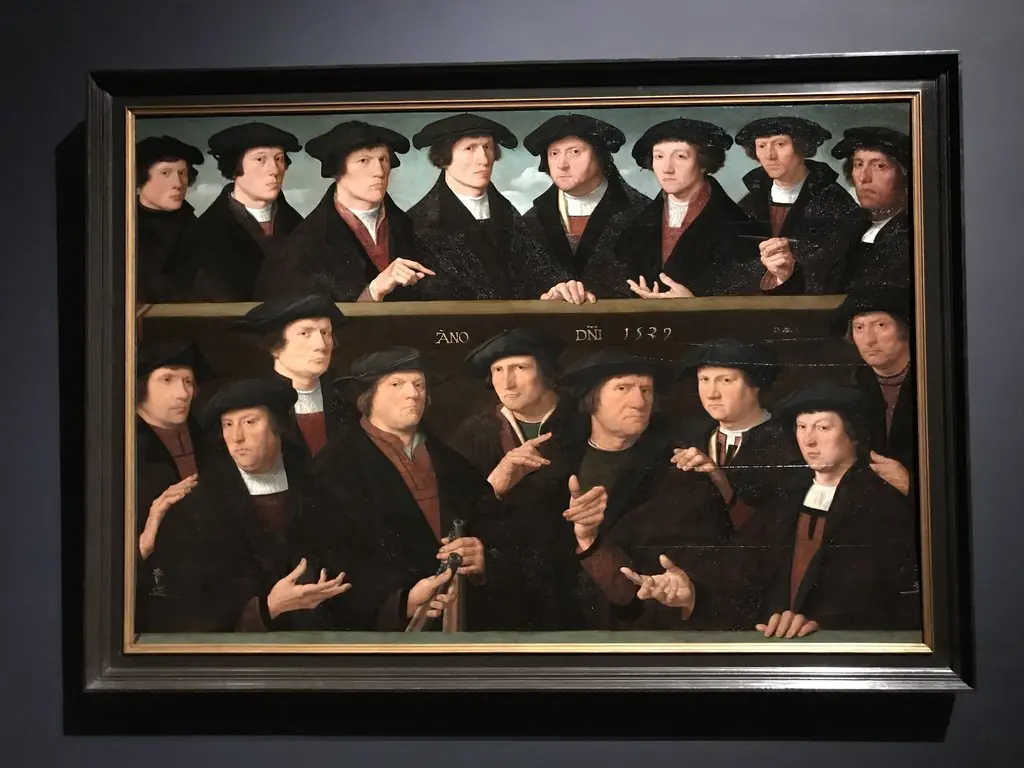
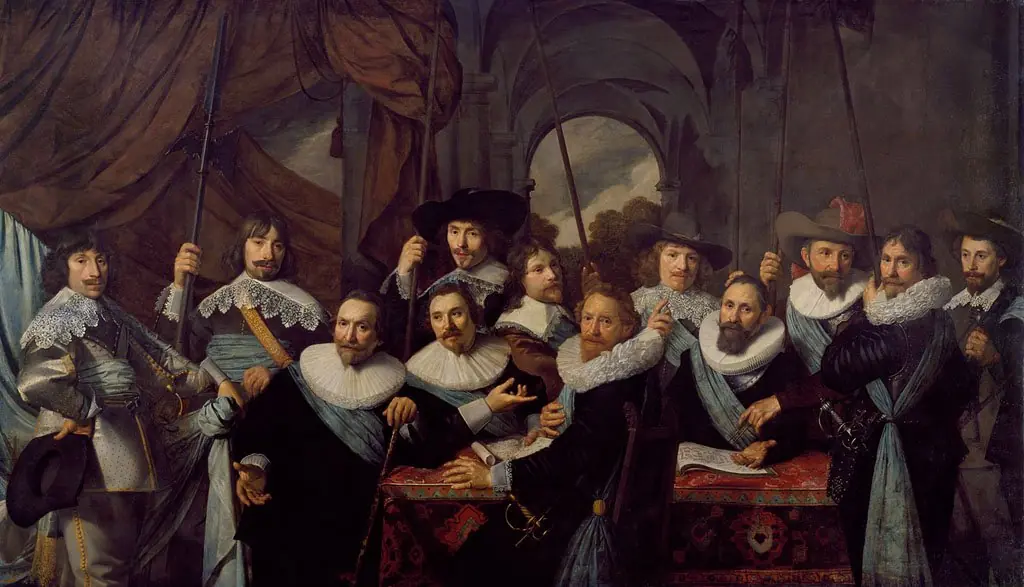 Members of the civic guard company of Captain Dirck Tholinx and Lieutenant Pieter Adriaenszn Raep
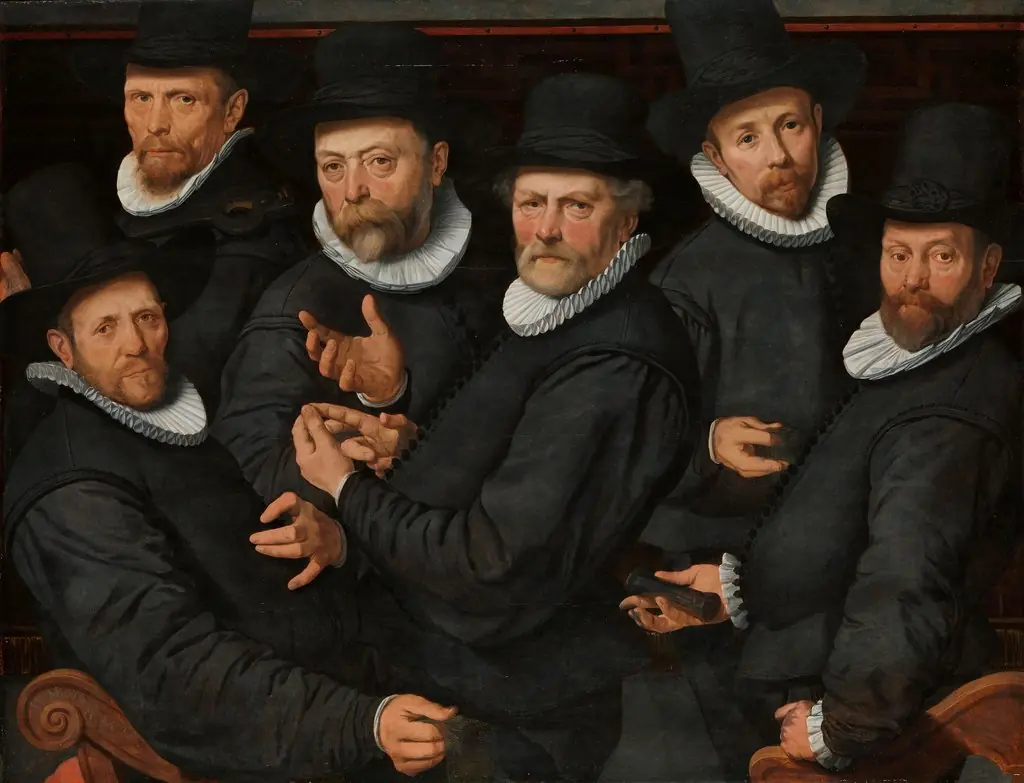 Six Wardens of the Drapers’ Guild
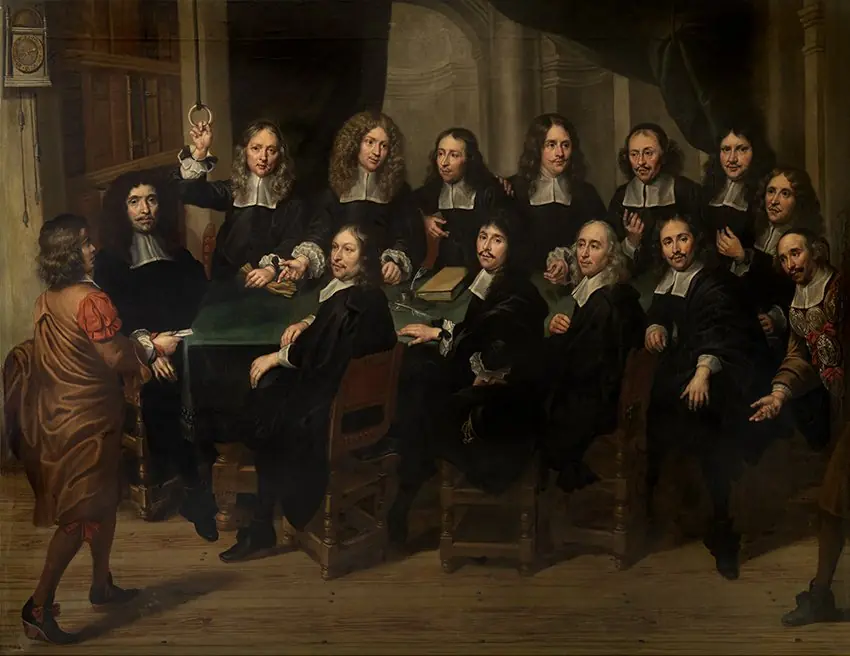 Het bestuur van het Brugse chirurgijnsambacht
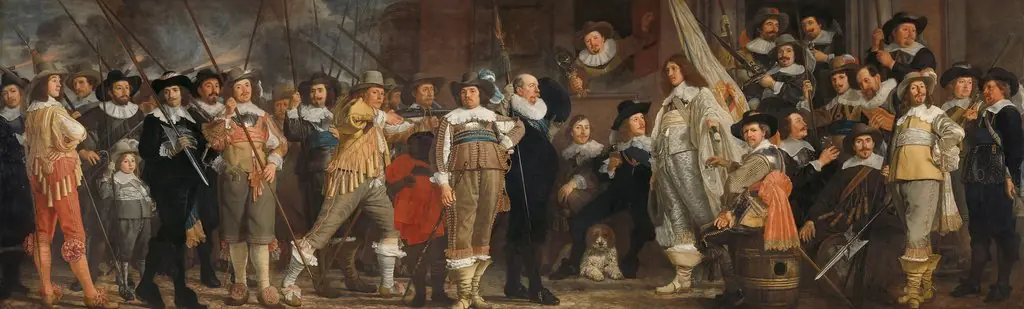 Militia Company of District VIII under the Command of Captain Roelof Bicker
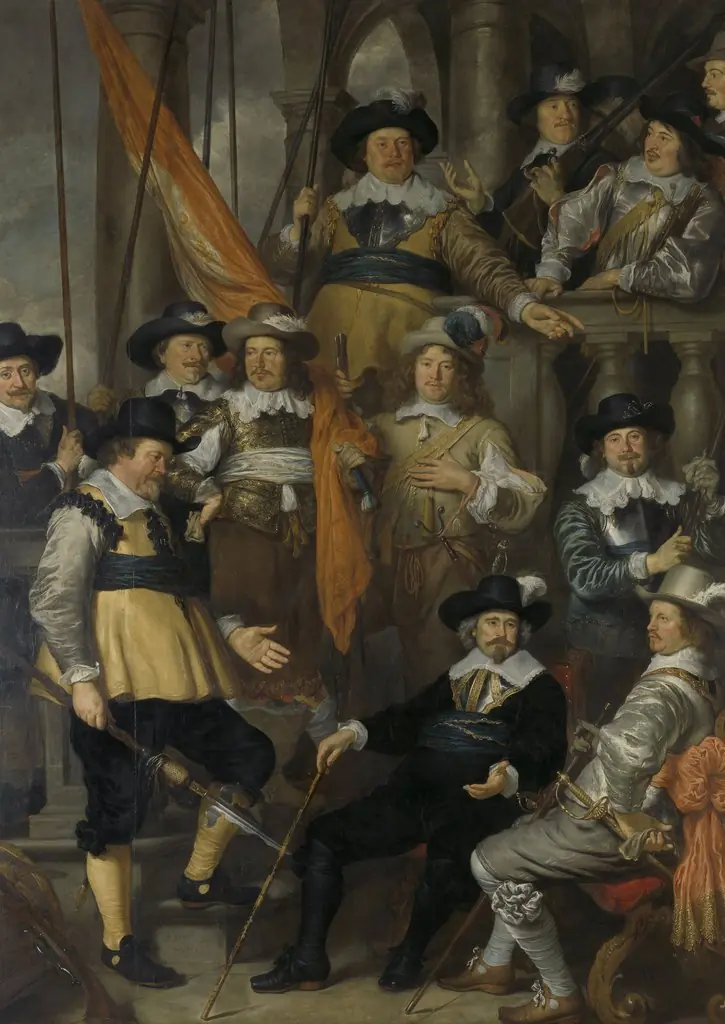 The Company of Captain Albert Bas and Lieutenant Lucas Conijn
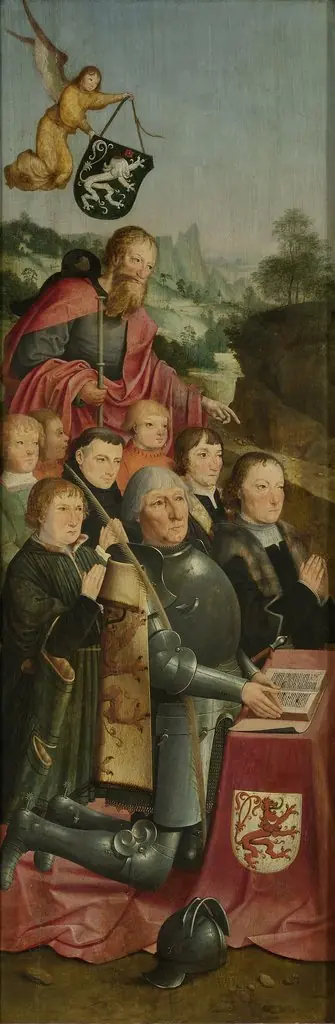 Memorial Panel with Eight Male Portraits, probably Willem Jelysz van Soutelande and Family, with Saint James the Greater and the Van Soutelande Family Crest, inner left wing of an altarpiece