Artwork
Guardsmen of Company E
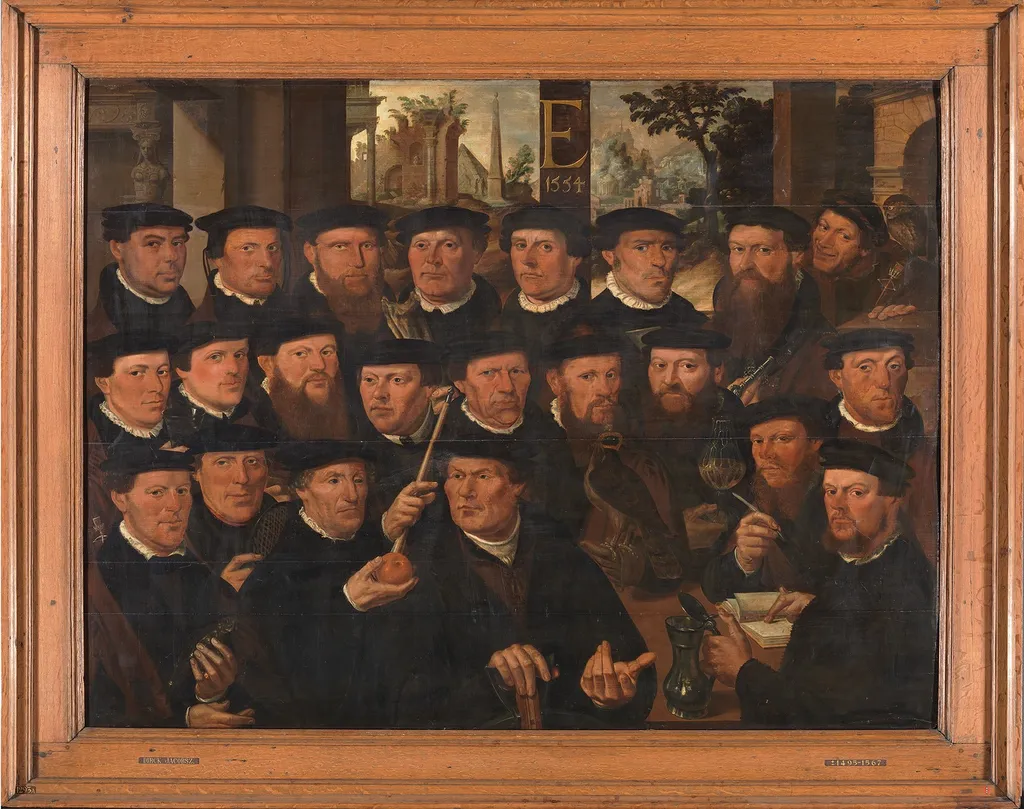
Guardsmen of Company E is an oil painting. It dates from 1554 and is held in the collection of the Rijksmuseum.
About this work
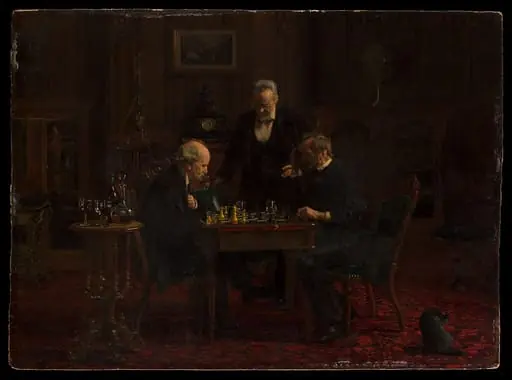
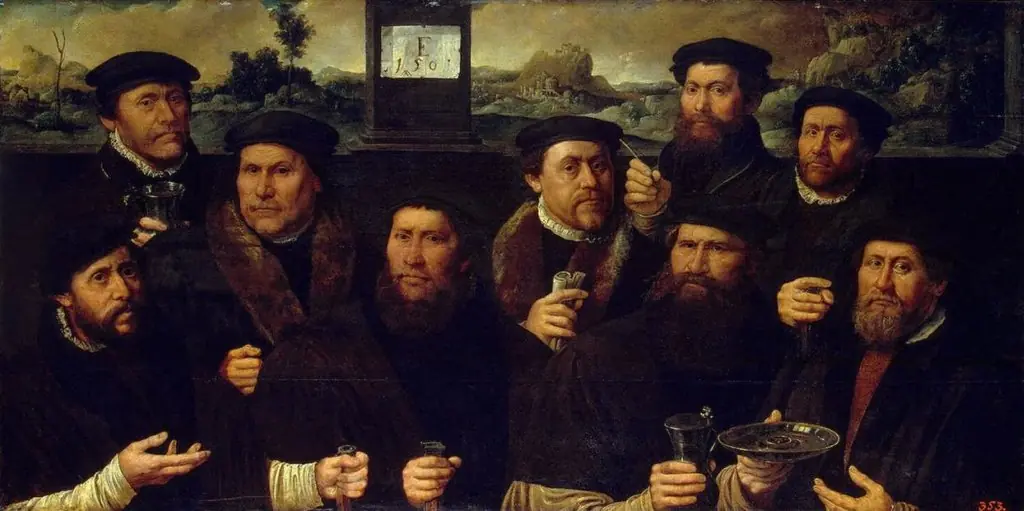
The men look like a group of guards or soldiers, all dressed the same but with different expressions.
This painting shows 21 men in black hats and clothes, packed close together. Some hold objects, a pipe, a glass, a book, while others just gesture or stare straight ahead. The background has a dark room with small landscapes behind a big "E" and the year 1554.
The men look like a group of guards or soldiers, all dressed the same but with different expressions. The artist used light and shadow to make their faces stand out against the dark background.
Next, look up chiaroscuro to see how this lighting trick works.
Subject & Meaning
The painting portrays the civic guard company known as Company E, a militia unit in 16th-century Amsterdam. Its iconography emphasizes collective martial readiness, typical of schutterstuk genre works, with figures arranged in a dynamic, narrative composition that celebrates communal defense and civic pride. The depiction reflects the historical role of such companies in city governance and militia organization, symbolizing both martial valor and municipal identity.
The work’s meaning is tied to the social and political context of the Dutch Golden Age, illustrating how civic organizations asserted status and collective responsibility through public art. Dimensions are recorded as 131.5 cm in height and 175.5 cm in width, consistent with panel paintings of the period.
Technique & Style
Guardsmen of Company E is an oil painting executed on a panel support, created in 1554. Classified as a schutterstuk, the work depicts members of a Schutterij, specifically focusing on a man within the group. The piece measures 131.5 cm in height and 175.5 cm in width. It is attributed to the Master of the Antwerp Family Portraits.
History & Provenance
The painting is held by the Amsterdam Museum, where it is part of the collection of historical civic-guard portraits. In the museum’s records, it is inventoried as part of the civic-guard series and is catalogued with dimensions of 131.5 cm in height and 175.5 cm in width.
The work was included in Schutters in de Gouden Eeuw held at the Amsterdam Museum from 17 September 2002 to 5 January 2003. This exhibition focused on civic-guard portraits and featured the work within the museum’s holdings.
Context
Guardsmen of Company E is a 1554 oil-on-panel painting attributed to the Master of the Antwerp Family Portraits. Classified as a schutterstuk, the work depicts members of the Schutterij, a civic guard group, reflecting the genre's prominence in mid-16th-century Dutch art. The painting is held in the Amsterdam Museum and the Rijksmuseum in Amsterdam.
As a dated example of the schutterstuk tradition, it contributes to the understanding of civic portraiture during this period.
Overview
The oil painting titled Guardsmen of Company E depicts a tightly grouped assembly of twenty‑one figures, each clad in identical black hats and garments. The men are positioned in a dim interior, their faces illuminated by a stark contrast of light and shadow that emphasizes individual expressions despite their uniform attire.
Artist & collection

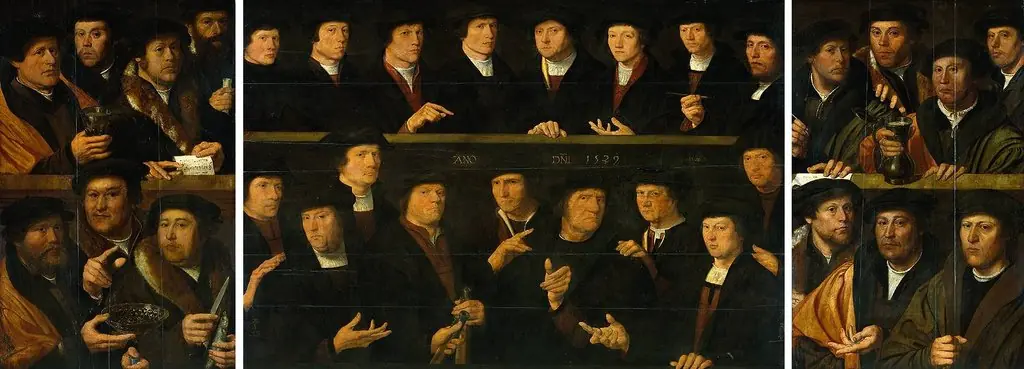
- Triptych with guardsmen of the Amsterdam Kloveniersdoelen (headquarters of the arquebusiers’ civic guard)
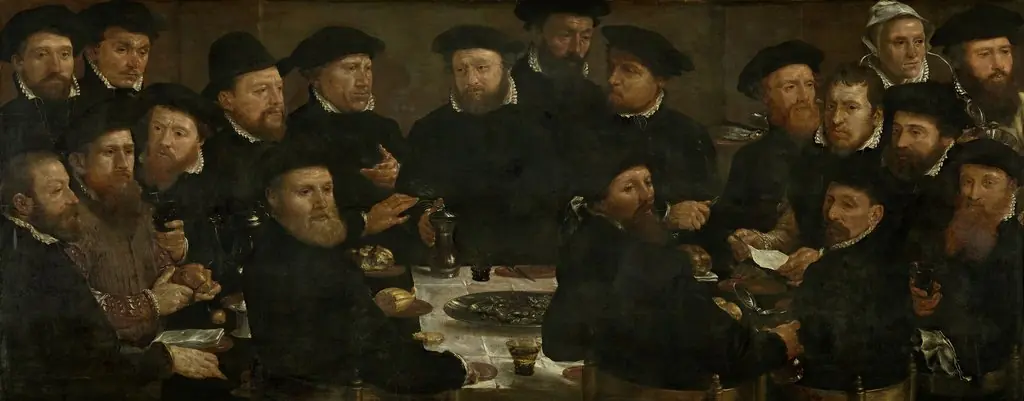 Meal of the Amsterdam militia
 Banquet of Eighteen Guardsmen of Squad L, Amsterdam 1566, known as 'The Perch Eaters'
 Group Portrait of the Amsterdam Shooting Corporation
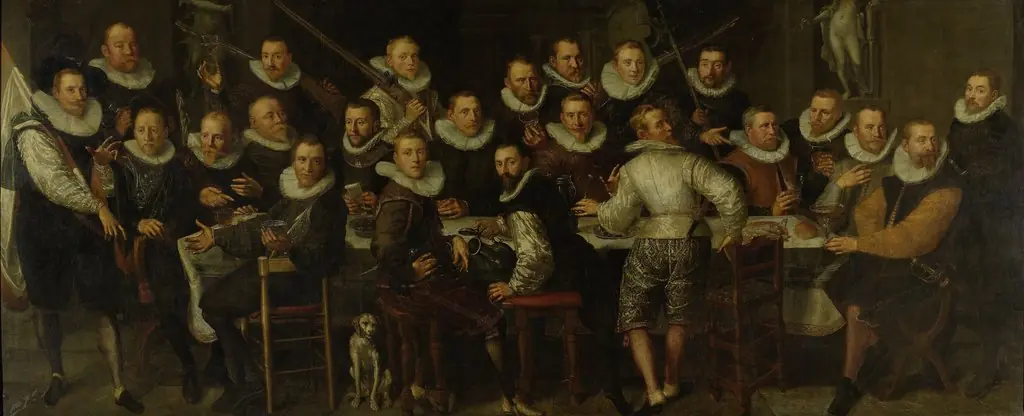 The Company of Captain Gillis Jansz Valckenier and Lieutenant Pieter Jacobsz Bas, Amsterdam, 1599
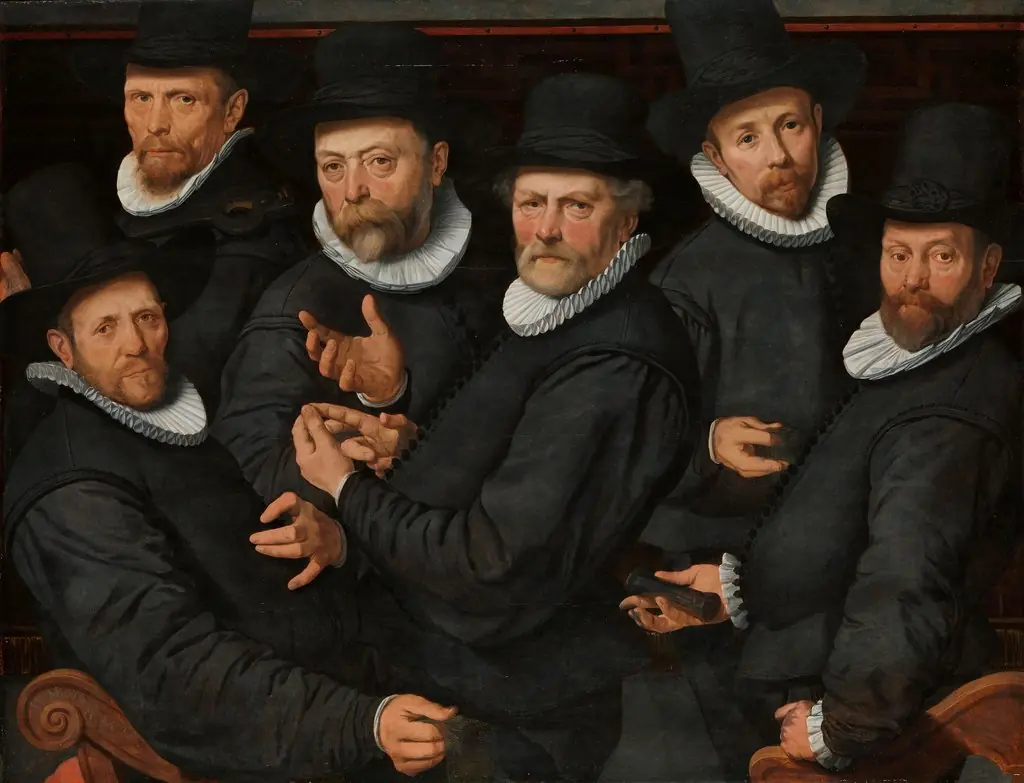 Six Wardens of the Drapers’ Guild
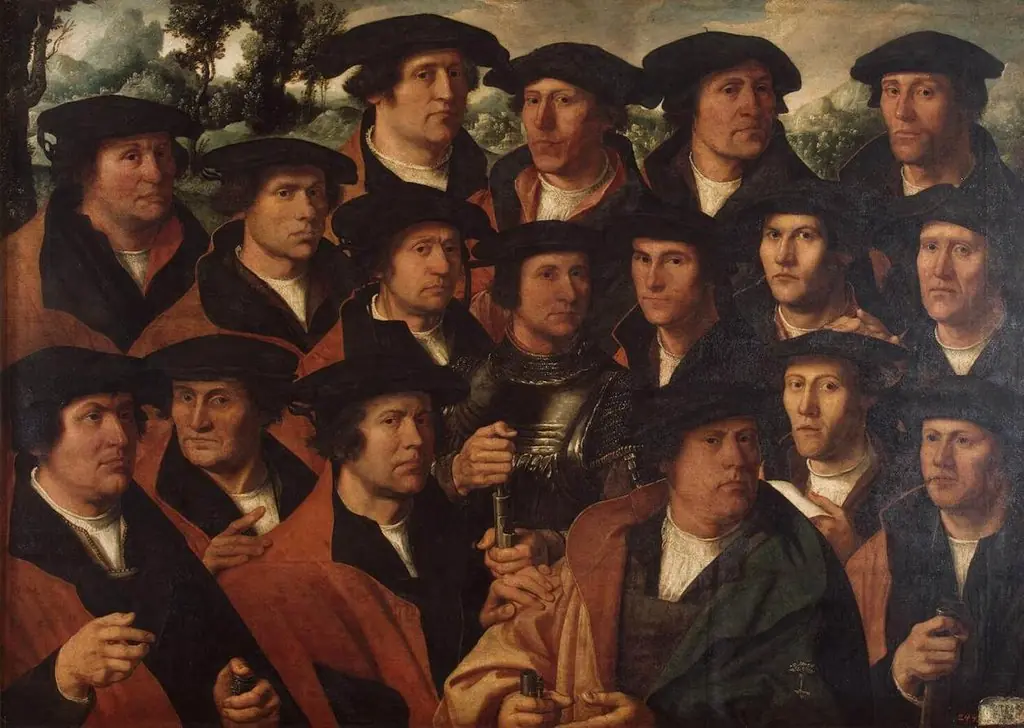 Group Portrait of the Amsterdam Shooting Corporation
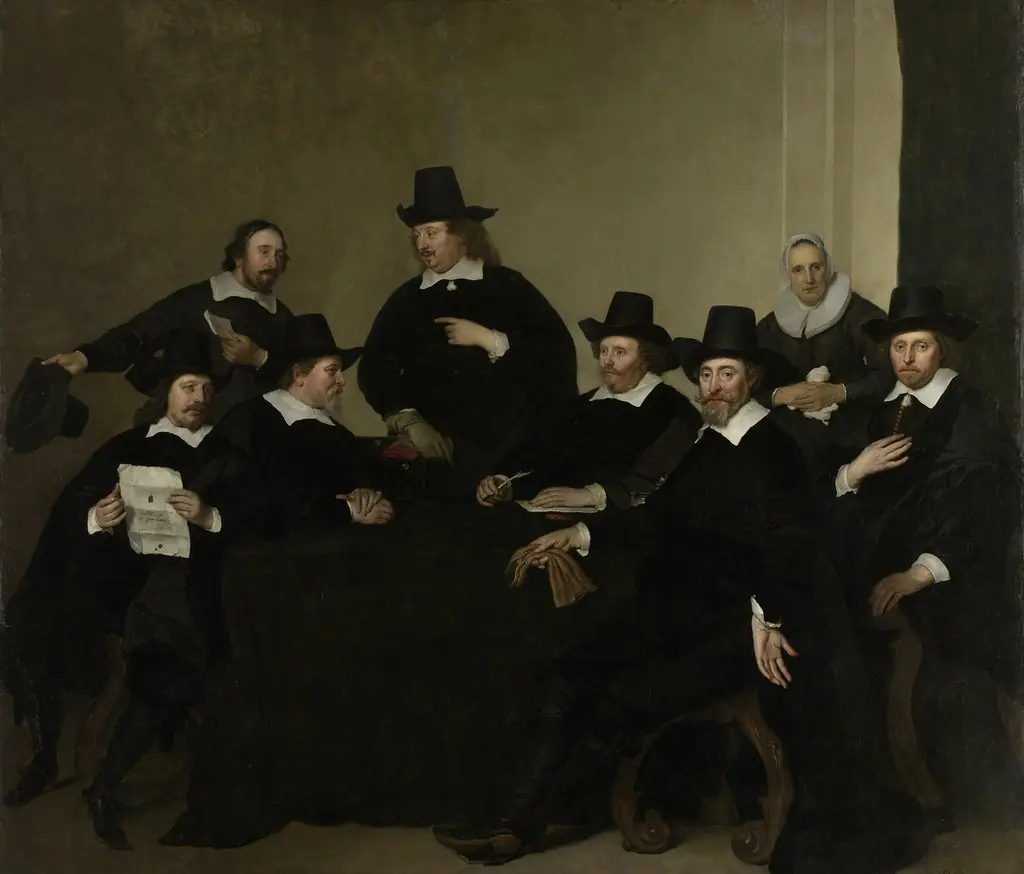 The regents of the Nieuwe Zijds institute for the outdoor relief of the poor, Amsterdam, ca 1650
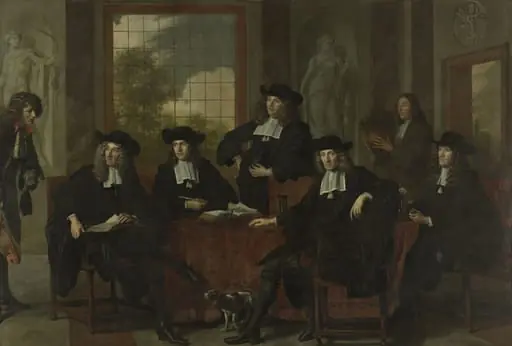 The Superintendents of the Collegium Medicum in Amsterdam, 1683
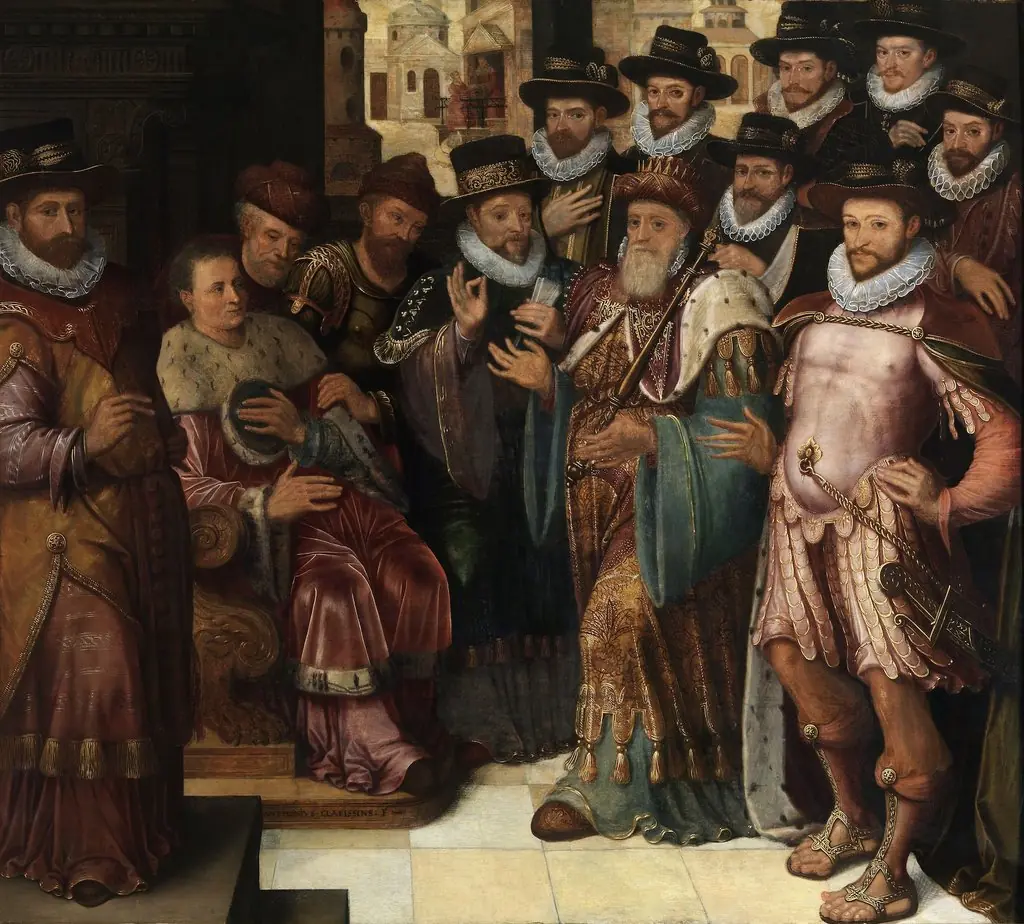 The judgement of Cambyses
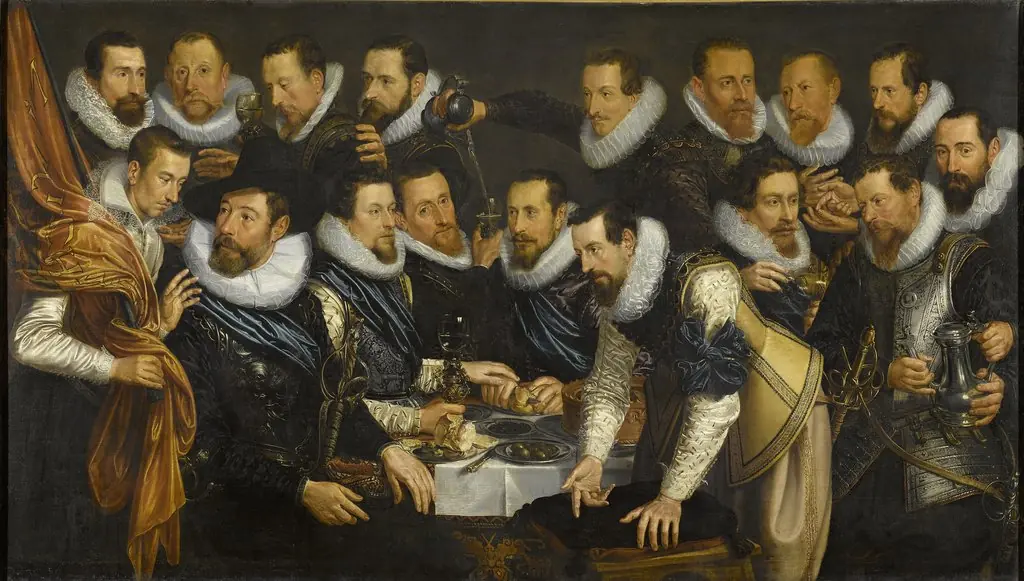 Officers and other civic guardsmen of the XIth District of Amsterdam, under the command of Captain Geurt Dircksz van Beuningen and Lieutenant Pieter Martensz Hoeffijser
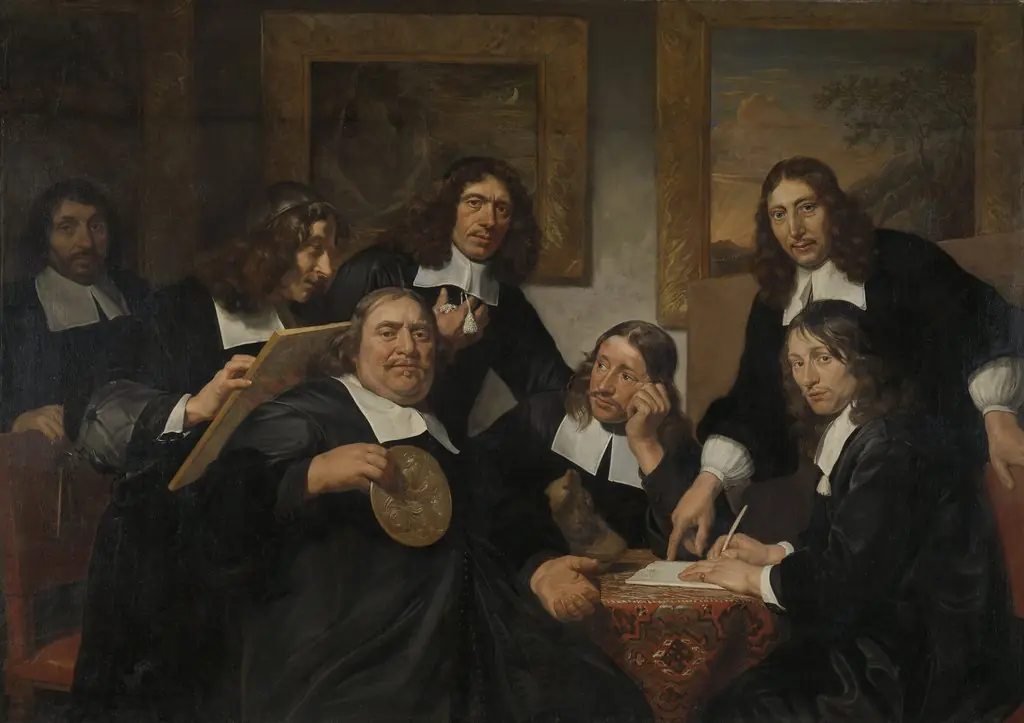 The governors of the guild of St. Luke, Haarlem, 1675