Artwork
Femme en rouge, dos à la fenêtre (Mujer de rojo, de espaldas a la ventana)
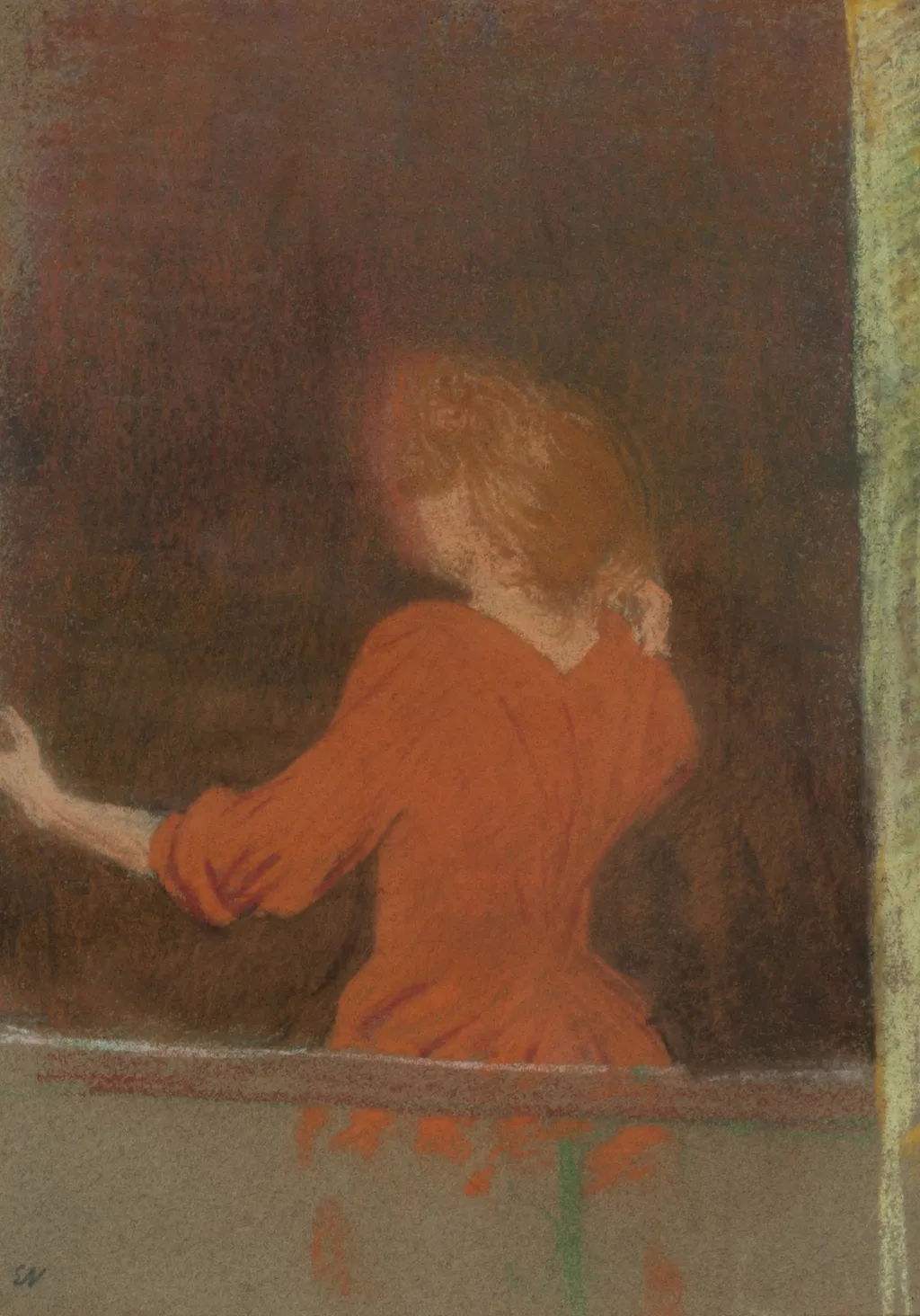
Femme en rouge, dos à la fenêtre (Mujer de rojo, de espaldas a la ventana) is an unspecified painting by the Les Nabis artist Édouard Vuillard. It dates from 1914 and is held in the collection of the National Museum of Fine Arts, Argentina.
About this work
Overview
The painting reflects his sustained interest in quiet, interior moments, rendered through deliberate color and spatial arrangement rather than narrative detail.
Painted around 1914 by French artist Édouard Vuillard, this work captures a solitary woman positioned before a window, her back to the viewer. Though associated with the Nabis group in earlier decades, Vuillard continued to explore intimate domestic settings well after its dissolution. The painting reflects his sustained interest in quiet, interior moments, rendered through deliberate color and spatial arrangement rather than narrative detail.
Subject & Meaning
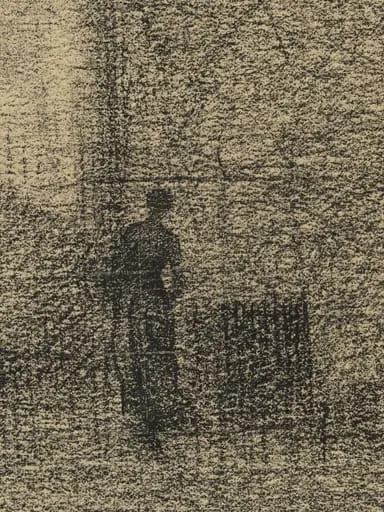
The figure, dressed in a vivid red gown, stands motionless against a dark wall, her posture suggesting stillness rather than action. One arm extends outward, the other rests near her shoulder, creating a subtle tension in the composition. Her turned back invites contemplation rather than direct engagement, emphasizing solitude and inner reflection. The absence of facial expression shifts focus to the emotional resonance of posture and environment.
Technique & Style
Vuillard employs flattened forms and saturated hues, echoing his earlier Nabis influences and Japanese woodblock aesthetics. The red dress contrasts sharply with the muted background, drawing attention to the figure’s silhouette. Brushwork is subdued, with smooth transitions between planes of color. Pattern is minimized, allowing the interplay of light, fabric, and wall to structure the space without ornamentation.
History & Provenance
Created during Vuillard’s mature period, the painting remained in private hands before entering the collection of the National Museum of Fine Arts in Buenos Aires. Its journey to Argentina reflects broader early 20th-century patterns of European art acquisition in Latin America. No significant exhibition history is documented prior to its institutional acquisition, suggesting it was not widely circulated in public displays during Vuillard’s lifetime.
Context
In 1914, as Europe edged toward war, Vuillard’s focus on private, domestic scenes stood in contrast to the rising tide of political and social upheaval. His work continued to prioritize personal atmosphere over public narrative, aligning with a broader trend among French painters who turned inward amid uncertainty. This painting exemplifies a quiet resistance to external chaos through the preservation of intimate, uneventful moments.
Legacy
The painting contributes to Vuillard’s enduring reputation as a chronicler of domestic life, distinct from his more flamboyant contemporaries. Its restrained palette and emotional subtlety influenced later generations interested in psychological depth within interior spaces. While not widely reproduced, it remains a key example of how quiet composition can convey complex inner states without overt symbolism.
Own this work as a print
Artist & collection
Artist
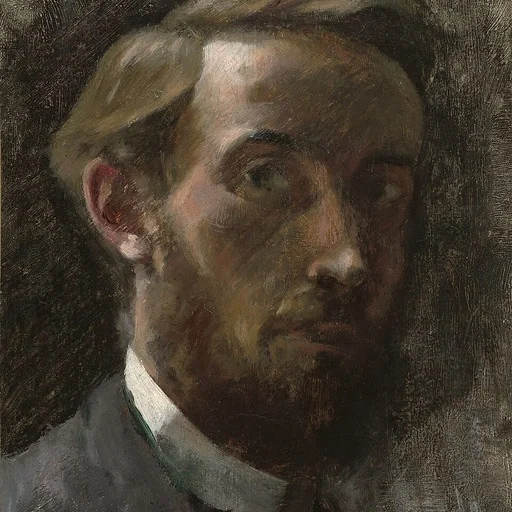
Jean-Édouard Vuillard (French:; 11 November 1868 – 21 June 1940) was a French painter, decorative artist, and printmaker.

Museum
National Museum of Fine Arts, Argentina
Continue through works from the same source collection.