Artwork
The Table
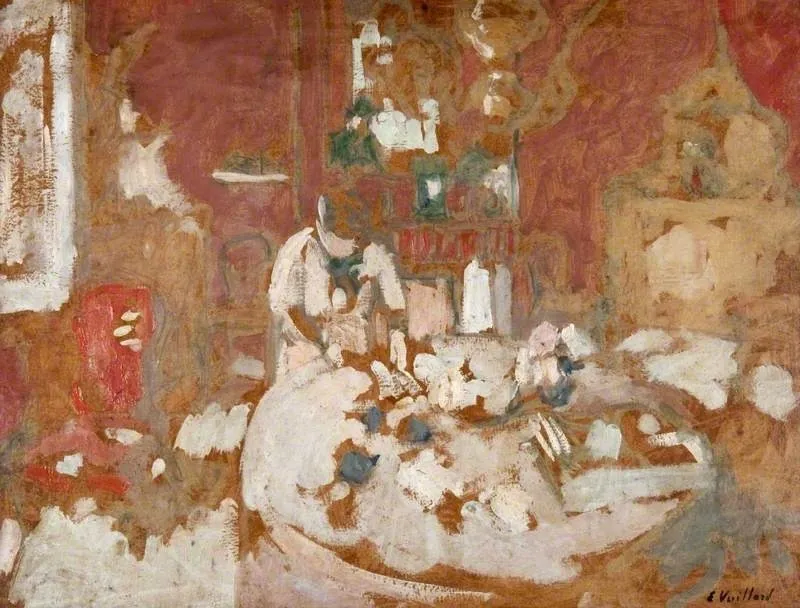
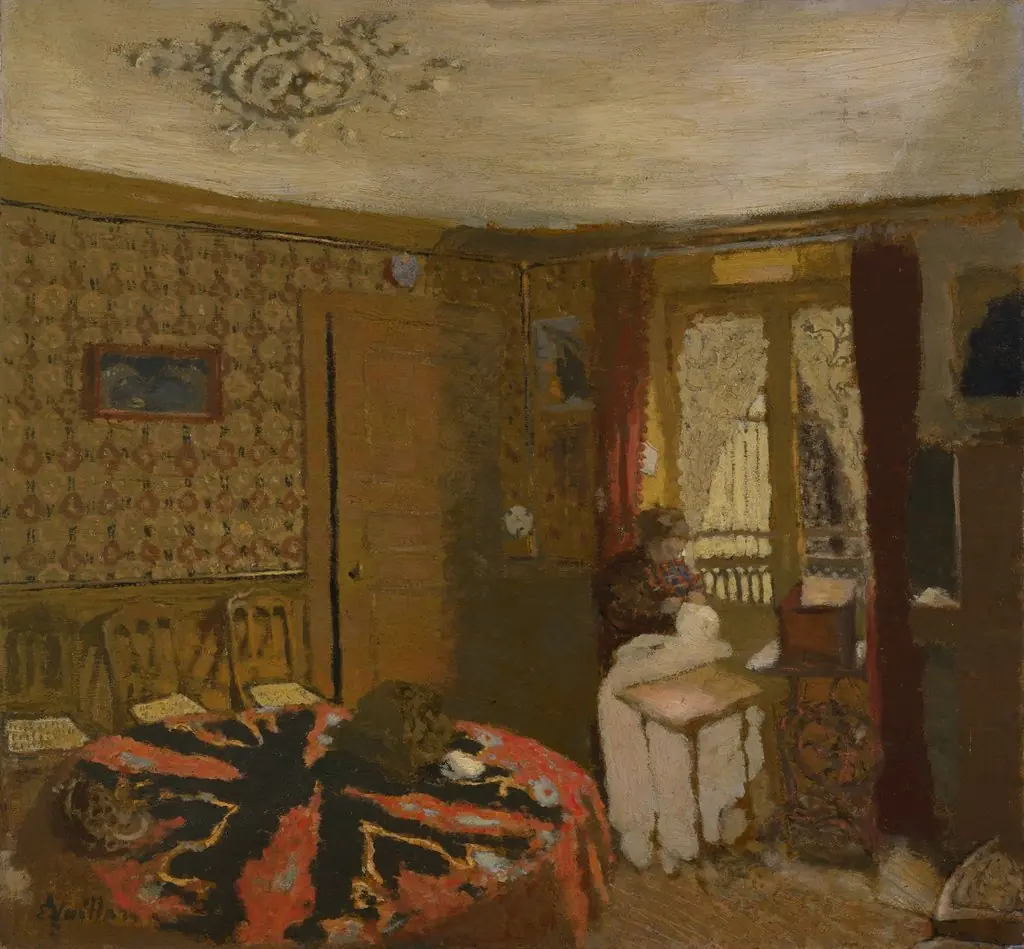
The Table is an oil painting by the Les Nabis artist Édouard Vuillard. It dates from 1902 and is held in the collection of the Kelvingrove Art Gallery and Museum.
About this work
If you're interested in learning more about his style and technique, you might want to look up his use of glazing.
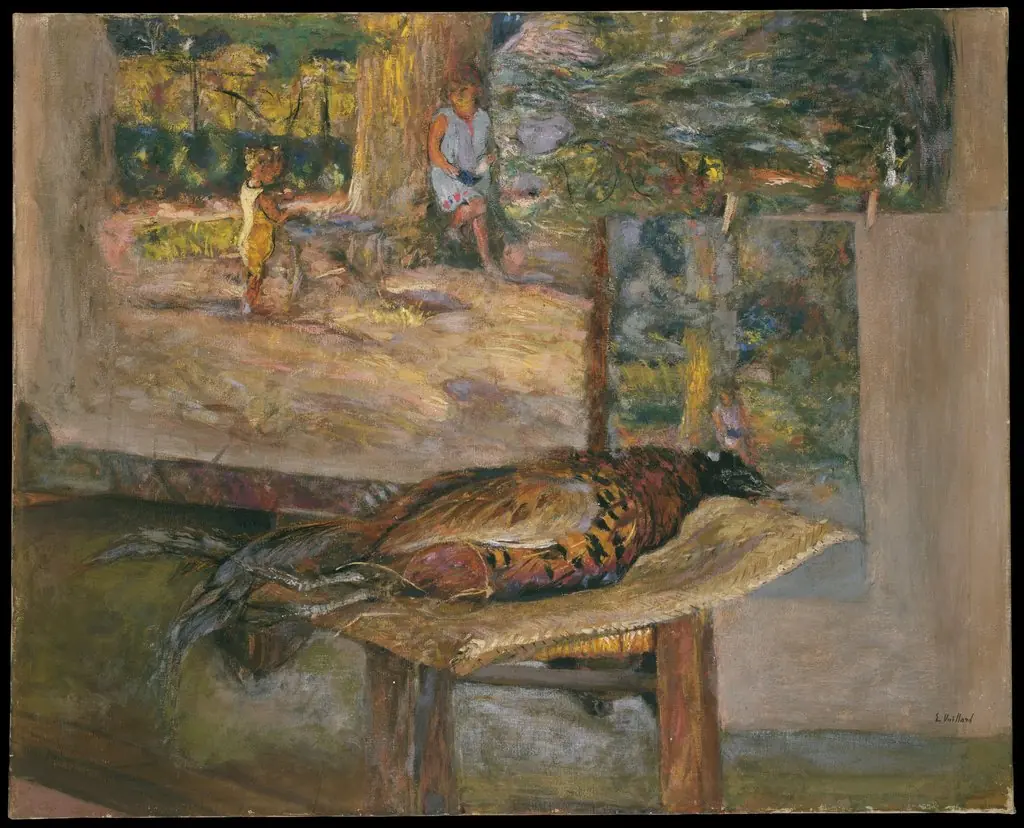
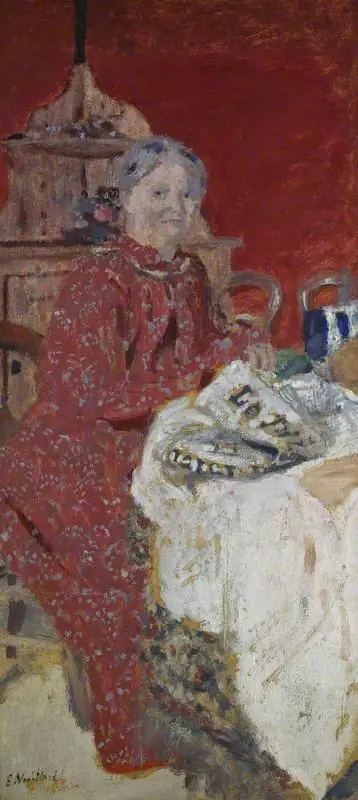
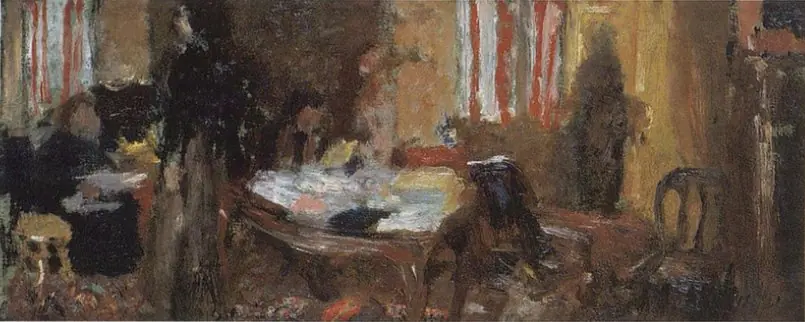
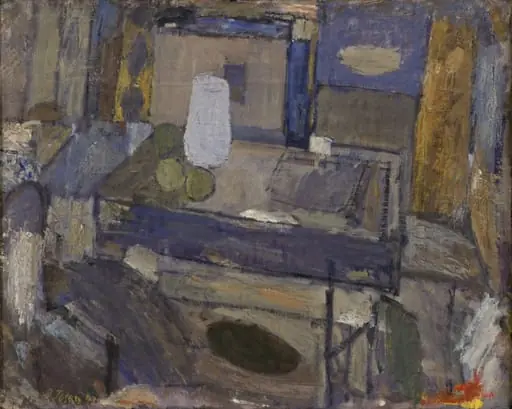
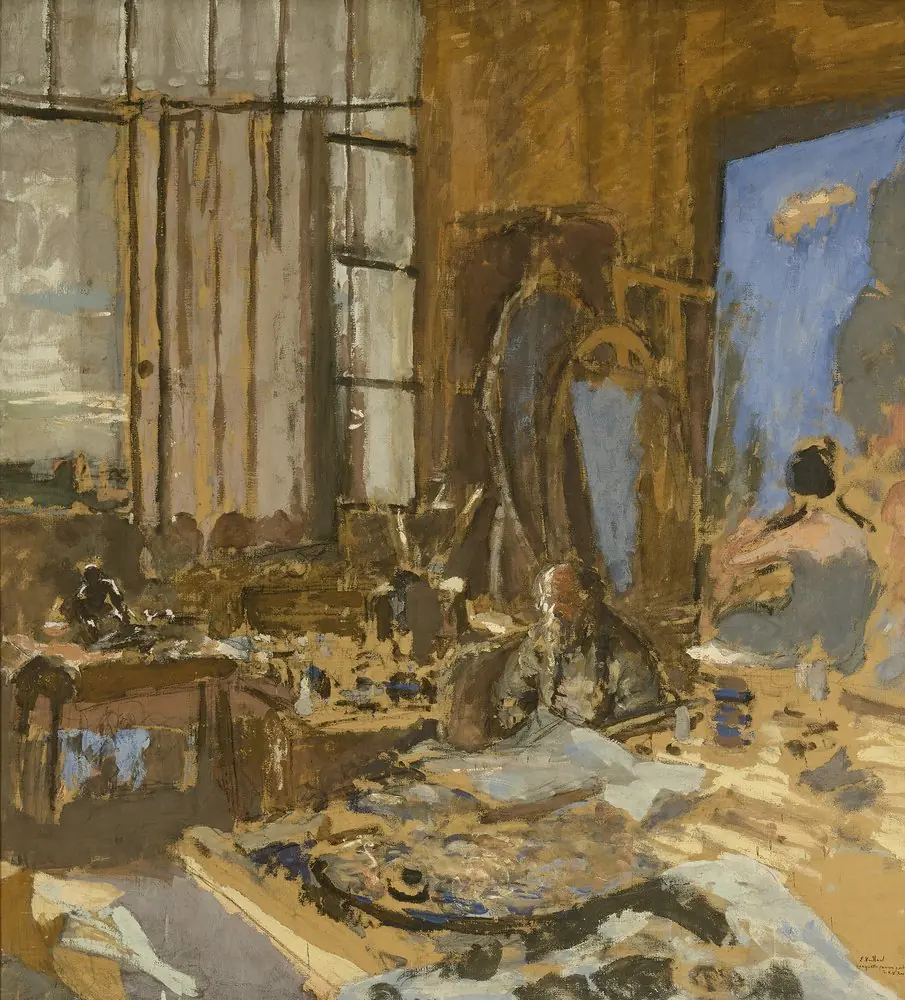
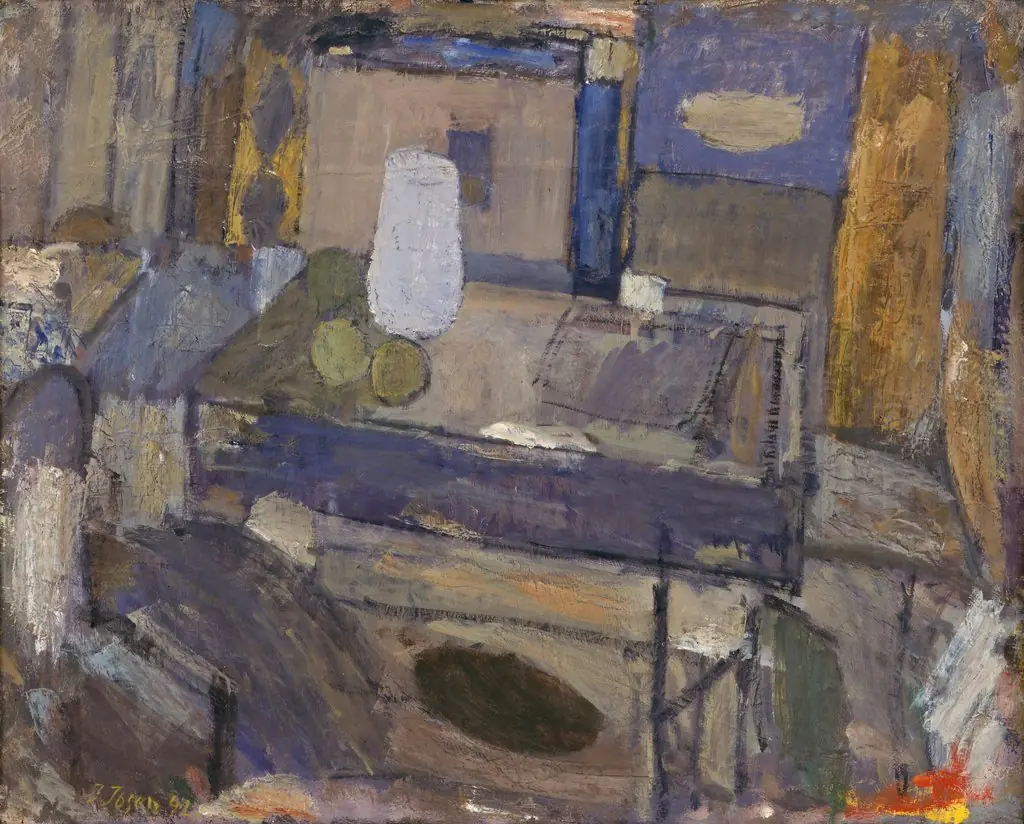
This painting shows a table with a white tablecloth, surrounded by a few objects. The table is in the center of the image, and the objects on it are not clearly visible. The background is a warm, reddish-brown color.
The painting is done in a style that emphasizes the play of light and shadow on the objects. The brushstrokes are visible, and the paint is applied thickly in some areas.
The artist, Édouard Vuillard, was a French painter known for his work in the early 20th century. If you're interested in learning more about his style and technique, you might want to look up his use of glazing.
Overview
Édouard Vuillard’s 1902 oil painting The Table presents a domestic interior centered on a modest table draped with a white cloth. The composition is set against a warm, reddish‑brown backdrop, and the objects placed upon the surface are rendered with limited detail, inviting focus on the overall arrangement rather than individual items.
Subject & Meaning
The work depicts an everyday scene, emphasizing the quiet presence of household objects within a private space. By simplifying the tableau and obscuring specific items, Vuillard encourages contemplation of the ambience and the subtle interactions of light, surface, and space that define domestic life.
Technique & Style
Executed with visible brushwork, the painting combines areas of flat color with thicker applications of pigment, creating a tactile surface. Vuillard balances flattened planes reminiscent of his earlier Nabis influences with a growing interest in realistic observation, using light and shadow to model forms while retaining decorative patterning.
History & Provenance
Created shortly after the dissolution of the Nabis group in 1900, The Table marks Vuillard’s transitional phase toward a more naturalistic approach. The piece remained in private collections throughout the early twentieth century before entering a museum holding, where it is displayed as part of the artist’s early oeuvre.
Context
During the early 1900s, French painters were exploring the tension between decorative abstraction and representational fidelity. Vuillard’s work reflects this dialogue, integrating the decorative flatness of Japanese prints and the Nabis aesthetic with a renewed focus on the tangible qualities of everyday objects.
Artist & collection
Artist
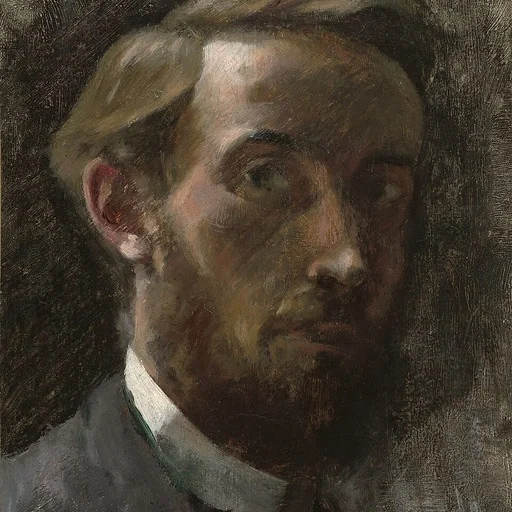
Jean-Édouard Vuillard (French:; 11 November 1868 – 21 June 1940) was a French painter, decorative artist, and printmaker.