Artwork
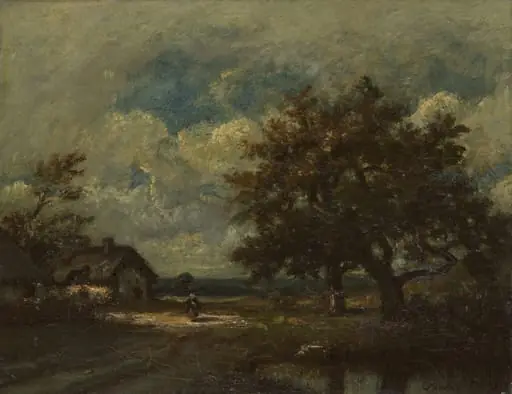
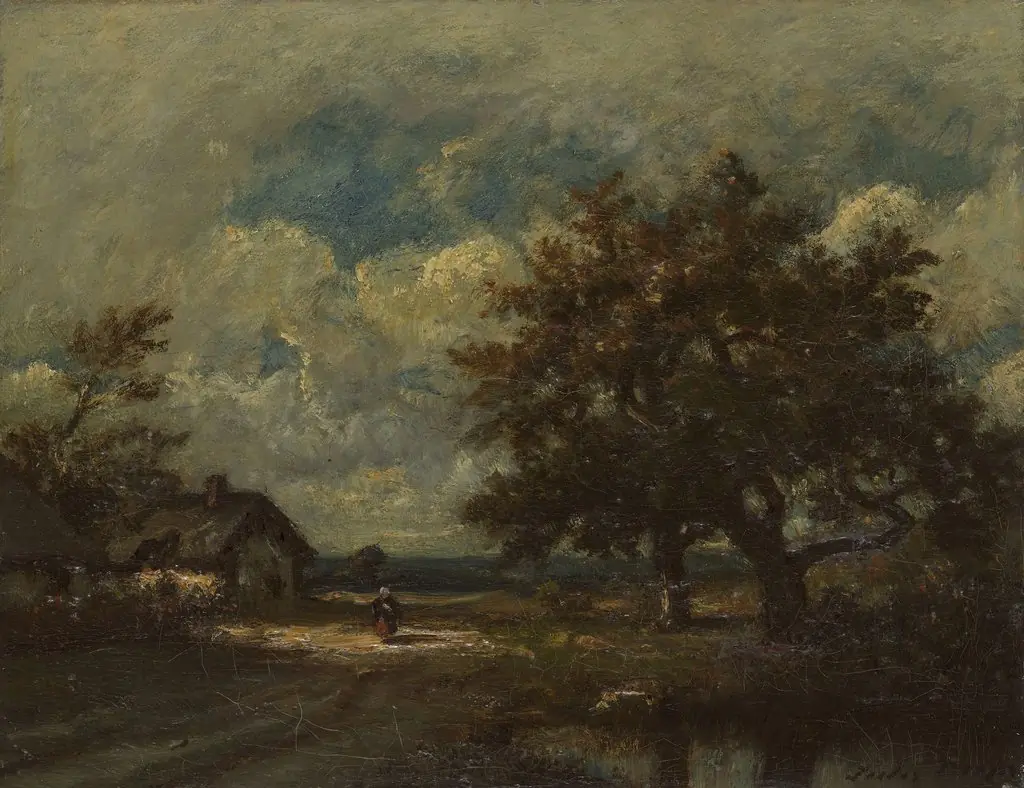
The Old Oak
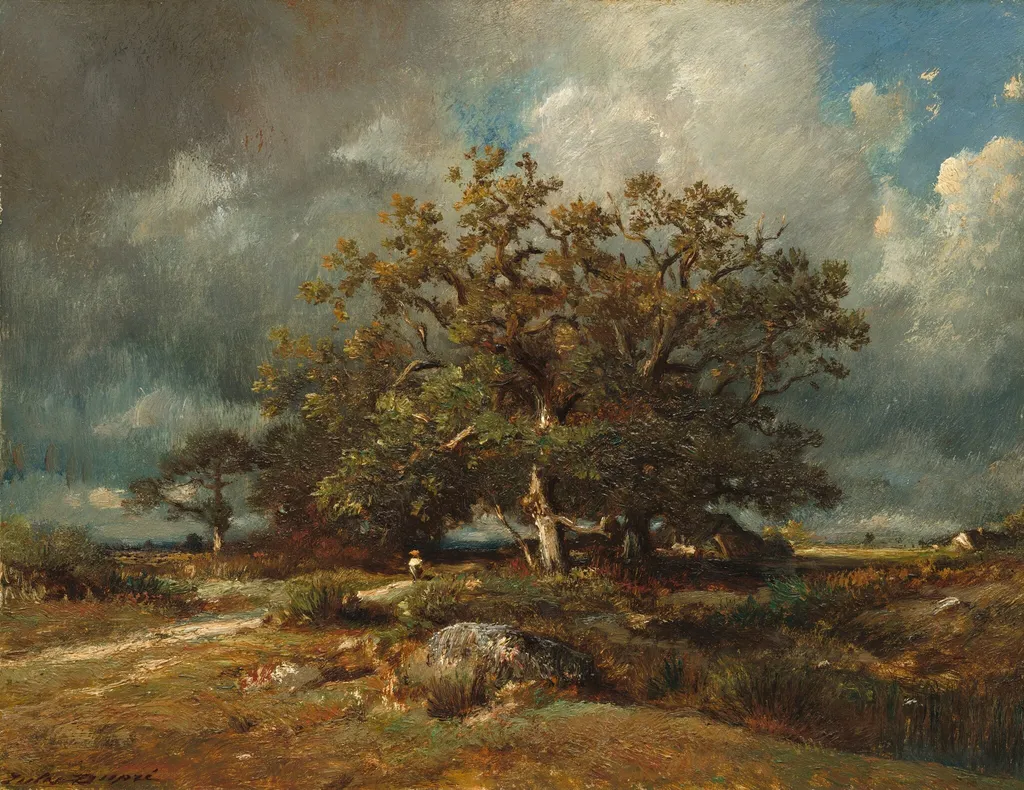
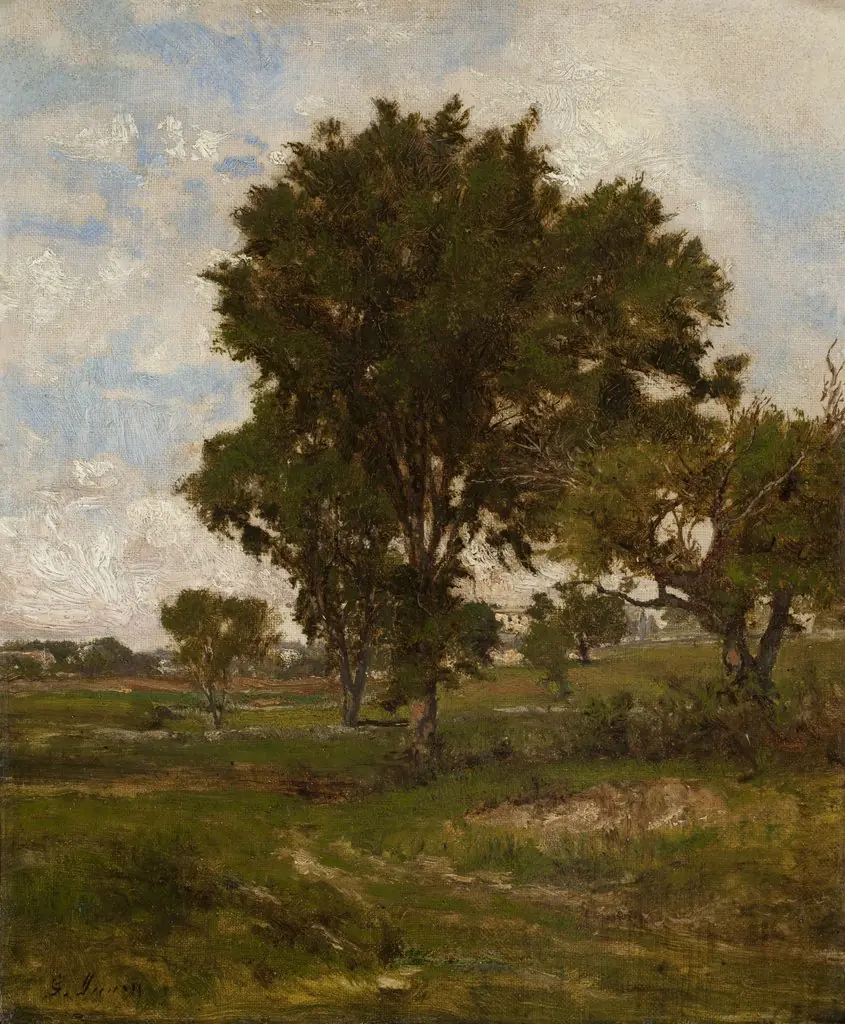
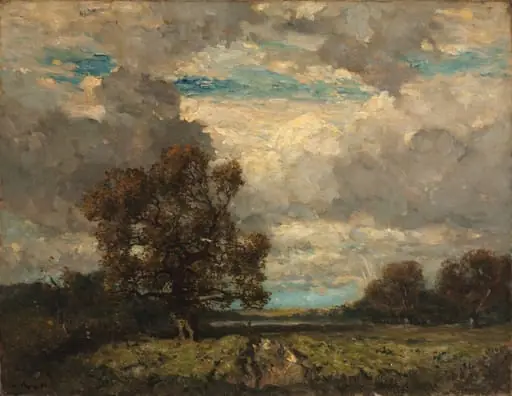
The Old Oak is an oil painting by the Barbizon school artist Jules Dupré. It dates from 1870 and is held in the collection of the National Gallery of Art.
- Inscription
- Inscribed:lower left: Jules Dupré
About this work
Subject & Meaning
The work’s iconography therefore centers on the tree itself, presenting it as both a visual motif and a representation of the natural world.
The painting titled The Old Oak portrays a solitary oak tree, which is identified as the central subject in the work’s description. The tree appears in the composition as a natural element rendered in oil on canvas in 1870, emphasizing its form and texture. In the context of 19th‑century French landscape painting, the depiction of a tree often served to highlight the artist’s interest in botanical detail and the atmospheric qualities of nature.
The work’s iconography therefore centers on the tree itself, presenting it as both a visual motif and a representation of the natural world.
Technique & Style
Jules Dupré's The Old Oak, executed in 1870, is an oil painting on canvas. The work measures 32.1 centimeters in height and 41.5 centimeters in width. As a landscape depicting a tree, the piece utilizes the traditional medium of oil paint applied to a canvas support, characteristic of Dupré's practice during this period.
The physical condition and handling of the work are not detailed in the provided records, but the medium and dimensions are clearly documented by the National Gallery of Art.
History & Provenance
The Old Oak was painted by Jules Dupré in 1870, as indicated by the work's inception date and its exhibition history. No record of a commission appears in the provenance sources. After its completion, the painting passed through several hands: it was held by Georges Petit in Paris before being purchased in 1880 by M. Knoedler & Co.; Knoedler sold it the same year to Thomas A. Howell of Brooklyn, whose estate offered it at the Fifth Avenue Art Galleries in 1889.
Knoedler reacquired the work and sold it to Samuel F. Barger, whose daughter Maud Barger‑Wallach inherited it. From 1917 the painting was on consignment with Knoedler, then sold in 1918 to R. Horace Gallatin, who gave it to the National Gallery of Art in 1949.
The Old Oak is now in the collection of the National Gallery of Art, Washington, D.C. Provenance research shows that after leaving Georges Petit’s gallery the painting moved through M. Knoedler & Co., Thomas A. Howell, Samuel F. Barger, Maud Barger-Wallach, and again through Knoedler before being acquired by R. Horace Gallatin in 1918; Gallatin donated it to the NGA in 1949. The work is listed among the NGA’s holdings, but the sources do not give an accession number or record any exhibition history for the painting.
Overview
Jules Dupré's oil painting, The Old Oak, created around 1870, presents a singular, imposing tree. This canvas exemplifies the artist's deep engagement with natural forms, focusing on the powerful presence of an ancient oak. The work highlights the tree's distinctive features, rendered with a keen eye for detail and atmospheric effect, reflecting Dupré's characteristic approach to landscape.
Context
Dupré frequently retreated from urban environments to observe and paint oak trees in the French countryside. This practice reflects his profound connection to nature and his dedication to capturing its enduring forms. The Old Oak is one of several works by Dupré that explore this specific subject, with other notable examples of his oak tree paintings held in collections such as the National Gallery of Art in Washington.
Own this work as a print
Artist & collection