Artwork
Landscape—Scene from "Thanatopsis"
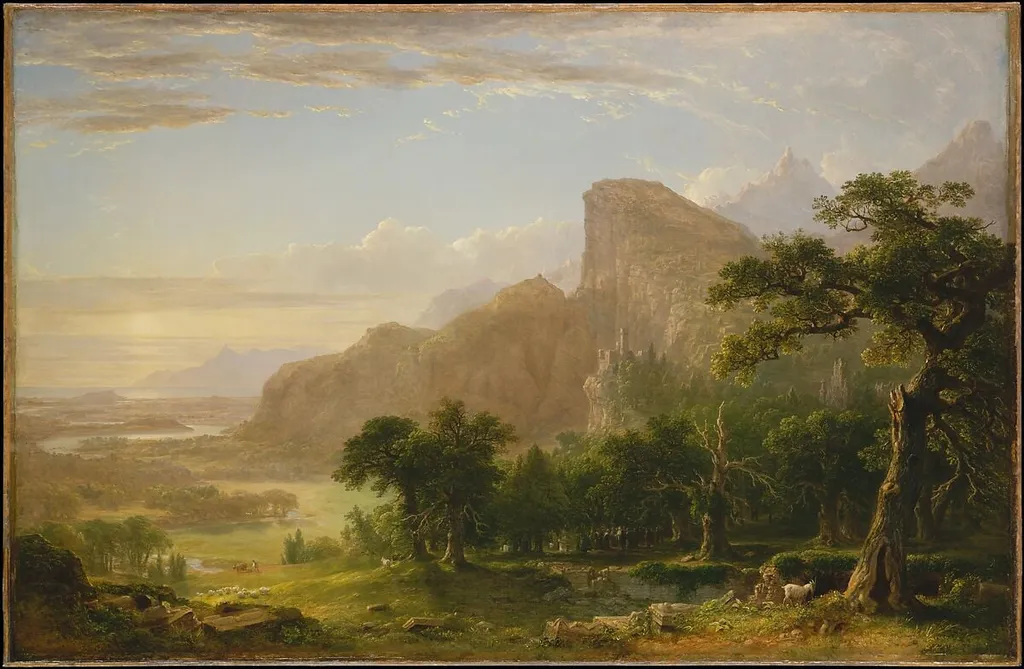
Landscape—Scene from "Thanatopsis" is an oil painting by the Hudson River School artist Asher Brown Durand. It dates from 1850 and is held in the collection of the Metropolitan Museum of Art.
- Accession no.
- 11.156
- Credit line
- Gift of J. Pierpont Morgan, 1911
About this work
A funeral procession winds through a valley where Egyptian, classical, and medieval ruins crumble into the earth, all beneath the watch of an ancient forest.
A funeral procession winds through a valley where Egyptian, classical, and medieval ruins crumble into the earth, all beneath the watch of an ancient forest. Asher Brown Durand painted this scene in 1850 for the National Academy of Design, taking its title and mood from William Cullen Bryant's poem "Thanatopsis." The Metropolitan Museum of Art now holds the canvas, a meditation on death's inevitability and nature's permanence that Durand later retrieved and revised before it reached J. Pierpont Morgan's collection.
Overview
Asher Brown Durand's 1850 oil on canvas, "Landscape, Scene from 'Thanatopsis'", draws its inspiration and title from William Cullen Bryant's contemplative poem. Measuring 39 1/2 by 61 inches, the painting visually explores themes of human mortality and the enduring power of the natural world. It depicts a somber funeral procession winding through a valley, a scene that became a significant example of American landscape painting during its era.
Subject & Meaning
The painting illustrates a funeral procession traversing a winding path through a valley, where remnants of ancient civilizations, Egyptian, classical, and medieval structures, crumble into the earth. Nearby, a farmer continues his daily work, underscoring life's ongoing cycle. These elements visually interpret Bryant's poem, whose title means 'view of death,' suggesting that all human lives, across different epochs, ultimately merge back into the natural landscape from which they originated.
Context
Created in 1850, this work marks a period following the death of Thomas Cole, a pivotal figure in American landscape painting, two years prior. Durand, a close associate of Cole, briefly revisited the grand, allegorical landscape tradition that Cole had established. The painting reflects the ambitions of the Hudson River School to convey profound philosophical ideas through natural scenery and highlights Durand's connections within the literary circles of his time, particularly with William Cullen Bryant.
History & Provenance
First exhibited at the National Academy of Design in 1850, the American Art-Union acquired the painting and distributed it to a subscriber. Durand later retrieved the canvas, made revisions to certain areas, and subsequently sold it to B.F. Gardner. The artwork eventually entered the esteemed collection of J. Pierpont Morgan, who gifted it to the Metropolitan Museum of Art in 1911. It remains a part of the museum's American Wing collection, identified as object number 11.156.
Artist & collection
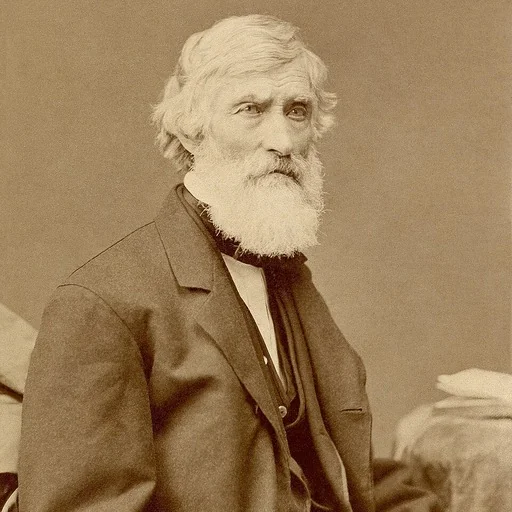
Artist
Asher Brown Durand spent his life in the rolling hills of New Jersey, where the forests and farmland shaped his quiet, deliberate way of seeing.