Artwork
The First Harvest in the Wilderness
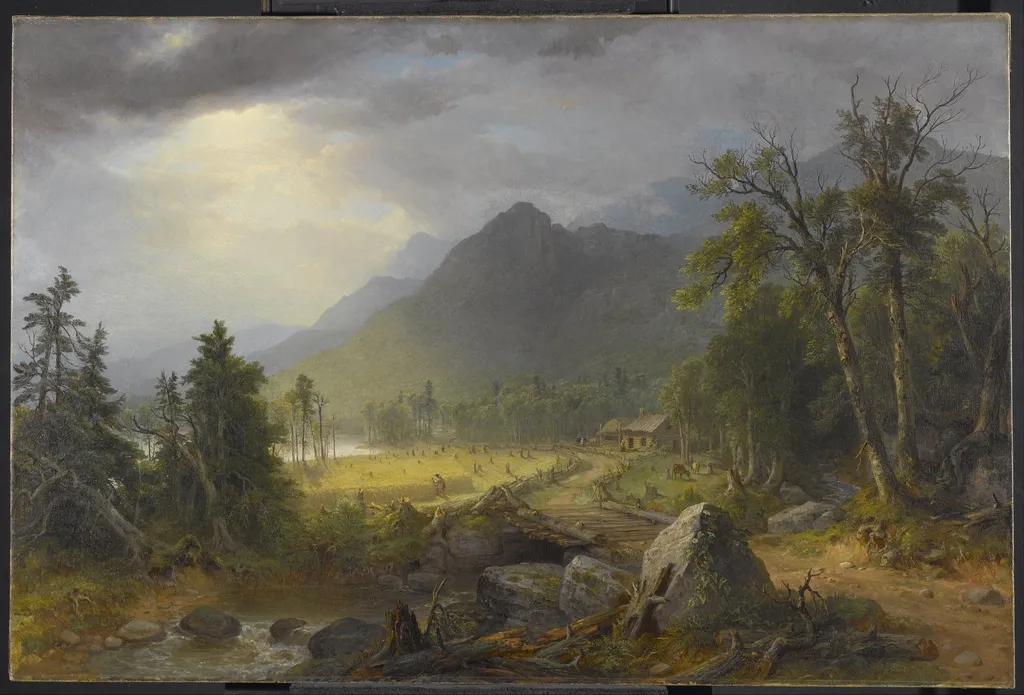
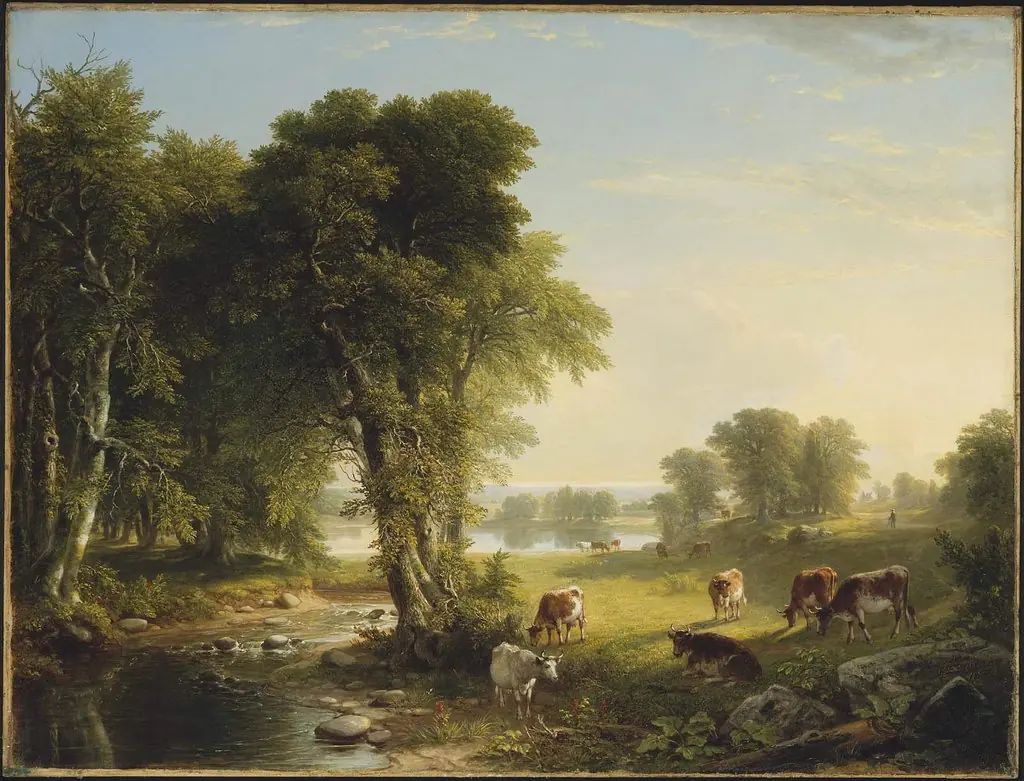
The First Harvest in the Wilderness is an oil painting by the Hudson River School artist Asher Brown Durand. It dates from 1855 and is held in the collection of the Brooklyn Museum.
About this work
Subject & Meaning
As a landscape genre piece, the scene presents a wilderness setting where human activity, specifically harvesting, intersects with the natural environment.
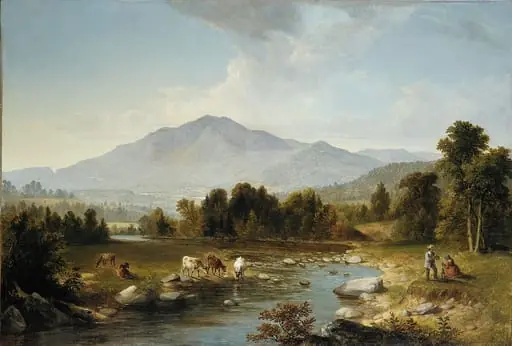
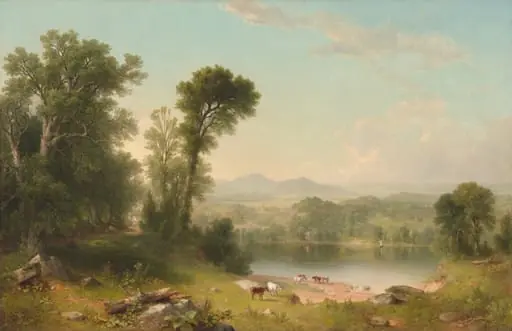
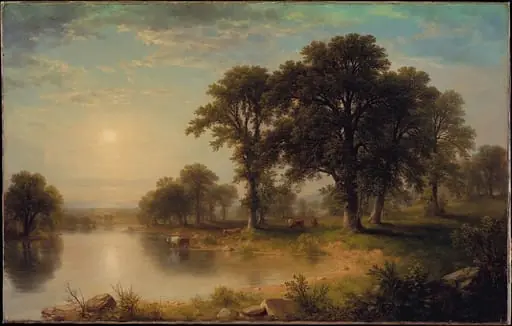
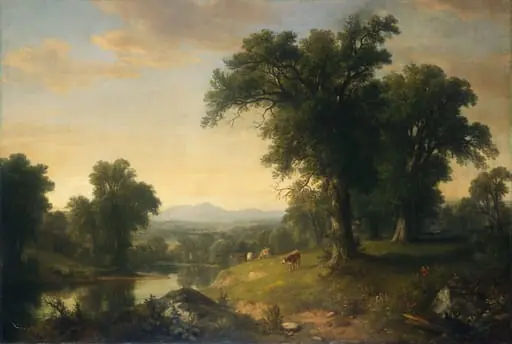
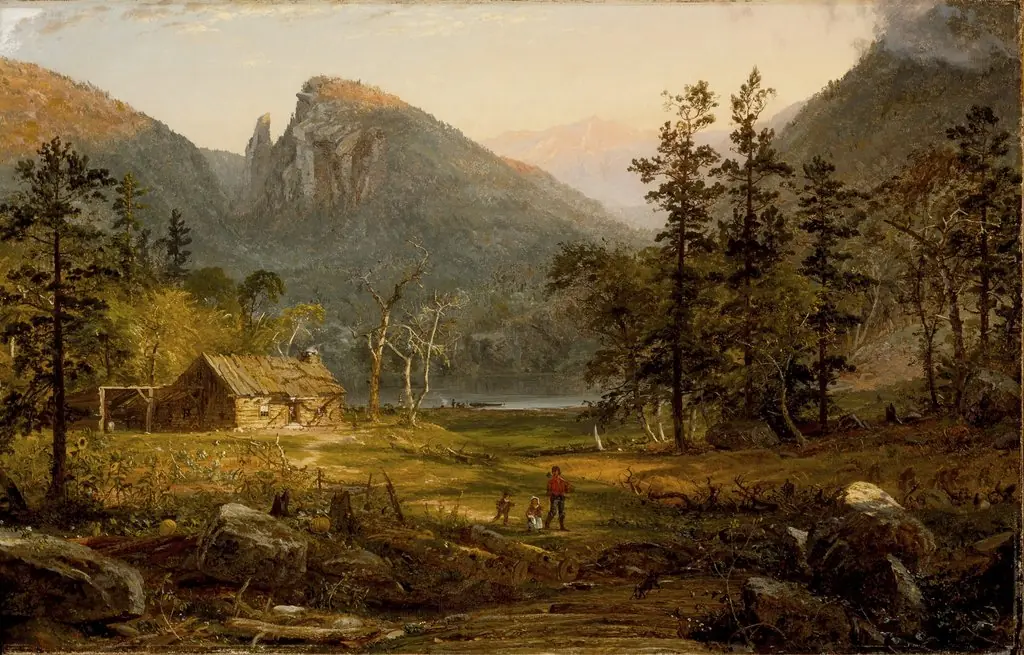
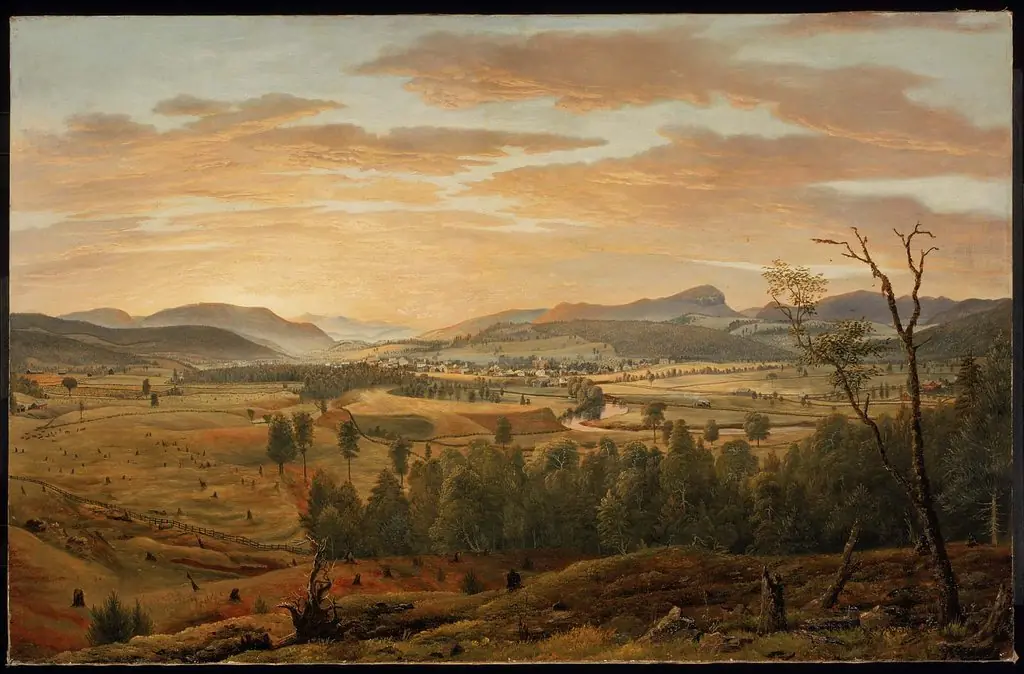
The painting depicts a panoramic landscape featuring a river, sky, clouds, trees, mountains, a path, a house, and a bridge. Central to the composition is the act of harvest, which gives the work its title and thematic focus. As a landscape genre piece, the scene presents a wilderness setting where human activity, specifically harvesting, intersects with the natural environment.
The inclusion of a house and bridge suggests early settlement and the taming of the wild, while the vast sky and mountains emphasize the scale of the American landscape.
Technique & Style
The First Harvest in the Wilderness is an oil painting on canvas created in 1855 by Asher Brown Durand. Executed in the landscape genre, the work depicts a river, sky, clouds, trees, mountains, harvest scene, path, house, and bridge. The canvas measures 80.3 cm in height and 122 cm in width, reflecting the Hudson River School emphasis on detailed natural observation and atmospheric effects. The painting is housed in the Brooklyn Museum collection.
History & Provenance
The First Harvest in the Wilderness was created in 1855 by Asher Brown Durand, who was commissioned to produce the work as part of his series on American landscape subjects. The painting is an oil on canvas measuring 80.3 cm in height by 122 cm in width, depicting a river, sky, cloud, tree, mountain, harvest, path, house, and bridge. It entered the collection of the Brooklyn Museum, where it remains on view.
The work was first exhibited in 1855 and has since been part of the museum's permanent holdings, catalogued under the genre of landscape painting.
The First Harvest in the Wilderness is held by the Brooklyn Museum. It entered the museum's collection with an accession number recorded in the institution's provenance files. The work has been included in several exhibitions at the Brooklyn Museum, highlighting its significance within the institution's American landscape holdings.
Context
The First Harvest in the Wilderness (1855) by Asher Brown Durand exemplifies the Hudson River School's synthesis of scientific observation and moral narrative in American landscape painting. Contemporary critics praised its technical precision and thematic depth, particularly its depiction of agrarian industry within a pristine natural setting, a subject later explored by artists like Thomas Cole. Durand's work reflects the movement's broader context of manifest destiny and environmental idealism, positioning the painting as both a product of 19th-century American expansionism and a commentary on human interaction with wilderness.
Scholarship emphasizes its role in bridging Romanticism and emerging ecological consciousness, cementing Durand's reputation as a foundational figure in 19th-century American art.
Legacy
The First Harvest in the Wilderness, painted by Asher Brown Durand in 1855, emerged as a pivotal work within the Hudson River School, influencing subsequent landscape artists through its nuanced portrayal of American wilderness and agrarian themes. Its integration of symbolic harvest motifs with expansive natural scenery prefigured later ecological narratives in 19th-century American art, though direct documentation of its immediate impact remains limited to contemporary critical responses.
Durand's composition, characterized by meticulous rendering of terrain and atmospheric effects, informed the technical approaches of peers such as Albert Bierstadt and Frederic Edwin Church, who adopted similar compositional strategies in their grander vistas. The painting's presence in the Brooklyn Museum's collection since the early 20th century has facilitated scholarly reexamination, reinforcing its role in narratives of Manifest Destiny and environmental consciousness.
Overview
Created in 1855, Asher Brown Durand’s oil on canvas titled The First Harvest in the Wilderness presents a tranquil forest clearing. The composition centers on a modest log cabin beside a gentle river, framed by towering trees and a winding path that leads toward distant mountains. Light filters through a partly clouded sky, illuminating the scene with a calm, early‑morning atmosphere.
Own this work as a print
Artist & collection
Artist
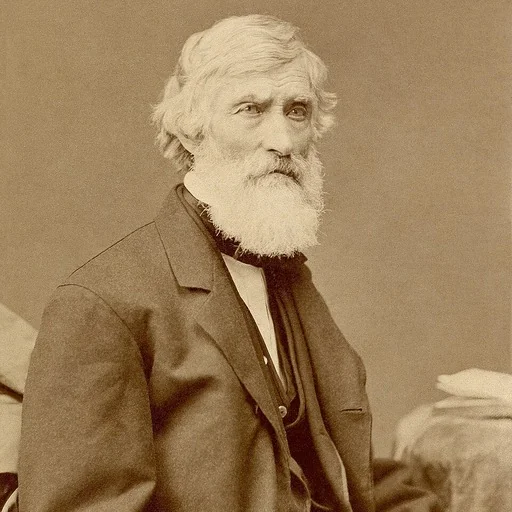
Asher Brown Durand spent his life in the rolling hills of New Jersey, where the forests and farmland shaped his quiet, deliberate way of seeing.