Artwork
The Chaperone
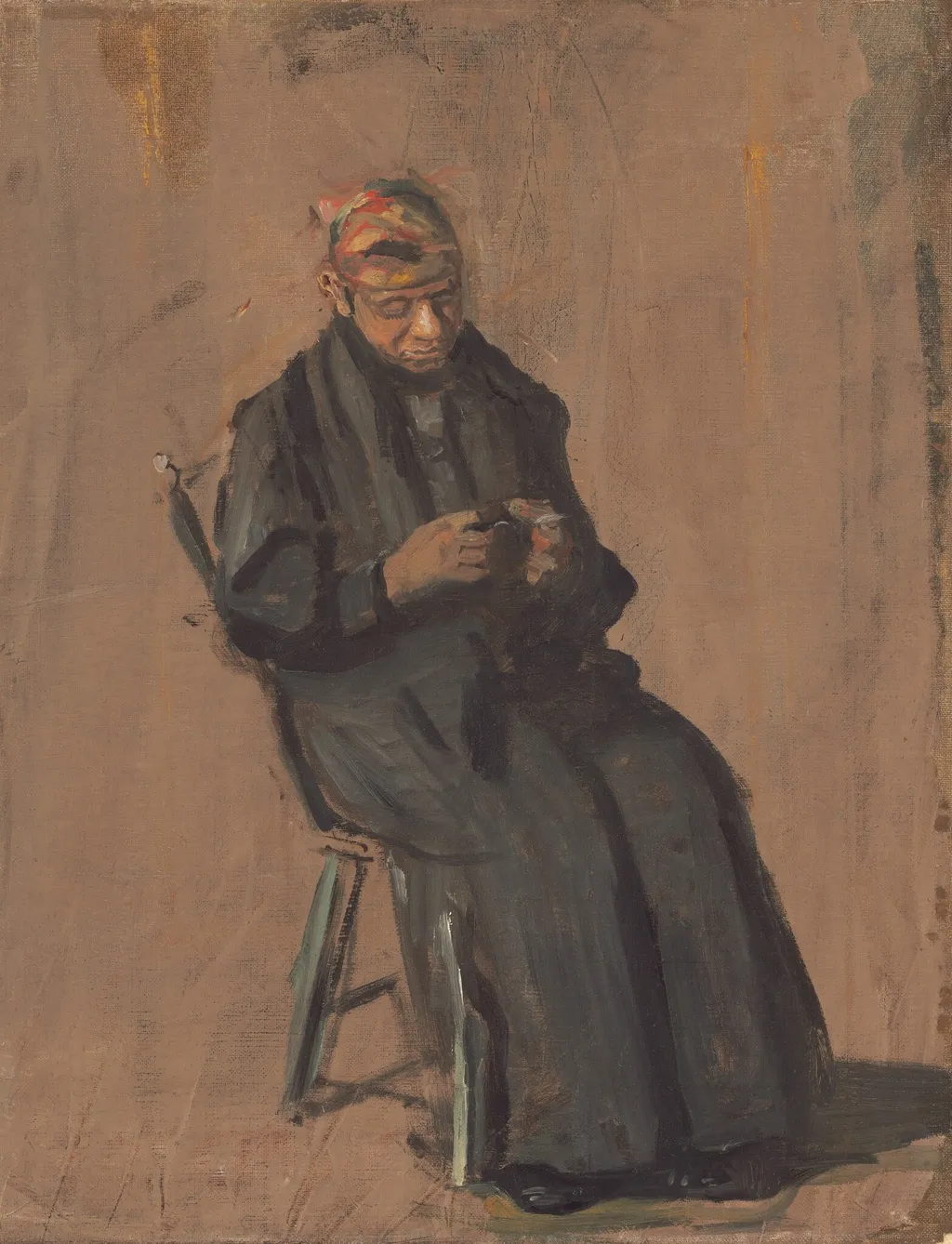
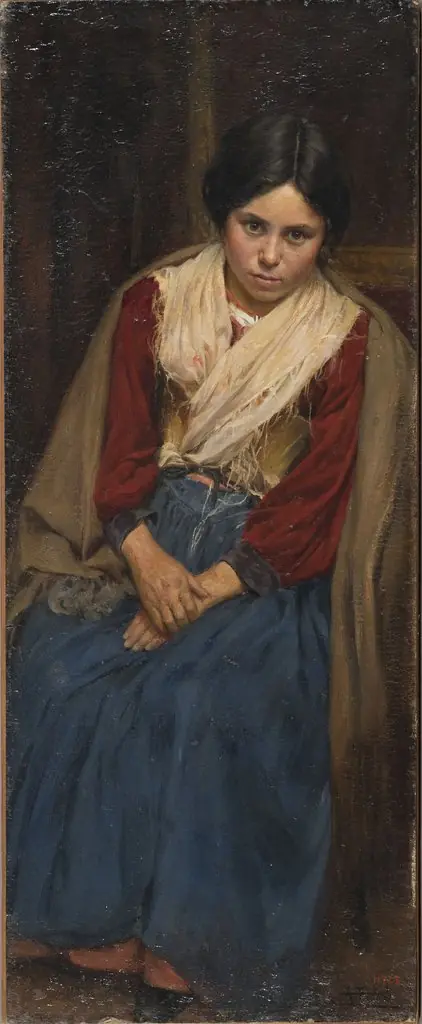
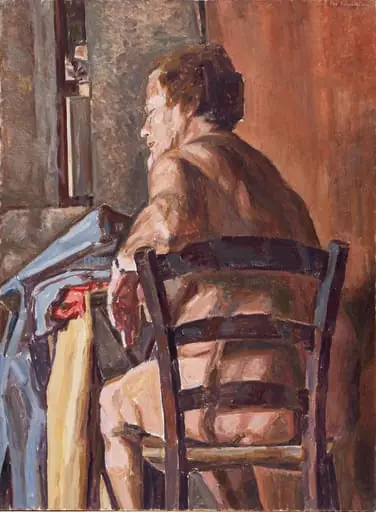
The Chaperone is an oil painting by the Realist artist Thomas Eakins. It dates from 1908 and is held in the collection of the National Gallery of Art.
About this work
Technique & Style
The surface shows careful application of oil paint, contributing to a smooth finish that emphasizes the formal qualities of the portrait.
The Chaperone is an oil painting on canvas created in 1908 by Thomas Eakins. The work measures 46.3 cm in height and 36.2 cm in width, reflecting the artist's precise handling of light and compositional balance characteristic of his mature style. The surface shows careful application of oil paint, contributing to a smooth finish that emphasizes the formal qualities of the portrait.
The painting has been part of the National Gallery of Art's collection in Washington, D.C., since 1991, underscoring its recognized significance within American art.
History & Provenance
Thomas Eakins painted The Chaperone in 1908 in oil on canvas. The work first passed through the artist's widow, Susan Macdowell Eakins, and her estate, before moving through the Babcock Galleries in New York and the Garelick Gallery in Detroit. Marshall M. Miller of Huntington Woods, Michigan, owned it, after which Peter H. Brady in Washington, D.C., held it by 1977.
The Middendorf/Lane gallery in Washington, D.C., handled the painting in 1979, and it then appeared at a Christie, Manson & Woods auction in New York on 24 April 1981 (lot 92), where the hammer price was not recorded. Hirschl & Adler Galleries in New York subsequently acquired it privately and sold it in 1982 to collector John Wilmerding of Washington, D.C., who in 1991 gave the painting to the National Gallery of Art.
Following a complex provenance that included ownership by Susan Macdowell Eakins and several private collectors and galleries, the painting was sold to John Wilmerding in 1982. Wilmerding subsequently donated the work to the National Gallery of Art in Washington, D.C., in 1991, where it remains in the collection. While the work was advertised by Middendorf/Lane in 1979 and appeared in a Christie's auction catalog in 1981, records indicate it may have been acquired privately after the latter event rather than sold at the block.
Specific inventory or accession numbers for the National Gallery of Art are not provided in the available documentation, nor are there records of public exhibition history prior to its accession.
Legacy
The Chaperone exerted quiet influence through its presence in major American collections, shaping scholarly understanding of Eakins' late portraiture and serving as a reference point for studies of his social realism. Its documented ownership trajectory, from the artist's widow to Hirschl & Adler Galleries and John Wilmerding before its 1991 donation to the National Gallery of Art, illustrates a clear provenance path that informed later acquisitions of Eakins works. The painting's physical attributes, recorded in its National Gallery of Art catalog entry, have been cited in technical analyses of Eakins' brushwork and compositional strategies within 20th-century American art discourse.
Legacy assessments consistently note its role in reinforcing the narrative of Eakins' unflinching examination of gender and authority, though specific exhibition histories beyond its inclusion in National Gallery exhibitions are not detailed in the cited records.
Scholars have referenced its scale and formal qualities in discussions of Eakins' compositional influence on contemporaries, establishing it as a touchstone for understanding his technical legacy within institutional frameworks.
Overview
The Chaperone, executed in oil on canvas around 1908, presents a domestic interior in which a young girl in a white dress is seated at a piano, her hands poised over the keys. Behind her, a woman dressed in dark clothing watches intently, her hands folded in her lap. The composition captures a moment of quiet concentration and subtle interaction between the two figures.
Subject & Meaning
The painting juxtaposes the innocence of the child, suggested by her light attire and active engagement with music, against the sober presence of the older woman, whose attentive gaze implies guardianship or instruction. The title hints at the woman's role as a chaperone, overseeing the girl's activity within the socially appropriate bounds of the era, while the shared focus on the piano underscores themes of education and refinement.
Own this work as a print
Artist & collection
Artist
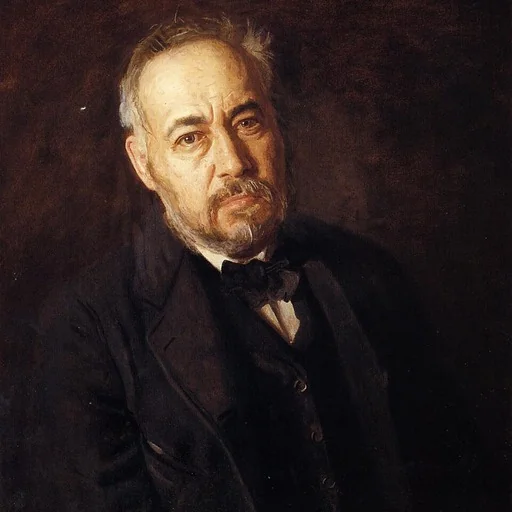
Thomas Cowperthwait Eakins (; July 25, 1844 – June 25, 1916) was an American realist painter, photographer, sculptor, and fine arts educator.